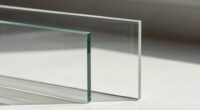
While using acid-free materials is essential, it’s not enough for museum-quality framing. To truly protect your artwork, you need conservation-grade mounting boards, UV-filtering glass, proper climate control, and skilled framing techniques like acid-free matting and spacers. Proper ventilation and choosing a professional framer also make a big difference. If you want to guarantee your piece stays pristine long-term, uncover the complete list of expert strategies that go beyond basic preservation.

Get art and craft supplies delivered free — and shop member deals
- Fast, free delivery on millions of items
- Access to Prime Big Deal Days deals on October 6–7
- Prime Video, Amazon Music and more included
Key Takeaways
- Museum-quality framing combines acid-free materials with UV-protective glazing to prevent fading and long-term damage.
- Proper climate control, including humidity and temperature stability, is essential for preserving artwork over time.
- Skilled, professional framing ensures correct material selection, assembly, and handling to avoid accidental damage.
- Using spacers and matting creates a barrier between artwork and glass, preventing sticking, moisture buildup, and physical stress.
- Certification of materials and adherence to conservation standards are vital for ensuring durability and preventing deterioration.
museum quality UV glass for artwork
As an affiliate, we earn on qualifying purchases.
As an affiliate, we earn on qualifying purchases.
Why Acid-Free Materials Alone Won’t Protect Your Artwork
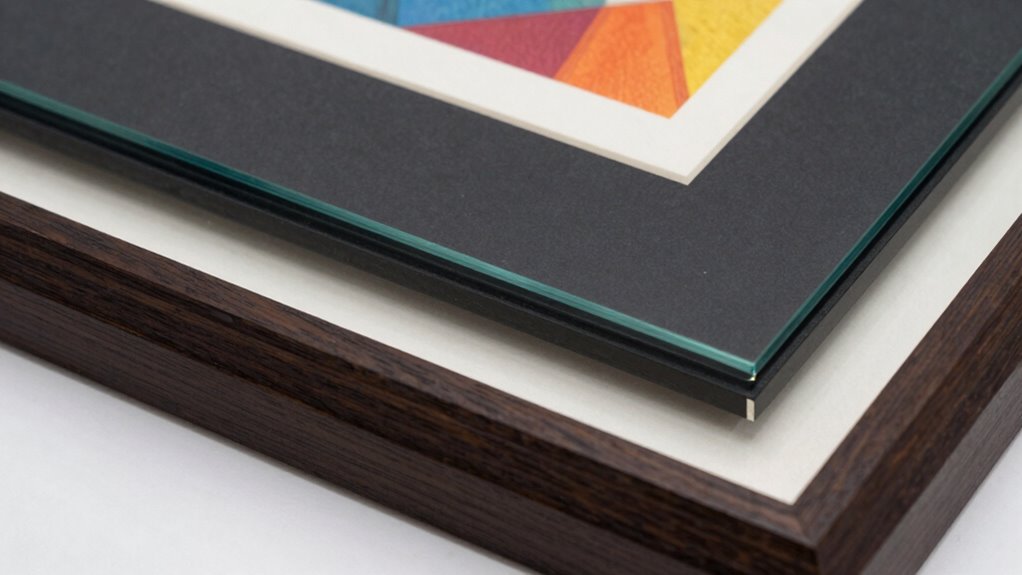
While acid-free materials are vital for preserving artwork, relying on them alone isn’t enough to guarantee long-term protection. Historically, artists and collectors prioritized quality framing that complemented the piece’s aesthetic and context. Understanding artist preferences and the historical context of the artwork helps determine the best preservation methods. Acid-free materials prevent acid migration and deterioration, but they don’t address other risks like improper handling, environmental fluctuations, or physical damage. In addition to using acid-free materials, exploring new frontiers in preservation techniques can lead to innovative solutions for protecting art. Without proper mounting techniques and climate control, even the best materials can fall short. This holistic approach ensures your artwork remains stable over time, respecting both its artistic intent and historical significance. In essence, acid-free is just one piece of a thorough preservation strategy. Additionally, just as in the Gold IRA market, the choice of materials and techniques can significantly impact the overall value and longevity of the investment. Similarly, investment strategies in precious metals require a comprehensive understanding to maximize returns. Incorporating luxury framing methods can further enhance the overall protection and presentation of your artwork. Moreover, contrast ratios play a crucial role in ensuring that framed art maintains its visual integrity over time.
archival mounting boards for paintings
As an affiliate, we earn on qualifying purchases.
As an affiliate, we earn on qualifying purchases.
How Archival Mounting Techniques Improve Preservation

How Archival Mounting Techniques Improve Preservation
Archival mounting techniques play a crucial role in preserving artwork by providing stable support that minimizes physical stress and damage over time. By adhering to conservation ethics, you guarantee that mounting methods do not compromise the piece’s integrity or originality. Proper techniques prevent warping, tearing, or shifting, maintaining the artwork’s structural stability. These methods also uphold historical accuracy by respecting the artist’s intent and original presentation. Using reversible, non-invasive materials, you avoid permanent alterations that could hinder future conservation efforts. This careful approach ensures the artwork remains as close to its original state as possible, allowing future generations to appreciate its historical and artistic significance. Fundamentally, archival mounting techniques are essential for long-term preservation and authenticity. Additionally, maintaining indoor air quality is vital to prevent environmental factors that could compromise the integrity of the artwork. Incorporating sustainable practices during the framing process can further enhance the conservation of these precious pieces, much like how electric bike efficiency maximizes performance while minimizing environmental impact.
acid-free matting and spacers for framing
As an affiliate, we earn on qualifying purchases.
As an affiliate, we earn on qualifying purchases.
Choosing Conservation-Grade Mounting Boards for Museum-Quality Framing
Choosing Conservation-Grade Mounting Boards for Museum-Quality Framing
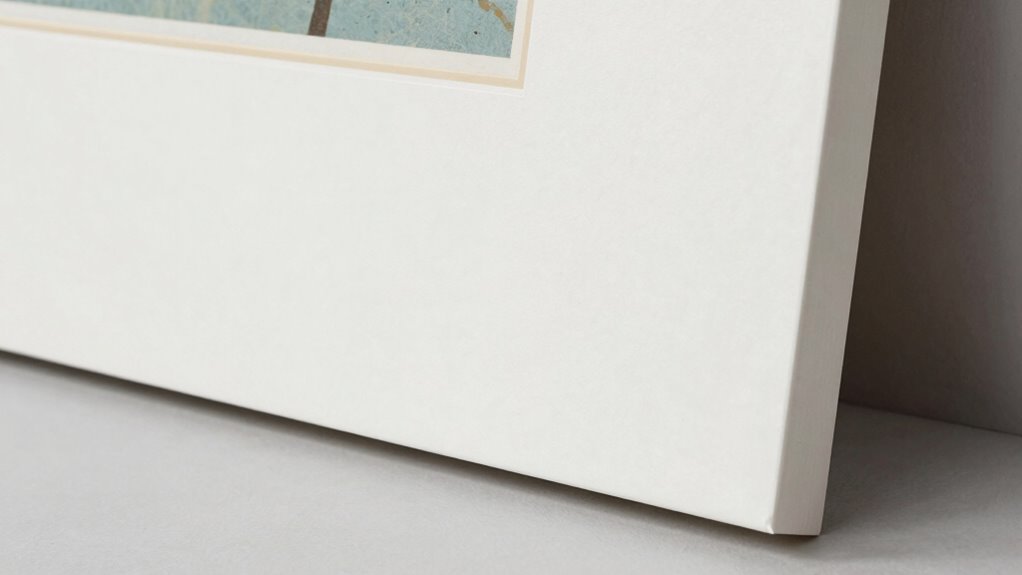
When selecting conservation-grade mounting boards, you need to pay close attention to their material composition to guarantee long-term preservation. Make certain the boards meet strict acid-free certification standards, as this prevents deterioration and damage over time. Additionally, the use of AI-driven technology can enhance security measures in museum environments, ensuring that valuable artworks are monitored and protected effectively. Choosing the right boards helps protect your artwork and maintains its integrity for years to come. Moreover, effective planning can also ensure that all aspects of your framing choices align with your overall conservation goals. Additionally, consider using eco-friendly materials to enhance the sustainability of your framing choices. For optimal results, look for boards that are archival quality to ensure your artwork remains in pristine condition. Using proper cleaning methods for your artworks can also contribute to their longevity and overall preservation.
Material Composition Standards
Choosing the right mounting board is vital for guaranteeing your artwork’s longevity and preservation. Material composition standards guarantee the board’s material durability and adhesive safety, which are essential for museum-quality framing. When selecting, consider these key factors:
- Material Durability: Opt for boards made from stable, inert materials that resist warping, discoloration, and deterioration over time. Incorporating high-quality materials can significantly enhance the overall lifespan of your framing. Additionally, ensuring the board is made from balanced diet components can contribute to its structural integrity. Regularly assessing the board’s condition can help maintain auditory feedback therapy standards. The use of testing accuracy in assessing materials can further ensure their long-term performance.
- Adhesive Safety: Ensure adhesives used are acid-free and non-reactive to prevent chemical damage to your artwork.
- Core Composition: Choose boards with a solid, acid-free core that provides uniform support and prevents bowing or bending. Additionally, consider the importance of emotional well-being in preserving the integrity of your artwork over time.
Acid-Free Certification Importance
Ensuring your mounting boards are acid-free is essential for preserving artwork over time, as acidic materials can cause deterioration, discoloration, and weakening of the piece. Historically, conservation standards have emphasized the importance of certification to guarantee material quality, especially for valuable or fragile works. Acid-free certification confirms that the boards meet these rigorous standards, critical for maintaining the integrity of diverse artistic styles—from delicate watercolors to bold mixed media. Additionally, using high-performance components can enhance the overall quality of your framing setup. Without certification, subtle acids may gradually damage your artwork, undermining its longevity and aesthetic appeal. Choosing conservation-grade mounting boards with proper certification aligns with museum practices, ensuring your framing supports the artwork’s preservation for generations, regardless of the historical context or artistic style involved. Additionally, using essential oils for relaxation can create a calming environment for artists and curators, enhancing their focus and creativity during the framing process. To further ensure durability, consider proper care techniques to maintain both your artwork and its framing over time. It is also advisable to incorporate fireproof materials in framing setups to minimize risks associated with environmental factors.
professional conservation framing tools
As an affiliate, we earn on qualifying purchases.
As an affiliate, we earn on qualifying purchases.
Why Use UV-Filtering Glass to Protect Your Art?
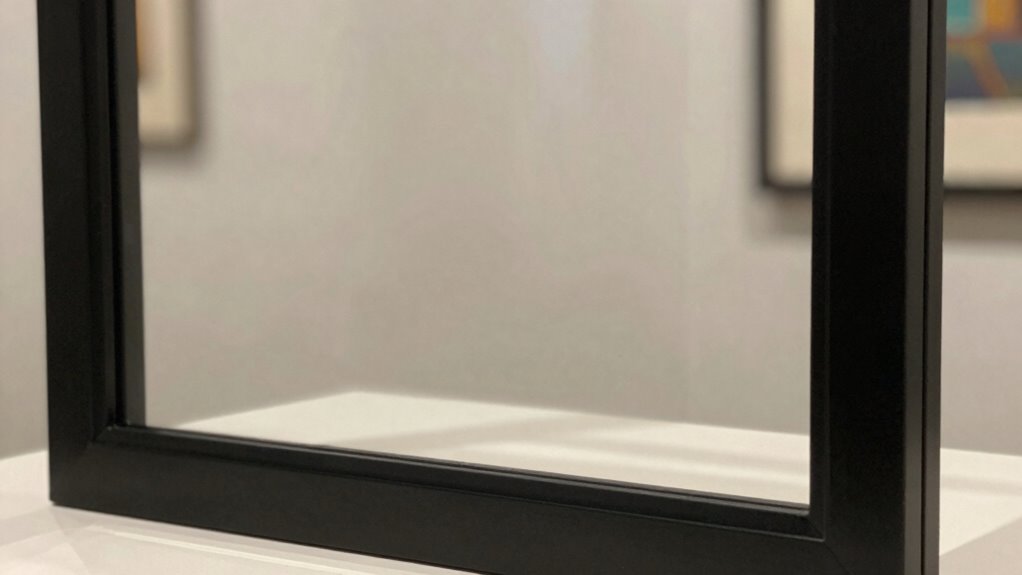
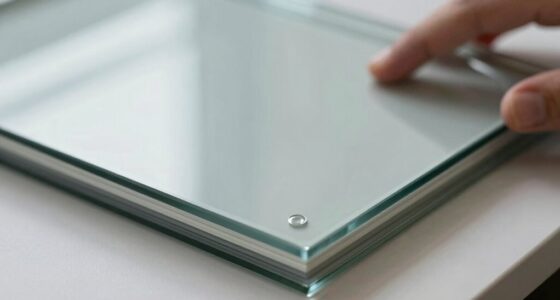
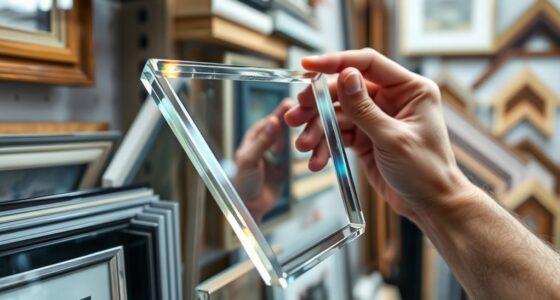
Ultraviolet (UV) light can cause significant damage to your artwork over time, leading to fading, discoloration, and deterioration of delicate materials. Using UV-filtering glass offers essential UV protection, shielding your piece from harmful rays. This specialized glass also maintains excellent glass clarity, ensuring your artwork remains vibrant and visible without distortion.
Consider these benefits:
- Reduces fading and discoloration caused by UV exposure.
- Preserves the original colors and details of your art.
- Maintains clarity for maximum viewing, without sacrificing transparency.
Additionally, using UV-filtering glass can enhance the longevity of your artwork, making it a crucial choice for preserving delicate materials.
How Climate Control Enhances Framing Longevity
Sure! Here’s the revised content with the requested modifications:
—
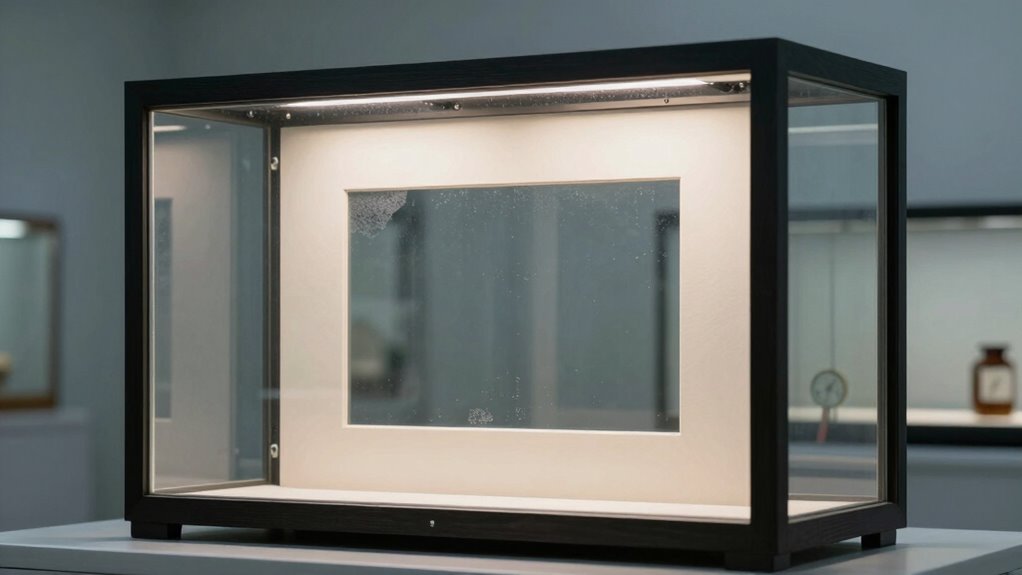
Proper climate control plays a crucial role in extending the life of your framed artwork. Maintaining consistent humidity levels prevents warping, cracking, and mold growth, which can damage your piece over time. Humidity regulation guarantees the environment isn’t too moist or too dry, preserving the materials and adhesives used in framing. Additionally, early detection through mammography guidelines can help identify potential issues before they escalate, similar to how climate control can prevent deterioration. Temperature stability is equally important; fluctuations can cause expansion and contraction of the frame and artwork, leading to stress and deterioration. Keeping your display area climate-controlled minimizes these risks, ensuring your artwork stays intact for years. Invest in a stable environment, and you’ll markedly improve your framing’s longevity. Remember, even high-quality materials can’t fully protect against climate-related damage without proper humidity regulation and temperature stability. Additionally, understanding caregiving decisions can provide valuable insights into how to prioritize your environment and personal well-being while managing responsibilities.
The Role of Matting and Spacers in Artwork Preservation
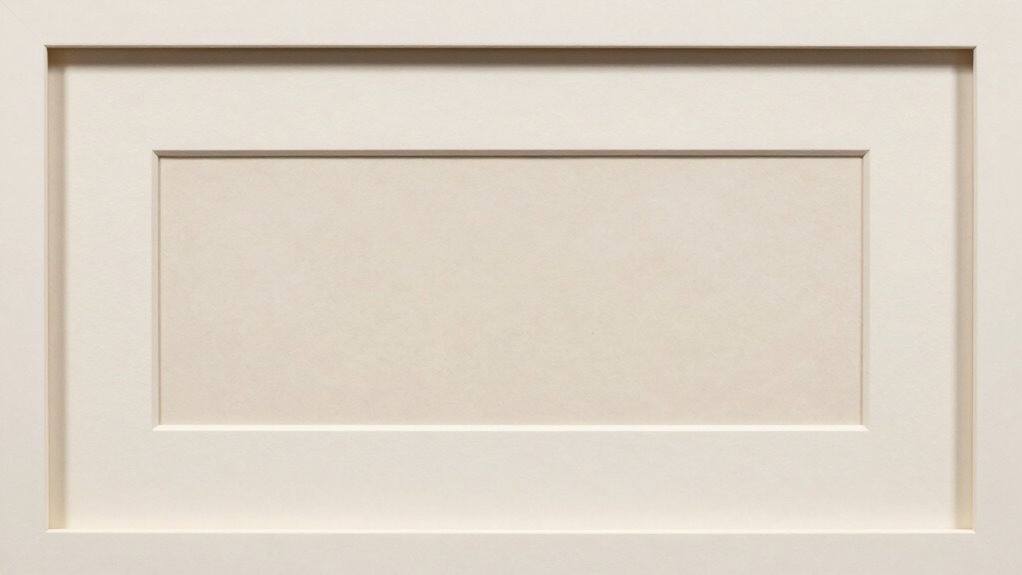
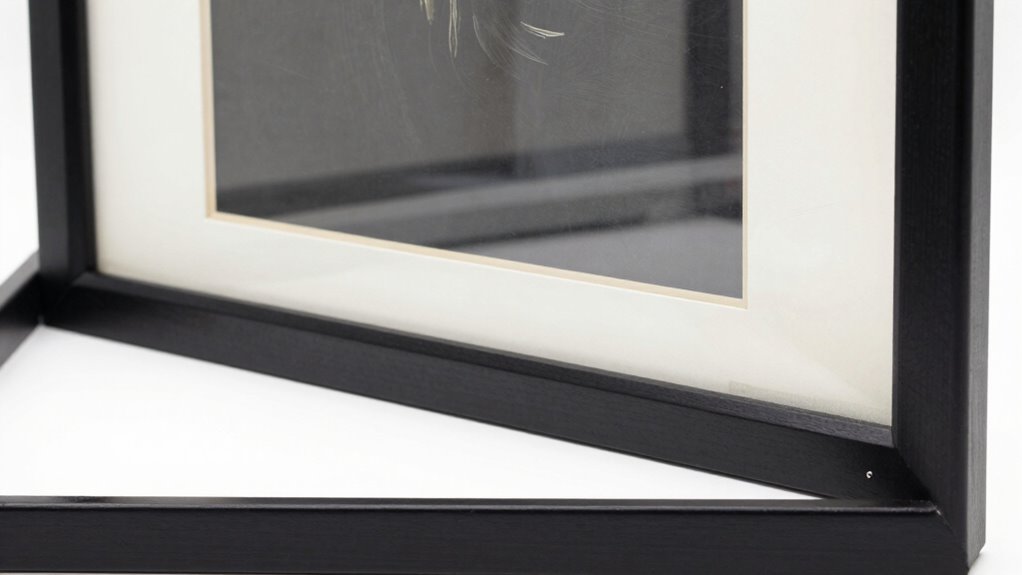
Matting and spacers are essential components in preserving your artwork, as they create a barrier between the piece and the glass or frame. Using proper matting techniques and spacer materials helps prevent damage from moisture, condensation, and sticking.
Matting and spacers protect artwork from moisture, condensation, and sticking, ensuring long-term preservation and safety.
- Choose acid-free matting to avoid acid migration, which can discolor your art over time.
- Select spacer materials like foam or acrylic that won’t off-gas or degrade, ensuring long-term protection.
- Properly sized spacers maintain a gap, preventing contact with the glass and allowing air circulation.
Why Skilled Framing Makes a Difference
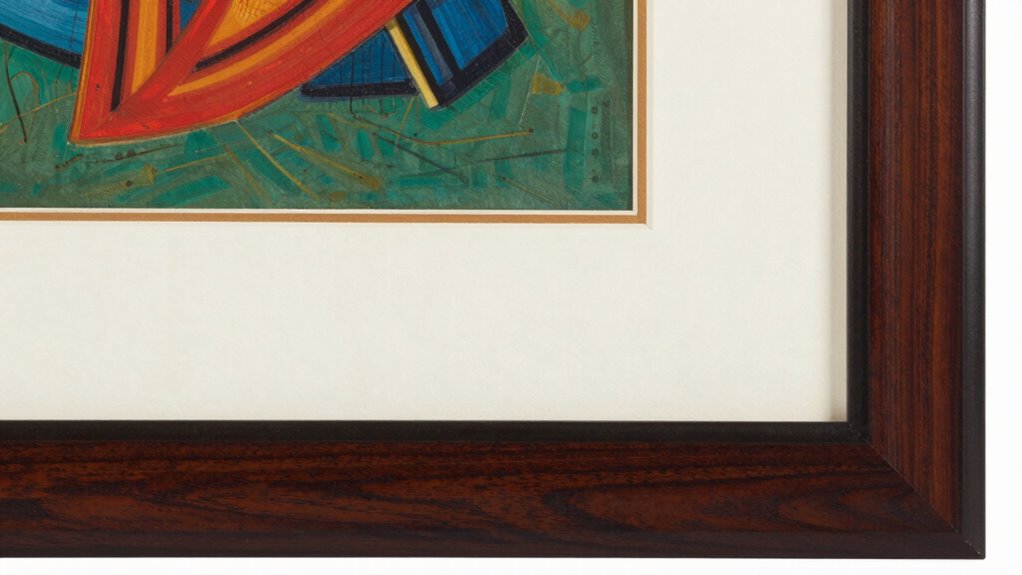
When you choose skilled framing, you benefit from proper material selection that protects your artwork over time. Expert assembly techniques guarantee everything stays secure and aligned, preventing damage. This attention to detail makes a significant difference in maintaining your piece’s beauty and value.
Proper Material Selection
Have you ever wondered why expert framers insist on using specific materials? It’s because proper material selection directly impacts framing aesthetics and durability. Using the right materials guarantees your artwork looks professional and lasts for generations. Here are three key reasons:
- Archival Quality: High-quality, acid-free, and lignin-free materials prevent deterioration over time.
- Structural Integrity: Choosing sturdy backing and glazing materials protects against warping and damage.
- Cost Considerations: While premium materials may cost more initially, they reduce long-term restoration and replacement expenses.
Skilled framers understand how these choices influence the final appearance and longevity of your piece. Investing in proper materials is essential for achieving museum-quality framing that’s both beautiful and enduring.
Expert Assembly Techniques
Expert assembly techniques are what truly set professional framing apart from DIY projects. When you work with a skilled framer, you guarantee that the framing aesthetics are flawless, with crisp, clean lines and precise alignment. These techniques prevent common issues like warping or uneven gaps that can detract from a piece’s presentation. Skilled framers also consider your budget considerations, choosing methods that maximize quality without unnecessary expense. They know how to handle delicate materials and apply mounting, matting, and glass with care, avoiding damage or misalignment. Proper assembly assures your artwork or memorabilia remains protected and visually appealing over time. Ultimately, expert assembly elevates the overall look and longevity of your frame, making it a worthwhile investment in achieving museum-quality results.
Common Framing Mistakes That Damage Artworks
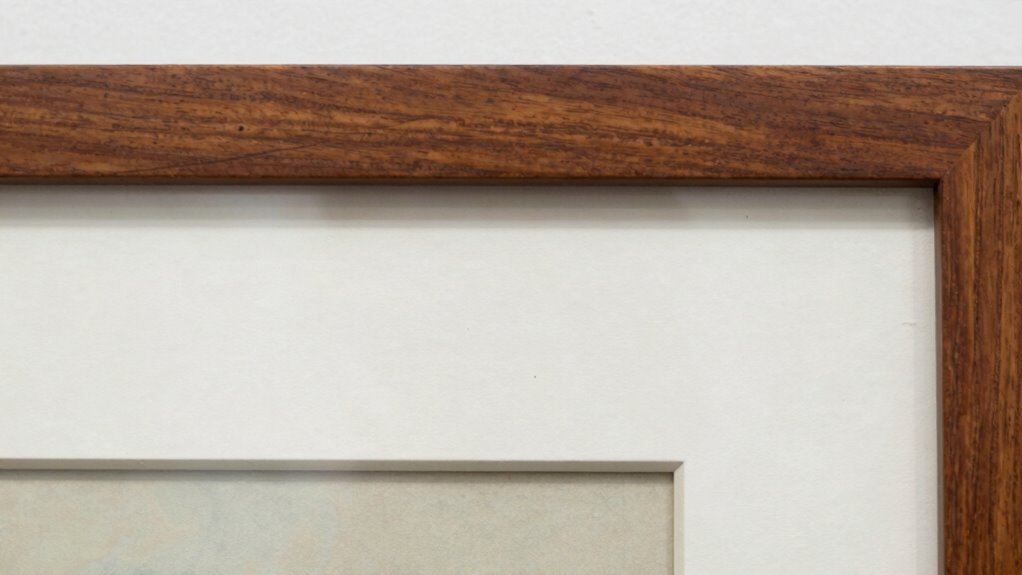
Many common framing mistakes can inadvertently damage artworks over time, often due to oversight or misconceptions about proper preservation. These errors can compromise both framing aesthetics and art display options.
- Using non-archival materials, like acidic mats or tapes, can cause long-term deterioration.
- Applying too much pressure or tight sealing may warp or damage delicate pieces.
- Neglecting proper ventilation can lead to mold growth or moisture buildup, harming the artwork.
Avoid these pitfalls by choosing acid-free, museum-quality materials and ensuring proper spacing. This safeguards your art’s integrity while enhancing its display. Remember, a well-executed frame not only improves framing aesthetics but also preserves your piece for years to come. Proper framing techniques are essential to maintaining the beauty and value of your artwork.
How to Find a Professional Framer for Your Priceless Pieces
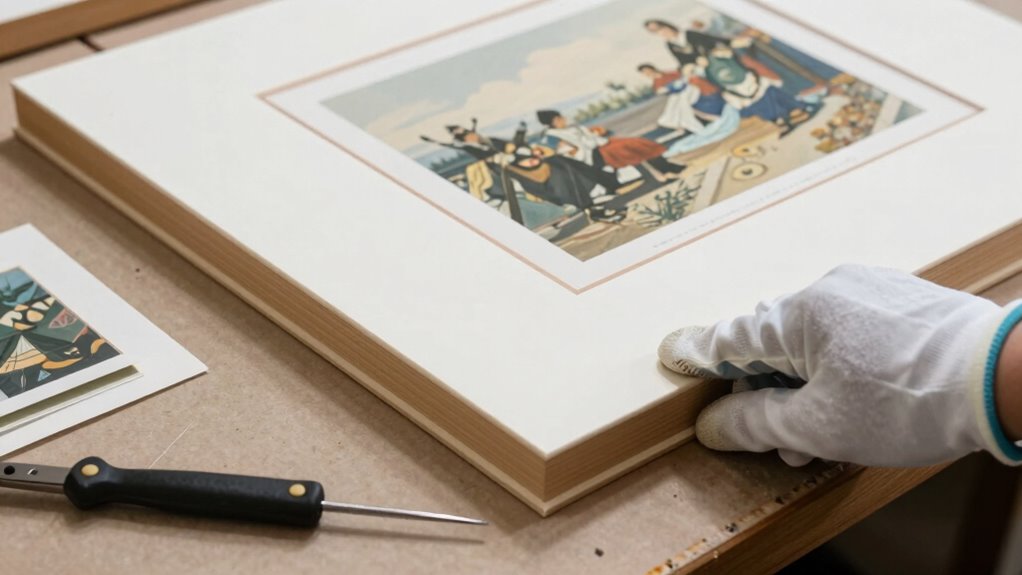
Choosing the right professional framer is key to ensuring your priceless pieces are properly protected and displayed. Start by researching framers with a strong reputation for framing aesthetics that match your artwork’s style. Ask for examples of their previous work, especially with museum-quality framing. It’s essential they understand conservation standards and use proper materials. Don’t forget to evaluate your budget considerations; quality framing can be an investment, but it shouldn’t break the bank. Get quotes from several professionals and compare their approaches. Talk openly about your priorities—whether it’s longevity, appearance, or both. A skilled framer will guide you toward the best options and help you find a balance between quality and affordability, ensuring your art remains pristine and beautifully showcased.
Frequently Asked Questions
What Are the Key Differences Between Standard and Museum-Quality Framing?
Museum-quality framing uses archival materials that prevent deterioration over time, unlike standard framing. You’ll notice better frame construction with sturdier, acid-free mats and UV-protective glass that shield your artwork from damage. This approach guarantees your piece stays vibrant and preserved. Standard framing often lacks these premium features, making museum-quality framing the ideal choice for long-term preservation and display of valuable or cherished items.
How Often Should I Have My Framed Artwork Inspected or Maintained?
You should schedule a framing inspection and maintenance every 1 to 2 years to keep your artwork in top condition. Regular inspections help identify issues like fading, moisture, or frame damage early. Follow a consistent maintenance schedule, and if you notice any signs of deterioration, don’t hesitate to seek professional help. Proper care ensures your museum-quality framing preserves your artwork’s beauty and value over time.
Can DIY Framing Methods Achieve Museum-Quality Results?
DIY framing methods can fall short of museum-quality results due to common pitfalls like using inappropriate framing materials or improper sealing, which can damage your artwork over time. While you can try it yourself, you risk compromising the preservation and appearance. To achieve true museum-quality, it’s best to invest in professional framing, ensuring the use of archival, acid-free materials, and precise techniques that protect and enhance your artwork’s longevity.
What Environmental Factors Most Threaten Framed Artwork Over Time?
You might think your artwork’s safe, but ironically, humidity fluctuations and light exposure are its biggest enemies. Sudden changes in humidity cause warping or cracking, while prolonged light exposure fades colors and damages delicate pigments. You can’t just frame it with acid-free materials and hope for the best. Proper humidity control and UV-protected glass are essential to preserve your piece’s vibrancy and integrity over time.
How Do I Identify a Truly Qualified Professional Framer?
To identify a truly qualified professional framer, look for someone with proper framing certifications and extensive professional experience. They should understand conservation standards, use high-quality materials, and offer custom solutions tailored to your artwork. Ask for references or examples of their previous work, and make certain they stay informed about latest preservation techniques. A skilled framer takes pride in their craftsmanship, ensuring your artwork’s longevity and aesthetic appeal.
Conclusion
Remember, preserving your artwork isn’t just about using acid-free materials—it’s about a thorough approach. Did you know that improper framing can reduce an artwork’s lifespan by up to 50%? By choosing conservation-grade materials, UV-filtering glass, and working with skilled professionals, you guarantee your pieces stay vibrant for generations. So, invest in proper framing techniques and climate control; your priceless art deserves nothing less for lasting beauty.
Fall Picks
fall essentials
As an affiliate, we earn on qualifying purchases.