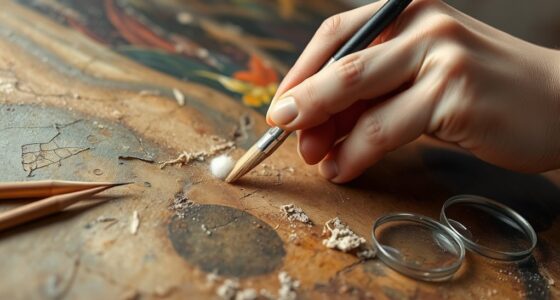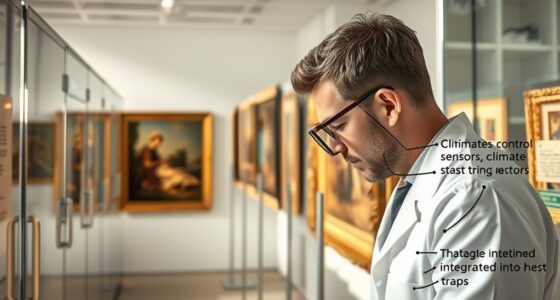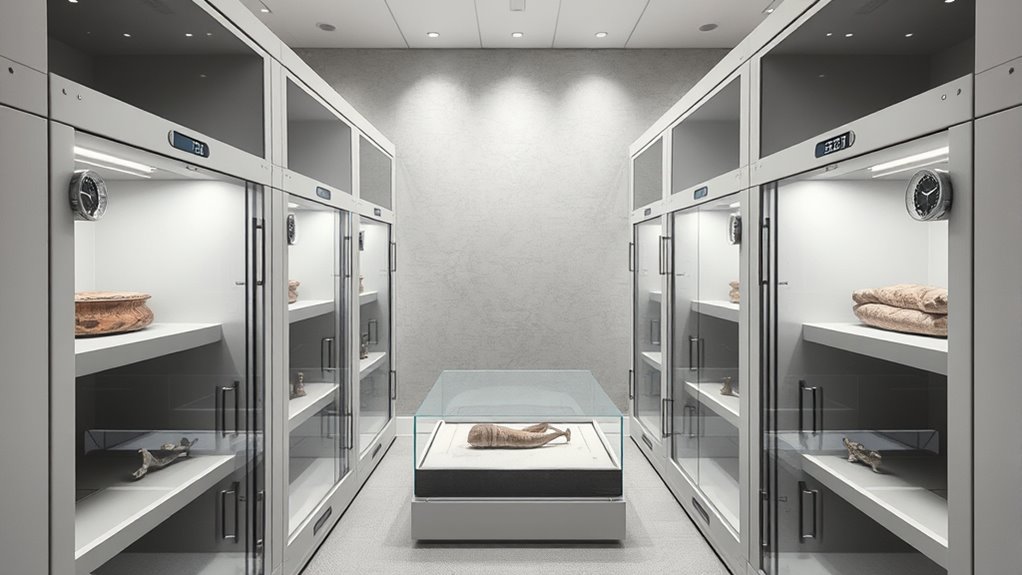

To effectively manage temperature and humidity for preventive conservation, you should keep conditions stable and within ideal ranges—around 18-22°C and 45-55% humidity. Avoid fluctuations that cause materials to expand, contract, or mold. Use HVAC systems, sensors, and proper placement to maintain consistent environments. Regular monitoring and adjustments prevent irreversible damage. Continuing to explore these strategies will help you protect your collections for the long term.

Get art and craft supplies delivered free — and shop member deals
- Fast, free delivery on millions of items
- Access to Prime Big Deal Days deals on October 6–7
- Prime Video, Amazon Music and more included
Key Takeaways
- Maintain stable temperature between 18°C and 22°C to prevent material stress and deterioration.
- Keep relative humidity around 45-55% to inhibit mold growth, corrosion, and organic material damage.
- Use climate control systems like HVAC, humidifiers, and dehumidifiers for consistent conditions.
- Regularly monitor environmental parameters with sensors and data loggers for early detection of fluctuations.
- Avoid placing artifacts near windows, radiators, or vents to minimize environmental fluctuations and stress.

Preventive conservation is the vital practice of protecting and maintaining cultural artifacts before damage occurs. One of the most effective ways to do this is by managing temperature and humidity levels, which directly influence the long-term stability of your collection. Climate control isn’t just about comfort; it’s about creating an environment where artifacts can survive and thrive without deterioration. Fluctuations in temperature and humidity can cause materials to expand, contract, crack, or warp, threatening their integrity over time. You need to maintain a stable climate to prevent these issues and preserve your collection’s authenticity.
Maintaining stable climate conditions is essential for protecting and preserving cultural artifacts.
Material stability is at the core of preventive conservation. When environmental conditions are carefully regulated, materials retain their original properties longer. Too much humidity can promote mold growth, corrosion, and swelling in organic materials like paper, wood, or textiles. Conversely, overly dry conditions can make materials brittle and prone to cracking. Temperature swings accelerate these processes, leading to irreversible damage. That’s why you should aim for consistent temperature levels—generally between 18°C and 22°C (64°F and 72°F)—and relative humidity around 45-55%. This balance helps guarantee that materials stay stable and that no sudden shifts cause stress or deterioration.
Implementing climate control in your storage and display areas is vital. You can use HVAC systems, humidifiers, dehumidifiers, and air purifiers to maintain steady conditions. Regular monitoring with digital sensors and data loggers allows you to detect fluctuations early, so you can take corrective actions promptly. You should also avoid placing artifacts near windows, radiators, or vents where temperature and humidity levels can fluctuate unpredictably. Proper insulation and sealing help maintain a consistent environment, reducing the risk of environmental stress. Additionally, understanding the material sensitivity of your artifacts can guide you in customizing the climate control measures for different types of materials.
Remember that materials react differently to environmental changes, so tailoring your climate control approach to the specific needs of your collection is essential. For example, paper and textiles are more susceptible to humidity fluctuations, while metals may corrode if moisture is not controlled. By understanding these differences, you can implement targeted strategies that enhance material stability. The goal is to create an environment that minimizes stress on artifacts, prolonging their lifespan and maintaining their historical and aesthetic value.
digital temperature and humidity monitor
As an affiliate, we earn on qualifying purchases.
As an affiliate, we earn on qualifying purchases.
Frequently Asked Questions
How Do Fluctuations in Temperature Affect Artifact Deterioration?
Fluctuations in temperature cause artifacts to expand and contract, leading to thermal expansion that weakens materials over time. These changes can create cracks or delamination. Additionally, temperature swings promote microbial growth, which accelerates deterioration. You should maintain stable temperatures to prevent these effects, minimizing stress on artifacts and reducing the risk of microbial activity that can damage delicate surfaces and structures.
What Are the Best Tools for Monitoring Humidity Levels?
You should use reliable hygrometers for monitoring humidity levels, making sure to regularly check and calibrate them for accuracy. Digital hygrometers with built-in calibration features simplify this process. Additionally, humidity data logging devices are essential—they record continuous data, helping you identify fluctuations over time. This way, you can maintain stable conditions, prevent deterioration, and adjust your environment as needed for ideal artifact preservation.
How Can I Stabilize Temperature in Irregular Storage Environments?
Did you know that temperature fluctuations can damage artifacts in just hours? To stabilize temperature in irregular storage environments, you should implement climate control systems like portable heaters or coolers. Use storage solutions with insulating materials to minimize external temperature impacts. Regularly monitor temperature levels with reliable sensors, and consider adding thermal buffering like foam panels or blankets. These steps create a more consistent environment, protecting your collection effectively.
What Are Common Signs of Humidity Damage in Artifacts?
You’ll notice humidity damage in artifacts through mold growth, which appears as fuzzy or discolored patches. Warping, cracking, or warping of materials like wood or paper also indicate excess moisture. During artifact assessment, look for salt efflorescence or powdery residues, which signal humidity fluctuations. Effective humidity mitigation involves controlling the environment to prevent these signs, helping preserve your artifacts’ integrity and preventing long-term deterioration.
How Often Should Environmental Conditions Be Checked?
Think of your artifacts as delicate plants needing daily care. You should check environmental conditions, including climate control, at least monthly, to guarantee they’re thriving. Regular monitoring helps catch fluctuations early, preventing damage. Follow conservation protocols by keeping a detailed log of temperature and humidity. Frequent checks, ideally monthly, ensure your artifacts stay safe from harm, maintaining their integrity for years to come.
climate control system for art preservation
As an affiliate, we earn on qualifying purchases.
As an affiliate, we earn on qualifying purchases.
Conclusion
By controlling temperature and humidity, you become the guardian of your treasures, shielding them from the silent thief of deterioration. Remember, these climate conditions are the gentle hands that nurture and preserve history’s fragile whispers. When you maintain the right environment, you’re not just protecting objects—you’re safeguarding memories, stories, and cultures for generations to come. Your vigilance transforms your space into a sanctuary, where history breathes freely and endures like an unbreakable bond across time.
dehumidifier for artifact storage
As an affiliate, we earn on qualifying purchases.
As an affiliate, we earn on qualifying purchases.
As an affiliate, we earn on qualifying purchases.
Fall Picks
fall essentials
As an affiliate, we earn on qualifying purchases.