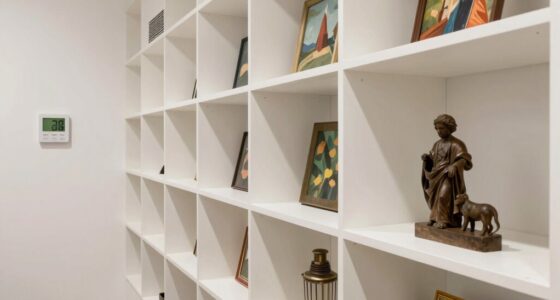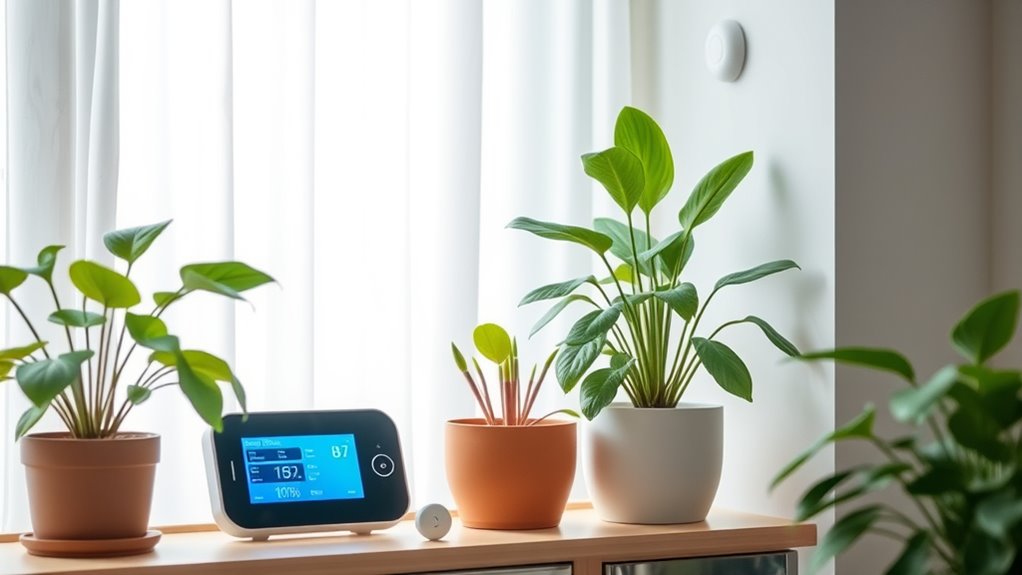

To safeguard your home collections, you should regularly monitor indoor air quality and humidity levels using reliable sensors and hygrometers. Keep air clean with HEPA filters and air purifiers, and maintain a stable temperature and humidity between 40-60%. Guarantee proper ventilation and eliminate sources of dust, mold, and pests. Using climate control systems helps keep conditions consistent, preventing damage. Continue exploring ways to optimize your environment to ensure your collections stay safe and preserved.

Get art and craft supplies delivered free — and shop member deals
- Fast, free delivery on millions of items
- Access to Prime Big Deal Days deals on October 6–7
- Prime Video, Amazon Music and more included
Key Takeaways
- Use hygrometers and thermometers to regularly monitor humidity and temperature levels in storage areas.
- Implement air quality sensors to detect airborne pollutants, VOCs, dust, and mold spores.
- Install automated climate control systems to maintain stable temperature and humidity for sensitive collections.
- Use HEPA filters and UV air purifiers to improve indoor air quality and prevent biological growth.
- Conduct routine inspections for signs of mold, pests, or environmental fluctuations to prevent long-term damage.

Monitoring the environment at home is essential for preserving your collections, whether they include artwork, antiques, or botanical specimens. One of the key factors you need to pay attention to is indoor air quality. Poor air quality can introduce pollutants, dust, and mold spores that tarnish or damage delicate items over time. Regularly checking the air for airborne particles, VOCs (volatile organic compounds), and other contaminants allows you to take swift action before any harm occurs. Ensuring good ventilation and using air purifiers can markedly improve indoor air quality, creating a safer environment for your treasures. Additionally, selecting an air purifier with HEPA filtration and UV light technology can further enhance air cleanliness and reduce biological growth risks. Humidity control plays an equally critical role in protecting your collection. Fluctuations in humidity levels can cause materials to expand, contract, or deteriorate. For instance, paper and textiles are particularly sensitive to moisture, which can lead to warping, mold growth, or pest infestations. Conversely, excessively dry air can make wood brittle or cause paint to crack. Maintaining a stable humidity level, ideally between 40-60%, helps preserve the structural integrity and appearance of your items. Using a hygrometer to monitor humidity levels gives you real-time data, so you can adjust your environment accordingly. Dehumidifiers and humidifiers are practical tools for fine-tuning indoor moisture levels, especially in areas prone to humidity swings. It’s common for people to overlook the importance of environmental monitoring until they notice visible signs of damage. By then, the damage might be irreversible. Instead, proactive measures are your best defense. Regularly inspecting indoor air quality and humidity levels allows you to spot potential problems early. For example, if you notice a musty smell or increased dust, it could indicate mold or poor ventilation. If humidity levels fluctuate wildly, consider installing a dedicated climate control system. These systems can automatically regulate temperature and humidity, providing a consistent environment that minimizes stress on your collection. In summary, integrating reliable environmental monitoring tools and practices helps safeguard your treasures from unseen threats. In addition to using the right technology, maintaining good habits is essential. Keep your collection away from direct sunlight, which can cause fading and deterioration. Ensure your storage spaces are clean and free of pests. Incorporate air filters into your HVAC system and replace them regularly. When you actively monitor and control indoor air quality and humidity, you create a protective barrier around your collection, extending its lifespan. Your efforts in environmental monitoring ensure that your treasured items stay in pristine condition for years to come, showcasing your dedication to preserving history, art, and nature.
indoor air quality monitor with VOC detection
As an affiliate, we earn on qualifying purchases.
As an affiliate, we earn on qualifying purchases.
Frequently Asked Questions
How Often Should I Calibrate My Home Environmental Monitoring Devices?
You should calibrate your home environmental monitoring devices at least once every six months, or more often if they drift or show inconsistent readings. Regular sensor maintenance guarantees accuracy, so check the calibration frequency recommended by the manufacturer. Keep an eye on device performance, and if you notice discrepancies, recalibrate sooner. Proper calibration maintains reliable data, helping you make informed decisions about your home environment.
What Are the Best Locations for Placing Sensors Indoors?
You should place your sensors in areas with good indoor airflow, avoiding corners and stagnant spots. Position them at breathing height, around 3 to 6 feet above the floor. Keep sensors away from direct sunlight, heating vents, and windows to guarantee accurate readings. Proper sensor placement helps you monitor air quality effectively, giving you reliable data to improve your home’s environment.
How Can I Interpret the Data From My Environmental Monitors?
You can interpret your environmental monitor data by checking if air quality levels are within healthy ranges and humidity stays balanced. If air quality worsens or humidity drops too low, it indicates potential issues like poor ventilation or excess moisture. Trust your monitor’s alerts and compare the readings over time. This helps you identify patterns, troubleshoot problems, and maintain a safe, comfortable indoor environment.
Are There Any Safety Concerns With Low or High Readings?
You should be concerned if your sensor readings are notably low or high compared to recommended data thresholds, as this may indicate potential safety issues. Keep in mind that sensor accuracy can vary, so double-check readings with calibrated devices. If readings exceed safe thresholds, take immediate action to ventilate or address the source. Regularly review your monitor’s calibration and data to guarantee reliable safety assessments.
What Should I Do if My Measurements Indicate a Problem?
If your measurements show a problem, don’t overlook it—take immediate action. Troubleshooting issues quickly can prevent further risks. If readings are dangerously high or low, prioritize emergency response steps like ventilating the area, contacting professionals, or evacuating if needed. Stay calm, follow your safety plan, and document the situation. Acting swiftly ensures your safety and helps resolve the issue effectively.
digital hygrometer and thermometer combo
As an affiliate, we earn on qualifying purchases.
As an affiliate, we earn on qualifying purchases.
Conclusion
Think of your home as a delicate garden—you must regularly check its soil and conditions to make certain it thrives. By monitoring your environment, you catch issues before they grow out of control, safeguarding your space and health. Just as a gardener tends to their plants, your vigilance keeps your home safe and healthy. Stay proactive, stay vigilant, and let your efforts be the nurturing sunlight that helps your home flourish.
As an affiliate, we earn on qualifying purchases.
automatic climate control system for home
As an affiliate, we earn on qualifying purchases.
As an affiliate, we earn on qualifying purchases.
Fall Picks
fall essentials
As an affiliate, we earn on qualifying purchases.