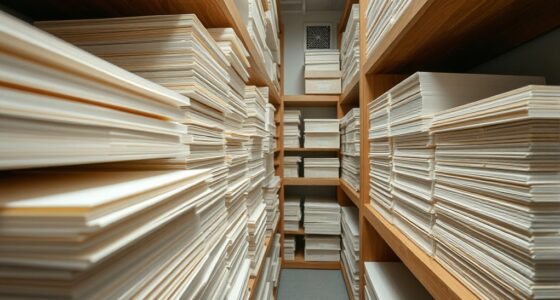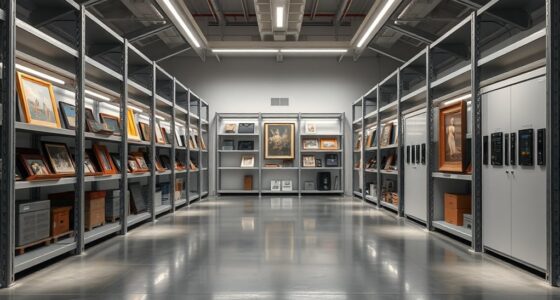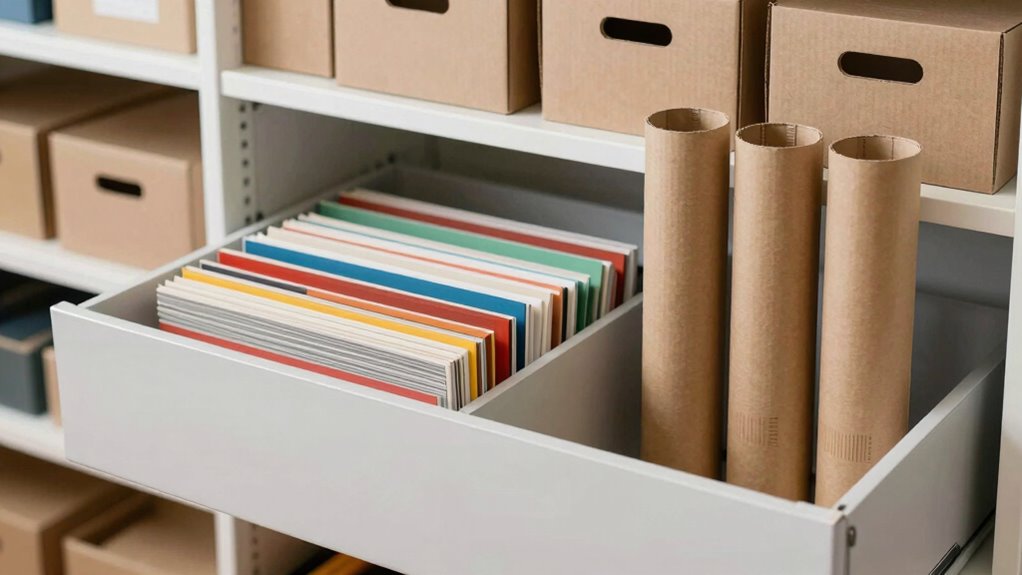

To properly store prints, use flat files for valuable, fragile, or detailed artworks, as they keep items flat and protected from light and damage. Tubes work well for large or delicate prints during transport and storage, but avoid rolling prints tightly to prevent damage. If you notice signs of deterioration or difficulty accessing your prints, it may be time to switch methods. Keep exploring for tips to preserve your prints effectively and safely.
Key Takeaways
- Flat files are ideal for fragile, detailed prints but are unsuitable for long-term storage of large, heavy, or frequently accessed items.
- Tubes protect large or delicate prints during transport but can cause creases if prints are rolled too tightly or stored improperly.
- Rolling prints in tubes is a bad idea for highly delicate, brittle, or heavily detailed artworks prone to damage from bending.
- Flat storage becomes problematic in limited space or when prints need frequent access, leading to disorganization and potential damage.
- Using tubes for small or valuable prints is inefficient and increases risk of surface abrasion if not stored or handled properly.

Dinifee 10 Pack Art Portfolio Folders Stores Flat Files Large Corrugated File Folder for Vertical Flat Storage for Artwork Blueprints Plans Drawings Construction Poster(18" X 24")
- Package Includes: 10 flat storage folders
- Large Capacity: Holds documents up to 18×24 inches
- Supports Vertical Storage: Rigid corrugated folders for upright storage
As an affiliate, we earn on qualifying purchases.
As an affiliate, we earn on qualifying purchases.
How Do Flat Files and Tubes Protect Prints?
**
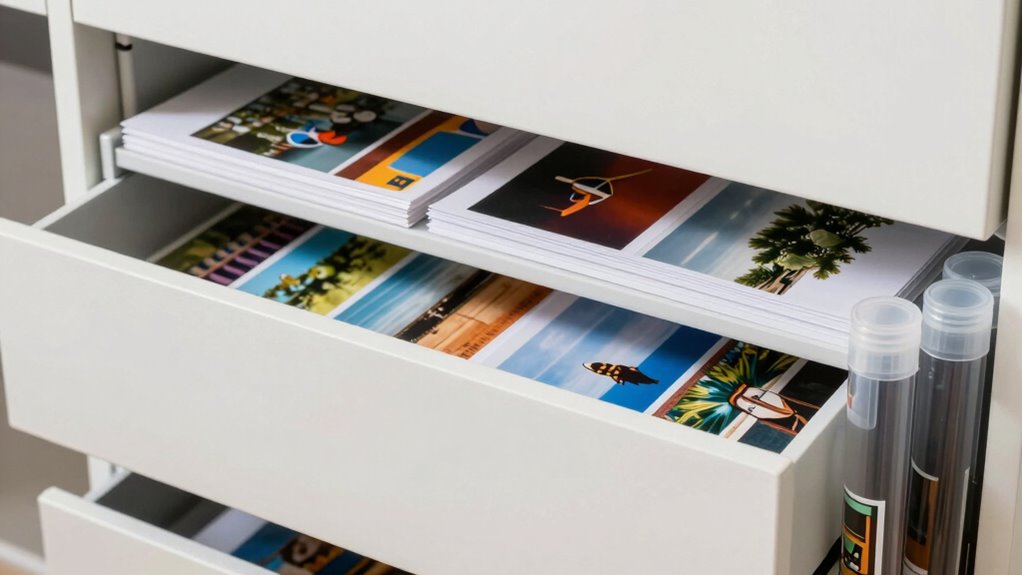
Have you ever wondered how flat files and tubes keep your prints safe from damage? They play a vital role in digital archiving and conservation techniques, ensuring your prints stay intact over time. Flat files provide a stable, acid-free environment, preventing bending, creases, and tears. They reduce exposure to light, dust, and fluctuating temperatures, all of which can harm prints. Tubes, on the other hand, protect prints during storage and transport by keeping them rolled smoothly without sharp folds. Both methods minimize physical stress, which is essential for preservation. By using these storage options correctly, you’re applying conservation techniques that extend the life of your prints and prepare them for digital archiving, allowing easy access and long-term safekeeping. Additionally, understanding gear care tips can significantly enhance the longevity of your stored prints. Furthermore, ensuring color accuracy in your prints can improve their visual quality over time. Moreover, implementing digital concepts in your archiving process can streamline the organization and retrieval of your prints. Using proper storage methods is part of ethical consumption practices, which can greatly impact the sustainability of your collection.

U.S. Art Supply Large Poster Tube Telescoping Adjustable, 4-7/8" Diameter
- Versatile and Expandable Art Tubes: This large telescoping poster tube,…
- Rugged and Protective Design: Made from durable, rigid plastic…
- Multi-Purpose Poster Storage: Ideal as an art tube,…
As an affiliate, we earn on qualifying purchases.
As an affiliate, we earn on qualifying purchases.
Which Prints Are Best Stored in Flat Files?
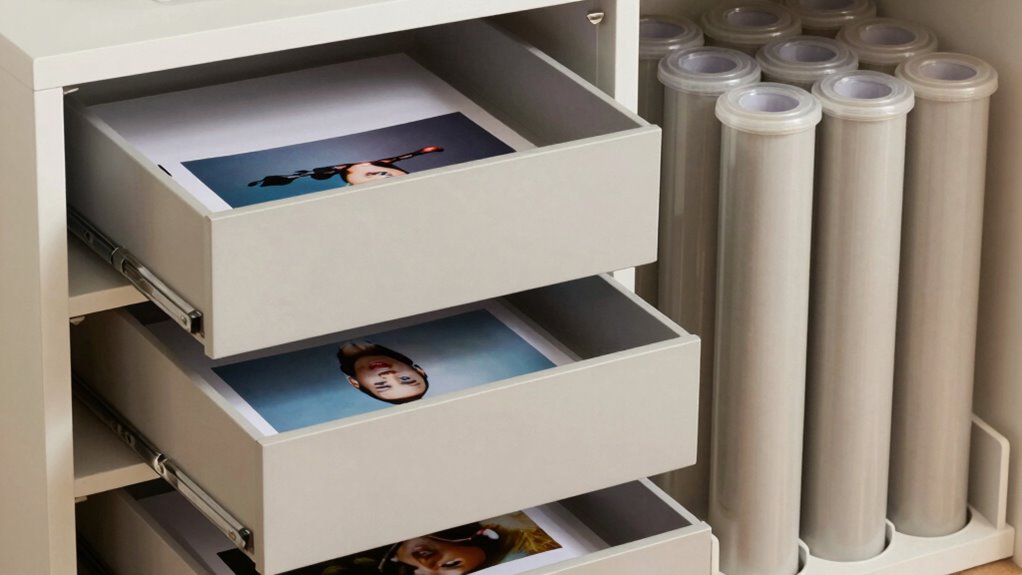
Flat files are ideal for storing prints that are large, delicate, or prone to damage from folding and bending. They provide a flat surface that helps maintain the print’s integrity, preventing creases and tears. For print preservation, flat files are especially suitable for artwork, maps, posters, and photographs that require careful handling. Using archival quality materials guarantees your prints are protected from environmental damage, such as light, dust, and pollutants. Additionally, keeping pets safe during storm events can help reduce anxiety that may lead to accidental damage of prints. Flat files also allow easy access and organization, making it simple to view and select prints without unnecessary handling. If your collection includes valuable or fragile pieces, storing them in flat files with archival quality supplies is the best way to maintain their condition over time. This method maximizes longevity and minimizes risks of deterioration. Furthermore, understanding dark psychology tactics can help you navigate relationships with individuals who may not respect your collection. Moreover, utilizing cultural festivals can provide opportunities for showcasing your prints in community events. Additionally, investing in high-quality storage solutions is essential for preserving the integrity of your prints in the long run. Incorporating balance in your storage methods can enhance both the safety and organization of your collection.

Lineco, Archival Storage Cartons, Acid-Free, 12x15x10 in, Tan, Pack of 5
- Brand: Lineco
- Intended Use: Archival storage for photos and documents
- Application: Moving and storage of various items
As an affiliate, we earn on qualifying purchases.
As an affiliate, we earn on qualifying purchases.
What Are the Benefits of Using Tubes for Certain Prints?
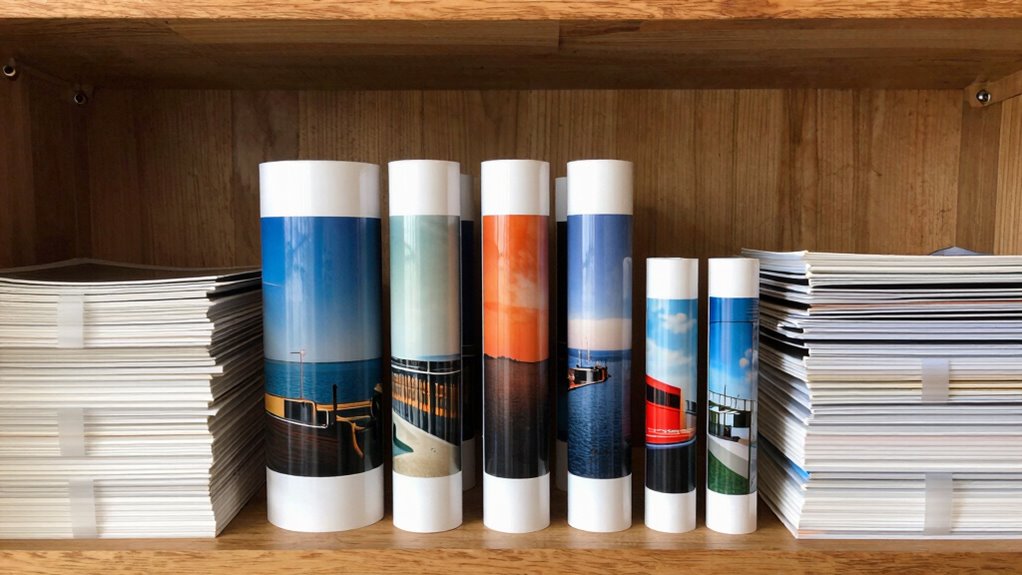
Why are tubes a popular choice for storing certain prints? They offer excellent protection for delicate or large-format works by preventing creases, folds, and physical damage. Using tubes aligns with best practices in print preservation and archival techniques, especially for prints that can’t be stored flat or are prone to warping. The cylindrical shape minimizes contact points, reducing the risk of surface abrasion. Additionally, tubes are portable and easy to label, making them ideal for storage, transport, or display purposes. They also help maintain the print’s shape and prevent environmental damage like dust or moisture. Overall, tubes are a practical, effective solution for safeguarding specific types of prints while supporting long-term archival care.

EOOUT 4pcs 24×36 Inches Art Portfolio Bags, Portfolio Folder for Artwork, Posters Storage Bag with Zipper and Handle Mesh Folder Organizers for Poster, Scrapbook, Keepsake and Bulletin Board
- Suitable for 22×34 Panels: Fits up to 2 packs of 22×34 panels
- Durable Mesh Construction: Stronger than standard plastic bags
- Comfortable Shoulder Straps: Wide straps reduce carrying strain
As an affiliate, we earn on qualifying purchases.
As an affiliate, we earn on qualifying purchases.
Signs You’re Using the Wrong Print Storage Method
If you find yourself struggling to access your prints easily or notice frequent misalignment or damage, it might be time to reconsider your storage method. Inefficient space use can also signal you’re not choosing the best option for your collection. Recognizing these signs helps guarantee your prints stay safe and organized. Additionally, eco-friendly practices in storage can further enhance the longevity of your collection.
Frequent Access Challenges
When your print storage system doesn’t keep up with your needs, it becomes obvious through frequent access challenges. If retrieving prints takes excessive time or effort, you’re likely using an inefficient method. This hampers print preservation and archival techniques, risking damage from constant handling or improper storage.
| Issue | Solution |
|---|---|
| Long retrieval times | Organize prints by frequency of access |
| Difficulty locating prints | Implement a cataloging system |
| Frequent handling risks | Use accessible, durable storage options |
| Disorganized storage | Standardize storage formats and labels |
If access becomes a hassle, it’s a sign you need a storage upgrade. Effective storage ensures quick retrieval and protects your prints over time, supporting both preservation and easy access.
Damage or Misalignment Risks
Are your prints showing signs of damage or misalignment? Poor print handling can lead to creases, tears, or smudges, especially if stored improperly. Using unsuitable storage methods, like unprotected flat files or tight tubes, increases the risk of bending or warping your prints. Misalignment often occurs when prints are stacked or stored vertically without proper support, making retrieval difficult and risking further damage. To prevent this, choose storage options that support flat handling for delicate prints or use protective sleeves if stored in tubes. Proper damage prevention involves gentle handling, avoiding over-tight storage, and ensuring prints are supported adequately. Additionally, using top car protection methods can help safeguard prints from environmental factors during transport. Regularly inspecting stored prints helps identify issues early, saving you from costly repairs or replacements later. Furthermore, consider proper cleaning methods to remove any potential contaminants before storage, as they can exacerbate damage over time. Implementing cookie management strategies can also ensure your storage practices remain effective and secure, allowing for a smoother user experience.
Inefficient Space Utilization
Using the wrong storage method can quickly lead to inefficient use of space, making it harder to organize and access your prints. Poor space optimization hampers your ability to maximize storage capacity, forcing you to allocate more room than necessary or risk clutter. If your storage system leaves prints crammed together or spread out unevenly, you’re likely not doing effective capacity planning. Flat files or tubes that don’t fit well can create gaps or overcrowding, reducing overall capacity. This inefficiency leads to wasted space and complicates retrieval. To improve, evaluate whether your current method allows for flexible, compact storage. Robot mowers show how technology can enhance efficiency, ensuring you’re making the most of available space, streamlining access, and maintaining an organized, efficient print storage setup. Proper capacity planning ensures you’re making the most of available space, streamlining access, and maintaining an organized, efficient print storage setup.
How to Store Prints Properly in Flat Files
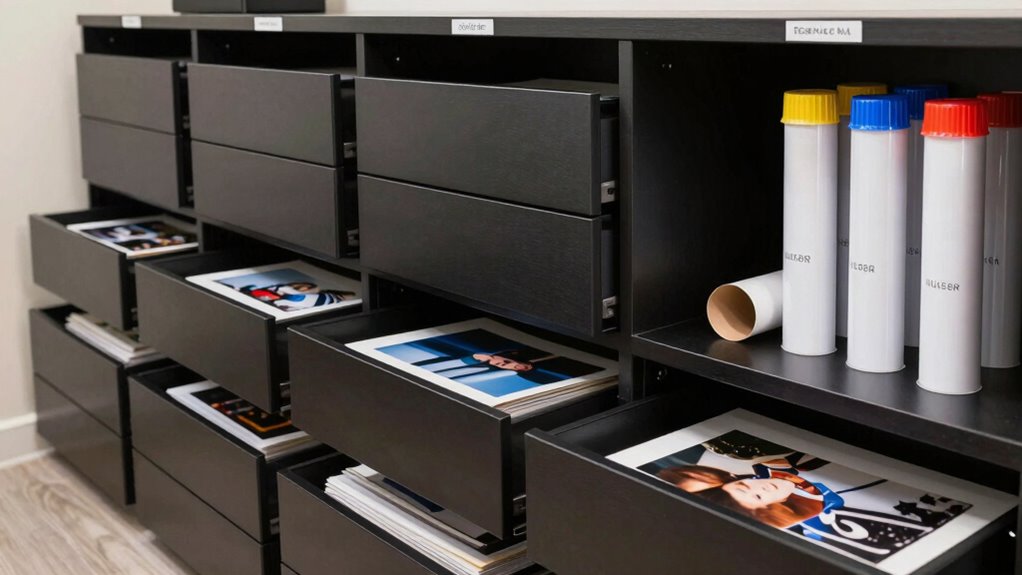
To store your prints properly in flat files, start by using acid-free materials to prevent deterioration over time. Always keep your prints flat rather than rolled, which can cause curling or damage. Additionally, store your files away from direct light to protect your prints from fading and discoloration. Consider implementing robust contingency plans to ensure that your storage methods remain effective even in unexpected circumstances.
Use Acid-Free Materials
When storing prints in flat files, choosing acid-free materials is essential to prevent deterioration over time. Acid-free materials help maintain the prints’ integrity by avoiding the acidic compounds that cause paper to yellow, become brittle, or degrade. Look for archival quality supplies specifically designed for preservation, such as acid-free folders, sleeves, and interleaving sheets. These materials provide a neutral environment that slows chemical reactions and preserves your prints’ colors and details. Always handle prints with clean, dry hands or gloves to avoid transferring oils or dirt. Using acid-free, archival quality storage supplies is a simple but crucial step in ensuring your prints stay vibrant and intact for decades. Proper materials are the foundation of long-lasting print preservation.
Store Flat, Not Rolled
Have you ever considered the best way to store your prints to guarantee their longevity? Storing flat is ideal because it minimizes bending and creasing. Flat storage keeps prints in pristine condition, making future display framing easier and safer. Plus, it preserves details better than rolling. To protect your prints, keep digital backups—these ensure you always have a copy, even if originals get damaged. Use acid-free folders or sleeves inside flat files for extra protection. When stacking, avoid overloading to prevent pressure marks. Here’s a quick comparison:
| Flat Storage Benefits | Rolling Storage Risks |
|---|---|
| Preserves details | Causes creases |
| Easier to frame later | Difficult to unroll |
| Better long-term protection | Higher damage risk |
Storing flat ensures your prints stay beautiful and ready for display or safekeeping. Additionally, just like bike generators that convert pedaling into renewable energy, the right storage method can help ensure your prints remain in excellent condition for years to come.
Keep Away From Light
Storing your prints flat helps protect their surface details, but exposure to light can still cause damage over time. To prevent fading and discoloration, keep your prints in a dark, UV-protected environment. Use storage options with UV protection or keep them in opaque containers or drawers that block harmful rays. Light exposure accelerates deterioration, so controlling humidity is equally important; high humidity can cause warping or mold, while low humidity might make paper brittle. Maintain a stable environment with consistent humidity levels to preserve your prints. Avoid placing flat files in bright, direct sunlight or near windows. Properly shielding your prints from light and controlling humidity ensures they stay vibrant and intact for years to come.
Best Practices for Rolling and Storing Prints in Tubes

Rolling your prints carefully and storing them in tubes is essential to preserve their condition over time. Use acid-free, archival-quality tubes to prevent deterioration. When rolling prints, avoid tight coils that can cause creases or damage; instead, roll loosely to prevent stress on the paper. Proper climate control is vital—store tubes in a cool, dry environment away from fluctuations in temperature and humidity. This minimizes the risk of warping or mold growth. For long-term preservation, consider digital archiving as a backup, ensuring you can access your prints even if physical storage is compromised. Always label tubes clearly to avoid unnecessary handling, which can lead to damage. Following these best practices helps maintain the integrity of your prints for years to come.
When Should You Switch Your Print Storage Method?
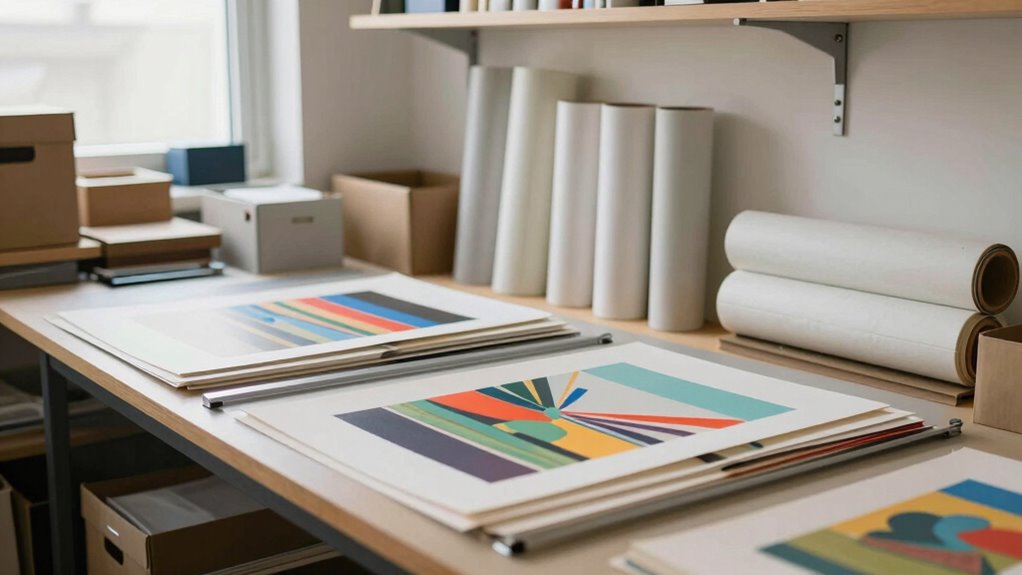
Knowing when to change your print storage method is vital for maintaining your collection’s condition over time. If you notice signs of deterioration—such as fading, warping, or mold—it’s time to reconsider your approach. Relying solely on traditional methods without climate control can accelerate damage, especially in humid or fluctuating environments. In such cases, you should switch to a more protective storage system, like flat files in climate-controlled conditions. Additionally, creating a digital backup of your prints helps preserve their image even if physical damage occurs. When your current storage no longer offers ideal protection or if environmental factors threaten your collection’s longevity, it’s essential to adapt your method to guarantee your prints stay safe and preserved for years to come.
Common Mistakes to Avoid When Storing Prints
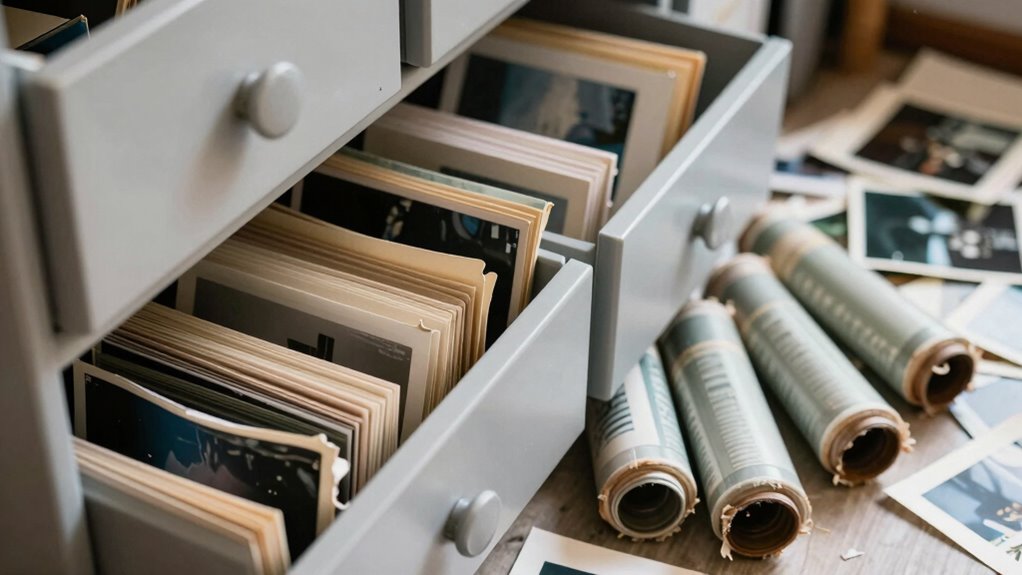
One of the biggest mistakes you can make when storing prints is failing to protect them from environmental hazards like humidity, light, and temperature fluctuations. These factors can cause fading, warping, or mold growth. To avoid this, prioritize climate control and consider digital archiving to reduce handling of originals.
Protect prints from humidity, light, and temperature changes by using climate control and digital backups.
Here are common mistakes to watch for:
- Storing prints in areas with poor climate control or high humidity.
- Exposing prints to direct sunlight or harsh artificial light.
- Using inappropriate storage materials that can acidify or damage prints.
- Relying solely on physical storage, neglecting digital archiving options for preservation and backup.
Frequently Asked Questions
How Long Can Prints Safely Be Stored in Flat Files or Tubes?
You can typically store prints in flat files or tubes for several decades if you use archival quality materials. Flat files are ideal for long-term storage, often maintaining print quality for 50+ years, while tubes are suitable for shorter durations, usually up to 20-30 years, depending on environmental conditions. Always choose archival quality storage options to maximize the storage duration and protect your prints from deterioration.
Are There Specific Materials That Are Better for Print Storage?
Choosing the right materials for print storage is like selecting a reliable partner—durability matters. Archival-quality papers and acid-free folders offer superior material durability, ensuring your prints remain pristine over time. These materials also enhance storage accessibility, making it easier to handle and retrieve your prints without damage. Avoid cheaper or acidic options that might seem convenient but could compromise your prints’ longevity, turning your collection into a fragile memory.
Can Digital Backups Replace Physical Print Storage?
Digital backups can complement physical print storage, but they shouldn’t completely replace it. Digital archiving offers convenience and quick access, yet it’s vulnerable to technological failures and obsolescence. Physical prints, on the other hand, are less affected by digital threats but face risks like physical degradation over time. Combining both strategies ensures your materials stay preserved and accessible, reducing the risk of losing important prints entirely.
What Environmental Conditions Are Ideal for Print Preservation?
You want your prints to breathe easy in an environment where chemical degradation slows to a crawl and light exposure stays at bay. Keep temperatures steady, like a calm lake, and humidity just right—never too damp or dry. Shield your prints from UV rays as if they’re precious treasures, because consistent, cool, dark conditions will keep your memories vibrant, resisting the silent march of time.
How Often Should Stored Prints Be Inspected or Maintained?
You should inspect your stored prints at least twice a year to guarantee proper print handling and storage organization. Regular check-ups help identify any signs of deterioration, such as fading or damage. During these inspections, carefully handle prints to avoid unnecessary wear. Maintaining a consistent schedule keeps your prints in good condition, allowing you to address issues early and preserve their quality over time.
Conclusion
Choosing between flat files and tubes is like picking the right sailing vessel for your journey—each has its purpose, but using the wrong one can leave your prints battered and lost at sea. By understanding their strengths and when to switch, you’ll keep your precious prints safe and sound, like treasures in a well-guarded harbor. So, steer wisely, avoid common pitfalls, and let your collection sail smoothly into the future.