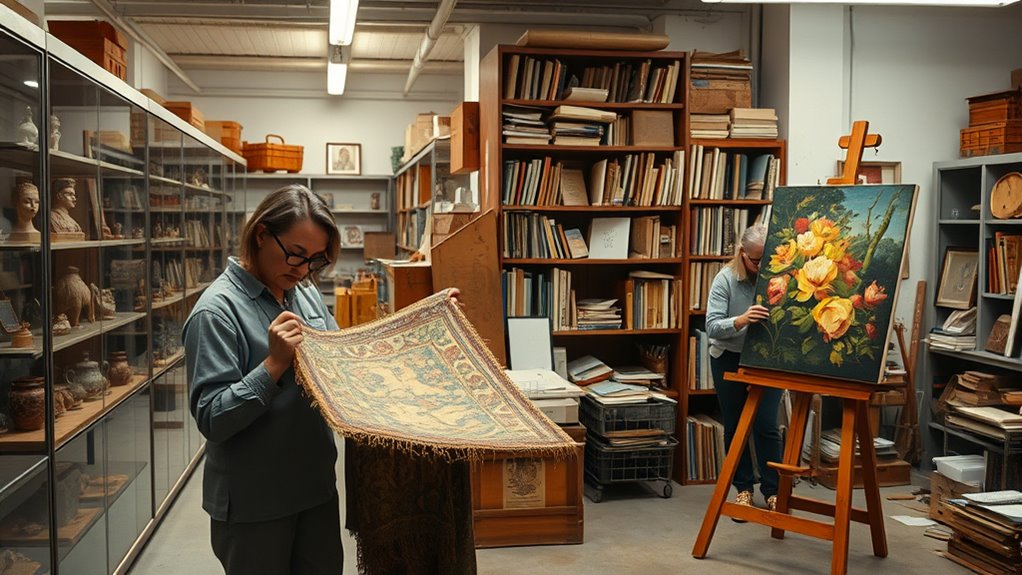

As someone interested in conservation, you’ll find that conservators in museums follow strict protocols and use advanced techniques to preserve artworks ethically and systematically. They focus on minimal, reversible interventions to safeguard authenticity, often relying on scientific analysis. In private collections, conservators may work more flexibly, balancing preservation with the owner’s preferences, but still respect the artwork’s integrity. To understand the key differences and how each approach impacts conservation, keep exploring further.

Get art and craft supplies delivered free — and shop member deals
- Fast, free delivery on millions of items
- Access to Prime Big Deal Days deals on October 6–7
- Prime Video, Amazon Music and more included
Key Takeaways
- Museums follow strict protocols involving scientific analysis before treatment, while private collections often allow more flexible, owner-driven decisions.
- Conservators in museums prioritize minimal, reversible interventions aligned with ethical standards; private collections may accept more invasive repairs.
- Museum conservators document every step and ensure treatments uphold authenticity; private collections may have less rigorous documentation.
- Conservation techniques in museums emphasize preservation of original materials and cultural significance; private collections focus on aesthetic or monetary preferences.
- Museum conservators serve as guardians of cultural heritage, maintaining ongoing expertise; private conservators adapt practices to individual owners’ needs.
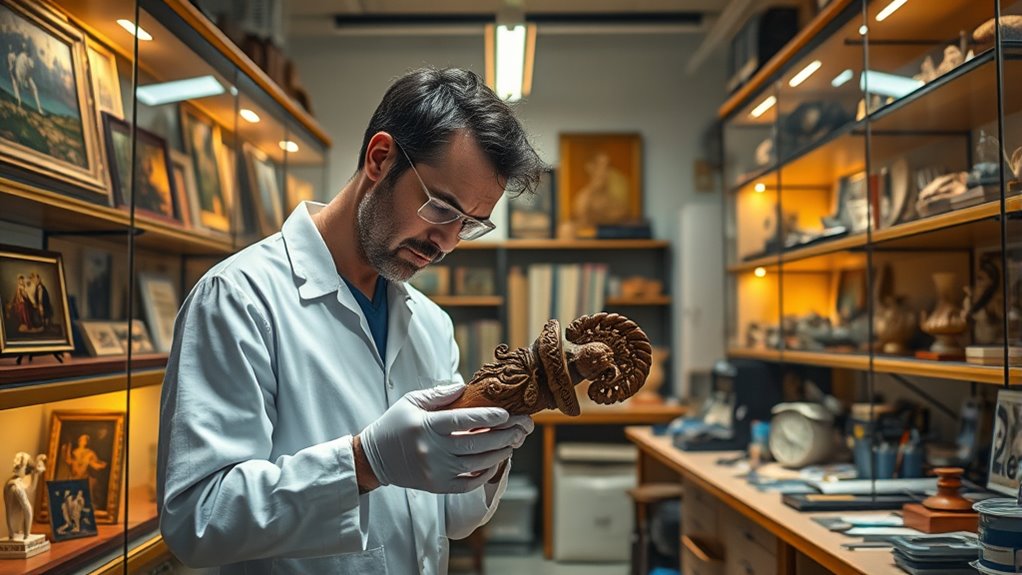
Conservators play an essential role in preserving artworks and artifacts, whether they are housed in museums or private collections. Your work involves more than just fixing damaged pieces; it’s about safeguarding history and cultural significance for future generations. When you approach a restoration, you carefully select the appropriate restoration techniques to guarantee the piece’s integrity remains intact. These techniques might include cleaning, consolidating fragile materials, or repairing structural damage, all while respecting the original craftsmanship. The challenge lies in balancing intervention with preservation, which is guided by strict conservation ethics. You understand that every decision you make can impact the artwork’s authenticity and value, so you prioritize minimal intervention and transparency. In museums, your role is often more structured. You follow established conservation protocols that emphasize documentation and scientific analysis before any treatment. This meticulous approach ensures that every step is recorded, allowing future conservators to understand what has been done and why. You might work on centuries-old paintings, sculptures, or textiles, applying advanced techniques that adhere to the highest standards of conservation ethics. These ethics emphasize that your primary goal is to preserve the original material as much as possible, avoiding unnecessary or invasive procedures that could compromise the piece’s authenticity. Additionally, understanding the importance of material analysis helps ensure that the methods used are appropriate for each specific artifact or artwork. When working with private collections, your approach may need to be more flexible but equally careful. Owners typically have emotional or monetary investments in their artworks, which means you often negotiate the scope of conservation work more directly. You might perform restorations that are less invasive but still respectful of the artist’s original intent. Here, your expertise in restoration techniques is essential, especially when the owner desires a specific aesthetic or has limited access to scientific tools. Regardless of the setting, your responsibility remains consistent: to uphold conservation ethics by ensuring your interventions are reversible where possible and well-documented. Ultimately, whether in a museum or private collection, your goal is to extend the lifespan of artworks while maintaining their authenticity. You must stay current with evolving conservation techniques and ethical standards, knowing that each project requires a tailored approach. Your work preserves not just the physical object but also the stories and history embedded within it. This dedication to meticulous, ethical conservation makes you an indispensable guardian of cultural heritage, guaranteeing these treasures continue to inspire and educate for generations to come.
art conservation and restoration tools
As an affiliate, we earn on qualifying purchases.
As an affiliate, we earn on qualifying purchases.
Frequently Asked Questions
How Do Conservators Prioritize Projects in Busy Museum Environments?
You prioritize projects by evaluating artifact documentation and appraising each item’s condition and significance. You consider ethical dilemmas, such as preservation priorities versus restoration risks. Urgent issues like deterioration or damage take precedence, especially when they threaten artifacts’ integrity. You also balance ongoing projects with new requests, ensuring that conservation efforts align with museum goals and available resources, ultimately safeguarding collections effectively and ethically.
What Specialized Training Is Required for Private Collection Conservators?
You need specialized certifications and hands-on training to become a private collection conservator. These professionals often pursue advanced education in conservation science, chemistry, or art history, followed by practical experience working with diverse materials. This specialized training guarantees you can accurately assess, treat, and preserve unique items, tailoring your approach to each piece’s specific needs. Continuous learning and certification updates keep your skills sharp and current.
How Do Conservation Techniques Differ Between Museum Artifacts and Private Items?
You use conservation techniques that differ mainly in scope and approach. For museum artifacts, you prioritize thorough material analysis to guarantee accurate preservation, often following strict ethical considerations for public display. In private collections, you might adapt methods to suit limited access or personal preferences, still focusing on material analysis but balancing preservation with individual owner needs. Ethical considerations guide your decisions in both contexts to maintain authenticity and integrity.
What Legal Considerations Affect Conservators Working in Private Collections?
About 60% of private collectors face legal issues related to conservation, making legal liability a major concern. As a conservator, you must navigate insurance requirements to protect yourself and the collection. You’re responsible for ensuring compliance with local laws, securing proper documentation, and avoiding damage that could lead to legal disputes. Staying informed about legal standards helps you prevent liability issues and safeguard valuable private collections effectively.
How Do Conservators Handle Provenance Verification During Restoration?
You verify provenance during restoration through thorough provenance research, examining historical records, ownership documentation, and previous restorations. You prioritize ethical handling by maintaining transparency and respecting the item’s history. This process helps confirm authenticity and provenance, ensuring you make informed conservation decisions. By combining detailed research with ethical practices, you protect the artwork’s integrity and uphold professional standards throughout the restoration process.
museum-quality conservation supplies
As an affiliate, we earn on qualifying purchases.
As an affiliate, we earn on qualifying purchases.
Conclusion
You now understand how conservators in museums and private collections play essential roles in preserving art. Did you know that only 30% of private collectors have access to professional conservation services? This highlights a significant gap in preservation efforts outside museums. Whether you’re managing a collection or just interested in art care, recognizing the importance of expert conservators helps ensure these treasures endure for future generations. Preservation truly depends on knowledgeable hands working behind the scenes.
artwork cleaning and preservation kits
As an affiliate, we earn on qualifying purchases.
As an affiliate, we earn on qualifying purchases.
conservation documentation supplies
As an affiliate, we earn on qualifying purchases.
As an affiliate, we earn on qualifying purchases.
Fall Picks
fall essentials
As an affiliate, we earn on qualifying purchases.