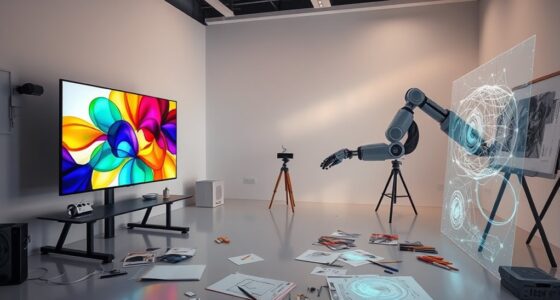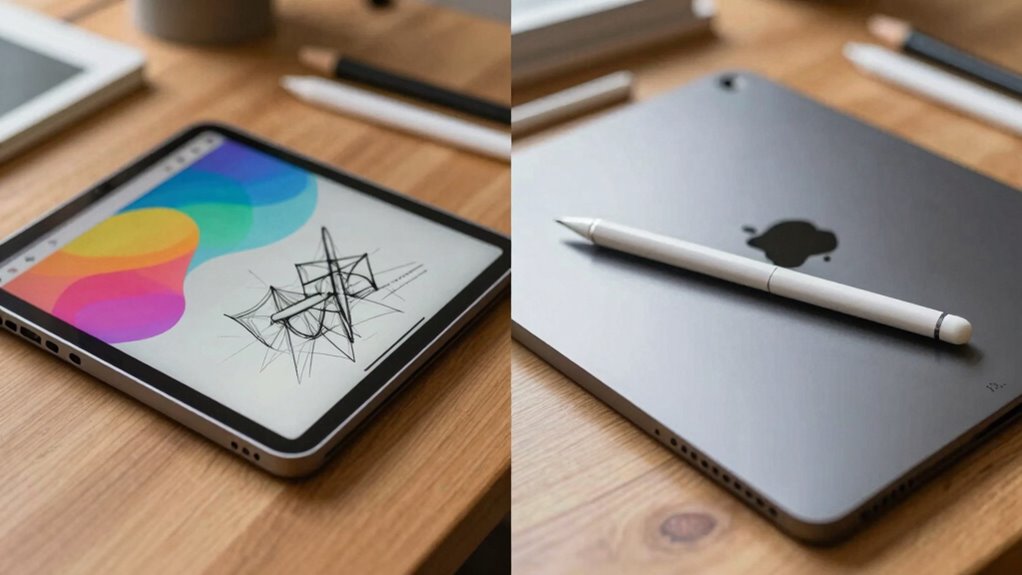
Choosing between a pen display and a tablet depends on your drawing style and needs. Pen displays offer a seamless, natural feel with high precision, mimicking traditional media and providing an immersive experience—great for detailed work. Tablets are portable, budget-friendly, and ideal for on-the-go sketching, but might lack the same level of control and comfort. To discover which device suits your art journey best, explore more insights ahead.
Open a free Amazon Business account
Business pricing, bulk buying and tax-exempt orders.
As an affiliate, we earn on qualifying purchases.
Key Takeaways
- Pen displays offer a seamless drawing experience with high color accuracy and ergonomic surfaces, ideal for detailed, professional artwork.
- Tablets are portable, have longer battery life, and are suitable for casual or on-the-go drawing, but may lack the precision of pen displays.
- Pen displays provide better responsiveness, lower latency, and natural stylus feel, enhancing control for detailed and nuanced work.
- Tablets are generally more affordable and accessible for beginners, making them a practical choice for entry-level artists.
- The decision depends on workflow needs, budget, and preference for immersion and precision versus portability and affordability.
As an affiliate, we earn on qualifying purchases.
What Are Pen Displays and Tablets? An Overview
What Are Pen Displays and Tablets? An Overview
Pen displays and tablets are popular tools for digital artists and designers, but they serve different purposes. Pen displays are integrated screens that show your work directly, offering excellent color accuracy to guarantee your colors look just right. Because they have built-in screens, they often require a power source, which impacts their battery life—some last all day, while others need frequent charging. Additionally, symbols and shapes can enhance the storytelling in your artwork, making pen displays particularly effective for conveying detailed narratives. Understanding how digital concepts function can further elevate your creative process. Moreover, the positive mindset associated with spiritual awakening can lead to greater creativity and inspiration in your artwork. Tablets, on the other hand, are usually separate devices paired with a stylus. They tend to have longer battery life since they’re designed for portability and extended use. While they might not match pen displays in color accuracy, many high-end tablets still deliver vibrant, precise visuals. Incorporating eco-friendly practices in your workspace can also enhance your overall creative experience. Understanding these differences helps you choose the right tool based on your focus on color fidelity and how long you need to work without recharging. Additionally, color accuracy is crucial for achieving the best results in digital art.
best digital drawing tablet for professionals
As an affiliate, we earn on qualifying purchases.
As an affiliate, we earn on qualifying purchases.
How Do Pen Displays and Tablets Feel When You Draw?

When you start drawing on a pen display or tablet, the feel of the pen on the surface makes a big difference. You’ll notice differences in how comfortable it is to work for extended periods and how responsive the screen responds to your strokes. These factors can substantially impact your overall drawing experience. Additionally, understanding the importance of paint viscosity can enhance the precision of your strokes, much like how it affects airless paint spraying. Incorporating regular foam rolling into your routine can improve your muscle recovery, allowing for longer and more focused drawing sessions. Engaging in mental challenges can also help you stay sharp and creative during those sessions. Moreover, the evolution of portable restroom solutions can inspire innovative design thinking that translates into your artistic projects. The right tools, like a performance flywheel, can significantly enhance the efficiency of your creative process.
Drawing Experience and Comfort
Drawing on a pen display often feels more natural and intuitive because the screen mimics the surface of traditional paper, providing immediate visual feedback. This setup allows you to focus on your art without distraction, making long drawing sessions more comfortable. Pen displays typically feature ergonomic design, reducing strain on your hand and wrist during extended use. You’ll also notice superior color accuracy, which helps you see your work’s true hues and details as you create, enhancing your confidence in your color choices. Tablets, on the other hand, may feel less seamless, especially if they lack a smooth surface or ergonomic features. Overall, pen displays offer a more comfortable, immersive drawing experience, making it easier to stay focused and produce high-quality art over time.
Screen Sensitivity and Response
The way your device responds to your strokes can considerably impact your drawing experience. Screen sensitivity and response are essential—higher pressure sensitivity allows for more natural shading and line variation, making your work feel more intuitive. Pen displays often offer greater pressure sensitivity, giving you precise control, while tablets may vary depending on the model. Stylus ergonomics also matter; a comfortable, well-designed stylus guarantees better control and reduces fatigue during long sessions. Responsive screens with minimal lag help you stay immersed in your creative flow, whether you’re sketching, coloring, or detailing. Overall, a device that reacts smoothly and accurately to your strokes enhances your confidence and creativity, making the difference between a frustrating experience and a seamless artistic process.
As an affiliate, we earn on qualifying purchases.
Which Device Offers Better Drawing Precision and Experience?
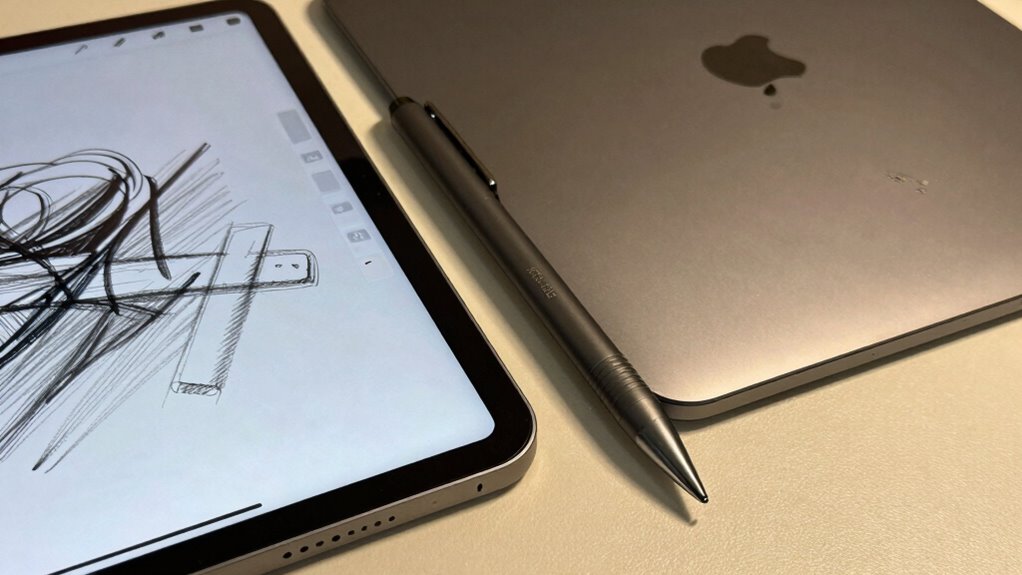
When comparing pen display and tablet, your focus should be on pen accuracy and responsiveness, which directly impact your drawing precision. You’ll also notice how screen clarity and detail enhance your ability to work on intricate projects, while comfort and ergonomics affect how long you can draw without fatigue. These factors together determine which device provides the better overall drawing experience for you. Additionally, the evolution of arcade games has shown how advancements in technology can significantly improve user experience and engagement.
Pen Accuracy and Responsiveness
Choosing between a pen display and a tablet often comes down to how accurately and responsively each device captures your strokes. Your experience hinges on key factors like stylus ergonomics and pressure sensitivity.
- The pen display generally offers better stylus ergonomics, making long sessions comfortable and reducing fatigue.
- Response time is vital; pen displays often have lower latency, giving you immediate feedback for natural drawing.
- Pressure sensitivity levels influence precision—higher sensitivity allows for subtle shading and fine detail, making your work more accurate.
While both devices can perform well, pen displays typically excel in translating the nuance of your strokes, thanks to superior responsiveness and ergonomics. This leads to a more natural, precise drawing experience overall.
Screen Clarity and Detail
Screen clarity and detail are essential for achieving precise work, and a device with a high-resolution display can make a significant difference. When evaluating pen displays and tablets, look for excellent color accuracy, which guarantees your artwork’s true hues are accurately represented. A clear, sharp screen allows you to see details precisely, reducing mistakes and enhancing your overall workflow. Additionally, consider screen glare, as reflections can hinder your ability to work comfortably for extended periods. Pen displays often feature anti-glare coatings, making them better suited for detailed, color-critical work. Tablets with lower resolution or glossier screens might cause eye strain or distort your perception of colors and details. Ultimately, a high-quality screen enhances your drawing precision and provides a more immersive, professional experience.
Drawing Comfort and Ergonomics
Drawing Comfort and Ergonomics (Which Device Offers Better Drawing Precision and Experience?)
Drawing comfort and ergonomics directly impact how long and effectively you can work without discomfort or fatigue. When choosing between a pen display and a tablet, consider these factors:
- Hand posture: Pen displays often promote a natural wrist position, reducing strain, while tablets may require awkward angles.
- Arm fatigue: Larger screens on pen displays allow a more relaxed arm movement, decreasing tiredness during prolonged sessions.
- Ease of control: Pen displays tend to offer better precision thanks to their integrated screens, helping you maintain better hand posture and control.
Ultimately, a device that supports comfortable hand posture and minimizes arm fatigue lets you focus on your art longer with less discomfort or interruption. Additionally, understanding ergonomics in workspace design can enhance your overall drawing experience and productivity.
portable drawing tablet for beginners
As an affiliate, we earn on qualifying purchases.
As an affiliate, we earn on qualifying purchases.
Compatibility With Art Software: What You Need to Know
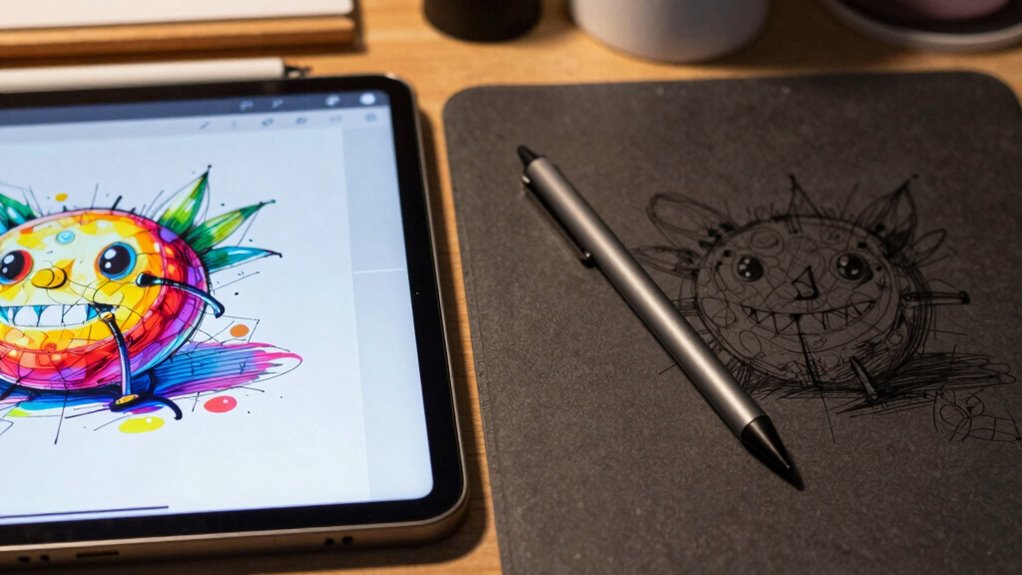
When selecting a pen display or tablet, it’s essential to verify compatibility with the art software you plan to use. Not all devices work seamlessly with every program, so check software compatibility before making a decision. Some tablets or pen displays are optimized for popular options like Photoshop, Illustrator, or CorelDRAW, while others may have limited support. Additionally, consider hardware requirements; confirm your device meets the necessary specifications to run your preferred software smoothly. Outdated hardware can cause lag, crashes, or limited functionality, affecting your workflow. Reading reviews and manufacturer specifications helps prevent compatibility issues. Taking these steps ensures your device will integrate effortlessly with your art software, saving you time and frustration while boosting your creative productivity. Furthermore, understanding U.S. tax law updates can provide financial insights that may influence your budgeting for art equipment.
Choosing the Right Device Based on Your Budget and Style

Choosing the right device depends heavily on your budget and artistic style, as each factor influences which features you’ll prioritize. Your creative workflows dictate whether you need portability, precision, or a seamless drawing experience. When considering budget considerations, focus on what offers the best value for your investment. For example:
- Entry-level tablets are affordable and great for beginners, supporting basic creative workflows. Many beginners can also benefit from supporting emotional well-being through creative expression as they start their artistic journey.
- Mid-range pen displays provide better accuracy and more natural drawing experiences without breaking the bank.
- High-end devices cater to professional artists, offering advanced features, larger screens, and premium build quality, fitting a versatile creative style.
Aligning your budget and style ensures you select a device that enhances your art without compromise. Additionally, understanding clear, step‑by‑step guidance on the features you need can significantly improve your decision-making process.
Pros and Cons of Pen Displays for Digital Artists
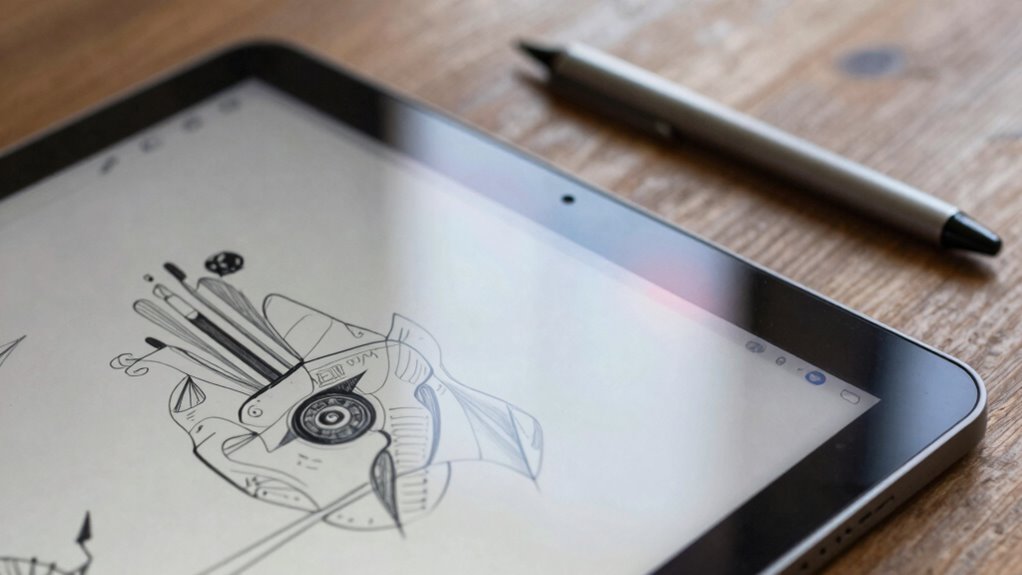
Pen displays have become a popular choice for digital artists because they combine the feel of traditional drawing with the power of digital technology. They enhance your creative workflows by offering precise control and a natural drawing experience, closely mimicking pencil or brush strokes. However, they can be expensive and require a steep learning curve, especially for beginners. The large screens provide artistic versatility, allowing for detailed work and seamless integration of layers and effects. On the downside, their size and weight can limit portability. Additionally, some models may experience lag or calibration issues, affecting your accuracy. Despite these drawbacks, pen displays offer a more immersive experience, making them ideal if you prioritize artistic versatility and a more authentic drawing feel. Furthermore, using eco-friendly materials, such as recycled paper products, can complement your digital artistry by promoting sustainability in your creative process. Embracing inclusive casting in the fashion and beauty industry can also inspire your artistic expression by reflecting diverse perspectives. Using products that ensure comfort and safety can further enhance your overall creative environment. Moreover, investing in luxurious lifestyle products can elevate your workspace, providing an inspiring atmosphere for your artistic endeavors. Furthermore, the instant torque of digital tools can enhance your drawing speed, similar to the horsepower of electric dirt bikes.
Should You Invest in a Pen Display or Stick With a Tablet?

Deciding whether to invest in a pen display or stick with a traditional tablet depends on your specific needs, budget, and workflow preferences. Consider these factors:
- If you prioritize color accuracy for detailed work, a pen display often offers better display quality and true-to-life colors. Additionally, template compatibility is crucial for ensuring your software works seamlessly with your chosen device.
- For portability considerations, tablets are lighter and more compact, making them ideal for working on the go.
- Your budget also influences the decision—pen displays tend to be more expensive, but they provide a more natural drawing experience. Additionally, consider how butter enhances texture in cooking, as both pen displays and tablets can enhance your creative process in different ways.
If you want an immersive, precise drawing experience and can invest more, a pen display could be the better choice. However, if you need portability and affordability, sticking with a traditional tablet might suit you best.
Frequently Asked Questions
How Do Pen Displays Affect Workflow Efficiency for Professional Artists?
Pen displays boost your workflow efficiency by offering seamless workflow integration, allowing you to switch quickly between drawing, editing, and refining your work. They enhance creative flexibility, letting you work directly on the screen with natural pen pressure and precision. This direct interaction minimizes delays, boosts productivity, and fosters smoother creative processes, making your artistic workflow more intuitive and efficient.
Are Pen Displays Suitable for Beginner Digital Artists?
Absolutely, pen displays can be a great starting point for beginners. Imagine your hand-eye coordination blossoming as you draw directly on the screen, making artistic flexibility feel natural and intuitive. They turn your creative ideas into reality with ease, offering a smooth learning curve. While they might seem intimidating initially, their user-friendly design helps you build confidence, making your journey into digital art both exciting and rewarding.
What Are the Maintenance and Durability Considerations for Pen Displays?
You should regularly check your pen display’s hardware longevity and follow proper cleaning routines to maintain its condition. Avoid exposing it to extreme temperatures or moisture, which can damage the device. Gently clean the screen with a soft, lint-free cloth and avoid harsh chemicals. Proper maintenance guarantees your pen display stays responsive and durable over time, reducing the need for repairs and prolonging its lifespan.
How Do Software Updates Impact Pen Display Performance?
Software updates, especially firmware improvements, can notably boost your pen display’s performance by fixing bugs, enhancing features, and improving responsiveness. However, they may also introduce compatibility issues with your operating system or creative software. To keep your device running smoothly, regularly check for updates from the manufacturer, confirm compatibility before installing, and follow instructions carefully to avoid disruptions. Staying current helps you get the best drawing experience.
Can Pen Displays Be Used for Tasks Other Than Drawing, Like Photo Editing?
Yes, pen displays are versatile tools suitable for tasks like photo editing. You can benefit from their high color accuracy, ensuring your images look true to life, and their precision makes retouching easier. However, keep in mind that battery life varies; some models require constant power, which might limit portability. Overall, they’re excellent for detailed work beyond drawing, provided you choose one with good color fidelity and manageable battery demands.
Conclusion
Choosing between a pen display and a tablet is like picking a paintbrush that feels just right in your hand—each has its own rhythm and stroke. I remember the first time I switched to a pen display; it was as if I had finally found the missing piece of my artistic puzzle. Trust your style, budget, and workflow, and you’ll find the device that transforms your sketches into masterpieces—making every line a part of your unique story.
Flea & tick season Picks
flea and tick prevention
As an affiliate, we earn on qualifying purchases.