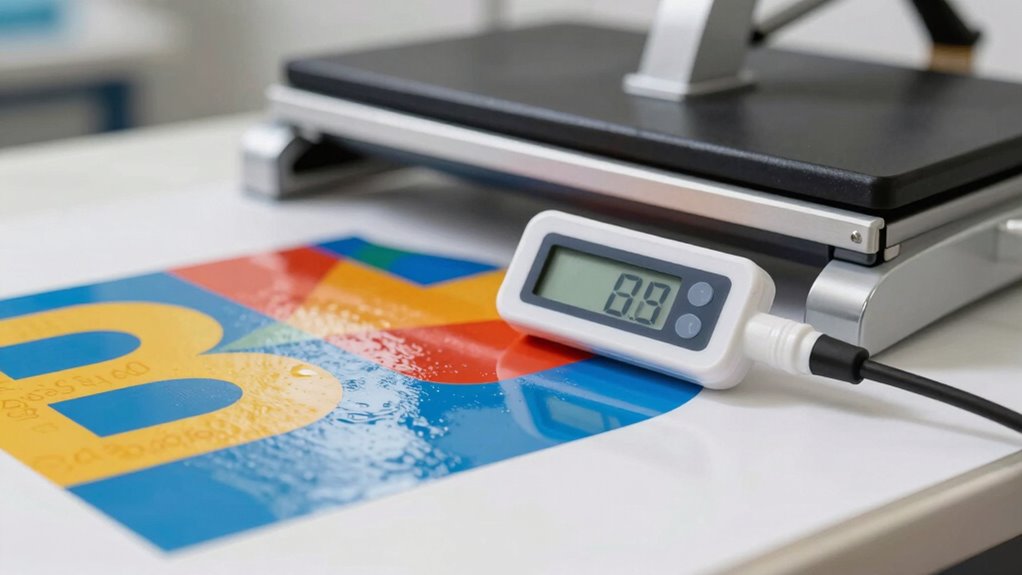

To guarantee your ink cures properly, you should measure the temperature rather than guess. For most inks, like solvent-based, aim for around 150°F to 180°F, while plastisol inks need about 320°F to 330°F. UV inks cure instantly without heat. Use a reliable thermometer to monitor your curing temperature constantly, and adjust your equipment to stay within the right range. Keep in mind, the right temperature varies depending on ink and material—stay tuned to learn more.

Get art and craft supplies delivered free — and shop member deals
- Fast, free delivery on millions of items
- Access to Prime Big Deal Days deals on October 6–7
- Prime Video, Amazon Music and more included
Key Takeaways
- Cure solvent-based inks at 150°F to 180°F, and plastisol inks at 320°F to 330°F, depending on material and ink specifications.
- UV inks cure instantly under UV light and do not require heat curing temperature measurements.
- Use infrared or surface thermometers to accurately measure curing temperature on the print surface.
- Regularly calibrate your temperature tools to ensure precise monitoring and consistent curing results.
- Adjust curing parameters based on measured temperatures to prevent under- or over-curing and ensure print durability.
infrared thermometer for ink curing
As an affiliate, we earn on qualifying purchases.
As an affiliate, we earn on qualifying purchases.
How Does Proper Ink Curing Affect Your Print Quality
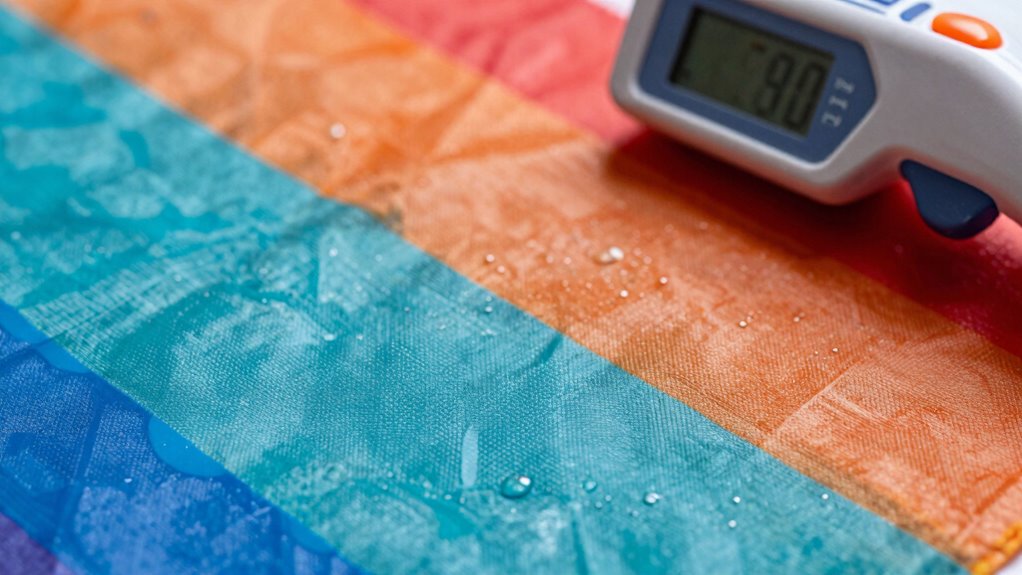
Proper ink curing is essential because it directly impacts the durability and appearance of your print. When you cure ink correctly, you enhance color vibrancy, making every hue pop and look sharper. Proper curing also ensures your design remains intact over time, providing durability enhancement that prevents cracking, fading, or peeling. If the ink isn’t cured thoroughly, colors may appear dull or uneven, reducing overall print quality. Additionally, insufficient curing can lead to smudging or sticking, which compromises the professional look of your work. By paying attention to the curing process, you guarantee that your prints not only look vibrant and appealing but also stand the test of time. In short, proper ink curing is key to achieving crisp, durable, and eye-catching results. Furthermore, exploring vinyl cutter settings can provide insights into best practices for enhancing your printing techniques. Understanding Victorian steampunk aesthetics can also inspire unique design choices that elevate your print projects. Additionally, using inks high in antioxidants can improve the longevity of your prints. Also, ensuring proper safety measures while working with inks can help maintain a safe printing environment.
As an affiliate, we earn on qualifying purchases.
Key Factors That Influence Your Curing Temperature

Your curing temperature depends heavily on the ink type you’re using and the material you’re printing on. Different inks require specific heat settings to cure properly without damaging the substrate. Understanding how ink variability and material compatibility influence temperature helps you achieve ideal print quality. Additionally, just as proper piercing aftercare is essential for preventing complications, ensuring the right curing temperature is crucial for achieving optimal results. The health of the drone bees in a hive can also be affected by environmental factors, much like how ink curing is influenced by temperature. Using the right heating techniques can further enhance the curing process and improve overall print quality. Furthermore, selecting the right hosting discount codes can help you save on services that support your printing needs. To ensure you are using the best practices, consider consulting a spec verification guide to help identify the optimal curing conditions for your specific ink and substrate combination.
Ink Type Variability
Have you ever noticed how different ink types require varying curing temperatures? It all comes down to ink formulation. Some inks contain solvents or additives that need higher heat to fully cure, while others cure at lower temperatures. The type of ink influences not just the temperature but also the curing duration. For example, UV inks cure almost instantly under UV light, whereas solvent-based inks may need longer exposure at specific temperatures to guarantee complete adhesion and durability. Understanding these differences helps you set the right parameters for each ink type, preventing under- or over-curing. Adjusting curing temperature based on ink formulation guarantees maximum performance, enhances color vibrancy, and prolongs print longevity. Always consult manufacturer guidelines for precise temperature and curing duration for each ink type. Additionally, consider how eco-friendly practices can influence the choice of materials used in ink formulations.
Material Compatibility
The material you’re printing on plays an essential role in determining the ideal curing temperature because different surfaces absorb and retain heat differently. Some materials, like plastics or textiles, may require lower temperatures to prevent warping or damage, while others need higher heat for proper curing. Inconsistent curing temperature can lead to issues like color inconsistency, where colors don’t match or fade over time. Additionally, material properties influence curing speed; smoother surfaces often cure faster, while porous or textured surfaces may slow the process. To achieve consistent results, you need to tailor your curing temperature to your specific material. Monitoring and adjusting based on material compatibility helps guarantee vibrant, uniform color and effective curing speed, avoiding over- or under-curing. Furthermore, understanding AI trends in creative applications can provide insights into innovative materials that may alter traditional curing requirements. For example, the culinary delights featured at Paula Deen’s wedding exemplify how different materials can be used effectively in various contexts. Additionally, using best espresso beans can enhance flavors in culinary applications where precise temperature control is essential. Incorporating advanced security features in your workspace can also help protect your valuable equipment and materials. Also, maintaining a clean workspace is crucial for optimal equipment performance, as dust and debris can negatively impact the curing process.
As an affiliate, we earn on qualifying purchases.
What Are the Best Curing Temperatures for Different Inks?

Different inks require specific curing temperatures to guarantee ideal adhesion and durability. The best curing temperatures vary based on the ink type and the substrate. For solvent-based inks, curing typically occurs between 150°F and 180°F, while UV inks cure instantly under UV light rather than heat. Plastisol inks often cure around 320°F to 330°F, but these temperatures depend on the ink’s formulation. To assure consistent results, you need to use proper ink curing methods and regularly perform temperature calibration of your equipment. Proper calibration secures your curing process reaches the precise temperature needed for each ink type, preventing under- or over-curing. Always consult the manufacturer’s recommendations for specific temperature guidelines, and adjust your process accordingly to achieve the best print quality. Additionally, using the right airless paint spraying techniques ensures optimal ink application and curing results. The importance of balanced support and boundaries in any care routine can also enhance the overall quality of your work environment.
As an affiliate, we earn on qualifying purchases.
Measuring and Monitoring Your Curing Temperature

Measuring and Monitoring Your Curing Temperature
Accurately measuring and monitoring your curing temperature is vital to guarantee consistent and high-quality prints. Using a reliable thermometer, like an infrared or surface probe, helps you track the exact temperature of your curing equipment. Consistent temperature readings ensure you maintain proper curing speed, preventing under- or over-curing. This precision is essential for achieving color consistency across your prints, as uneven curing can cause color shifts or fading. Regularly checking and recording temperatures allows you to identify fluctuations and adjust your process accordingly. By actively monitoring, you minimize errors and guarantee each print meets your quality standards. Ultimately, precise temperature control leads to better color accuracy, faster curing times, and more professional results. Additionally, just as with dogs, understanding emotional needs can enhance the overall outcomes in your printing process. The importance of regional flavors in coffee and tea culture can be likened to how varying temperatures affect the curing process. Incorporating techniques from classic arcade games can also inspire creativity and precision in your printing approach. Moreover, just as Indonesian decor masks are crafted with precision and attention to detail, maintaining optimal curing conditions can significantly enhance the quality of your prints cultural heritage. Additionally, using essential DIY tools can enhance your ability to maintain consistent curing conditions.
How to Adjust and Keep Your Curing Temperature Accurate

Sure! Here’s your revised article subheading content with the specified changes:
—
Once you’ve established how to measure and monitor your curing temperature, the next step is to make adjustments to keep it consistent. To do this, start by controlling the UV light source, guaranteeing it’s set to the correct intensity. If the temperature is too low, increase the UV light exposure or raise the curing chamber’s temperature slightly. Conversely, if it’s too high, reduce the UV exposure time or lower the chamber’s temperature. Keep a close eye on curing duration, as overexposure can cause overheating, while underexposure results in incomplete curing. Use a thermometer to verify changes and maintain a stable environment. Regularly calibrate your equipment to ensure your UV light delivers consistent results, so your ink cures evenly and accurately every time. Additionally, softener brine impact can enhance your confidence, which might improve your overall approach to precision in tasks like curing ink.
—
Let me know if you need further assistance!
Troubleshooting Curing Problems: Signs and Solutions

Troubleshooting curing problems starts with recognizing the key signs that your ink isn’t curing properly. If you notice color fading or uneven shades, it’s a strong indication that the ink isn’t fully cured, which compromises its vibrancy and durability. Poor ink adhesion is another clear sign; if the ink flakes or peels easily, it suggests inadequate curing temperatures or times. To address these issues, double-check your curing process, ensuring your equipment is calibrated correctly. Adjust the temperature or curing time as needed, and test again. Consistent monitoring and measuring can prevent these problems, ensuring your ink cures evenly and adheres properly, resulting in long-lasting, vibrant prints.
Frequently Asked Questions
Can Curing Temperature Vary Between Different Printing Substrates?
Yes, curing temperature can vary between different printing substrates. You need to take into account ink adhesion and substrate compatibility because each material responds differently to heat. For example, plastics may require lower temperatures to prevent warping, while textiles might need higher curing temps for durability. Measuring and adjusting the curing temperature guarantees ideal ink adhesion and long-lasting prints across various substrates, reducing the risk of damage or poor adhesion.
How Often Should I Calibrate My Curing Equipment?
You should calibrate your curing equipment regularly, ideally every few months or after significant changes in ink viscosity or curing methods. Frequent calibration guarantees consistent curing temperatures, which helps avoid under- or over-curing. If you notice inconsistencies in print quality or ink adhesion, it’s time to recalibrate. Regular checks keep your equipment running efficiently, maintain print quality, and adapt to any changes in ink formulations or substrate types.
What Safety Precautions Are Necessary During Curing?
Think of curing as tending a delicate flame—safety comes first. You should wear personal protective gear like gloves and masks to shield your skin and lungs from harmful fumes. Make sure proper ventilation to prevent fumes from building up, acting as the wind guiding your flame safely. Always work in a well-ventilated area, and follow safety guidelines to keep your environment secure during the curing process.
Does Ambient Humidity Affect Curing Temperature Accuracy?
Ambient humidity can indeed affect curing temperature accuracy by causing humidity interference. High humidity levels can lead to inconsistent heat transfer, making it harder to maintain temperature stability during curing. You should monitor both humidity and temperature closely, especially in moisture-rich environments. Using a controlled environment with stable humidity levels guarantees your curing process remains precise, resulting in better ink adhesion and durability.
How Does Curing Time Relate to Temperature Consistency?
You’ll find that curing time directly impacts temperature consistency, especially since ink viscosity influences curing speed. For every 10°F increase, curing speed can double, so maintaining a steady temperature guarantees even ink viscosity and proper curing. If temperature fluctuates, curing times may vary, leading to inconsistent results. By controlling curing time and temperature, you guarantee a smooth, durable finish without risking over- or under-curing your ink.
Conclusion
Mastering the right curing temperature isn’t just a detail—it’s the secret weapon to flawless prints that stand the test of time. By measuring and maintaining the perfect heat, you’ll avoid costly mistakes and produce results that blow your competition out of the water. Don’t leave your success to guesswork—get precise, stay consistent, and watch your printing game reach legendary heights. Trust me, once you nail this, your prints will be unstoppable!
Fall Picks
fall essentials
As an affiliate, we earn on qualifying purchases.