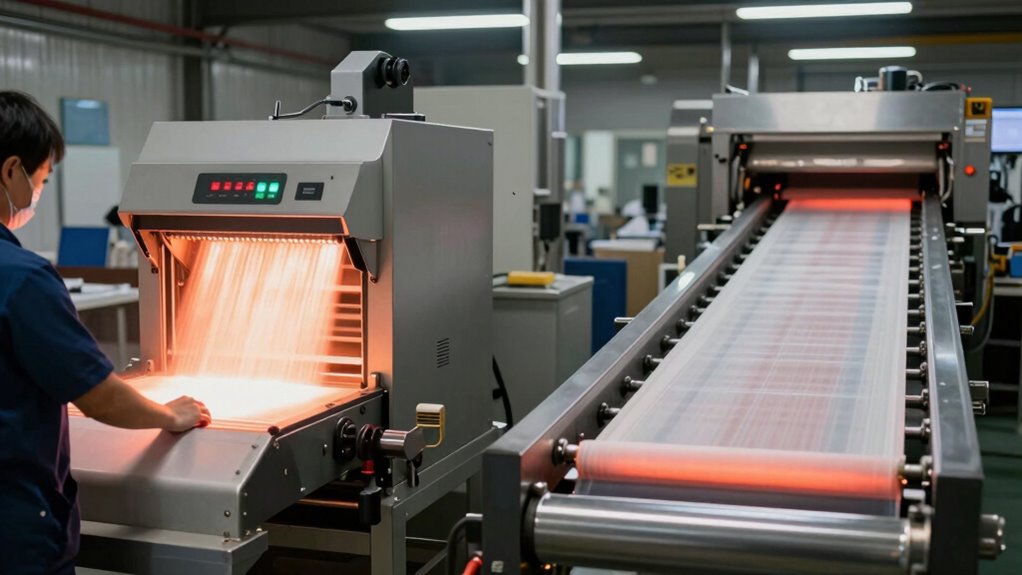

If you need to dry fine, lightweight, or heat-sensitive materials quickly and in high volume, a flash dryer makes the most sense because it offers rapid moisture removal with high efficiency. However, for larger, thicker items that require uniform drying over longer runs, a conveyor dryer provides steady, gentle heat and better control. Understanding your material type and production goals helps determine which option fits best—more details await to guide your choice.

Get art and craft supplies delivered free with Prime
- Fast, free delivery on millions of items
- Prime Video, Amazon Music and more included
- Member-only deals all year
Key Takeaways
- Use a flash dryer for rapid drying of fine, heat-sensitive, or lightweight materials requiring quick turnaround.
- Choose a conveyor dryer for continuous, large-scale production of thicker or bulkier items needing uniform drying.
- Opt for a flash dryer when high processing speed and short batch times are priorities.
- Select a conveyor dryer for steady, controlled drying with consistent quality over longer production runs.
- Consider initial costs and maintenance complexity: flash dryers are more expensive and complex, while conveyor dryers are more affordable and easier to operate.
Popular right now

De’Longhi Classic Matte Black Espresso Machine with Milk Frother

Roborock Robot Vacuum and Mop with LiDAR Navigation and 10,000 Pa Suction

Bose QuietComfort Wireless Noise-Cancelling Over-Ear Headphones, Black
As an affiliate, we earn on qualifying purchases.
Flash Dryers vs. Conveyor Dryers: Which Is Right for Your Production?
Choosing between a flash dryer and a conveyor dryer depends on your specific production needs. If energy efficiency is a priority, consider that conveyor dryers typically consume more energy but offer consistent, continuous operation suitable for larger batches. Flash dryers, on the other hand, are more energy-efficient for quick, high-temperature drying of small to medium loads. Additionally, high refresh rates in drying technology can significantly enhance efficiency for rapid production cycles. Maintenance requirements also vary; conveyor dryers often need more regular upkeep due to their complex moving parts, while flash dryers usually have simpler designs with fewer maintenance needs. Think about your production volume and product type to decide which fits best. If you need rapid drying with less maintenance, a flash dryer might be the right choice. For steady, large-scale processing, a conveyor dryer could serve you better. Additionally, exploring digital concepts can help you understand the latest advancements in drying technology.
How Do Flash Dryers and Conveyor Dryers Work?
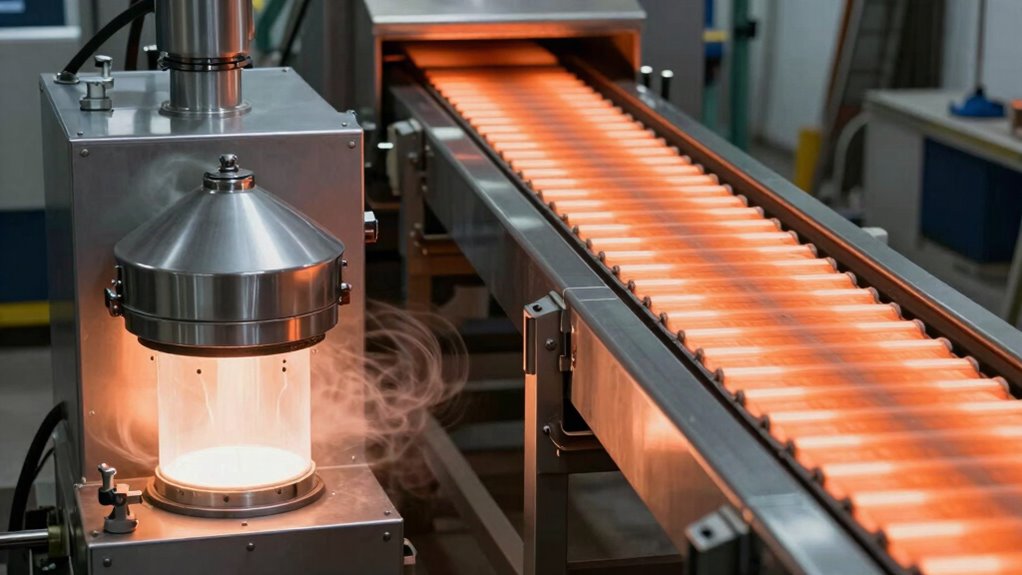
You’ll see that both flash and conveyor dryers rely on airflow and heat transfer to dry materials, but they do so differently. Flash dryers use high-velocity hot air to quickly evaporate moisture, while conveyor dryers steadily pass items through heated chambers. Their operational workflows also vary, with flash dryers offering rapid, batch-style drying and conveyor dryers providing continuous processing. Understanding the dynamics of rebuilding trust can also be essential in managing relationships during the drying process, as it parallels the need for patience and care. Additionally, the choice between these two systems often hinges on operational efficiency, which can significantly impact production timelines. Proper management of heat buildup is crucial to ensure both systems operate safely and effectively. Incorporating high-quality content about drying technologies can further enhance your understanding of each method’s advantages. Moreover, recognizing the importance of system monitoring can help optimize the performance of both drying methods.
Drying Mechanism Explained
Understanding how flash dryers and conveyor dryers operate is key to selecting the right equipment for your drying needs. Both use heat to remove moisture, but they do so differently. Flash dryers rapidly expose material to hot air at high temperatures, causing immediate moisture removal in seconds. This quick process is ideal for fine powders or flakes. Conveyor dryers, on the other hand, move materials through a heated chamber at a controlled pace, allowing for gradual drying. They provide better temperature control, which helps prevent damage or over-drying. In both cases, temperature regulation is vital to guarantee efficient moisture removal without compromising product quality. Additionally, luxurious lifestyle products often utilize specialized drying processes to maintain their quality, making understanding their mechanisms essential. The choice depends on your material’s sensitivity and desired drying speed, making understanding their mechanisms essential.
Airflow and Heat Transfer
Both flash dryers and conveyor dryers rely on the movement of hot air to transfer heat to the material, but they do so through different airflow patterns that influence drying efficiency. In a flash dryer, hot air moves rapidly in a turbulent, high-velocity flow, providing quick heat transfer and reducing energy consumption. This makes it suitable for fast, high-volume drying with less environmental impact due to lower energy use. Conversely, conveyor dryers use a steady, controlled airflow that moves at a slower pace, allowing for more uniform heat transfer over longer periods. While this can increase energy consumption, it offers better control over drying quality. Overall, the airflow design directly impacts the energy efficiency and environmental footprint of each dryer type.
Operational Workflow Differences
While both flash dryers and conveyor dryers aim to remove moisture from materials efficiently, their operational workflows differ considerably. Flash dryers use a high-velocity hot air stream to quickly dry small particles as they pass through the chamber, making the process rapid and continuous. Conveyor dryers, on the other hand, move materials along a belt through a heated zone, allowing for slower, more controlled drying. Energy consumption varies; flash dryers typically use more energy upfront due to intense air heating, but they dry materials faster. Maintenance requirements also differ: flash dryers need frequent cleaning of filters and chambers due to dust buildup, while conveyor dryers require regular belt and heating element checks. Understanding these differences helps you choose the right system for your specific drying needs. Additionally, considering stain removal techniques can enhance your overall cleaning efficiency and effectiveness in your home.
What Are the Main Differences Between These Dryer Types?

You’ll notice that flash dryers typically dry faster and are more efficient for quick, high-volume jobs, while conveyor dryers excel with larger, continuous runs. The choice also depends on your material type and application needs, as each dryer handles different substrates better. Additionally, operational complexity and initial costs vary, with flash dryers often requiring more investment and technical expertise. For instance, understanding natural filtration systems can help in selecting the right dryer for eco-friendly processes. Furthermore, being aware of lubricant specifications can optimize performance and compatibility in your drying operations. Effective leadership in manufacturing efficiency can also guide you in making the best choice for your production goals. A solid understanding of chamber vacuum sealers can also enhance your drying process by ensuring materials are properly preserved before or after treatment. Having a first aid kit on hand can also be crucial for addressing any minor accidents that may occur during the drying process.
Drying Speed and Efficiency
Drying speed and efficiency are critical factors when choosing between a flash dryer and a conveyor dryer, as they directly impact production throughput and energy consumption. Flash dryers are designed for rapid drying, making them ideal for high-volume, quick-turnaround applications. They use intense heat and short residence times, which boost efficiency but can increase energy consumption if not optimized. Conveyor dryers, on the other hand, provide slower, more controlled drying processes, often consuming less energy overall due to their consistent operation. Maintenance requirements also differ: flash dryers tend to need more frequent upkeep because of their complex components, while conveyor dryers are generally simpler, reducing downtime. Your choice depends on balancing drying speed with long-term energy costs and maintenance needs. Additionally, considering the use of fireproof storage for critical documents is essential in safeguarding against unexpected emergencies.
Application and Material Compatibility
Choosing between a flash dryer and a conveyor dryer largely depends on the types of materials you need to process. Flash dryers excel with fine, lightweight, or heat-sensitive materials because they offer high material flexibility, allowing quick drying without damaging delicate substrates. They’re ideal for powders, pigments, or small particles. Conveyor dryers, on the other hand, handle larger, thicker, or more complex materials efficiently, especially when uniform drying over longer runs is needed. They tend to have higher energy consumption but provide consistent results for bulkier items. Your choice hinges on the material’s characteristics and your production needs. If you’re working with fragile or fine materials, a flash dryer is often the better fit. For more substantial or varied materials, a conveyor dryer offers better compatibility.
Operational Complexity and Cost
While both flash dryers and conveyor dryers serve the same fundamental purpose, they differ considerably in operational complexity and initial costs. Flash dryers are typically more complex to operate, requiring precise control over parameters like air temperature and flow, which can increase energy consumption. They also demand higher maintenance due to their fast-moving parts and high temperatures. In contrast, conveyor dryers are generally simpler, with straightforward operation and lower energy costs. They tend to have fewer moving parts, reducing maintenance needs.
- Energy consumption: Flash dryers usually consume more energy due to rapid drying processes.
- Maintenance requirements: Conveyor dryers generally need less regular upkeep.
- Initial costs: Flash dryers tend to be more expensive upfront because of their advanced technology.
What Factors Should You Consider When Choosing a Dryer?

When selecting the right dryer for your needs, you need to evaluate several key factors to guarantee peak performance and efficiency. Consider the environmental impact; choose a dryer that minimizes energy consumption and emissions to reduce your carbon footprint. Additionally, investing in car protection accessories can further enhance your operational efficiency. Maintenance requirements are also vital—opt for equipment that’s easy to clean and service, saving you time and costs over its lifespan. Think about your production volume and speed needs, as well as the type of materials you’ll process. Furthermore, utilizing a reliable directory for discovering trusted businesses and services can help you find the right suppliers and resources for your drying equipment. Additionally, assessing recovery factors can provide insights into optimizing your equipment’s performance. Also, assess the initial investment and long-term operational costs. By weighing these factors carefully, you assure your choice aligns with your business goals, sustainability commitments, and budget constraints, leading to more reliable and efficient drying operations. A daily startup idea can help you explore high-signal startup ideas that may enhance your drying processes and overall efficiency. Many businesses are also incorporating spiritual retreats into their wellness initiatives to improve employee well-being and productivity.
When Should You Use a Flash Dryer for Fast, High-Volume Production?
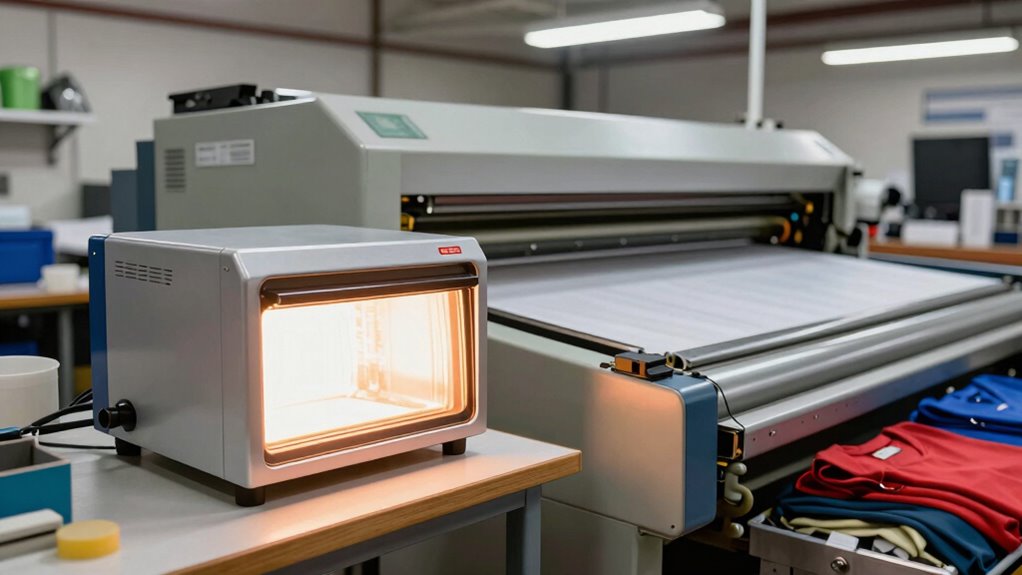
A flash dryer is ideal when you need to rapidly process large quantities of material without sacrificing quality. It excels in high-volume production where speed is critical. You should consider a flash dryer when energy efficiency is a priority, as it uses less energy per unit compared to other dryers. Additionally, its quick drying process minimizes downtime, boosting productivity. Keep in mind that maintenance requirements are generally low, making it easier to keep the equipment running smoothly. To maximize benefits, evaluate:
- The need for rapid throughput without quality loss
- Low energy consumption for cost savings
- Minimal maintenance demands for operational efficiency
A flash dryer is your best option when fast, high-volume output combined with efficiency and ease of maintenance is essential. Furthermore, understanding the role of regional flavors can enhance product offerings in coffee and tea culture, appealing to diverse consumer preferences. Effective requirements traceability can also ensure that your drying processes meet industry standards, ultimately supporting software quality and compliance.
What Are the Best Applications for Conveyor Dryers?
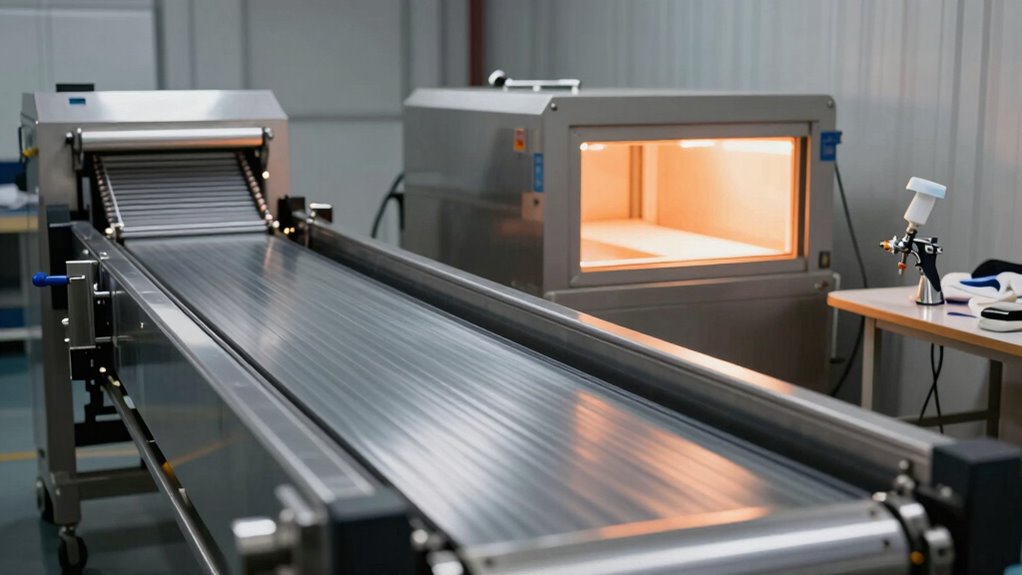
Conveyor dryers are best suited for continuous, large-scale production processes where consistent, uniform drying is essential. They excel in applications requiring excellent color consistency and minimal environmental impact. You’ll find them ideal for drying textiles, ceramics, and printed materials, where maintaining quality and color accuracy is vital. Their continuous operation guarantees efficiency in high-volume settings. Additionally, these dryers serve as a storytelling playground for creators, allowing them to experiment with different drying techniques that can enhance the final product’s quality. To visualize their applications:
| Application Area | Key Benefit | Environmental Impact |
|---|---|---|
| Textiles | Uniform drying, color accuracy | Reduces waste and energy use |
| Ceramics | Consistent glaze drying | Lower emissions |
| Printed Materials | Preserves color integrity | Less solvent use |
| Food Processing | Reliable moisture removal | Reduced energy consumption |
Incorporating natural light into drying processes can further enhance the quality of the finished products. Moreover, understanding Filipino culture can also provide insights into the importance of craftsmanship in drying processes, which may influence product quality and consumer perception.
What Are the Benefits of Conveyor Dryers Compared to Flash Dryers?

Compared to flash dryers, conveyor dryers offer several distinct advantages that make them ideal for large-scale, continuous production. They excel in maintaining consistent color and quality across extensive batches, thanks to uniform heat distribution. Additionally, conveyor dryers typically have lower maintenance requirements, reducing downtime and operational costs. The steady, controlled environment allows for better control over the drying process, leading to improved color consistency. Their design also facilitates continuous operation, making them suitable for high-volume production lines. Moreover, conveyor dryers tend to be more energy-efficient over long production runs, saving costs in the long run. These benefits make conveyor dryers especially advantageous when producing large quantities with strict quality standards and consistent visual appeal.
How Do Cost, Efficiency, and Quality Vary Between the Two?
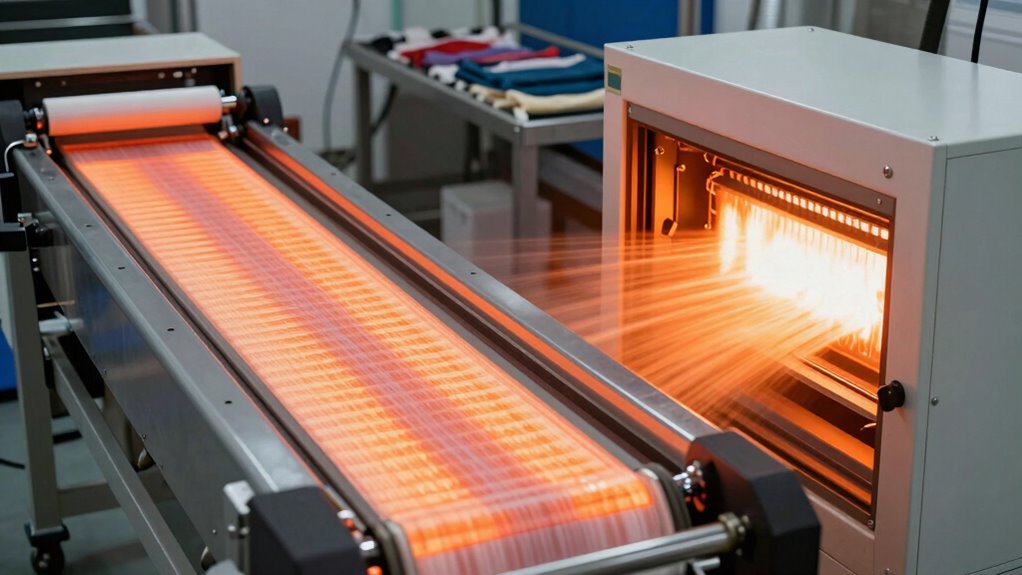
When evaluating cost, efficiency, and quality, you’ll find that each dryer type offers distinct advantages depending on your production needs. Flash dryers typically have higher energy consumption but provide faster drying times, reducing overall production costs. Conveyor dryers often use less energy and have lower maintenance requirements, making them cost-effective for large-volume runs. Quality differences depend on the application; flash dryers may deliver more uniform results for quick, high-heat processes, while conveyor dryers excel with delicate or heat-sensitive materials. Consider this comparison:
| Aspect | Flash Dryer | Conveyor Dryer |
|---|---|---|
| Energy Consumption | Higher due to rapid drying process | Lower, more gradual drying |
| Maintenance Requirements | Moderate to high | Generally lower |
| Cost | Usually higher upfront | More affordable initially |
| Efficiency | Very efficient for quick drying | Efficient for continuous, large-scale production |
| Material Quality | Suitable for fast, uniform drying | Better for delicate materials |
Which Dryer Is Best for Your Materials and Business Goals?
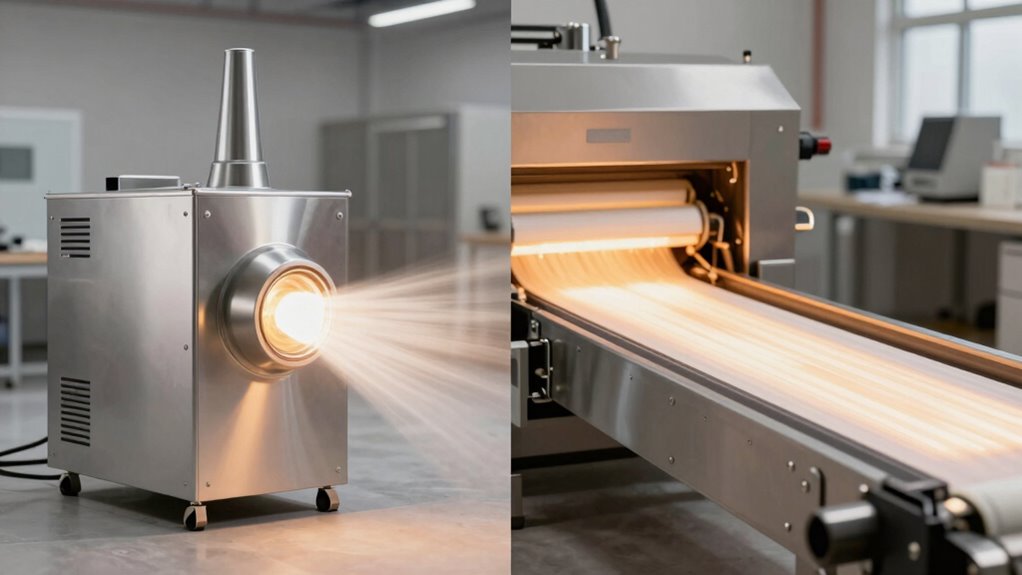
Choosing the right dryer depends on your specific materials and business objectives. If maintaining color consistency is critical, a conveyor dryer offers controlled, uniform heat that guarantees consistent results. For materials sensitive to heat or requiring rapid processing, a flash dryer provides quick drying with less risk of color variation. Consider your energy consumption goals—flash dryers typically consume less energy for small batches, making them cost-effective. Conversely, conveyor dryers excel in high-volume production with precise temperature control. Your business goals also influence the choice: prioritize a flash dryer for fast turnaround times, or a conveyor dryer for consistent quality over long runs. Ultimately, matching your material properties and operational priorities will guide you to the best solution.
Frequently Asked Questions
How Does Maintenance Differ Between Flash and Conveyor Dryers?
You’ll find maintenance differs mainly in cost efficiency and environmental impact. Flash dryers require less upkeep due to fewer moving parts and simpler design, saving you money long-term. Conveyor dryers, however, need regular belt and roller checks, which can increase maintenance costs. Both have environmental impacts; keeping them well-maintained guarantees peak energy use, reducing emissions. Proper care maximizes efficiency, minimizes downtime, and helps you manage maintenance costs effectively.
Can Both Dryers Handle the Same Types of Materials?
Did you know that over 80% of textile printers prefer dryers that handle diverse materials? Both dryers offer material versatility and operational flexibility, but they excel in different areas. Flash dryers are ideal for quick, high-volume jobs with limited material types, while conveyor dryers accommodate a broader range of fabrics and designs. Your choice depends on your production needs, but both can handle various materials effectively, enhancing your workflow.
What Is the Typical Lifespan of Each Dryer Type?
You’ll find that flash dryers generally last around 5 to 10 years, depending on material compatibility and maintenance, while conveyor dryers often endure 10 to 15 years with proper care. During startup procedures, make certain materials are suitable for each dryer type to prevent damage and optimize lifespan. Regular maintenance, prompt repairs, and adhering to manufacturer guidelines help both dryers stay efficient and extend their operational life.
How Do Energy Consumption Levels Compare?
Imagine a blazing sun versus a gentle breeze—your choice affects energy use. Flash dryers, like the sun, consume more power with high energy efficiency for quick, small batches. Conveyor dryers, like the breeze, use less power for continuous, large-scale production. Your decision hinges on balancing power consumption with production needs, ensuring you harness energy efficiently without overloading your system.
Are There Specific Safety Considerations for Each Dryer?
You should prioritize safety protocols and hazard prevention for both dryers. For a flash dryer, guarantee proper ventilation and avoid hot surfaces that could cause burns, and keep flammable materials away. For conveyor dryers, maintain clear pathways and regularly inspect electrical systems to prevent fires or shocks. In both cases, training staff on safety measures and using protective equipment minimizes risks and ensures safe operation.
Conclusion
Choosing between a flash dryer and a conveyor dryer depends on your specific needs and goals. While one offers swift, high-volume results, the other provides gentle, consistent drying suited for delicate materials. By considering your production rate, material type, and quality expectations, you’ll find the perfect fit. With a thoughtful approach, you can navigate this decision smoothly, ensuring your process flows seamlessly and your results shine, much like a well-choreographed dance in your production journey.