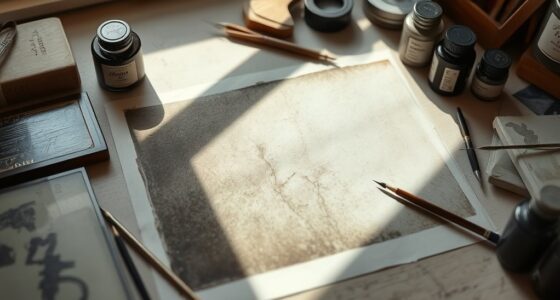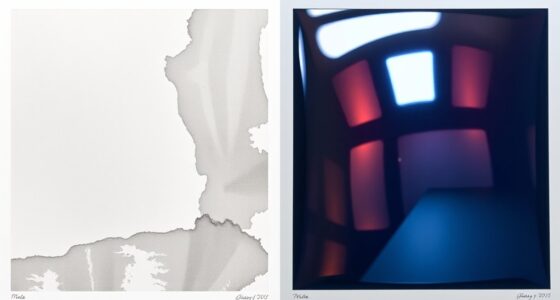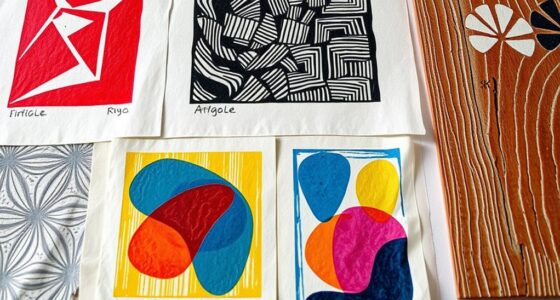

When choosing paper for printmaking, consider how ink will interact with the surface. Smooth papers give sharp details, while textured ones add visual interest and tactile quality. Heavier papers hold ink better and are more durable during printing. Test different options to see how they absorb ink and match your artistic style. By selecting the right paper, you’ll improve your results and create more expressive prints. Keep exploring to discover the best paper for your projects.
Key Takeaways
- Consider ink absorption properties to achieve desired vibrancy, softness, or richness in your prints.
- Match paper texture with your technique, using smooth surfaces for detailed work and textured papers for expressive effects.
- Select appropriate paper weight and surface to support ink hold, durability, and overall print quality.
- Test different papers with small prints to evaluate ink interaction and prevent issues like bleeding or warping.
- Balance texture, absorption, and technical needs to choose a paper that enhances both your artistic vision and print outcome.

Have you ever wondered how the right paper can elevate your printmaking projects? The answer lies in understanding how different papers interact with ink and the unique qualities they bring to your artwork. Choosing the proper paper isn’t just about aesthetics; it’s about how ink absorption and texture variability influence the final result. When selecting paper, consider how well it absorbs ink—some papers soak up ink quickly, creating vibrant, rich colors, while others allow for more controlled application, resulting in softer tones and subtle gradations. If your work relies on bold contrasts or fine details, opt for a paper with moderate ink absorption, which balances ink flow and prevents bleeding. On the other hand, if you aim for expressive, painterly effects, a paper with high ink absorption can add depth and richness to your prints.
Choosing the right paper enhances ink interaction and elevates your printmaking.
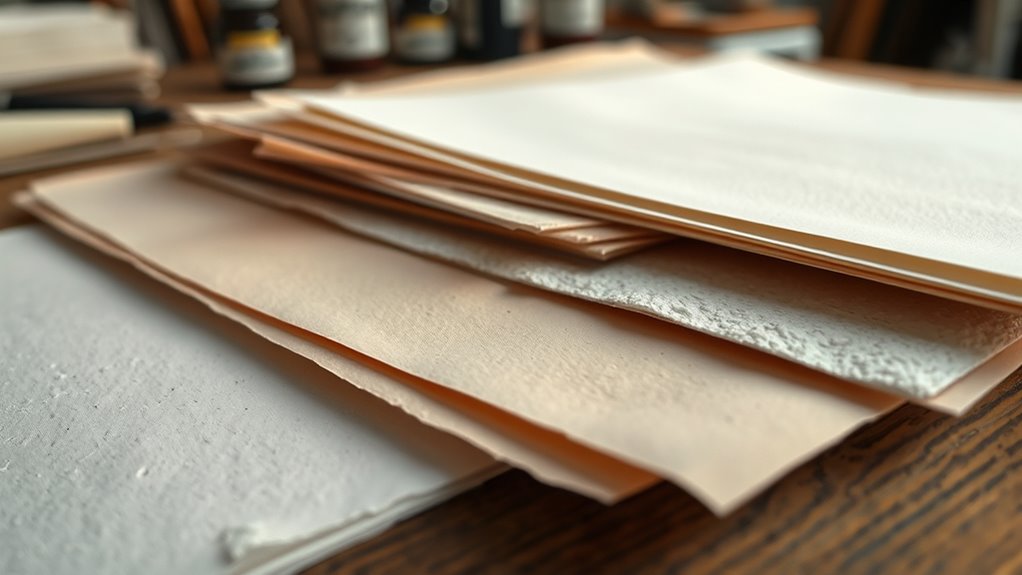
Texture variability plays a fundamental role in defining the character of your print. Smooth papers produce crisp, clean lines, ideal for detailed illustrations or precise typography. Conversely, textured papers introduce a tactile dimension, adding visual interest and a sense of depth. The surface texture influences how the ink sits on the paper, affecting the overall look and feel of your piece. For instance, a rough, heavily textured paper can create a more organic, raw appearance, perfect for expressive or abstract work. Meanwhile, finer, smoother surfaces lend themselves to delicate line work and detailed shading, giving your print a polished finish.
Your choice of paper should also reflect the medium you’re using. For linocuts or woodcuts, a sturdy, textured paper can enhance the rustic quality of the print. For monotypes or softground etchings, a smoother surface might be preferable to capture subtle details and gradients. Additionally, consider the weight and thickness—heavier papers tend to hold ink and pressure better, preventing warping or tearing during printing.
It’s important to test different papers to see how they behave with your preferred ink and printing method. Make small test prints to evaluate ink absorption and how the texture impacts your image. This experimentation helps you find the perfect match for your artistic vision. Ultimately, selecting the right paper involves balancing ink absorption qualities with texture variability to achieve your desired aesthetic. Choosing the appropriate paper type can significantly influence your results and overall satisfaction with your printmaking projects. With careful consideration, you’ll find a paper that not only supports your technical needs but also elevates the expressiveness of your printmaking projects.

Strathmore 300 Series Printmaking Paper Pad, Glue Bound, 8×10 inches, 40 Sheets (120g) – Artist Paper for Adults and Students – Block Printing, Linocut, Screen Printing
Natural white paper with a soft medium-textured surface for smooth printing practice
As an affiliate, we earn on qualifying purchases.
As an affiliate, we earn on qualifying purchases.
Frequently Asked Questions
How Does Paper Texture Affect Print Quality?
Your paper texture markedly impacts print quality by influencing ink absorption and surface finish. A rougher surface allows more ink absorption, creating rich textures but potentially reducing fine detail, while a smoother surface offers a cleaner, more precise finish. Consider your desired outcome; if you want vibrant, textured prints, choose a rougher paper. For crisp, detailed images, opt for a smoother surface to achieve a polished surface finish.
What Environmentally Friendly Paper Options Are Available?
You can choose eco-friendly papers made from recycled fibers or plant-based fibers, blending sustainability with quality. These options reduce environmental impact while offering excellent print results. Recycled fiber papers reuse materials, minimizing waste, while plant-based fibers like hemp or bamboo grow quickly and require fewer resources. By selecting these environmentally friendly papers, you support sustainable practices without sacrificing the integrity of your printmaking.
How Should I Store Printmaking Paper?
You should store printmaking paper in a cool, dry place with stable humidity levels, ideally around 50%. Use archival storage materials like acid-free folders or boxes to prevent deterioration. Keep the paper flat and avoid stacking heavy objects on top. Regularly check humidity and temperature to prevent warping or mold. Proper storage guarantees your printmaking paper remains in excellent condition for future use and preserves your artwork’s quality.
Can Different Printmaking Techniques Use the Same Paper?
Yes, different printmaking techniques can use the same paper, but you should consider ink absorption and paper weight. For example, intaglio needs paper with high ink absorption, while screen printing might require thicker paper for durability. Always match the paper’s weight and texture to your technique to achieve the best results, ensuring the paper can handle the ink and pressure involved in each printmaking process.
What Is the Cost Difference Between Various Printmaking Papers?
The cost difference between printmaking papers varies widely, with budget considerations playing a big role. Higher-quality, handmade or specialty papers tend to be more expensive, sometimes costing several dollars per sheet, while standard papers are more affordable, often under a dollar per sheet. A pricing comparison shows that investing in better paper can enhance your artwork, but you should balance quality with your budget to make the best choice.
Strathmore 300 Series Printmaking Paper Pad, Glue Bound, 8×10 inches, 40 Sheets (120g) – Artist Paper for Adults and Students – Block Printing, Linocut, Screen Printing
Natural white paper with a soft medium-textured surface for smooth printing practice
As an affiliate, we earn on qualifying purchases.
As an affiliate, we earn on qualifying purchases.
Conclusion
Choosing the right paper is like finding the perfect dance partner—your printmaking journey flows smoothly when they move in sync. When you select the right texture, weight, and finish, your artwork comes alive, capturing every detail and nuance. Trust your instincts and experiment until the paper responds beautifully to your vision. With each choice, you’re choreographing a masterpiece that sings with harmony, making your printmaking experience not just a task, but a true expression of your creative rhythm.

Strathmore Printmaking Paper Pad 8"X10"-20 Sheets -62433800, White
Natural white paper with a soft medium-textured surface for smooth printing practice
As an affiliate, we earn on qualifying purchases.
As an affiliate, we earn on qualifying purchases.
Strathmore Printmaking Paper Pad 8"X10"-20 Sheets -62433800, White
Natural white paper with a soft medium-textured surface for smooth printing practice
As an affiliate, we earn on qualifying purchases.
As an affiliate, we earn on qualifying purchases.