
If you’re choosing between a rotary trimmer and a guillotine cutter for a cleaner cut, it depends on your material. Rotary trimmers excel at producing smooth, precise cuts on thin materials like paper and cardstock, with minimal fraying. Guillotine cutters are better for thicker, heavier materials and can give clean, straight edges on bulkier projects. To understand which tool suits your needs best and how to optimize your cuts, explore the detailed differences further.
Play games included with Prime
Start a Prime free trial and play with Amazon Luna on your devices.
As an affiliate, we earn on qualifying purchases.
Key Takeaways
- Rotary trimmers provide smoother, more precise cuts with less jagged edges due to their sharp, rotating blades.
- Guillotine cutters often produce cleaner cuts on thicker or heavier materials with their powerful, straight blades.
- Proper maintenance and sharpening are essential for both tools to achieve optimal, clean cuts.
- Rotary trimmers excel in detailed, decorative finishing, reducing tearing and rough edges.
- Guillotine cutters are ideal for straight, clean cuts on bulk or heavier materials, especially when precision is maintained.
best rotary paper trimmer for crafts
As an affiliate, we earn on qualifying purchases.
As an affiliate, we earn on qualifying purchases.
How Do Rotary Trimmers and Guillotine Cut Differ in Design?
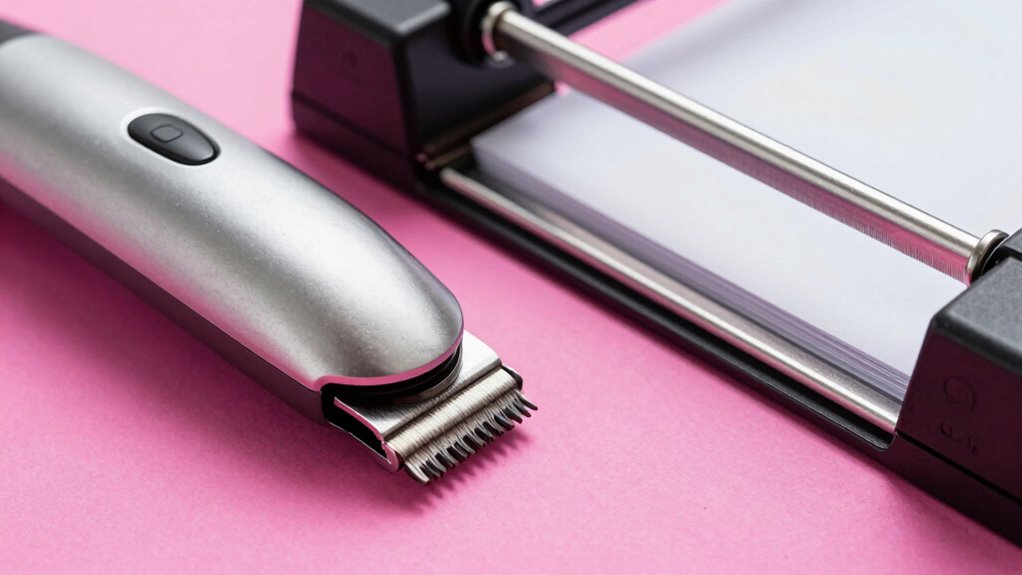
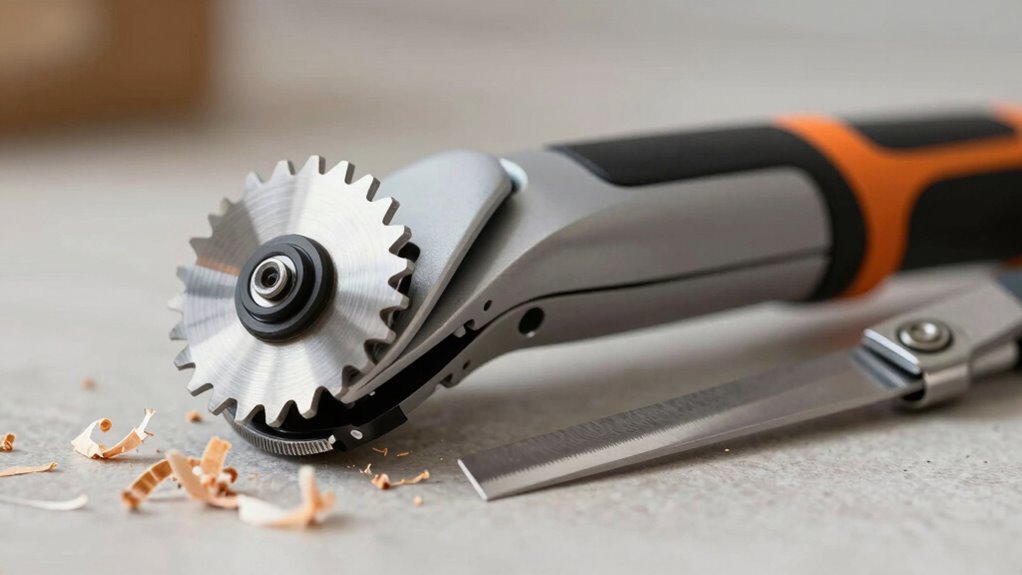
While both rotary trimmers and guillotine cutters serve the purpose of trimming paper, their designs differ considerably. Rotary trimmers feature a cylindrical blade that rotates smoothly, allowing for continuous, effortless cuts. This design makes blade sharpening easier and maintains peak performance over time. In contrast, guillotine cutters have a large, straight blade fixed to a lever arm, requiring you to lift and press down. The ergonomic design of rotary trimmers minimizes hand strain, providing a comfortable grip during use. Guillotine cutters, however, often have a more robust build but may cause fatigue with frequent use. Overall, the rotary trimmer’s focus on blade sharpening and ergonomic handling offers a more user-friendly experience, especially for repetitive trimming tasks. Additionally, understanding various digital content formats can enhance your selection of cutting tools for different projects.
heavy-duty guillotine paper cutter
As an affiliate, we earn on qualifying purchases.
As an affiliate, we earn on qualifying purchases.
Which Cutter Provides the Most Precise, Clean Cuts?
Sure! Here’s the updated content with the specified changes:
—
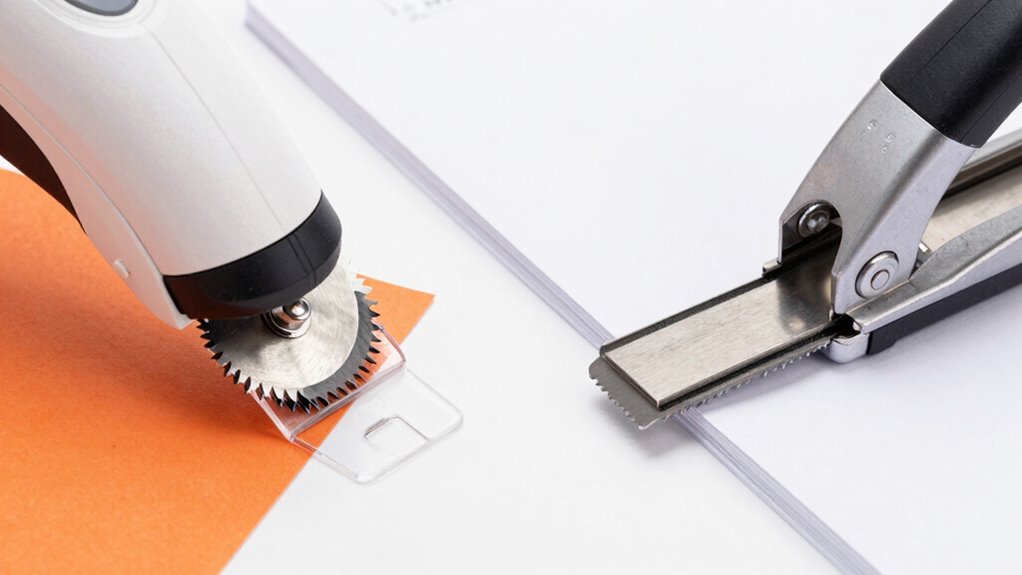
When it comes to achieving the most precise, clean cuts, the design and blade quality of a cutter play a significant role. A rotary trimmer often offers superior accuracy thanks to its sharp, rotating blade that glides smoothly, ensuring even cuts. Regular blade sharpening maintains its cutting edge, preventing jagged edges or uneven lines. On the other hand, a guillotine cutter’s blade needs consistent sharpening to stay effective, but its straight, heavy-duty blade often delivers cleaner cuts, especially with thicker materials. Additionally, high refresh rates can enhance precision in cutting tasks that require quick adjustments. An important factor to consider is proper piercing care to prevent complications when working with intricate materials. Ergonomic design also influences precision; a well-balanced, comfortable grip helps you control the cut more accurately. Additionally, choosing the right printmaking paper can enhance the overall quality of your cuts. Ultimately, both cutters can produce clean results, but a rotary trimmer with sharp blades and ergonomic features tends to provide more precise, cleaner cuts for detailed work.
precision paper trimmer with sharp blades
As an affiliate, we earn on qualifying purchases.
As an affiliate, we earn on qualifying purchases.
How Easy Is It to Use a Rotary Trimmer Versus a Guillotine Cutter?
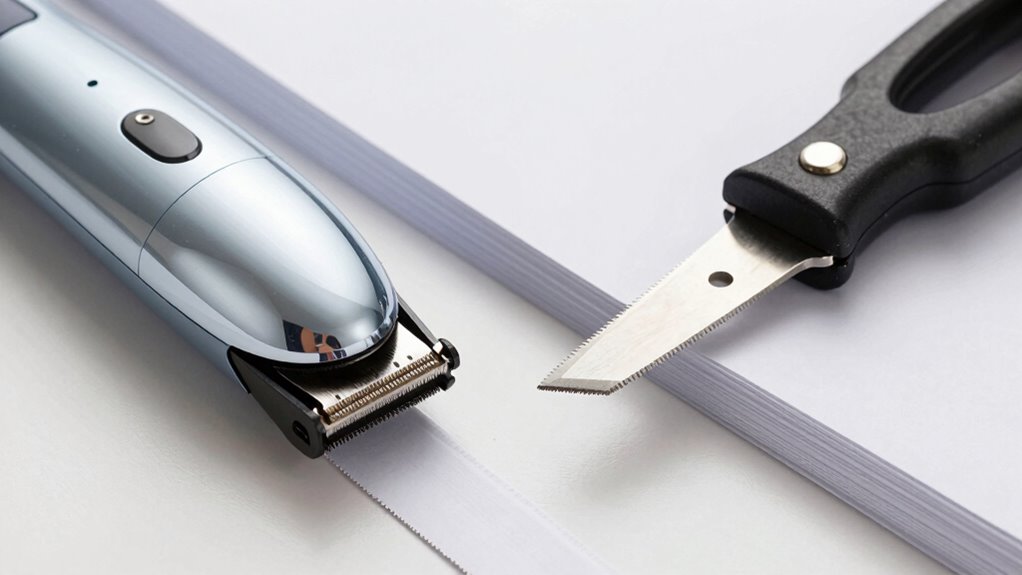
Both rotary trimmers and guillotine cutters are designed to be user-friendly, but they differ in how intuitive and straightforward they feel during operation. Rotary trimmers often excel in ergonomics and accessibility, featuring lightweight, compact designs that make them easy to handle, especially for repetitive cuts. Their aesthetic design tends to be sleek and modern, which can boost confidence during use. Additionally, using tools that promote mindfulness and presence can enhance the overall cutting experience. Proper rug cleaning techniques are also essential in maintaining your tools and workspace. Furthermore, investing in high-quality accessories can improve the durability and efficiency of your cutting tools. Guillotine cutters, on the other hand, typically have larger, more stable frames with a lever-based mechanism, requiring less fine motor skill but possibly feeling bulkier. While they might seem less accessible for detailed work, they offer straightforward operation once you get the hang of the lever. Overall, both tools are manageable, but your comfort depends on your workspace setup and personal preferences. Understanding safety checks is crucial to ensuring a smooth cutting experience and preventing accidents. Additionally, knowing the importance of cutting accuracy can significantly impact the quality of your work.
ergonomic guillotine cutter for thick materials
As an affiliate, we earn on qualifying purchases.
As an affiliate, we earn on qualifying purchases.
What Are the Pros and Cons of Rotary and Guillotine Cutting Methods?
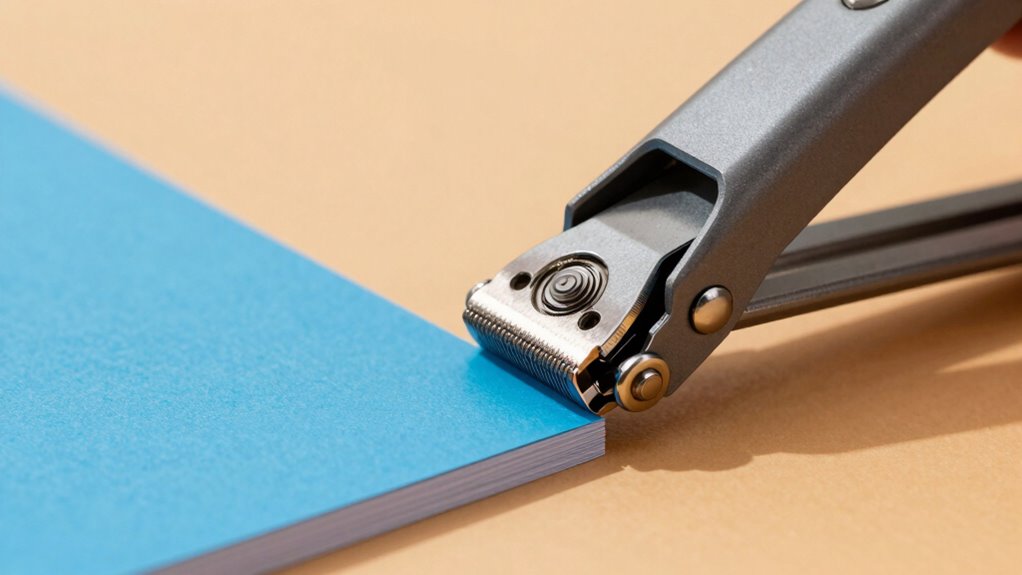
Rotary trimmers and guillotine cutters each have distinct advantages and drawbacks that can influence your choice depending on your needs. Rotary trimmers excel in cutting speed, making quick work of small stacks, but their blades may wear faster if not maintained. Guillotine cutters, on the other hand, offer precise, straight cuts ideal for larger or thicker materials, with blade durability lasting longer under heavy use. Consider this comparison:
| Feature | Rotary Trimmer | Guillotine Cutter |
|---|---|---|
| Cutting Speed | Faster for small jobs | Slower but consistent |
| Blade Durability | Wears out quicker | Lasts longer with proper care |
| Best Use | Quick, light-duty trimming | Heavy-duty, precise cuts |
Choose based on your project needs, balancing speed and longevity.
Which Cutter Leaves Fewer Burrs and Frayed Edges?
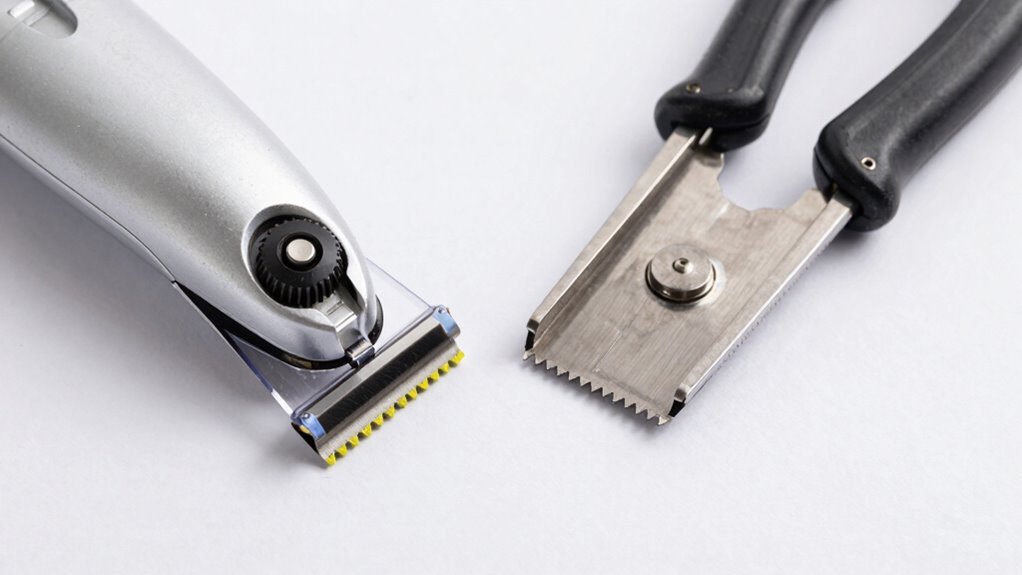
Choosing the right cutter depends not only on speed and durability but also on the quality of the cut, especially regarding burrs and frayed edges. A cutter with laser precision guarantees cleaner cuts with minimal fraying, reducing the need for further trimming. Guillotine cutters typically produce sharp, straight cuts with fewer burrs due to their sturdy blade design. Conversely, rotary trimmers, with their continuous rotary blade, can sometimes leave slight fraying along the edges, especially if not properly aligned. An ergonomic design enhances control and stability during cutting, helping you achieve cleaner results. Overall, for fewer burrs and frayed edges, a guillotine cutter often provides a more precise, consistent cut, while a rotary trimmer offers convenience but may require additional finishing to perfect the edge. Additionally, understanding the principles of precision cutting can greatly enhance your cutting experience and results. This is particularly important as emerging trends in digital publishing continue to evolve, influencing the tools and techniques used in the industry. Furthermore, ensuring the right filter sizing and flow in your workspace can also impact the quality of your cutting outcomes.
How Do Cutting Capacity and Material Compatibility Compare?
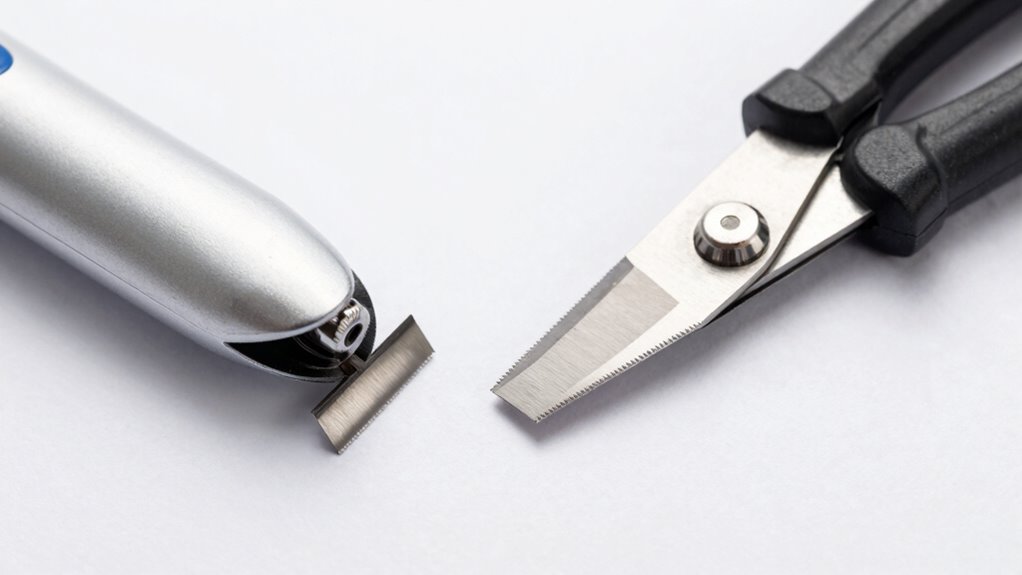
When comparing cutting capacity, you’ll want to take into account material thickness limits and compatible cutting lengths, as these affect how much you can trim at once. You should also check which material types each cutter handles best, since some are better suited for thicker or softer materials. Understanding these factors helps you choose the right tool for your specific project needs. Additionally, considering testing accuracy ensures that your cuts meet the required specifications for precision and quality. A good smart lock can enhance overall security by providing an added layer of protection for your workspace or home. Utilizing DIY beauty secrets can also elevate your overall appearance, making you feel more confident while you work on your projects. It’s important to recognize that sustainable practices in your workspace can greatly influence the environmental impact of your projects. Moreover, ensuring proper socialization importance can promote a harmonious workspace environment, enhancing collaboration and creativity.
Material Thickness Limits
While both rotary trimmers and guillotine cutters are designed to handle specific ranges of material thickness, their cutting capacities vary considerably. Your choice depends on material durability, required cutting speed, and thickness.
- Rotary trimmers typically cut thinner materials, around 1-3mm, suited for paper and lightweight plastics. Additionally, they are often favored for efficient precision in crafting and scrapbooking tasks, making them ideal for detailed projects that require finesse. Somatic therapy practices can similarly enhance focus and precision in creative tasks. Understanding cutting mechanisms can also improve your selection process.
- Guillotine cutters handle thicker, more durable materials—up to 10mm or more—ideal for cardboard and heavy stock.
- Rotary trimmers excel in fast, precise cuts on lighter materials, but may struggle with thicker, rigid materials.
- Guillotine cutters provide more force for thicker, tougher materials but may cut slower, affecting productivity.
Understanding these limits helps you select the right tool for your material’s thickness, ensuring cleaner cuts and maximum performance. Additionally, exploring grocery savings strategies can help you budget for quality cutting tools that meet your needs.
Compatible Cutting Lengths
The cutting length capacity of a trimmer or guillotine determines how much material you can process in a single cut, directly impacting workflow efficiency. When considering compatible cutting lengths, paper quality plays a role because thicker or higher-quality paper may require more precise cuts, which can affect your choice of equipment. Guillotine cutters typically handle longer sheets efficiently, making them suitable for larger projects, while rotary trimmers excel at shorter lengths with faster cutting speeds. Your decision depends on your typical material size and desired throughput. Keep in mind that a longer cutting capacity may reduce the number of passes needed, but it can also influence the overall precision. Matching your cutting length needs with your paper quality and speed requirements ensures ideal results.
Suitable Material Types
Matching your cutting equipment to the types of materials you work with guarantees the best results. Your choice depends on material flexibility and blade durability. For instance:
- Thin paper and cardstock are best suited for rotary trimmers, which handle flexible materials easily without tearing. Additionally, using a cutter that minimizes radiation exposure can enhance the safety of the cutting process, especially when considering ethical consumer choices in tool selection.
- Heavier materials like cardboard or foam board require a guillotine cutter with a sturdy blade for clean cuts.
- Plastic sheets demand a cutter with high blade durability to prevent dulling or damaging the blade.
- Textured or laminated materials benefit from precise, smooth cuts, making both rotary trimmers and guillotine cutters viable, depending on thickness and flexibility.
Additionally, using tools that are designed for specific materials can enhance cutting efficiency and accuracy.
Understanding these factors guarantees your tool matches your material, delivering cleaner cuts and prolonging equipment life.
What Safety Tips and Maintenance Tips Should You Know?
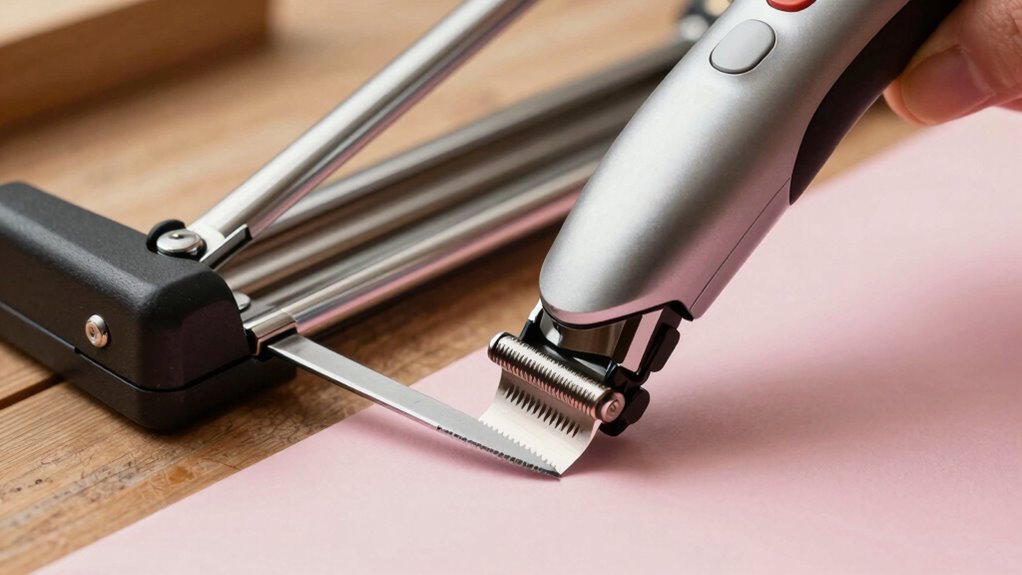
To stay safe and keep your cutter in top shape, always handle blades carefully and avoid touching the cutting edges. Regularly clean the device to prevent buildup and guarantee smooth operation. Store your equipment securely to prevent accidents and damage when not in use.
Proper Blade Handling
Handling blades safely is essential to prevent accidents and guarantee your trimmer or cutter stays in good working condition. Proper blade handling also preserves blade durability and ensures cutting accuracy. To do this:
- Always use a blade guard when not in use to prevent accidental cuts.
- Regularly inspect blades for dullness, chips, or damage—sharp blades cut cleaner and last longer.
- Use the correct tools to change blades; avoid using your hands directly to prevent injury.
- Store blades in a secure, dry place to prevent rust and maintain sharpness.
Regular Cleaning Practices
Regular cleaning keeps your trimmer or cutter operating safely and effectively. Establishing a regular cleaning schedule helps prevent buildup of paper scraps, dust, and debris that can impact cutting performance. Use appropriate tools, like brushes or compressed air, to remove debris from blades and moving parts. When cleaning, follow proper disposal methods for waste materials—dispose of paper scraps and used blades safely, according to your facility’s protocols. Avoid using harsh chemicals that could damage blades or machinery. Always unplug the device before cleaning and wear gloves if necessary. Consistent maintenance not only extends your equipment’s lifespan but also keeps cuts clean and precise. Routine cleaning practices ensure safe operation while minimizing the risk of accidents or malfunctions.
Safe Storage Procedures
Proper storage of your rotary trimmer or guillotine cutter is essential for maintaining safety and prolonging the equipment’s lifespan. To guarantee storage safety and keep blades in top condition, follow these tips:
- Always store the cutter in a secure, dry place away from children and pets.
- Cover the blades with protective caps or guards to prevent accidental cuts.
- Keep the blades clean and sharpened; dull blades can be dangerous during use and when stored.
- Avoid stacking heavy objects on top of the equipment to prevent damage and misalignment.
Which Cutter Is Better for High-Volume or Professional Use?
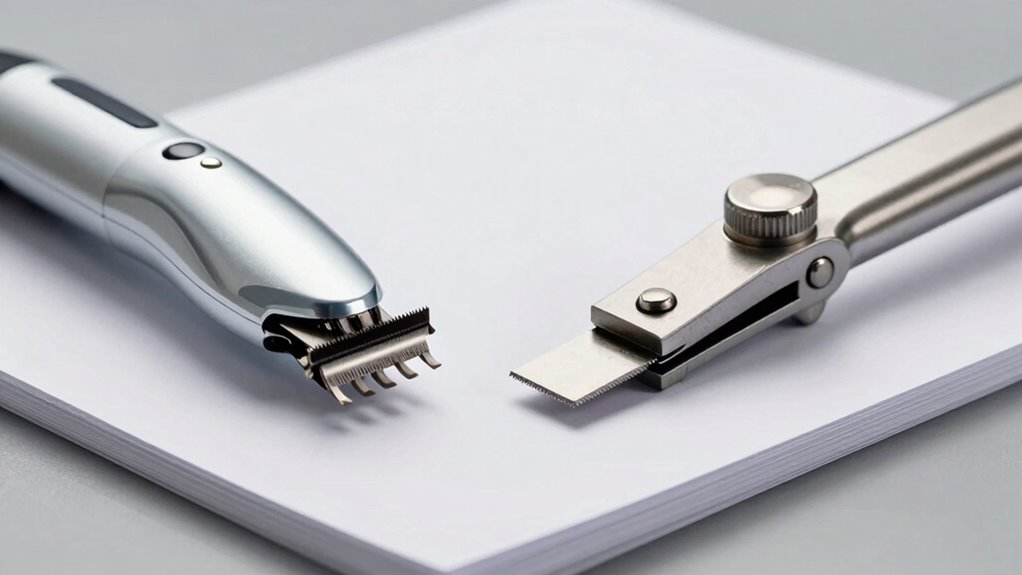
When choosing a cutter for high-volume or professional use, it’s crucial to take into account durability, speed, and precision. A guillotine cutter often offers material flexibility, allowing you to handle various paper types efficiently, which is important in busy environments. Its straightforward operation enables quick, consistent cuts, boosting productivity. Rotary trimmers, on the other hand, tend to be more cost-efficient over time, especially if you need to make frequent cuts with minimal maintenance. They can handle large stacks of paper with ease, making them suitable for high-volume tasks. While both tools have their advantages, a guillotine cutter might be better for heavy-duty, professional settings due to its robustness and material versatility. Ultimately, your choice depends on balancing speed, durability, and ongoing costs.
How to Choose the Best Cutter for Your Specific Needs
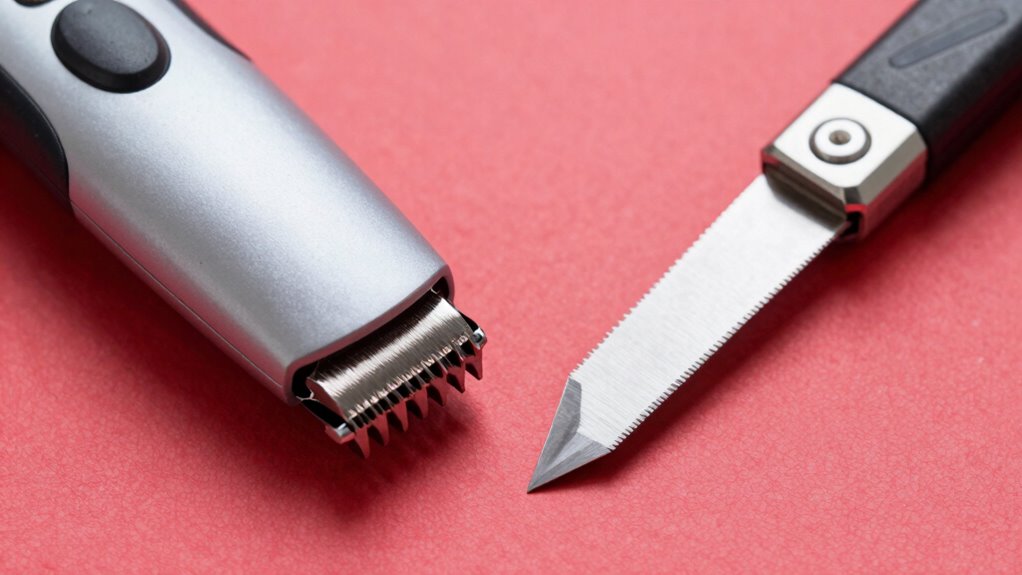
Choosing the right cutter depends on understanding your specific needs and workflow. To find the best fit, consider how you plan to use it for creative applications or decorative edges. Ask yourself:
Selecting the right cutter depends on your needs and workflow, whether for creative designs or decorative edges.
- Will you need precise cuts for detailed designs or simple straight edges?
- Do you want versatility in handling different paper sizes and thicknesses?
- Is speed important, or do you prioritize accuracy for intricate work?
- Will you be doing frequent, high-volume cuts or occasional projects?
A rotary trimmer is ideal for smooth, clean cuts, perfect for decorative edges and detailed work. A guillotine cutter offers powerful, straight cuts suitable for bulk projects. Choose based on your project complexity and volume.
Frequently Asked Questions
Can Rotary Trimmers Handle Thicker or Tougher Materials Effectively?
Rotary trimmers can handle thicker or tougher materials effectively, but their material flexibility is limited compared to other tools. They work best for standard paper and lighter materials, providing good cutting precision. For very thick or rigid materials, a guillotine cutter or specialized tool may be more efficient. If you frequently cut tougher materials, consider a cutter designed specifically for durability and strength to guarantee clean, precise cuts.
How Does Blade Replacement Differ Between Rotary and Guillotine Cutters?
You might think blade replacement is similar for both tools, but it actually differs considerably. Rotary trimmers often require blade sharpening or replacement of the entire rotary blade, which can be more frequent due to wear from cutting tougher materials. Guillotine cutters usually have a replaceable, straight blade that’s easier to swap out. For cutting precision, regular blade maintenance ensures cleaner cuts, so choose a cutter with straightforward blade replacement options.
Are There Specific Maintenance Routines to Ensure Cleaner Cuts Over Time?
To guarantee cleaner cuts over time, you should regularly perform blade sharpening for both rotary trimmers and guillotine cutters. Keep your blades sharp, and check safety features to prevent accidents. Clean the cutting area frequently to remove debris that can dull blades. Lubricate moving parts as recommended, and follow manufacturer maintenance routines. Doing so maintains cutting precision and prolongs your cutter’s lifespan, ensuring consistently clean, professional results.
What Is the Typical Lifespan of Rotary Versus Guillotine Cutter Blades?
You can expect the blades of rotary trimmers and guillotine cutters to last between 1,000 and 5,000 cuts, depending on usage and maintenance. Regular blade sharpening enhances cutting precision, extending the lifespan of both tools. For maximum performance, maintain consistent sharpening routines and avoid excessive force. Proper care, timely replacement, and careful handling ensure your blades stay sharp longer, providing cleaner cuts and reliable accuracy over their lifespan.
Do Different Paper or Material Types Influence Cut Quality Between the Two Cutters?
Different paper or material types do influence cut quality between rotary trimmers and guillotine cutters. Thicker paper or rigid materials can challenge rotary blades, causing less precise cuts, while flexible materials are easier to trim cleanly. Guillotine cutters handle thicker or stiffer paper better, providing a smoother cut. Your choice depends on paper thickness and material flexibility, ensuring you select a cutter suited to your material’s specific requirements for a cleaner, more precise cut.
Conclusion
Choosing between a rotary trimmer and a guillotine cutter depends on your needs. While some worry about precision with rotary trimmers, modern models offer remarkably clean cuts, rivaling guillotine cutters. If you prioritize safety, ease of use, and versatility, a rotary trimmer might be your best bet. Don’t let concerns about quality hold you back—both tools can deliver professional results when chosen correctly for your specific projects.
NFL season / tailgating Picks
team gear
As an affiliate, we earn on qualifying purchases.