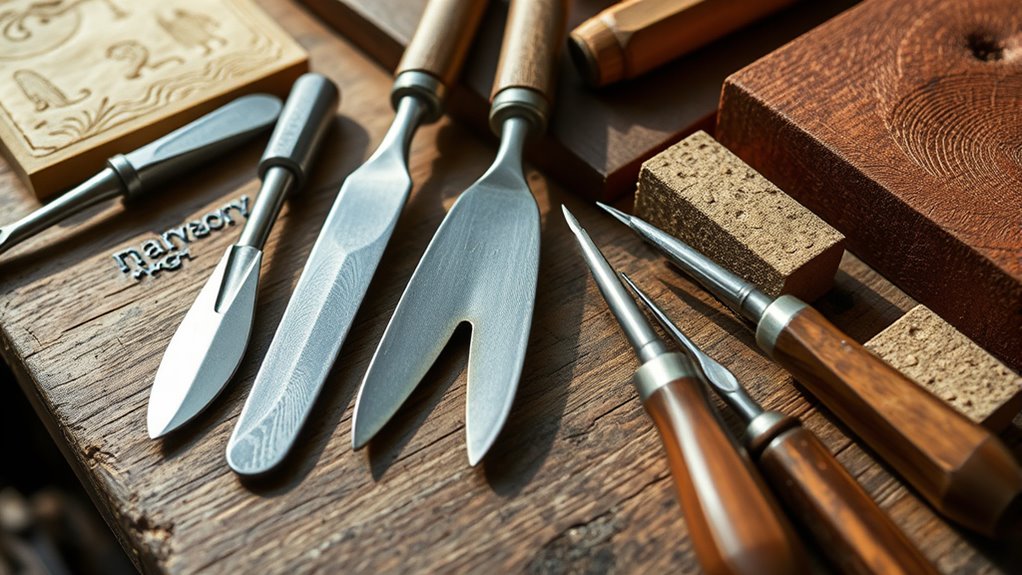

When choosing carving tools for linocut and woodcut, you’ll want to have a variety of gouges, V-tools, and U-tools. These tools help you create fine lines, broad areas, and detailed textures. Always prioritize sharp, well-maintained blades to improve safety and quality. Using the right tool for each part of your design makes carving easier and more precise. Keep exploring to learn how to select, use, and care for your tools effectively.
Open a free Amazon Business account
Business pricing, bulk buying and tax-exempt orders.
As an affiliate, we earn on qualifying purchases.
Key Takeaways
- Use gouges, V-tools, U-tools, and detail knives for precise carving in linocut and woodcut.
- Keep tools sharp and well-maintained to ensure clean cuts and safety.
- Choose the appropriate tool based on whether you need fine lines or broad, smooth areas.
- Work on a stable, well-lit surface to improve control and accuracy.
- Store tools properly and carve away from your body to prevent injuries.

When working on linocut and woodcut prints, choosing the right carving tools is essential for achieving clean, detailed designs. Your selection of tools directly impacts the quality and ease of your carving process. Traditional carving techniques rely heavily on specific tools designed for precision and control, such as gouges, V-tools, U-tools, and detail knives. These tools help you shape the material accurately, whether you’re working on soft linoleum or hardwood blocks. Using the appropriate tools guarantees your lines are crisp and your details sharp, making the difference between a rough impression and a polished print.
It’s also critical to follow safety precautions for carving to prevent injuries. Sharp tools are necessary for clean cuts, but they can also cause accidents if not handled carefully. Always carve away from your body, keeping your hands behind the cutting edge, and use a stable surface to work on. When handling gouges and knives, maintain a firm grip to avoid slips, and consider using a carving glove on your non-dominant hand for added protection. Keep your tools sharp; dull blades require more force and are more likely to slip, increasing the risk of injury. Store your carving tools properly, ideally in a dedicated toolbox or a holder, to prevent accidental cuts when reaching for them. Additionally, work in a well-lit area so you can see your lines clearly and avoid applying excessive pressure that could cause the tool to slip.
Traditional carving techniques emphasize the importance of patience and precision. Whether you’re using a V-gouge for fine lines or a U-gouge for broader areas, each tool serves a specific purpose that contributes to your overall design. Practice proper technique by making controlled, deliberate cuts, and avoid forcing your tools through tough material, which can lead to breakage or uneven cuts. Regularly inspecting your tools for damage or dullness and maintaining them is key to consistent results. Remember, the more you familiarize yourself with different tools and techniques, the more confident and safe you’ll become in your carving process. Additionally, understanding the role of proper tool maintenance and ensuring your tools stay sharp can significantly improve your carving experience and safety.
As an affiliate, we earn on qualifying purchases.
Frequently Asked Questions
What Safety Precautions Should I Take When Using Carving Tools?
When using carving tools, you should always wear protective gear like gloves and safety glasses to prevent injuries. Keep your workspace clean and well-lit to avoid accidents and guarantee good visibility. Hold tools firmly and carve away from your body to prevent slips. Take your time, stay focused, and regularly check your tools for sharpness. These precautions help keep you safe and maintain workspace safety during your carving projects.
How Do I Choose the Right Blade for Different Textures?
Choosing the right blade is like selecting your paintbrush for a masterpiece. For fine lines, opt for detail blades, perfect for delicate texture techniques. Wide, curved blades help create bold, sweeping textures, while V-shaped blades excel in cross-hatching or stippling. Consider your project’s desired effect and match your blade types accordingly. Experiment with different blades to discover which best brings your artistic vision to life through varied textures.
Can I Sharpen My Carving Tools at Home?
Yes, you can sharpen your carving tools at home using sharpening techniques and home sharpening kits. First, clean the tools to remove debris, then use a sharpening stone or honing guide to maintain the correct bevel angle. Regularly hone your blades to keep them sharp and precise. With practice and proper tools, you’ll guarantee your carving tools stay in top condition, making your artwork easier and more enjoyable.
What Are the Best Storage Methods for Carving Tools?
Imagine your carving tools as treasured brushes in an artist’s gallery. To keep them sharp and ready, you must treat them like precious artifacts. Use a dedicated toolbox or a magnetic strip for easy access, ensuring each tool’s edge stays protected. Proper storage organization prevents damage and rust, simplifying tool maintenance. By choosing these methods, you safeguard your tools’ longevity and craftsmanship, turning your workspace into a well-curated creative haven.
Which Tools Are Suitable for Beginners in Linocut and Woodcut?
As a beginner, you’ll want to start with essential carving knives that are comfortable and easy to control. Look for beginner-friendly tools like small gouges and U-shaped chisels, which help you develop your skills without feeling overwhelmed. These essential carving knives and gouges are perfect for practicing your cuts and creating detailed designs, making your linocut or woodcut projects enjoyable and manageable from the start.
As an affiliate, we earn on qualifying purchases.
Conclusion
Remember, a craftsman’s greatest tool is patience. With the right carving tools, you can bring your linocut and woodcut visions to life. Take your time, experiment, and don’t rush the process. As the saying goes, “Haste makes waste.” By carefully choosing and using your tools, you’ll create stunning prints that showcase your skill and creativity. Keep honing your craft—beautiful art begins with the right tools and a steady hand.
As an affiliate, we earn on qualifying purchases.
As an affiliate, we earn on qualifying purchases.
Fall Picks
fall essentials
As an affiliate, we earn on qualifying purchases.