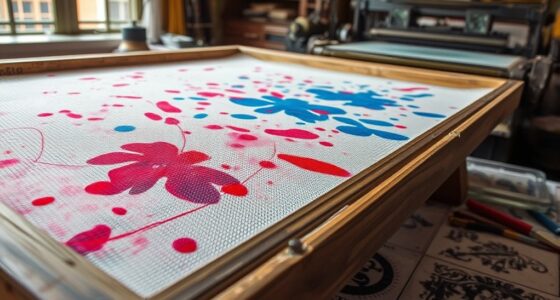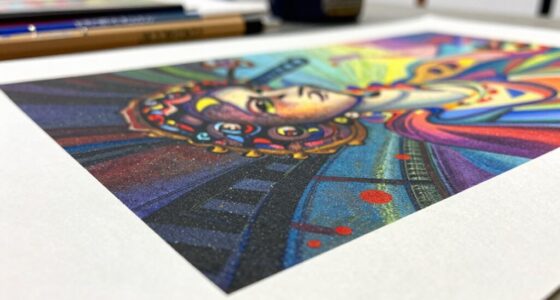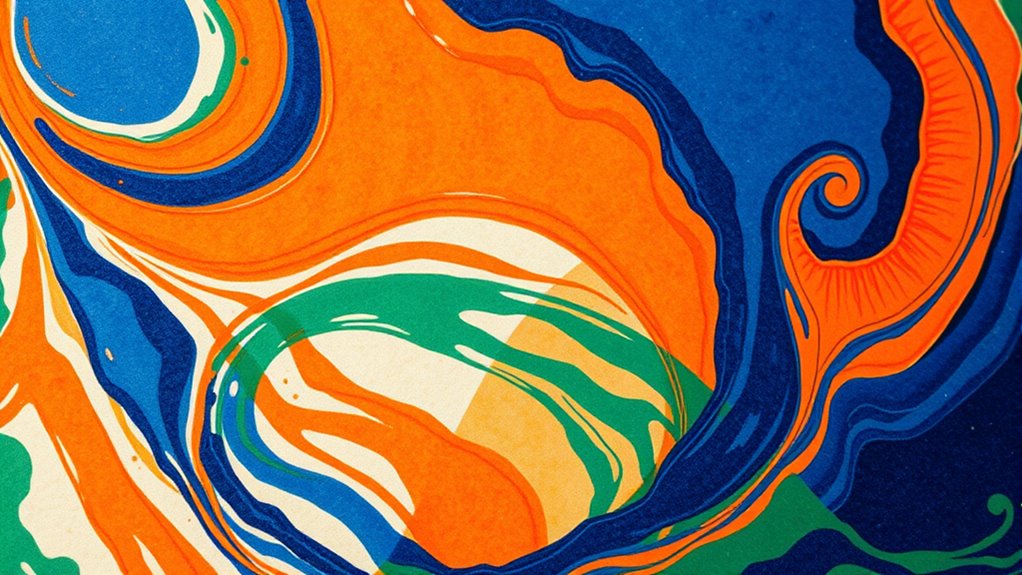
Monotype printmaking is a creative process where you apply ink or paint directly onto a smooth, non-absorbent surface like glass or metal, then manipulate it with brushes, rollers, or your fingers. When you press paper onto this surface, you transfer a unique, one-of-a-kind image that can’t be duplicated. Each print reflects spontaneous improvisation and personal expression. To discover more about this fascinating technique and how to perfect your prints, keep exploring the details below.
Key Takeaways
- Monotype printmaking involves applying ink or paint directly onto a smooth surface and transferring it onto paper for a one-of-a-kind image.
- Each monotype is unique because the process emphasizes spontaneous manipulation and immediate transfer, preventing duplicates.
- Artists can create textures and patterns through direct manipulation with brushes, rollers, or fingers on non-absorbent surfaces like glass or metal.
- The technique is rooted in 19th-century experimental art, evolving into a recognized form linked to Impressionism and Expressionism.
- Modern practitioners combine traditional monotype methods with digital or mixed media to explore new expressive possibilities.

Monotype printmaking is a unique and spontaneous art form that allows you to create one-of-a-kind images through a direct transfer of ink or paint onto paper. Unlike other printmaking techniques that involve multiple steps or carving, monotype emphasizes immediacy and improvisation. To get started, you’ll want to familiarize yourself with a techniques overview, which covers the core methods used in monotype creation. Typically, you apply ink or paint directly onto a smooth, non-absorbent surface such as glass, metal, or acrylic. You can then manipulate the medium using brushes, rollers, or even your fingers to create textures, patterns, and images. Once you’re satisfied with your composition, you press a piece of paper onto the surface, transferring the image. Since the process involves direct contact and manual manipulation, each print is inherently unique, with no two identical impressions. Health-conscious options are increasingly incorporated into modern monotype projects, reflecting broader trends in consumer preferences.
Understanding the historical development of monotype printmaking can deepen your appreciation of its artistic roots. The technique emerged in the late 19th century, gaining prominence as an experimental alternative to traditional printmaking methods like etching or lithography. Artists like Edgar Degas and Mary Cassatt were early adopters, exploring monotype for its ability to produce expressive, painterly effects that were difficult to achieve through more rigid print processes. Over time, monotype evolved from a mere experimental technique into a recognized art form, embraced by modern artists for its spontaneity and freedom. The process’s roots in 19th-century artistic circles reflect its connection to the broader movements toward Impressionism and Expressionism, where capturing fleeting moments and emotional immediacy became paramount. Additionally, contemporary artists are expanding the boundaries of monotype by integrating digital tools and mixed media to create layered, innovative works.
Today, the technique continues to evolve as contemporary artists experiment with new materials and tools, blending traditional methods with modern innovations. Its historical development highlights a shift from purely technical printmaking toward a more personal, expressive art form. You might find yourself inspired by the work of past masters or by contemporary artists who push the boundaries of monotype. Whether you’re seeking a quick, expressive sketch or a detailed, layered image, understanding the techniques overview and historical development of monotype printmaking equips you with a richer perspective on its possibilities. As you practice, you’ll discover that each print embodies a moment of spontaneity, a direct reflection of your hand and mind. This blend of history, technique, and personal expression makes monotype an endlessly fascinating and rewarding process for any artist enthusiastic to explore the unpredictable beauty of spontaneous image creation.
Top picks for "monotype printmak creat"
Open Amazon search results for this keyword.
As an affiliate, we earn on qualifying purchases.
Frequently Asked Questions
What Types of Inks Work Best for Monotype Printmaking?
You should use solvent-based inks or water-soluble inks for monotype printmaking. Solvent-based inks offer rich, vibrant colors and excellent adhesion, making details pop. Water-soluble inks are easier to clean and safer to handle, providing softer tones and easier blending. Depending on your desired effect and cleanup preferences, choose the type that best suits your project. Both inks work well, so experiment to find the perfect match for your artistic style.
How Can I Correct Mistakes During the Printing Process?
If you spot mistakes during your print, act quickly. Use a damp cloth to gently remove residual ink from the problematic areas, ensuring you don’t disturb the rest of your design. For print alignment correction, carefully reposition your paper or plate before running it through the press again. Take your time to make precise adjustments, and test on scrap paper if needed to perfect your correction before finalizing your print.
What Paper Textures Yield the Best Results?
Imagine a canvas of whispering leaves or smooth river stones—your paper texture choice shapes your print’s story. For best results, opt for a variety of textures, like smooth, lightly textured, or rough surfaces, to create depth. Heavier paper weights maintain stability during pressing, ensuring crisp impressions. Experiment with different textures to find the perfect balance, allowing your artwork to breathe with rich, tactile detail and vibrant, unique impressions.
How Many Prints Can I Produce From a Single Monotype?
You can typically produce one to three prints from a single monotype, but this depends on your edition limits and your desire for creative variation. Each print will be unique, especially if you add different colors or textures. Keep in mind, the more prints you make from one plate, the less variation you’ll have. To maintain originality, limit your edition size and explore new techniques for each impression.
What Safety Precautions Should I Follow When Using Printmaking Inks?
Safety in printmaking inks is your shield, your armor. Always wear protective gear like gloves and aprons, symbolizing your readiness to guard against spills and fumes. Store inks in well-labeled, airtight containers, representing security and order. Ventilate your workspace, like a gust of fresh air, to prevent inhaling harmful fumes. Respect these precautions as your safeguard, ensuring your creative journey remains safe and inspiring.
Conclusion
Remember, a picture is worth a thousand words, and with monotype printmaking, you create a one-of-a-kind masterpiece that tells its own story. Each impression is unique, just like your artistic journey. Embrace the process, experiment freely, and don’t be afraid to make mistakes—they’re part of the magic. As the saying goes, “Every artist was first an amateur,” so keep practicing and enjoy the beauty of your individual expression.