Printmaking began in ancient China around the 7th century CE with woodblock printing, allowing mass distribution of texts and images. Techniques spread along trade routes, leading to the development of movable type by Johannes Gutenberg during the 15th century, which revolutionized book production and knowledge dissemination. Over time, innovations like etching, lithography, and digital printing expanded artistic options. To understand how these methods evolved and shaped culture, keep exploring how printmaking continues to transform today.
Key Takeaways
- Ancient China pioneered early printmaking methods like woodblock printing around the 7th century CE, enabling mass production.
- Techniques spread along trade routes, influencing the development of movable type and fostering cultural exchange.
- Johannes Gutenberg’s invention of movable type in the 15th century revolutionized printing, boosting accessibility during the Renaissance.
- Modern printmaking expanded with etching, lithography, and screen printing, increasing artistic diversity and technical capabilities.
- Today, digital technology continues to evolve printmaking, reflecting societal changes and maintaining its role in cultural communication.
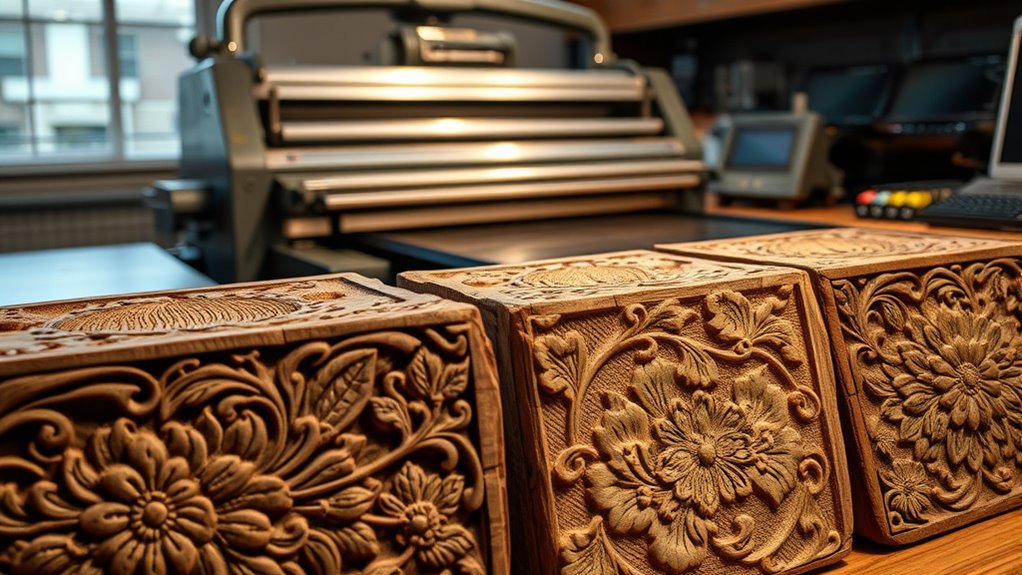
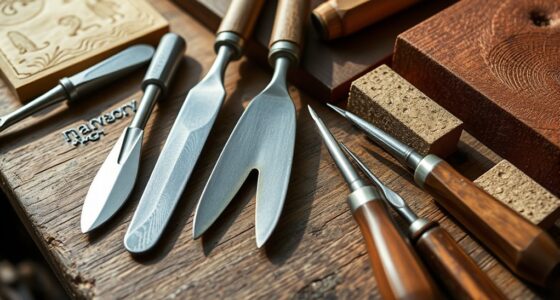
Have you ever wondered how images and texts have been shared across centuries? The history of printmaking reveals a fascinating journey through time, showcasing how techniques evolution has shaped communication and art. Early civilizations like ancient China pioneered the earliest forms of printmaking, where woodblock printing emerged around the 7th century CE. This technique involved carving images or texts into wooden blocks, inking them, and pressing them onto paper or fabric. It was revolutionary because it allowed for the mass production of images and words, making information more accessible. As the technique evolved, so did its cultural significance. In China, printmaking became an essential tool for spreading religious texts, literature, and art, fostering cultural exchange and literacy. The innovations didn’t stay confined to China; they spread along trade routes, influencing other regions and leading to new methods, such as movable type.
When you consider the development of movable type, you’re witnessing a major turning point in printmaking history. Invented by Johannes Gutenberg in the 15th century, movable type allowed individual characters to be arranged and reused, vastly increasing the efficiency of printing. This breakthrough made books and pamphlets more affordable and accessible, fueling the spread of knowledge during the Renaissance. The techniques evolution here was rapid, leading to the proliferation of printed materials across Europe and beyond. The cultural significance of these advancements is profound, as they contributed to the democratization of information, the rise of literacy, and the dissemination of ideas that transformed societies.
Moving into modern times, printmaking continued to evolve with new techniques such as etching, lithography, and screen printing. These methods expanded creative possibilities for artists, enabling intricate details and bold visuals that were previously impossible to achieve. Today, digital technology further revolutionizes printmaking, making it more versatile and accessible. While the tools have changed, the core purpose remains the same: sharing ideas, stories, and culture through visual and textual expression. Additionally, the ongoing techniques evolution reflects the dynamic nature of printmaking, adapting to technological changes and artistic demands. Throughout history, printmaking has served as a mirror of societal shifts, technological advancements, and cultural values. Its techniques evolution continues to push boundaries, ensuring it remains a crucial form of artistic and communicative expression. From ancient Asia to modern studios, printmaking’s enduring legacy lies in its ability to connect people across time, preserving and transforming human culture in every print.

Speedball 3471 Super Value Block Printing Starter Kit – Includes Ink, Brayer, Lino Handle and Cutters, Speedy-Carve
PERFECT INTRO SET – The block printing starter kit has all the essentials to get you started in…
As an affiliate, we earn on qualifying purchases.
As an affiliate, we earn on qualifying purchases.
Frequently Asked Questions
How Did Printmaking Influence Global Art Movements?
Printmaking revolutionized global art movements by boosting artistic expression and enabling widespread cultural dissemination. You see, it allowed artists to produce multiple copies of their work quickly and affordably, reaching diverse audiences worldwide. This accessibility sparked new styles and ideas, fostering cross-cultural exchanges. As a result, printmaking played an essential role in shaping modern art movements, making art more inclusive, dynamic, and interconnected across different regions and societies.
What Were the Earliest Materials Used in Printmaking?
You learn that the earliest materials in printmaking included ancient inks made from natural substances like charcoal and plant extracts, which allowed for vivid, durable images. Early printing presses utilized carved wooden blocks and metal movable type, revolutionizing how images and text were reproduced. These materials helped lay the foundation for the development of more sophisticated techniques, shaping the future of printmaking and its impact on art and communication.
How Did Printmaking Techniques Evolve During the Renaissance?
During the Renaissance, printmaking techniques evolved markedly through technique innovations like engraving and etching, allowing artists to create more detailed and intricate designs. You see many artist collaborations, where printmakers and painters worked together to produce high-quality images, expanding artistic possibilities. These advancements made prints more accessible and fostered a broader dissemination of ideas, ultimately transforming art production and inspiring future generations of artists.
What Role Did Printmaking Play in Spreading Literacy?
Like a lighthouse guiding ships to shore, printmaking illuminated minds by spreading literacy. You see, it revolutionized literacy dissemination and made education accessibility possible for many. Mass-produced books and pamphlets broke down barriers, reaching common people rather than just the elite. This shift empowered individuals to learn, think critically, and participate in society, transforming the way knowledge traveled and ensuring that more people could read and understand the world around them.
How Is Digital Printmaking Changing Traditional Methods?
Digital printmaking is transforming traditional methods through digital innovation, allowing you to experiment artistically with new techniques and materials. It offers faster, more flexible options, enabling you to create complex designs and unique prints that weren’t possible before. By embracing digital tools, you can push boundaries, explore innovative styles, and expand your artistic expression, all while streamlining the printing process and making it more accessible than ever.
MerryXD 6 Pack Assembly Completed T13 3D Action Figure,Dummy Nova Titan Lucky 13 Action Figure 3D Printed Multi-Jointed Movable Toy
Designed by Soozafone: MerryXD 3D printed T13 robot series is designed by the talented artist soozafone, known for…
As an affiliate, we earn on qualifying purchases.
As an affiliate, we earn on qualifying purchases.
Conclusion
You’ve seen how printmaking evolved from ancient China’s woodblocks to today’s digital presses. Did you know that over 30 million books are published worldwide each year? This shows just how powerful and widespread printmaking has become, shaping cultures and spreading ideas for centuries. As you appreciate its rich history, remember that every printed page carries a story of innovation and creativity—reminding you of printmaking’s lasting impact on our world.
Paper Lithography (Small Crafts)
As an affiliate, we earn on qualifying purchases.
As an affiliate, we earn on qualifying purchases.

Linocut Kit for Printmaking & Stamp Making: Linocut Tools Block Printing Kit Supplies with Linoleum Blocks, Ink, Brayer, Guide for Beginners – DIY Hobby & Christmas Birthday Gift for Adults & Kids
[Perfect Starter Kit] Everything you need to begin, no extra purchases required! Includes carving tools, rubber blocks, brayer,…
As an affiliate, we earn on qualifying purchases.
As an affiliate, we earn on qualifying purchases.