When choosing between acid-free and buffered mat boards, you should consider your preservation needs. Acid-free mats have a neutral pH and offer long-term stability, making them ideal for valuable or irreplaceable items. Buffered mats, with alkaline substances, help neutralize acids in the environment and are better for materials sensitive to acid damage. Understanding these differences can help you select the best option, and exploring further reveals how to make the most eco-friendly choice.
Listen free for 30 days with Audible
Thousands of audiobooks and originals — cancel anytime.
As an affiliate, we earn on qualifying purchases.
Key Takeaways
- Acid-free mats have a neutral pH (~7), ideal for long-term preservation of valuable or irreplaceable items.
- Buffered mats contain alkaline substances that help neutralize acids, offering extra protection for paper-based artworks.
- Acid-free mats are more environmentally friendly and emit fewer harmful byproducts during manufacturing and disposal.
- Buffered mats are suitable for items that need protection from fluctuating environmental acid levels.
- The choice depends on preservation goals; acid-free mats are preferred for longevity, while buffered mats add extra acid protection.
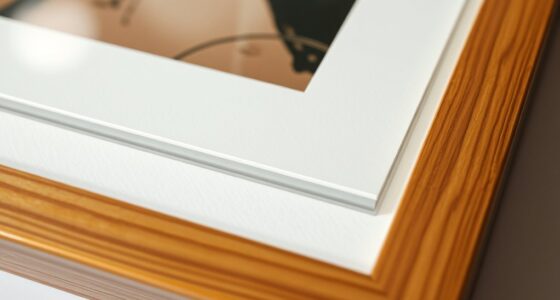
When choosing mat boards for framing and preservation, understanding the differences between acid-free and buffered materials is vital. Both options play a crucial role in protecting your artwork or photographs, but they serve different purposes and have distinct characteristics. Acid-free mats are made from materials that have a neutral or basic pH level, typically around 7, guaranteeing they won’t release acids that can deteriorate your valuable items over time. Buffered mats, on the other hand, contain alkaline substances like calcium carbonate, which help neutralize acids in the environment and any acids that may come into contact with the artwork. Knowing which type to use depends on the specific needs of your piece and the long-term preservation goals you set.
Choosing between acid-free and buffered mats depends on your artwork’s preservation needs and environmental conditions.
In terms of archival quality, acid-free mats are often regarded as the gold standard because they provide a stable, inert environment that minimizes chemical reactions that can cause deterioration. They don’t contain acids or lignins that can break down over time, making them ideal for artworks, photographs, and documents meant to last for decades or even centuries. Buffered mats, while also considered archival, are particularly beneficial when dealing with materials that are more sensitive to acids, such as paper-based artworks or items stored in environments with fluctuating humidity and pH levels. The buffering agents absorb and neutralize acids that might otherwise cause yellowing, brittleness, or fading, thereby extending the lifespan of your collection. Additionally, advancements in eco-friendly manufacturing practices are making both types more sustainable and environmentally conscious choices for preservation.
When evaluating environmental impact, both types of mats have their pros and cons. Acid-free mats are generally more environmentally friendly because they produce fewer harmful byproducts during manufacturing and disposal. Their neutral pH and lack of chemical additives mean they’re less likely to contribute to pollution or environmental degradation. Buffered mats, however, may involve additional chemicals in their production process, which can have a greater environmental footprint. It’s important to consider sourcing from manufacturers that prioritize sustainable practices and use eco-friendly materials, regardless of the type of mat board you choose.
Ultimately, your decision should balance archival quality with environmental impact. If you’re preserving irreplaceable or highly valuable items, acid-free mats are usually the safest choice. For items that require additional buffering against acid migration, buffered mats provide extra protection. Both options, when selected thoughtfully, help guarantee your artwork remains vibrant and intact over time, all while considering their environmental footprint. Recognizing these differences helps you make informed choices that align with both preservation goals and eco-conscious values.
As an affiliate, we earn on qualifying purchases.
Frequently Asked Questions
Which Mat Board Is Better for Preserving Photographs Long-Term?
When choosing a mat board for long-term photo preservation, you need to consider archival quality and material compatibility. A board that’s acid-free offers better protection against deterioration, ensuring your photographs stay vibrant over time. Buffered boards can help neutralize acids in surrounding materials, but if your photos are sensitive, acid-free boards are safer. Always select the option that best matches your photos’ needs for ideal, long-lasting preservation.
Can Buffered Mats Be Used With All Types of Artwork?
Buffered mats can be used with many types of artwork, but they’re not suitable for all, especially delicate or sensitive pieces. You should consider museum-quality conservation techniques to protect valuable artworks. For instance, some materials may react negatively with buffering agents, causing deterioration. Always research the specific needs of your artwork and consult conservation experts to guarantee you’re using the right mat board, preserving your piece’s integrity long-term.
How Do I Identify if a Mat Board Is Truly Acid-Free?
Did you know that only about 20% of mat boards are properly labeled for longevity? To identify if a mat board is truly acid-free, you should perform pH testing, which reveals its acidity level. Material transparency is key—look for clear labels or certifications from reputable sources. If unsure, consult the manufacturer’s specifications or request a test result to guarantee your artwork stays preserved over time.
Are There Environmental Considerations When Choosing Between the Two?
When choosing between acid-free and buffered mat boards, consider environmental factors like recycling options and eco-friendly materials. Acid-free boards often lack harmful chemicals, making them more recyclable and better for the environment. Buffered boards contain alkaline substances that may affect recyclability or eco-friendliness. So, if sustainability matters to you, opt for acid-free mats, as they typically align better with eco-conscious practices and support recycling efforts.
What Are the Cost Differences Between Acid-Free and Buffered Mats?
When comparing costs, you’ll notice pricing variations based on material costs and quality. Buffered mats tend to be slightly more expensive because they contain an alkaline substance that adds to production costs, while acid-free mats are usually more affordable due to simpler materials. Your choice depends on your budget and preservation needs. Keep in mind, investing in higher-quality mats can protect artwork longer, but initial costs may vary.
As an affiliate, we earn on qualifying purchases.
Conclusion
When choosing between acid-free and buffered mat boards, consider your artwork’s specific needs. For instance, if you’re framing a delicate watercolor, acid-free boards prevent yellowing and deterioration. Conversely, buffered boards work well for paper-based pieces that might benefit from pH stabilization. Ultimately, understanding your artwork’s materials and environment helps you make the best choice, ensuring your piece stays vibrant and protected for years to come.
As an affiliate, we earn on qualifying purchases.
As an affiliate, we earn on qualifying purchases.
Flea & tick season Picks
flea and tick prevention
As an affiliate, we earn on qualifying purchases.