To conduct artist interviews for content marketing, start with thorough research on the artist’s work, influences, and recent projects to craft meaningful questions. Focus on open-ended prompts that encourage storytelling and insight into their creative process. Create a comfortable environment and listen actively to their responses, allowing for natural follow-up. This approach helps foster genuine conversations that resonate with your audience. If you keep exploring, you’ll discover even more ways to make your interviews impactful.

Get art and craft supplies delivered free — and shop member deals
- Fast, free delivery on millions of items
- Access to Prime Big Deal Days deals on October 6–7
- Prime Video, Amazon Music and more included
Key Takeaways
- Conduct thorough research on the artist’s work, influences, and projects to craft relevant, meaningful questions.
- Prepare open-ended questions that encourage storytelling and deep insights into the artist’s creative process.
- Create a comfortable environment, ensuring good audio/video quality and minimizing distractions for authentic responses.
- Listen actively during the interview to identify opportunities for follow-up questions and maintain engaging flow.
- Focus on capturing the artist’s unique voice and passion to produce compelling content that resonates with your audience.
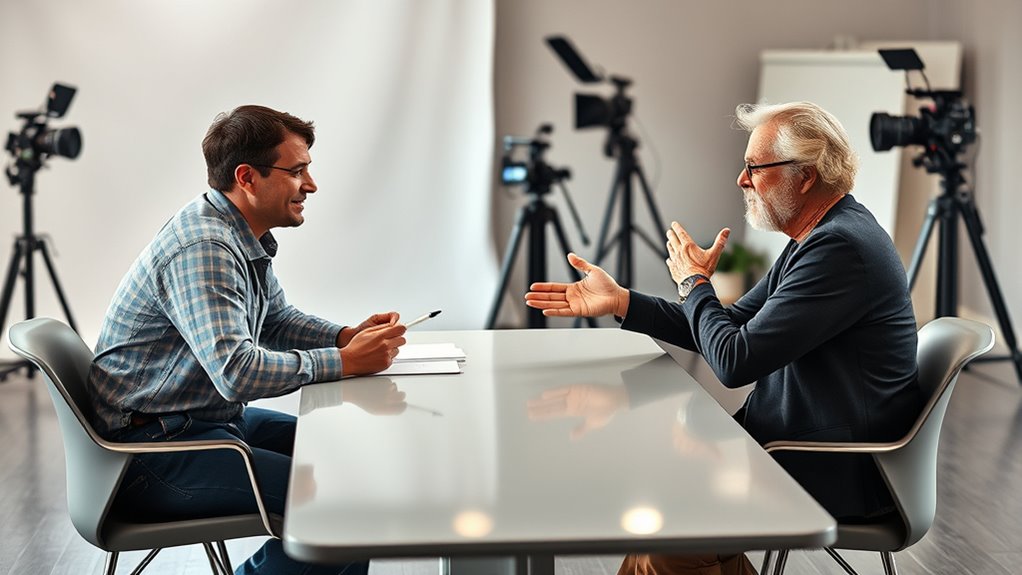
Conducting artist interviews is a skill that can reveal unique insights and deepen your understanding of their creative process. To do this effectively, you need solid interview preparation. Before reaching out, research the artist thoroughly—familiarize yourself with their work, recent projects, and any public statements they’ve made. This groundwork allows you to craft meaningful questions and shows respect for their craft. When preparing for the interview, consider the context and purpose of your content. Are you highlighting their artistic journey, exploring their techniques, or discussing their latest project? Clarifying your goals helps you focus your questions and makes the conversation more engaging.
Thorough research and clear goals are essential for effective artist interview preparation.
Question formulation is an essential step in interview preparation. Instead of generic questions, aim for open-ended, thought-provoking ones that encourage detailed responses. For example, instead of asking, “Did you enjoy creating this piece?”, ask, “What inspired the themes and techniques behind this work?” This invites the artist to share stories and insights that resonate with your audience. Think about the flow of the interview as well—start with easier, background questions and gradually move into more in-depth topics. This approach helps build rapport and makes the artist feel comfortable opening up.
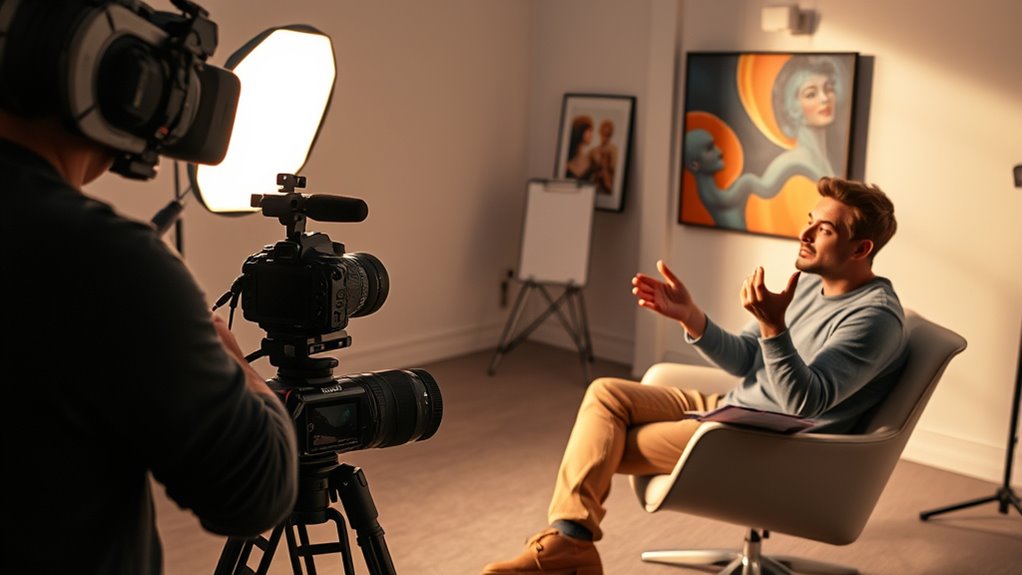
As you develop your questions, keep them aligned with your content goals. Avoid yes-or-no questions that limit the conversation. Instead, craft questions that prompt storytelling and reflection. Also, prepare some follow-up questions based on your research. If they mention a specific project or influence, have a few clarifying questions ready. This demonstrates genuine interest and allows the conversation to unfold naturally. Remember, good question formulation is flexible—you should listen actively during the interview and be ready to pivot or explore new avenues based on their responses. Additionally, understanding the creative process and how it influences their work can provide deeper context and enrich your interview. In addition to questions, prepare your environment and equipment to guarantee smooth recording. Test your audio and video beforehand, and choose a quiet, well-lit location. During the interview, stay attentive and engaged; your active listening skills will help you ask insightful follow-up questions that add depth to your content. By investing time in interview preparation and crafting thoughtful questions, you’ll create a richer, more authentic dialogue that captures the essence of the artist’s creative spirit. This not only benefits your content marketing efforts but also builds genuine connections that can lead to future collaborations.
professional microphone for interviews
As an affiliate, we earn on qualifying purchases.
As an affiliate, we earn on qualifying purchases.
Frequently Asked Questions
How Do I Approach Shy or Reticent Artists for Interviews?
When approaching shy or reticent artists, focus on building rapport by creating a comfortable environment. Use active listening to show genuine interest and make them feel valued. Start with light, open-ended questions to ease them into the conversation, and respect their pace. By showing patience and understanding, you’ll help them relax, encouraging more open sharing, which ultimately results in authentic content that resonates with your audience.
What Equipment Is Essential for Recording High-Quality Artist Interviews?
For a professional interview setup, you need vital equipment to guarantee top audio quality. Use a good quality microphone, such as a condenser or dynamic mic, to capture clear sound. Pair it with headphones to monitor audio in real-time. A reliable recorder or audio interface is essential for capturing high-quality audio. Don’t forget a sturdy stand and good acoustic environment, as these directly impact your interview setup and overall audio quality.
How Can I Ensure the Artist’S Voice Is Authentic and Engaging?
Authenticity and engagement hinge on your interview approach, balancing genuine curiosity with prepared questions. While a spontaneous tone sparks connection, consistent branding ensures your message remains clear. You can achieve this by thorough interview preparation, understanding the artist’s background, and aligning questions with your brand voice. This blend of authenticity and strategy creates content that feels natural yet reinforces your branding consistency, engaging your audience and showcasing the artist’s true voice effectively.
What Legal Considerations Should I Be Aware of During Interviews?
When you’re conducting artist interviews, you should be aware of legal considerations like copyright issues and consent protocols. Always get explicit permission before recording or sharing any content to avoid copyright infringement. Make sure the artist signs a consent form that clarifies how their interview will be used. Staying transparent about these legal aspects helps protect both you and the artist, ensuring your content remains compliant and respectful.
How Do I Handle Sensitive Topics With Artists Professionally?
Guiding sensitive topics is like walking a tightrope—you want to stay balanced and respectful. You should set clear emotional boundaries upfront, letting artists know what’s off-limits. Practice cultural sensitivity by researching their background and choosing words carefully. If a topic feels uncomfortable, gently steer the conversation elsewhere. Showing empathy and respect ensures a professional environment where artists feel safe sharing, enriching your content with authenticity and trust.
portable video recording equipment
As an affiliate, we earn on qualifying purchases.
As an affiliate, we earn on qualifying purchases.
Conclusion
Now that you know how to conduct artist interviews effectively, you’re all set to strike while the iron’s hot. Remember, building genuine connections and asking the right questions can reveal stories that resonate with your audience. Don’t be afraid to think outside the box—sometimes, the best insights come from unexpected places. Keep your ears open and your curiosity alive. With these tips, you’ll turn interviews into content that hits the mark every time.
As an affiliate, we earn on qualifying purchases.
lighting kit for video interviews
As an affiliate, we earn on qualifying purchases.
As an affiliate, we earn on qualifying purchases.
Fall Picks
fall essentials
As an affiliate, we earn on qualifying purchases.