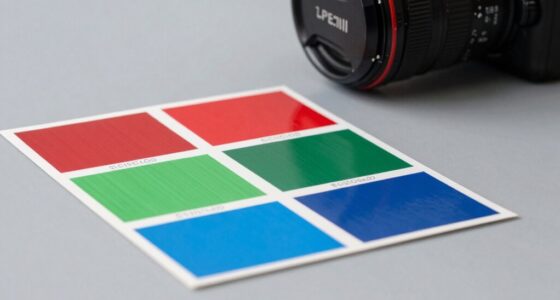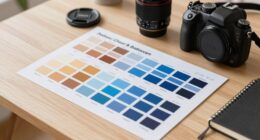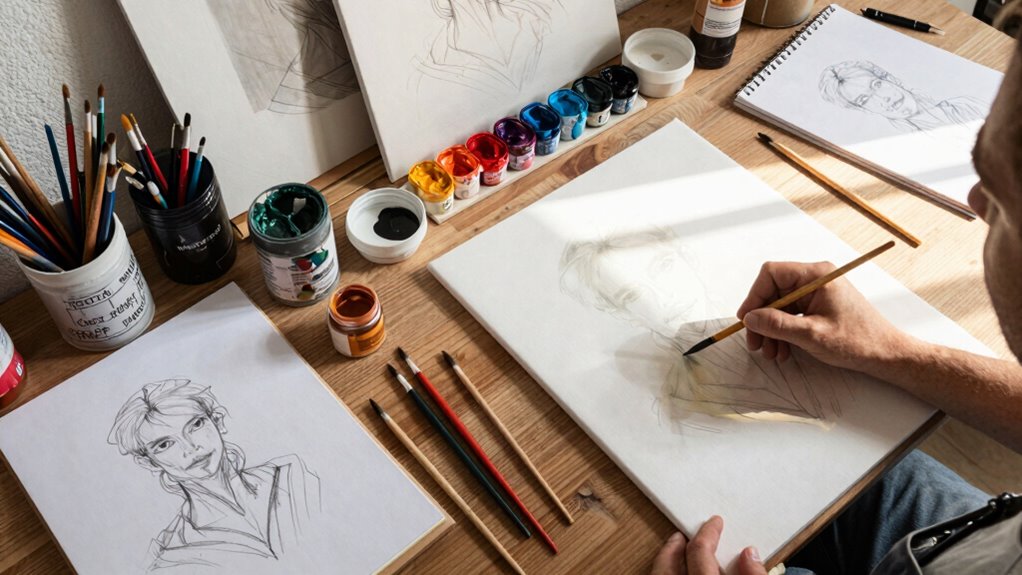
Overhead filming is a powerful camera angle that captures your art from above, offering viewers a clear and engaging view of your process. It highlights textures, colors, and intricate details, making your work more mesmerizing. Proper setup, stable equipment, and good lighting are key to getting crisp, consistent shots. Using this perspective can elevate your storytelling and showcase your techniques beautifully. Keep exploring, and you’ll discover how to make your overhead footage truly stand out.
Key Takeaways
- Overhead angles reveal intricate details and textures, engaging viewers with a comprehensive view of the artistic process.
- Unique perspectives emphasize color harmony and composition, making artwork visually captivating.
- Stable, well-lit overhead shots ensure clear, professional visuals that hold viewers’ attention.
- Combining multiple angles and dynamic movements enhances storytelling and viewer engagement.
- Overhead filming highlights contrasts and patterns, creating compelling, memorable artistic presentations.

NEEWER Overhead Camera Mount Rig for Top Down Shots, Heavy Duty Steel Tabletop Mount Stand Multi Device Platform for Flat Lay Photography Lighting Cooking Drawing Crafts, For Desks≥3.3'/1m Long, ST100
【Professional Tabletop Overhead Camera Mount Rig】 NEEWER ST100 Overhead Camera Tabletop Stand features a durable steel construction and…
As an affiliate, we earn on qualifying purchases.
As an affiliate, we earn on qualifying purchases.
What Is Overhead Filming and Why Is It Great for Artists?
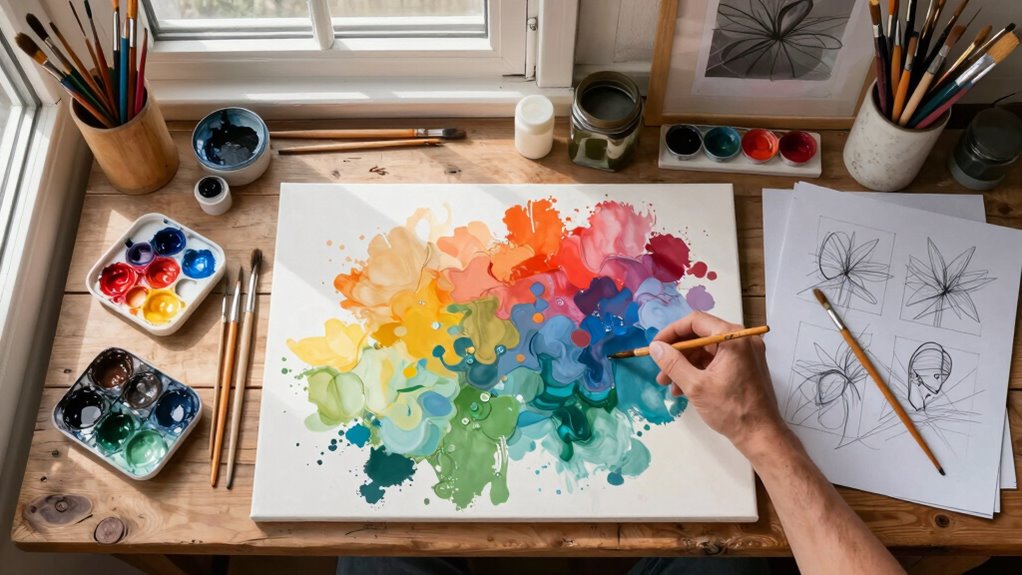
Have you ever wanted to see your artistic process from a fresh perspective? Overhead filming offers that view, capturing your work from above. This camera angle helps you analyze your use of color theory, ensuring harmony and contrast in your piece. It also connects to art history, showing how traditional compositions and techniques translate into your modern creations. Overhead shots reveal details you might miss when working at eye level, helping you refine strokes and color blending. For viewers, it creates a clear, engaging perspective that highlights your process. Whether you’re sharing tutorials or documenting progress, this angle makes your art more accessible and understandable. It’s a powerful way to deepen your understanding of your craft while engaging your audience visually. Additionally, this method aligns with adaptable content formats, allowing artists to explore innovative ways of presenting their work.
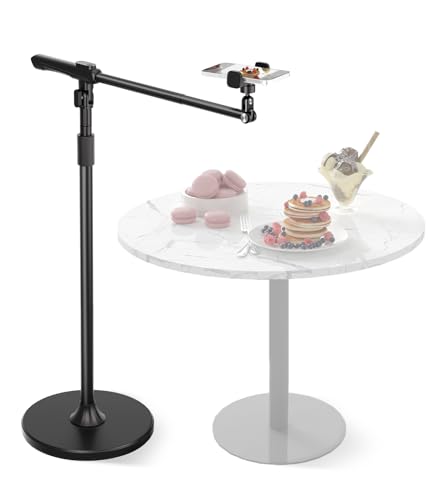
Overhead Phone Mount for Video Recording, Tall Floor Stand with Bluetooth Remote, 360° Extendable Boom Arm Tripod for Live Streaming, Art, Cooking – Fits iPhone 17 16 15 14 13 Android (Not for iPad)
Professional Overhead Recording with Extendable Arm – Capture perfect top-down videos without tripod legs getting in the shot….
As an affiliate, we earn on qualifying purchases.
As an affiliate, we earn on qualifying purchases.
How to Set Up Overhead Shots for Artistic Projects
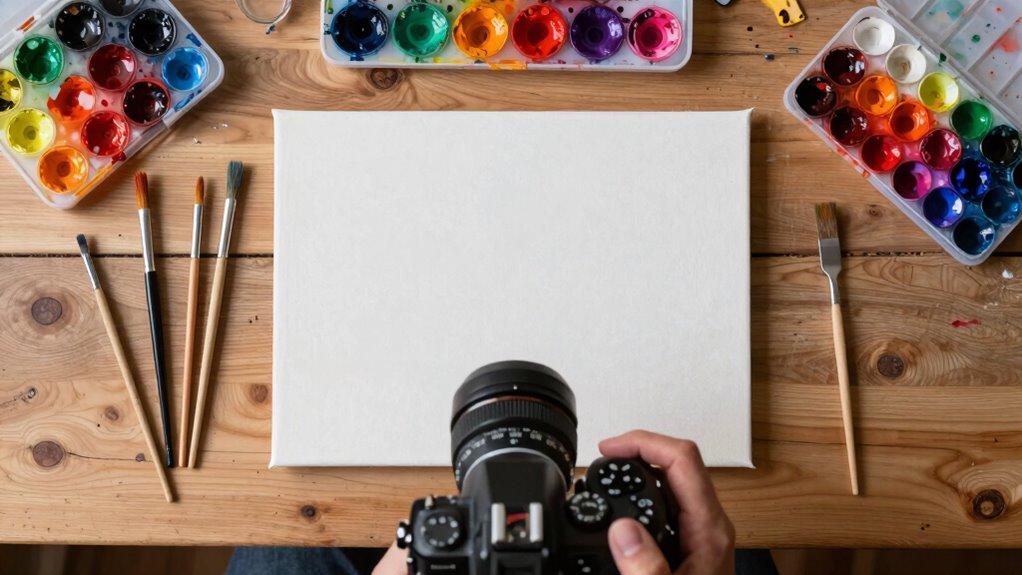
To set up effective overhead shots, you need to choose the right equipment that can securely hold your camera above your workspace. Make sure to optimize lighting conditions so your project is clearly visible without unwanted shadows or glare. Carefully adjusting these elements will help you capture high-quality footage that highlights your artistic process. Additionally, using essential DIY tools can enhance your setup and ensure stability while filming. Investing in top car protection accessories can also help protect your filming gear from damage during transport. Incorporating luxurious lifestyle products into your filming environment can elevate the overall aesthetic, contributing to a more visually appealing presentation. It’s also important to prioritize your own emotional well-being as a caregiver, as this can positively impact your creative output. Moreover, understanding the role of UBI debates in shaping future economies can inspire new artistic themes and approaches in your work.
Choosing the Right Equipment
Choosing the Right Equipment (How to Set Up Overhead Shots for Artistic Projects)
Choosing the right equipment is essential for capturing clear, stable overhead shots that enhance your artistic projects. The right gear helps you achieve the desired camera angles and artistic perspectives, making your work visually compelling. Consider the following:
- A sturdy, adjustable tripod or overhead rig for stability
- A camera with good resolution and manual controls
- A wide-angle lens to capture more of your workspace
- A remote shutter release or app to prevent shake
- Non-reflective surfaces for equipment placement to avoid glare
Incorporating natural lighting techniques can also significantly improve the quality of your shots. Additionally, being mindful of design principles can ensure that your workspace is optimally arranged for filming. Investing in quality equipment guarantees your shots stay sharp and consistent, allowing your creativity to shine. Proper setup makes it easier to experiment with different camera angles and artistic perspectives, elevating your artistic projects. Furthermore, understanding contrast ratios is crucial for achieving the best image quality in your overhead shots. Additionally, understanding media literacy is crucial for evaluating the effectiveness of your visual storytelling. Mastering kitchen knife techniques can also enhance your overall presentation, ensuring every detail is captured beautifully.
Optimizing Lighting Conditions
Effective lighting is essential when setting up overhead shots for your artistic projects, as it directly influences the clarity, color accuracy, and overall mood of your images. To optimize lighting, focus on creating balanced illumination that enhances color contrast without washing out details. Use multiple light sources at different angles to minimize shadows and highlight textures. Adjust camera angles to prevent glare and guarantee even light distribution across your subject. Position lights carefully to emphasize key elements and maintain consistent color tones. Experiment with diffusers and reflectors to soften harsh shadows and achieve a natural look. Proper lighting setup not only improves visual appeal but also guarantees your camera captures vibrant colors and sharp details, making your overhead shots more compelling and professional.
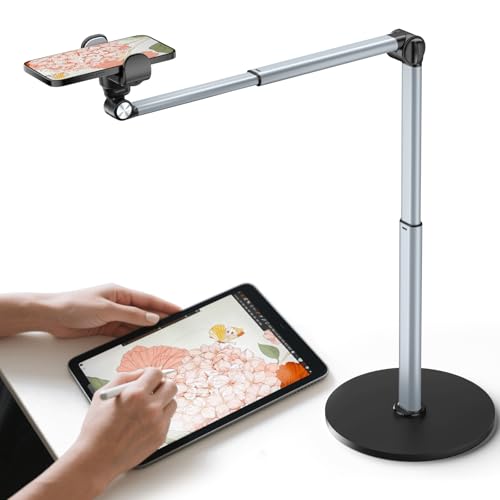
Heavy Duty Aluminum Overhead Phone Stand for Recording, Adjustable iPhone Tripod for Overhead Shots, Sturdy Stand for Cooking, Crafting, Filming, Painting – Perfect for Creators(Clip)
【Sturdy Overhead Phone Mount for Stable Recording】This overhead phone stand features a heavy-duty aluminum build with a weighted…
As an affiliate, we earn on qualifying purchases.
As an affiliate, we earn on qualifying purchases.
Must-Have Gear for Overhead Filming
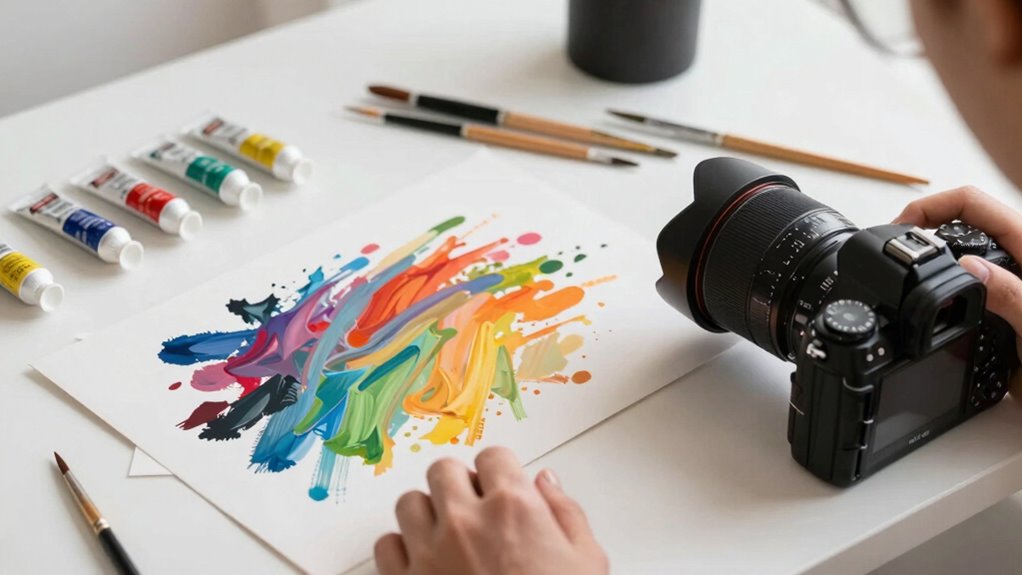
To get quality overhead shots, you’ll need the right tripod options that keep your camera steady and adjustable. Stabilization accessories, like mounts and clamps, are vital to prevent shaky footage, especially on uneven surfaces. Good lighting is also essential for clear, detailed shots, so consider portable lights that suit your filming environment. Additionally, exploring creative ideas can help you innovate your filming techniques and engage viewers more effectively.
Essential Tripod Options
Certainly! Here’s your revised content with the requested changes:
—
When setting up for overhead filming, having the right tripod can make all the difference in achieving stable, crisp shots. A sturdy, adjustable tripod guarantees your camera stays steady, allowing you to focus on capturing perfect camera angles that highlight your artwork. For artists interested in color grading, a reliable tripod helps maintain consistent framing, making post-production adjustments easier. Additionally, maintaining accountability in your workflow can enhance your overall productivity during filming. Consider tripods with smooth panning and height flexibility to experiment with dynamic shots. Additionally, using tripods designed for optimal stability ensures that your equipment can withstand any vibrations or movements. Tripods that are compatible with anti-fatigue mats can provide extra support and comfort during long shooting sessions. Look for lightweight options if you need portability, but don’t sacrifice stability. Additionally, being aware of Frühwarnzeichen für Brustkrebs can help you maintain a healthy balance between your creative pursuits and personal well-being. Having a tripod that supports heavy-duty equipment can further improve your filming experience.
- Heavy-duty tripod with adjustable height
- Compact, portable tripod for quick setups
- Tripod with fluid head for smooth camera movements
- Flexible tripod with multiple mounting options
- Tripod with built-in level for precise framing
—
Let me know if you need any further changes!
Stabilization Accessories Needed
Stabilization accessories are essential for ensuring your overhead shots stay steady and professional-looking. Using proper camera stabilization tools helps prevent shaky footage that could distract viewers. Tripod accessories like center columns, horizontal arms, or boom attachments make it easier to position your camera directly above your workspace. These accessories provide added stability and flexibility for overhead filming. Additionally, using a gimbal stabilizer can enhance your filming experience by ensuring smooth, fluid shots even during movement.
| Accessory Type | Description | Benefit |
|---|---|---|
| Tripod Center Column | Extends vertically for overhead shots | Achieves higher, stable angles |
| Horizontal Arm | Extends camera outward from tripod | Precise positioning, reduces shake |
| Gimbal Stabilizer | Balances camera during movement | Smooth, fluid shots |
| Clamp Mount | Attaches to surfaces for stability | Secure, steady overhead setup |
| Tripod Dolly | Moves tripod smoothly around workspace | Dynamic angles without shaking |
Lighting for Clear Shots
Good lighting is essential for capturing clear, detailed overhead shots that highlight your artwork or project. Proper illumination enhances color contrast, making your work pop and guaranteeing viewers see the true details. To achieve this, use soft, even lighting to minimize shadows that can distract or obscure your work. Adjustable LED lights are ideal, allowing you to control brightness and color temperature. Keep in mind that good lighting supports smooth camera movement, preventing glare or uneven spots that can disrupt shots. Consider these must-have gear options:
- Adjustable LED overhead lights
- Diffusers to soften harsh light
- Reflectors for even distribution
- Color temperature controls
- Light stands for stability
This setup ensures your overhead shots are crisp, vibrant, and professional.

Torjim Softbox Photography Lighting Kit, 16'' x 16'' Professional Softbox Lighting Kit with 85W 3000-7500K LED Bulbs, Studio Lights for Photography/Video Recording/Live Streaming/Portraits Shooting
【Illuminate Your Creativity】 Torjim softbox lighting kit is made of high-quality PET fabric and a foldable nylon cover,…
As an affiliate, we earn on qualifying purchases.
As an affiliate, we earn on qualifying purchases.
Tips for Getting Clear and Consistent Overhead Footage
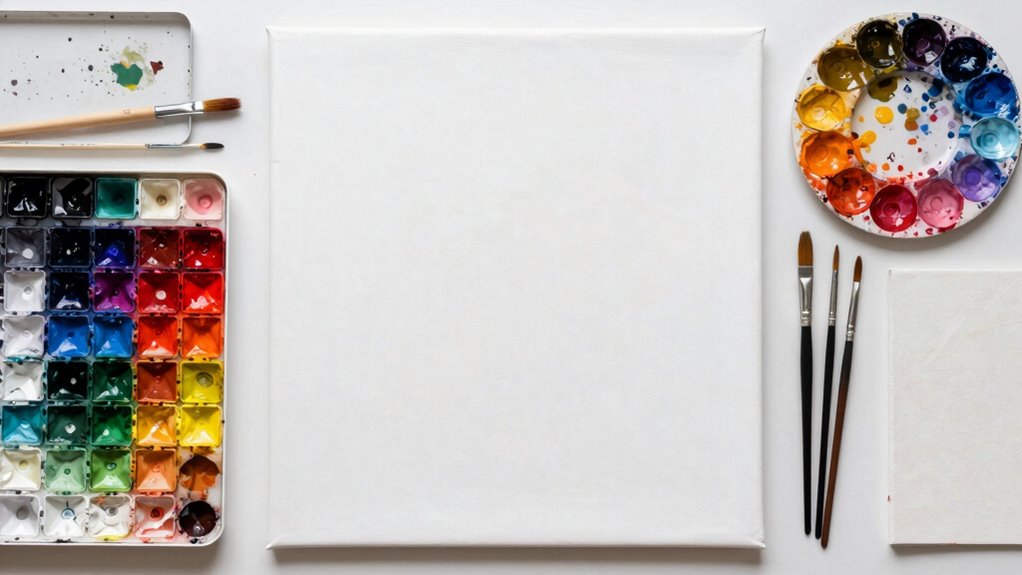
Achieving clear and consistent overhead footage starts with proper setup and attention to detail. Make certain your camera is stable, using a sturdy tripod or mounting system to prevent wobbling. Use a consistent distance and height to maintain framing and perspective. Pay attention to your lighting setup, as even, diffuse light helps reduce shadows and glare. Incorporate color theory to choose background and prop colors that enhance your artwork without distraction. This consistency supports storytelling techniques by clearly showcasing your process and details. Always double-check your camera settings—focus, white balance, and exposure—to keep footage uniform. Regularly review your shots to catch issues early. With these tips, you’ll produce overhead footage that’s both sharp and visually engaging, helping viewers connect with your art more effectively.
Creative Ideas for Using Overhead Shots in Your Art

Overhead shots give your artwork a fresh, unique perspective that can captivate viewers. By experimenting with creative composition techniques, you can highlight patterns, textures, and focal points in new ways. Consider how these angles can enhance storytelling and add depth to your artistic vision.
Unique Perspective Benefits
Seeing your subject from above offers a fresh, eye-catching perspective that can transform ordinary scenes into compelling artwork. Overhead shots reveal patterns, textures, and relationships that aren’t obvious from eye level, enriching your storytelling techniques. They allow you to experiment with color theory by highlighting contrasts and harmonies from a new vantage point. This view also simplifies complex scenes, helping viewers focus on shapes and lines that guide their eye through your piece. Use overhead angles to:
- Emphasize symmetry and balance in your compositions
- Showcase intricate details or patterns
- Create a sense of scale or intimacy
- Highlight color relationships in a unique way
- Convey a narrative through spatial arrangements
These benefits make overhead filming a powerful tool to deepen your artistic expression and engage viewers more effectively.
Creative Composition Techniques
Creative composition with overhead shots opens up a world of possibilities for enhancing your artwork. Use color theory to guide your choices—contrasting or complementary colors can create visual impact, while subtle shades evoke mood. Experiment with perspective distortion by adjusting the camera angle; this can exaggerate shapes or emphasize certain elements, adding intrigue. Overhead shots allow you to align objects precisely, creating balanced or intentionally asymmetrical compositions. Play with negative space to draw attention to focal points or to create a sense of depth. Combining these techniques helps craft dynamic, engaging visuals that speak directly to viewers. By thoughtfully applying color theory and perspective distortion, you can transform simple overhead captures into powerful artistic statements. Additionally, fan trailers demonstrate how communities can learn and experiment with visual language, enriching the storytelling experience.
Common Challenges in Overhead Filming and How to Fix Them
Filming from above often presents unique challenges that can affect the quality of your footage. You might struggle with color consistency, making it hard to convey your intended narrative storytelling. Additionally, maintaining focus and avoiding camera shake can be tricky. Overhead shots can also cause distortion, skewing proportions and impacting visual balance. To fix these issues:
- Use a tripod with stabilization features to reduce shake
- Apply color theory principles during filming to ensure cohesive visuals
- Adjust camera angle to optimize perspective and avoid distortion
- Use markers or guides to maintain consistent framing
- Review footage regularly to catch and correct issues early
Addressing these common challenges helps you produce clearer, more compelling overhead footage that enhances your storytelling and artistic vision.
Lighting and Composition Tips for Stunning Overhead Shots
Lighting and composition are essential elements that can make or break your overhead shots, so paying close attention to them can elevate your footage considerably. Use color theory to select lighting that enhances the mood and guides viewers’ emotions, such as warm tones for intimacy or cool tones for calmness. Pay attention to shadows and highlights to create depth and focus, emphasizing key elements in your scene. Composition-wise, apply the rule of thirds to position your subject dynamically, and consider leading lines to direct viewers’ eyes. Think about storytelling techniques—use light and framing to reinforce your narrative visually. A well-composed overhead shot, with thoughtful lighting, can immerse viewers and strengthen your artistic message effectively.
Editing Tricks to Make Your Overhead Footage Pop
Once you’ve captured stunning overhead footage, the next step is to enhance its visual impact through editing. Use color theory to create mood and focus, adjusting saturation and contrast to emphasize key elements. Incorporate storytelling methods by layering clips, adding smooth transitions, or using pacing to guide viewers’ attention. To make your footage pop, consider these tricks:
- Apply color grading to evoke emotion
- Use contrast to highlight focal points
- Add subtle motion effects or zooms
- Incorporate overlays or textures for depth
- Sync edits with music or sound cues
These techniques help you craft a cohesive visual story, elevating your overhead footage from simple documentation to compelling art. Thoughtful editing amplifies your perspective, making viewers stay engaged with every frame.
Artists Who Master Overhead Perspectives

Sure! Here’s your revised content following the specified directions:
—
Many artists have elevated overhead perspectives into a true art form, seamlessly blending technique and vision to create mesmerizing works. These artists understand how to use color theory to enhance depth and focus, guiding viewers’ eyes across complex compositions. Their mastery of overhead angles allows them to transform simple scenes into enthralling narratives. Through artist interviews, you learn that their success often hinges on experimenting with lighting and color harmony to evoke emotion from a bird’s-eye view. Their work demonstrates that overhead perspectives aren’t just technical choices but powerful storytelling tools. By studying their techniques, you can grasp how to leverage color and composition, making your own overhead art more compelling and engaging for your audience. Additionally, mindfulness practices can help artists focus their creativity and reduce distractions while creating. As climate investing becomes increasingly important, artists can also draw inspiration from nature to reflect environmental themes in their work. Understanding the common causes of heat pump failure can also provide insights into the importance of precision and care in artistic endeavors. Furthermore, exploring air quality management can enhance both the artist’s workspace and the overall viewing experience for the audience. Moreover, incorporating music therapy in creative routines can foster emotional well-being and inspire innovative ideas.
—
Let me know if you need any further adjustments!
Elevate Your Portfolio With Overhead Filming Techniques
To truly elevate your portfolio, incorporating innovative overhead filming techniques can make your work stand out. Using overhead shots allows you to explore color theory creatively, highlighting contrasts and harmonies that might go unnoticed from other angles. It also enhances storytelling techniques by providing unique perspectives that draw viewers into your process or narrative. To maximize impact, consider these tips:
- Experiment with lighting to emphasize color relationships
- Use dynamic camera movements to add energy
- Incorporate multiple angles for layered storytelling
- Focus on composition to guide viewer’s eye
- Combine overhead shots with close-ups for detailed storytelling
Additionally, ensure that your filming environment is safe and free from hazards, as portable oil radiators can pose risks if not used properly. Mastering these techniques can showcase your versatility and deepen your artistic expression, making your portfolio more compelling and memorable.
Frequently Asked Questions
What Are the Best Camera Settings for Overhead Filming?
You should set your camera with a wide aperture, like f/2.8 or wider, to create a sharp focus on your artwork while softly blurring the background. Use a lens suited for overhead shots, such as a macro or a standard zoom. Combine this with good lighting techniques—diffused, even lighting reduces shadows and highlights details. Adjust ISO and shutter speed for proper exposure, ensuring your footage is crisp and clear.
How Do I Prevent Glare or Reflections During Overhead Shots?
To prevent glare or reflections during overhead shots, focus on lighting control and reflection reduction. Use diffused lighting to soften harsh reflections and position lights at angles that minimize direct glare. Consider adding polarizing filters to your camera lens, which help cut down unwanted reflections. Adjust your setup carefully, and experiment with angles until you find a balance that keeps your artwork clear and vibrant, free from distracting glare.
Can Overhead Filming Be Done With Smartphones or Only Professional Cameras?
You can definitely do overhead filming with smartphones, as many models now offer high-quality cameras and good stability features. While professional camera requirements might provide more control, smartphone compatibility has improved greatly, making it accessible and easy. Just make sure your phone has a good camera, use a stable mount or tripod, and consider lighting to get clear overhead shots. This way, you don’t need professional equipment to achieve impressive results.
How Do I Stabilize the Camera for Smooth Overhead Footage?
You stabilize your camera by using a sturdy tripod or a specialized overhead mount, ensuring it remains steady during filming. To achieve smooth footage, incorporate lighting techniques like diffused or soft lighting that reduce shadows and vibrations. Secure your camera firmly with proper camera mounting, and double-check all connections before recording. These steps help prevent shaky footage, providing clean, professional-looking overhead shots that keep viewers engaged.
What Are Common Mistakes to Avoid in Overhead Filming?
Did you know poor composition accounts for 50% of filming mistakes? To avoid common mistakes in overhead filming, prioritize proper lighting techniques to reduce shadows and glare, ensuring clear visuals. Pay attention to composition tips like framing your subject centrally and avoiding clutter that distracts viewers. Also, secure your camera firmly to prevent shaky footage. By focusing on these areas, you’ll create compelling overhead shots that keep viewers engaged.
Conclusion
So, next time you think overhead filming is just a fancy trick, remember—it’s actually your secret weapon to keep viewers hooked. Ironically, what seems like a simple camera angle can turn your art into a mesmerizing display that’s hard to look away from. Don’t underestimate its power. Immerse yourself, master the technique, and watch your portfolio—and your audience—rise above the rest. Who knew that looking down could lift your art to new heights?