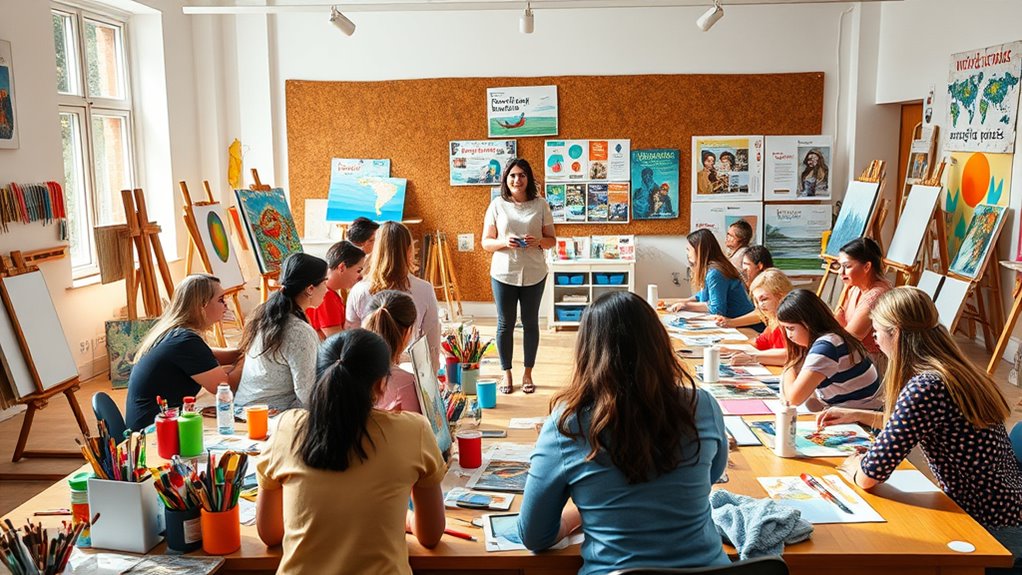

To teach effective art workshops, start with a clear plan that breaks down techniques into simple steps, and create an inviting space that encourages experimentation and personal expression. Incorporate inspiring stories and diverse artistic styles to keep participants engaged and motivated. Balance demonstration with hands-on practice, ensuring materials are prepared in advance. To attract attendees, use social media and local networks, and keep the atmosphere friendly and encouraging. Continue exploring these strategies to master engaging art education and successful marketing.

Get art and craft supplies delivered free — and shop member deals
- Fast, free delivery on millions of items
- Access to Prime Big Deal Days deals on October 6–7
- Prime Video, Amazon Music and more included
Key Takeaways
- Define clear objectives and structure your workshop with step-by-step techniques for all skill levels.
- Develop engaging marketing strategies using social media, local networks, and artistic communities to attract participants.
- Create a welcoming environment that encourages experimentation and personal expression to boost word-of-mouth promotion.
- Prepare materials and organize activities in advance, ensuring a smooth experience from warm-up to reflection.
- Highlight your unique artistic style and share inspiring stories to differentiate your workshop and attract interest.

Have you ever wondered how to turn your passion for art into an engaging workshop experience? The key lies in understanding how to craft a session that not only teaches techniques but also sparks artistic inspiration. When you plan your workshop, start with a techniques overview, focusing on clear, step-by-step instructions that suit all skill levels. This helps participants feel confident as they follow along, whether they’re beginners or more advanced artists. Break down complex processes into manageable parts, and demonstrate each technique with patience and precision. Show how different tools and materials can be used creatively, and encourage experimentation. By doing so, you make the art process approachable and enjoyable, which is essential for keeping participants motivated and enthusiastic to learn.
Artistic inspiration plays a vital role in engaging your students. As a teacher, you want to ignite their creative spark, so think about how you can infuse your workshop with ideas that resonate. Share stories behind certain techniques or artworks, discuss different artistic movements, or highlight inspiring artists. These elements help participants connect emotionally to their work and see beyond the technical aspects. When you combine practical skills with elements that inspire, you create a more meaningful experience. You also want to set a welcoming environment, where students feel free to experiment without fear of making mistakes. Encourage them to incorporate their personal experiences and perspectives into their projects, fostering originality and confidence.
In planning your workshop, consider the flow of activities — from warm-up exercises to main projects and reflection time. Balance demonstration with hands-on practice, giving participants enough space to explore their ideas. Be prepared to adapt your techniques overview based on the group’s progress and interests. Keeping the atmosphere friendly and encouraging boosts engagement and helps students stay motivated to push their boundaries. Also, think about the materials you’ll need and how to organize your space efficiently. Clear instructions and accessible tools make a significant difference in how smoothly the workshop runs and how much your students get out of it. Additionally, understanding the importance of contrast ratio can help you better visualize how lighting and environment affect your artwork’s appearance, creating a more inspiring and effective teaching setting.
Ultimately, your goal is to create a memorable experience that combines technical learning with artistic inspiration. When you approach your workshop with enthusiasm and a clear plan, you’ll empower your students to see their potential and develop their own artistic voice. Remember, the best workshops are those where participants leave feeling inspired, confident, and enthusiastic to continue exploring art on their own.
As an affiliate, we earn on qualifying purchases.
Frequently Asked Questions
How Do I Set Workshop Prices Effectively?
To set workshop prices effectively, start by considering your workshop budget and desired profit margin. Use pricing strategies such as tiered pricing or early-bird discounts to attract participants. Research what similar workshops charge in your area to stay competitive. Guarantee your prices cover costs like materials, space, and your time. Regularly review and adjust your pricing based on feedback and demand to maximize income and value for attendees.
What Safety Measures Should I Implement in Art Workshops?
Think of safety as the foundation of your art workshop’s masterpiece. You should provide essential safety equipment like goggles, gloves, and aprons, ensuring everyone’s protected. Clearly display emergency procedures and keep a well-stocked first aid kit nearby. Regularly review safety rules with participants, and maintain a clutter-free workspace. By doing so, you create a secure environment where creativity can flourish without worry.
How Can I Handle Difficult or Unmotivated Students?
You can handle difficult or unmotivated students by boosting their engagement with personalized projects and encouraging their unique ideas. Use motivational strategies like positive reinforcement and setting achievable goals to inspire confidence. Keep communication open, listen to their concerns, and adapt your approach to meet their interests. By fostering a supportive environment, you’ll help them reconnect with their creativity and stay motivated throughout the workshop.
What Equipment Is Essential for Different Art Forms?
You’ll need essential art supplies like paints, brushes, pencils, and paper tailored to each art form. For a successful workspace setup, confirm your space has good lighting, ample table space, and proper storage for supplies. Consider specialized equipment such as easels for painting, sewing machines for textiles, or sculpting tools for ceramics. Organizing your workspace efficiently helps students focus and fosters creativity, making your workshops more engaging and productive.
How Do I Evaluate the Success of My Workshops?
You measure success by listening to your students’ voices and tracking attendance, like gauges on a ship guiding your course. Collect honest feedback through surveys or conversations, noting patterns and growth. Keep an eye on attendance trends, which reveal engagement levels. When students leave inspired and enthusiastic to return, you know your workshop is a vibrant canvas of achievement. Your evolving art space reflects your dedication and the impact you create.
As an affiliate, we earn on qualifying purchases.
Conclusion
Teaching art workshops is like planting seeds; with careful planning and passionate marketing, you nurture creativity and watch your students flourish. Remember, your enthusiasm and clear guidance are the sunshine and water that help ideas blossom. Stay organized, connect with your audience, and keep sharing your love for art. Before you know it, you’ll be cultivating a vibrant community where everyone’s creativity can grow wild and free. Keep inspiring, and watch your workshop garden thrive.
artistic drawing and painting tools
As an affiliate, we earn on qualifying purchases.
As an affiliate, we earn on qualifying purchases.
portable art easel for workshops
As an affiliate, we earn on qualifying purchases.
As an affiliate, we earn on qualifying purchases.
Fall Picks
fall essentials
As an affiliate, we earn on qualifying purchases.