
Building confidence through artistic challenges means embracing imperfections and viewing them as part of your unique voice. Break tasks into small steps, celebrate each success, and seek constructive feedback to improve. Practice mindfulness to stay present, relax, and enjoy the process. Trust that progress comes with patience and persistence, pushing your boundaries gradually. Keep exploring these strategies, and you’ll discover how resilience and self-trust grow with each creative step you take.
Key Takeaways
- Break challenges into small, achievable tasks to foster a sense of accomplishment and build confidence gradually.
- Embrace mistakes and imperfections as valuable learning opportunities that enhance artistic authenticity.
- Reframe critique as constructive feedback that guides growth rather than as personal failure.
- Practice mindfulness to stay present, reduce anxiety, and approach artistic challenges with a relaxed mindset.
- Celebrate progress over perfection, recognizing each step as a move toward increased confidence and skill.

Taking on artistic challenges can be one of the most effective ways to build your confidence. When you push yourself beyond your comfort zone, you start to realize that mistakes and imperfections are just part of the process. To truly grow, you need techniques to overcome self-doubt, which often creeps in when you’re faced with a blank canvas or a new style. One powerful approach is to shift your mindset from perfectionism to experimentation. Instead of aiming for flawless results, focus on exploration and learning. Remind yourself that every artist, no matter how experienced, faces setbacks and imperfections. Embracing imperfections in art isn’t about lowering standards; it’s about accepting that they’re natural and even valuable. They reveal your unique voice and add character to your work, making it more authentic.
Embrace imperfections and experiment—every mistake reveals your unique voice and builds confidence through growth.
A practical way to overcome self-doubt is to set small, achievable goals for each artistic challenge. For example, instead of creating a perfect landscape in one sitting, aim to master a particular technique or complete a rough sketch. Celebrate these small victories, as they reinforce your progress and boost your confidence. Remember, confidence isn’t about never failing; it’s about learning how to handle failure gracefully. When you accept that mistakes are part of growth, you’ll be more willing to take risks and try new ideas without fear of judgment. This openness to imperfection helps you develop resilience, which is essential when tackling more complex projects.
Another technique involves changing how you view critique. Instead of seeing feedback as a threat, consider it a valuable tool for growth. Constructive criticism helps you identify areas for improvement while affirming what you’re doing well. Over time, this shift in perspective reduces self-doubt and encourages you to keep experimenting with your art. Also, practicing mindfulness can help you stay present and centered during your artistic pursuits. When you’re less caught up in the worry of producing perfect work, you’ll be more relaxed and open to embracing imperfections. This relaxed attitude creates a positive feedback loop—your confidence grows as you enjoy the creative process more.
Additionally, understanding that vetted information ensures you are relying on accurate and professional guidance, which can help you make more informed decisions about your art practice. Ultimately, building confidence through artistic challenges requires patience and persistence. By applying techniques to overcome self-doubt and embracing imperfections in art, you learn to value progress over perfection. Every brushstroke, sketch, or experiment becomes a stepping stone toward a more confident, resilient artist. As you continue pushing your boundaries, you’ll discover that your self-assurance isn’t just about creating beautiful art but also about trusting yourself more in all areas of life.

The Sketchbook Challenge: Techniques, Prompts, and Inspiration for Achieving Your Creative Goals
SC 144/PG BOOK
As an affiliate, we earn on qualifying purchases.
As an affiliate, we earn on qualifying purchases.
Frequently Asked Questions
How Can Artistic Challenges Improve Self-Esteem?
Artistic challenges boost your self-esteem by encouraging self-expression and growth. When you face and overcome creative obstacles, you prove to yourself that you’re capable of more. This process helps you develop confidence in your abilities, making you more willing to take risks and try new things. As your skills improve, you’ll see your self-expression flourish, fueling ongoing growth and strengthening your overall self-esteem.
What Types of Art Challenges Are Most Effective?
You should try art challenges that focus on techniques for sketching and color palette experimentation. These challenges push you to refine your skills and explore new ideas, boosting your confidence. For example, daily sketching exercises help improve your technique, while color experiments encourage creativity and risk-taking. By consistently challenging yourself in these areas, you’ll develop a stronger sense of achievement and belief in your artistic abilities.
How to Stay Motivated During Difficult Artistic Projects?
Think of your motivation as a fire that needs constant tending. To stay inspired, make mindset shifts to focus on progress, not perfection. Break your project into small, achievable goals to create a steady stream of wins. When challenges arise, remind yourself why you started. Setting clear goals and maintaining a positive outlook keeps your creative flame burning bright, even during tough times.
Can Artistic Challenges Help Overcome Creative Blocks?
Yes, artistic challenges can help you overcome creative blocks by encouraging you to develop new skills and refine your craft. Engaging in creative routines pushes you to explore different techniques, which boosts your confidence and sparks fresh ideas. As you tackle these challenges, you achieve skill mastery, making it easier to break through barriers. Embrace these challenges as opportunities to grow, and you’ll find your creativity flowing more freely.
What Role Does Community Play in Building Confidence?
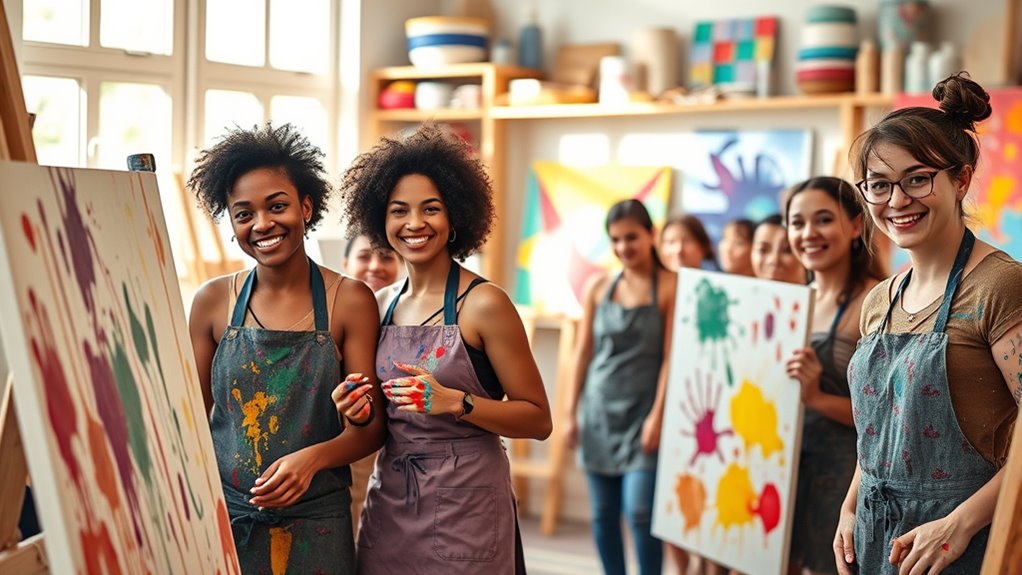
Community plays a vital role in building your confidence by providing peer encouragement and celebrating shared success. Imagine joining an art group where members cheer each other on and display their work together. This support makes you feel valued and motivated to try new techniques. When you see others succeed, it boosts your belief in your own abilities, helping you overcome doubts and develop a stronger artistic identity.

Grabie 50 Colors Watercolor Paint Set, Detail Paint Brush Included, Watercolor Paints, Painting Sets, Art Supplies for Painting, Travel Watercolor Set, Amateur Hobbyists
50 Essential Colors for Every Artist: A carefully curated palette of vibrant, rich pigments that cater to all…
As an affiliate, we earn on qualifying purchases.
As an affiliate, we earn on qualifying purchases.
Conclusion
By embracing artistic challenges, you boost your confidence and open hidden potential. Did you know that people who regularly engage in creative activities report a 25% increase in self-esteem? So, don’t shy away from difficult projects—each one is a stepping stone toward greater self-assurance. Keep pushing your boundaries, and watch your confidence soar as you turn obstacles into opportunities for growth. Your artistic journey is a powerful path to believing in yourself.

Teaching Artist Handbook, Volume One: Tools, Techniques, and Ideas to Help Any Artist Teach
As an affiliate, we earn on qualifying purchases.
As an affiliate, we earn on qualifying purchases.
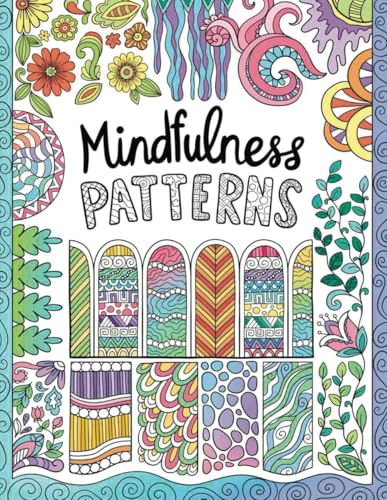
Mindfulness Patterns: Coloring book for Teens & Adults with Artistic Pattern Designs for Stress Relief and Relaxation
As an affiliate, we earn on qualifying purchases.
As an affiliate, we earn on qualifying purchases.