
To create movement in static art through visual rhythm, you should focus on using repetition patterns and color harmony to guide the viewer’s eye smoothly across your composition. Vary the size and spacing of repeated elements to control the pace and direction of movement. Incorporate slight variations or breaks to add visual interest and tension, making your piece lively. Keep exploring these strategies, and you’ll discover even more ways to energize your artwork.
Key Takeaways
- Use repetition of shapes, lines, or motifs with slight variations to generate visual flow.
- Incorporate harmonious color schemes, like complementary or analogous colors, to reinforce movement.
- Vary pattern size and spacing to control the pace and direction of the viewer’s eye.
- Introduce subtle breaks or contrast to create dynamic tension and prevent monotony.
- Combine consistent rhythm with strategic variations to emulate musical patterns and energize static art.

Have you ever noticed how certain images or designs seem to move your eyes smoothly across a composition? That sensation is often created by visual rhythm, which guides your gaze in a way that feels natural and effortless. At the core of this effect are repetition patterns—consistent elements that appear throughout a design—and color harmony, which ties these elements together visually. When you incorporate repetition patterns, you’re establishing a predictable sequence that your eye can follow easily. These patterns might be a series of shapes, lines, or motifs that recur at regular intervals, giving your composition a sense of flow. Repetition doesn’t have to be exact; slight variations can add interest while maintaining the overall rhythm. The key is consistency, which reassures the viewer and guides their eye smoothly from one element to the next.
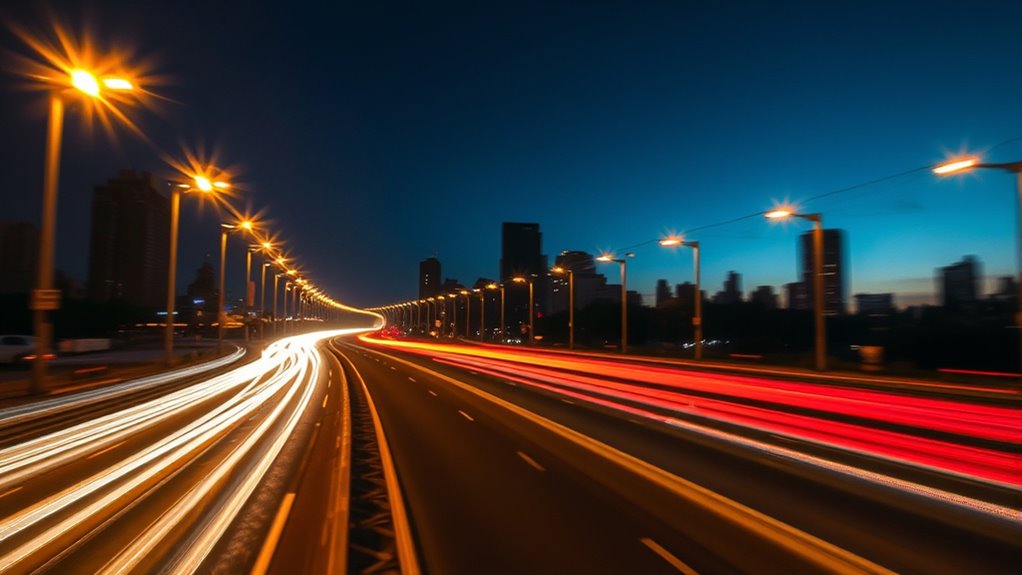
Repetition patterns and color harmony create visual rhythm, guiding the eye smoothly through your design.
Color harmony plays an essential role in reinforcing this movement. When you choose a harmonious color palette, it creates a unified visual experience that makes your repetition patterns more engaging. Complementary or analogous colors work well because they naturally lead the eye from one element to another without jarring transitions. Think about how a subtle gradient or a carefully balanced color scheme can enhance the rhythm. If your colors are too contrasting or clashing, they can disrupt the flow and create visual tension instead of harmony. By aligning your color choices with the repetition patterns, you create a cohesive visual language that invites viewers to follow the movement across your artwork seamlessly.
Additionally, understanding how contrast ratio impacts visual clarity can help you fine-tune your compositions for optimal engagement. You can also manipulate the size and spacing of your repetition patterns to control the speed and direction of movement. Larger, more spaced-out elements tend to slow down the eye, making each component more deliberate, while smaller, tightly packed repetitions quicken the pace. When you vary these aspects strategically, you can lead the viewer’s eye through your composition with a sense of rhythm and purpose. Additionally, combining repetition patterns with variations or breaks in color harmony can create a dynamic tension that keeps the viewer engaged. Think of it like a musical rhythm—steady but with subtle changes that keep it interesting.
In essence, creating visual rhythm involves a thoughtful balance of repetition patterns and color harmony. When you master these elements, you craft compositions that feel alive and vibrant, even when static. Your design then becomes a journey for the eye—one that flows effortlessly, guiding viewers naturally from one point to the next. This skill allows you to turn simple arrangements into compelling visual stories, where movement is implied through the careful orchestration of patterns and colors.

FINGERINSPIRE Spirals Painting Stencil with 1Pc Plastic Paint Brush 8.3×11.7inch Reusable Swirl Pattern Drawing Template Line Art Endless Connections Swirls Repetition Stencil for Home Wall Decor
Spirals Stencil: You will receive a creative hollow out floral theme template with 1PC plastic paint brush. This…
As an affiliate, we earn on qualifying purchases.
As an affiliate, we earn on qualifying purchases.
Frequently Asked Questions
How Does Visual Rhythm Differ From Actual Motion?
When you think about how visual rhythm differs from actual motion, it’s about perception shifts. Visual rhythm uses patterns, repetition, and flow to create a sense of movement, engaging you as a viewer without real movement happening. You perceive a dynamic flow that guides your eye through the artwork, making it feel alive. This active engagement makes static art feel energetic, even though no physical motion is present.
Can Digital Art Effectively Incorporate Visual Rhythm?
Imagine a digital canvas alive with energy—you can almost feel the pulse of artistic flow. You might wonder if digital art can truly harness visual rhythm, creating digital harmony that guides the eye effortlessly. The answer is yes; digital tools let you craft dynamic patterns and repetitive elements that evoke movement and rhythm. With careful design, your digital masterpiece can pulse with life, inviting viewers into a mesmerizing visual dance.
What Are Common Mistakes When Creating Visual Rhythm?
When creating visual rhythm, you might make mistakes like overusing pattern repetition, which can make your artwork feel monotonous rather than dynamic. Another common error is imbalance in composition, causing your piece to lose harmony and flow. To avoid these, vary your patterns and make sure your elements are well-distributed. This helps your artwork achieve a lively sense of movement, engaging viewers without overwhelming them.
How Does Cultural Context Influence Visual Rhythm Perception?
When considering how cultural context influences visual rhythm perception, you should recognize that cultural symbolism shapes how you interpret patterns and movement. Perceptual differences arise because your cultural background affects what you see as harmonious or dynamic. You might notice certain rhythms more strongly if they align with familiar symbols or traditions. Ultimately, your cultural experiences color your perception, making visual rhythm feel unique based on your cultural perspective.
Are There Specific Art Styles Better Suited for Visual Rhythm?
You’ll find that certain art styles, like abstract patterns and geometric arrangements, are especially suited for creating visual rhythm. These styles emphasize repetition, variation, and structure, making it easier for you to perceive movement within static pieces. By focusing on these styles, you can effectively guide viewers’ eyes and evoke a sense of dynamic flow, even when the artwork itself isn’t physically moving.

The Oil Painter's Color Handbook: A Contemporary Guide to Color Mixing, Pigments, Palettes, and Harmony
The Oil Painter's Color Handbook: A Contemporary Guide to Color Mixing, Pigments, Palettes, and Composition: A Contemporary Guide…
As an affiliate, we earn on qualifying purchases.
As an affiliate, we earn on qualifying purchases.
Conclusion
By understanding visual rhythm, you become the conductor of a silent symphony within your artwork. It guides the viewer’s eye like a gentle breeze, creating movement where there’s only stillness. When you master this technique, your art transforms into a vibrant dance of shapes and lines, breathing life into static images. Remember, visual rhythm isn’t just a tool—it’s the heartbeat that turns your creation into something alive and enthralling.

Celtic Pattern: Visual Rhythms of the Ancient Mind (Wooden Books North America Editions)
As an affiliate, we earn on qualifying purchases.
As an affiliate, we earn on qualifying purchases.

Zentangle(R) Dingbatz: Patterns & Projects for Dynamic Tangled Ornaments & Decorations (Design Originals) Learn How to Construct Fun Embellishments for Hand Lettering, Scrapbooking, & Art Journaling
As an affiliate, we earn on qualifying purchases.
As an affiliate, we earn on qualifying purchases.