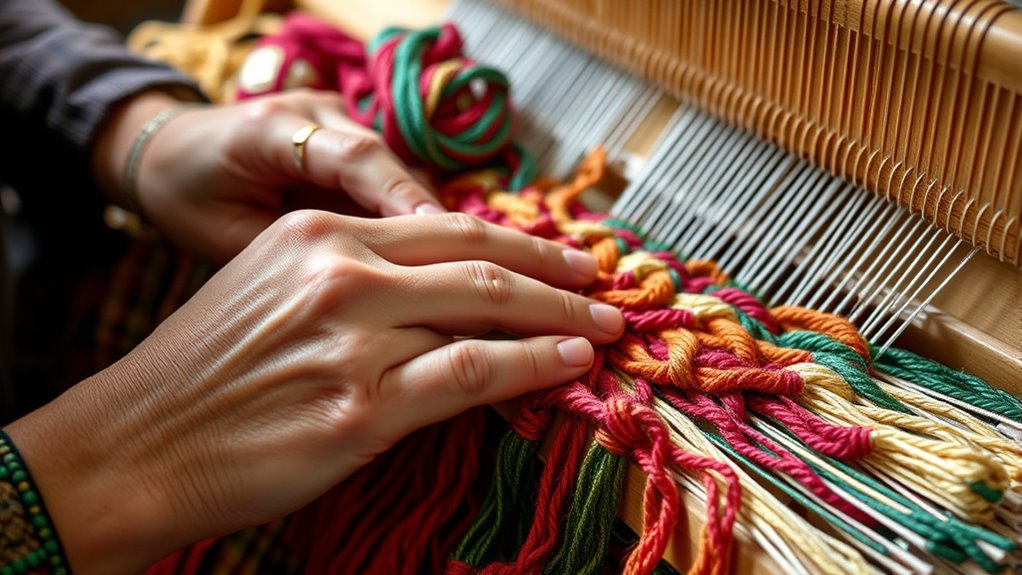

To start tapestry weaving, you need to select the right loom setup, ensuring proper tension on warp threads for stability. Choose fibers and yarns carefully—wool offers rich colors and durability, while cotton provides a different texture and saturation. Consider how dyeing fibers before weaving can enhance color blending and shading. Managing yarn placement and tension is key to creating detailed images. Keep exploring, and you’ll uncover more tips to elevate your craftsmanship.

Get art and craft supplies delivered free with Prime
- Fast, free delivery on millions of items
- Prime Video, Amazon Music and more included
- Member-only deals all year
Key Takeaways
- Selecting the right loom setup, including warp tension and weaving techniques, is essential for creating a stable tapestry foundation.
- Choose yarns based on fiber type, dye compatibility, and desired texture to achieve vibrant, durable designs.
- Proper yarn management and consistent tension ensure evenness and detailed color placement in the woven tapestry.
- Understanding how fiber dyeing affects color fidelity helps in planning shading and color blending for detailed imagery.
- Mastering weaving techniques like plain or tapestry weave and discontinuous wefts enables complex, detailed patterns.

Have you ever wondered how intricate images and patterns are created directly into fabric? When it comes to tapestry weaving, understanding the basics of loom setup and yarn selection is essential. One of the first steps in creating a detailed tapestry is choosing the right fibers and mastering fiber dyeing. Fiber dyeing allows you to achieve vibrant, consistent colors that will hold up over time. You can dye your yarns before weaving or dye them as you go, depending on the desired effect. This process gives you control over color blending and shading, enabling the creation of complex images. The type of fiber you select impacts how the dye adheres and how the final texture feels. Wool, for example, takes dye beautifully, resulting in rich hues, while cotton offers a different texture and color saturation.
Once your fibers are dyed to your satisfaction, you move on to weaving techniques, which are crucial for translating your design into fabric. The loom acts as your canvas, and understanding its mechanics is vital. You’ll need to set up your warp threads—these run vertically and provide the structure for your tapestry. Tension must be precise to ensure even weaving and prevent distortion. As you weave, you’ll interlace your weft yarns horizontally, building up your image one row at a time. Different weaving techniques, such as plain weave or more complex methods like tapestry weave, allow for varying textures and detail. Tapestry weaving often involves discontinuous wefts, which means you can switch colors and yarns within a single section to craft detailed patterns and images. This technique requires patience and precision but produces stunning, picture-like results.
Mastering weaving techniques also involves managing your yarns carefully, maintaining consistent tension, and understanding how to create depth and shading through color placement. You might experiment with combining fibers or using different thicknesses to add dimension. The choice of yarn plays a significant role in the final appearance, so consider the fiber’s texture, sheen, and how well it accepts dye. Additionally, understanding the color fidelity of your dyes and fibers ensures your finished piece maintains its intended look over time. As you work, remember that the interplay between fiber dyeing and weaving techniques defines the quality and intricacy of your tapestry. Whether you’re aiming for a detailed portrait or an abstract pattern, these foundational skills allow you to bring your artistic vision to life. With practice, you’ll develop an intuitive sense for selecting yarns, dyeing fibers, and employing weaving techniques that best express your creativity.
As an affiliate, we earn on qualifying purchases.
Frequently Asked Questions
What Are the Best Beginner-Friendly Loom Options for Tapestry Weaving?
You should start with a simple frame or lap loom, which is beginner-friendly and portable. These looms make it easy to experiment with weaving patterns and color blending without feeling overwhelmed. As you gain experience, you can explore larger, more complex looms. This approach helps develop your skills while allowing you to enjoy creating intricate designs and vibrant tapestries with ease.
How Do I Choose the Right Yarn Types for Durability?
Imagine your tapestry standing the test of time, vibrant and strong. To achieve this, you need to choose durable yarns by considering their fiber properties. Look for yarns with good tensile strength, low pilling, and resistance to wear. Opt for natural fibers like wool or cotton, or high-quality acrylics that hold up well. Carefully selecting yarns based on these qualities guarantees your masterpiece remains beautiful and resilient for years to come.
Can I Incorporate Different Textures Into My Tapestry?
Yes, you can definitely incorporate different textures into your tapestry. Use textural contrast by mixing smooth, shiny yarns with rough or fuzzy fibers. Experiment with mixed media techniques by adding other materials like fabric strips, ribbons, or even natural elements. This creates visual interest and tactile variety, making your tapestry more dynamic. Just guarantee your loom and yarn choices support these textures for a cohesive, artistic finish.
What Maintenance Does a Weaving Loom Require?
Think of your loom as a trusty steed needing regular care. You’ll want to keep it well-lubricated to prevent squeaks and ensure smooth rides, and regularly check and adjust the warp tension to keep your weaving steady as a mountain stream. By giving it these simple maintenance steps, your loom stays in top shape, ready for your creative adventures without missing a beat.
Are There Eco-Friendly Yarn Alternatives for Tapestry Weaving?
Yes, you can choose eco-friendly yarn alternatives for tapestry weaving. Look for sustainable fibers like organic cotton, hemp, bamboo, or linen, which are renewable and biodegradable. These materials reduce environmental impact and support eco-conscious practices. By selecting biodegradable materials, you help minimize waste and pollution, making your weaving projects more sustainable. Switching to these alternatives aligns your craft with eco-friendly values while maintaining quality and beauty in your tapestries.
As an affiliate, we earn on qualifying purchases.
Conclusion
As you continue your tapestry weaving journey, remember that choosing the right loom and yarn is like selecting the perfect brush for a painting. With patience and care, your threads will gently intertwine, creating a vibrant tapestry that whispers stories of your craftsmanship. Embrace the process, knowing each knot and color shift is simply a delicate brushstroke in your personal masterpiece. Soon, your woven art will softly reveal the beauty you’ve patiently nurtured through every careful weave.
As an affiliate, we earn on qualifying purchases.
As an affiliate, we earn on qualifying purchases.
Halloween Picks
halloween
As an affiliate, we earn on qualifying purchases.