
Gilding techniques involve carefully applying thin sheets of gold leaf or modern alternatives to artworks to create a luminous, luxurious finish. You start by preparing the surface with gesso or bole, then use adhesive size to attach the delicate gold leaf. Gently apply the leaf with a brush or cushion, then burnish to enhance shine. If you keep exploring, you’ll discover more tips and tricks to master these revered methods.

Get art and craft supplies delivered free with Prime
- Fast, free delivery on millions of items
- Prime Video, Amazon Music and more included
- Member-only deals all year
Key Takeaways
- Prepare the surface with a suitable primer like gesso or bole for better adhesion.
- Apply a thin layer of adhesive size and allow it to become tacky before gilding.
- Carefully lay the gold leaf onto the adhesive, gently pressing and smoothing it out.
- Burnish the gold leaf using a soft tool for a polished, luminous finish.
- Seal or protect the gilded surface with a varnish to enhance durability and appearance.
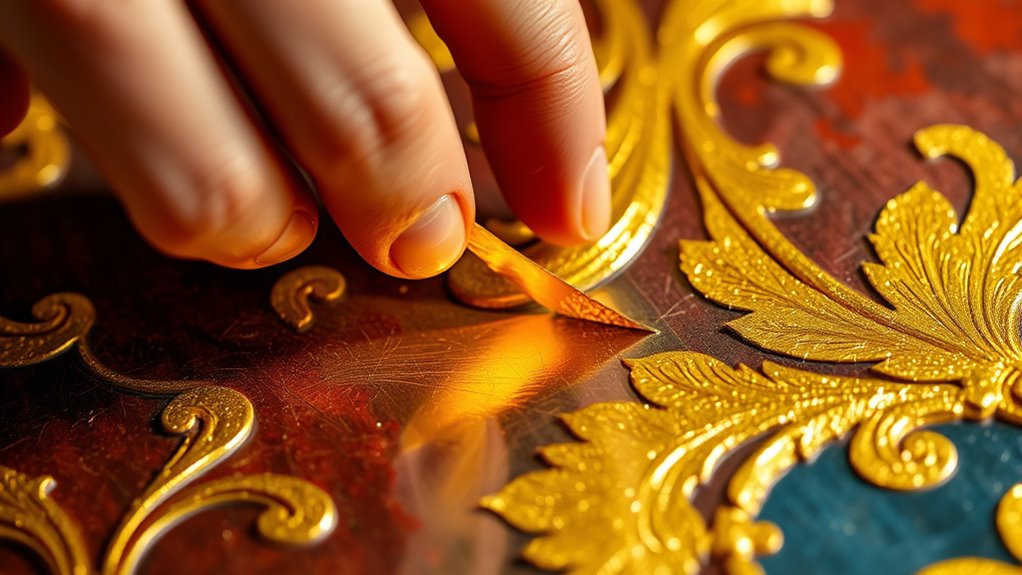
Have you ever wondered how artists achieve that stunning, metallic finish on their artwork or decorative objects? The secret lies in gilding, a centuries-old technique that involves applying thin sheets of gold leaf to surfaces. Gilding has evolved over time, blending traditional methods like antique gilding with modern gilding techniques to create breathtaking finishes. When you immerse yourself in gilding, you’re stepping into a world where craftsmanship and innovation meet, allowing you to transform ordinary objects into luxurious works of art.
Antique gilding, the classic approach, involves meticulous preparation and application. Historically, artisans used gold leaf adhered with a sticky substance called bole or gesso, which provided a smooth, adhesive surface. This method requires patience and skill, as the gold leaf is extremely delicate and must be carefully laid onto the surface without tearing. The finished piece is often burnished to enhance its shine, giving it a rich, warm glow that has stood the test of time. Antique gilding is renowned for its deep, luminous quality, often found on religious icons, furniture, and architectural details. Its timeless appeal lies in its durability and the way it captures light, creating an aura of opulence that feels rooted in tradition.
Antique gilding involves meticulous application of delicate gold leaf with bole or gesso for a luminous, durable finish.
Modern gilding, on the other hand, incorporates advanced materials and techniques that make the process more accessible and versatile. Instead of traditional gold leaf, you’ll find options like gold leaf sheets with a self-adhesive backing, gilding paints, or even synthetic alternatives that mimic the appearance of real gold. These innovations speed up the application process and reduce the need for extensive preparation. Modern gilding techniques also include spray gilding and the use of adhesive sizes designed for quick drying, allowing artists and craftsmen to achieve a gilded finish more efficiently. Whether you’re restoring antique furniture or adding decorative accents to contemporary art, modern gilding offers flexibility and precision. It can be applied to a variety of surfaces, including plastics and metals, broadening the scope of gilding projects.
Both antique and modern gilding share the core principle of adding a luminous, metallic layer to enhance visual appeal. While antique gilding emphasizes craftsmanship and tradition, modern gilding focuses on efficiency and adaptability. As you experiment with these techniques, you’ll discover that mastering either approach can elevate your work, giving your creations a luxurious, eye-catching finish. Whether you’re restoring an heirloom or creating something entirely new, understanding the differences and similarities between these gilding methods empowers you to choose the right technique for your project. Ultimately, gilding transforms surfaces into radiant, timeless pieces that captivate and inspire, no matter which method you choose. Additionally, the natural beauty of gold in gilding has made it a preferred prairie scenery in decorative arts, symbolizing wealth and prestige across cultures.
As an affiliate, we earn on qualifying purchases.
Frequently Asked Questions
How Long Does Gold Leaf Gilding Typically Last?
Gold leaf gilding typically lasts for decades, thanks to its exceptional durability. The gilding longevity depends on environmental factors and maintenance, but properly applied gold leaf can remain vibrant for 50-100 years or more. You should regularly clean and protect the gilded surface from moisture, pollutants, and physical damage to guarantee the gold leaf’s durability. With proper care, your gilded artwork will maintain its beauty for generations.
Can Gilding Be Applied to Non-Porous Surfaces?
Gilding can absolutely be applied to non-porous surfaces, and it’s easier than you think! You just need to guarantee proper surface preparation with a suitable adhesive or primer. Metallic finishes like gold leaf cling well when the surface is clean and smooth. This process creates a stunning, durable finish that transforms any non-porous material into a radiant masterpiece, making your project truly shine like a star!
What Are the Environmental Effects on Gold Leaf?
Environmental effects on gold leaf are minimal because gold is a naturally inert and recyclable metal. However, the environmental impact depends on mining practices and manufacturing processes, which can be resource-intensive. Sustainability considerations include sourcing gold responsibly and reducing waste during application. You can minimize your ecological footprint by choosing recycled gold leaf and supporting suppliers committed to environmentally friendly practices, ensuring your gilding process aligns with eco-conscious values.
Is Gilding Suitable for Outdoor Artworks?
Sure, gilding is perfect for outdoor artworks—if you enjoy constantly reapplying your shimmering masterpiece. Weather resistance isn’t its strong suit, so unless you love maintenance, it’s a gamble. Proper surface preparation is essential; neglect it, and your gold leaf will peel faster than your patience. Think of gilding outdoors as a glamorous soap opera—glorious at first, but expect drama from the elements.
How Do I Repair Damaged Gold Leaf?
To repair damaged gold leaf, start by carefully removing loose fragments. Use gentle restoration techniques like applying an adhesive or gilding size to reattach the gold leaf. Once secured, consider applying a protective coating to prevent future damage. Make sure to match the new gold leaf with the existing finish for seamless integration. Patience and precision are key to restoring the artwork’s original brilliance effectively.
As an affiliate, we earn on qualifying purchases.
Conclusion
Now that you know the art of gilding, imagine transforming a simple surface into a shimmering masterpiece. Did you know that gold leaf is so thin, it’s comparable to a single strand of hair? With these techniques, you have the power to turn ordinary objects into dazzling works of art, catching every glint of light. So, embrace the process and let your creativity shine as brilliantly as the gold you apply.
As an affiliate, we earn on qualifying purchases.
As an affiliate, we earn on qualifying purchases.
Halloween Picks
halloween
As an affiliate, we earn on qualifying purchases.