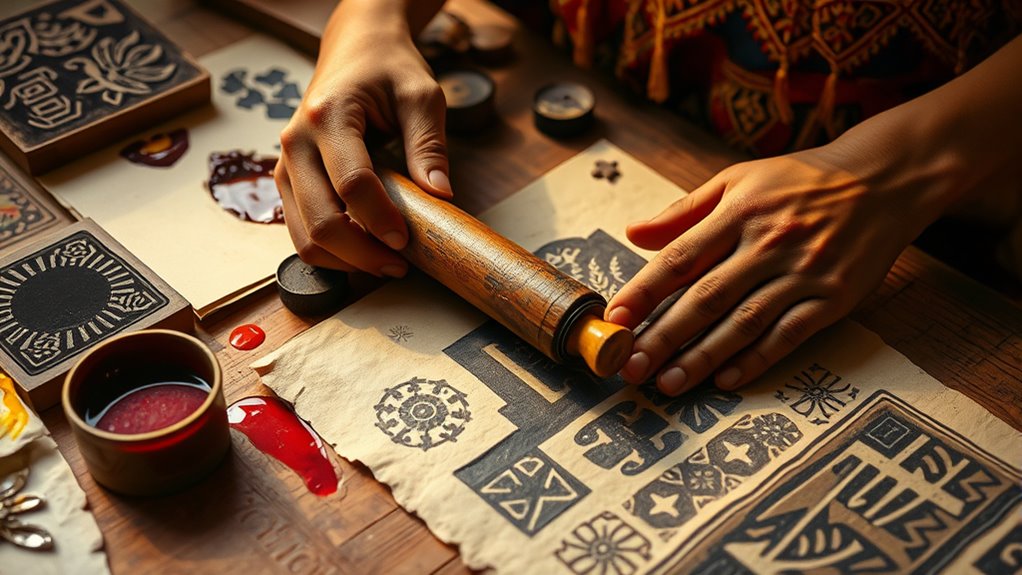

Indigenous printmaking is a powerful way for communities to preserve their stories, symbols, and traditions. Through their artwork, you can see representations of creation, ancestors, and sacred events that connect generations. This art form isn’t just decorative; it’s a symbol of cultural resilience and resistance against misrepresentation. By engaging with these prints, you help support the continuity of cultural identity and understand the deep meanings behind each motif. Discover more to see how these images protect and celebrate Indigenous heritage.

Get art and craft supplies delivered free — and shop member deals
- Fast, free delivery on millions of items
- Access to Prime Big Deal Days deals on October 6–7
- Prime Video, Amazon Music and more included
Key Takeaways
- Indigenous printmaking functions as a symbolic storytelling medium that preserves and communicates cultural stories, beliefs, and traditions across generations.
- The use of specific symbols and motifs in prints encodes cultural values, spiritual beliefs, and historical narratives unique to each community.
- Creating prints serves as a form of cultural activism, asserting Indigenous identity, resisting stereotypes, and promoting authentic representation.
- Indigenous printmaking establishes a visual language that fosters community empowerment and reinforces cultural ties beyond words.
- Legal protections and ethical engagement ensure the preservation of cultural stories, safeguarding Indigenous knowledge from misappropriation.

Have you ever wondered why Indigenous printmaking holds such profound cultural significance? It’s because this art form isn’t just about creating images; it’s a powerful way to engage in symbolic storytelling that connects communities to their history, beliefs, and traditions. When you see Indigenous prints, you’re witnessing visual narratives that have been passed down through generations, often depicting stories of creation, ancestors, or sacred events. These images serve as a bridge to the past, helping communities preserve their cultural identity in a rapidly changing world. Printmaking becomes a vessel for cultural preservation, ensuring that essential stories and meanings are not lost over time. You might notice that many Indigenous prints incorporate specific symbols and motifs unique to their culture, each carrying layered significance understood deeply within the community. These symbols are more than decorative; they encode values, histories, and spiritual beliefs that might otherwise be forgotten. By engaging with these prints, you participate in a tradition of storytelling that sustains cultural knowledge and fosters a sense of belonging. Indigenous printmakers often see their work as a way to keep their cultural heritage alive, especially in contexts where oral traditions may be under threat. The act of creating these prints is itself a form of cultural activism, asserting identity and resilience amid external pressures. As you observe and appreciate Indigenous printmaking, you’re witnessing a visual language that communicates beyond words, reinforcing cultural ties across generations. This process of artistic expression also empowers Indigenous communities to reclaim their narratives and challenge stereotypes. Through their prints, they tell stories that are authentic and rooted in their worldview, countering misrepresentations often seen elsewhere. The importance of Indigenous printmaking extends beyond individual artistry; it becomes a collective act of cultural preservation and resistance. Each print serves as a testament to a community’s resilience and a reminder of their enduring traditions. Additionally, legal protections help safeguard these cultural expressions from misappropriation and exploitation. When you engage with these artworks, you’re not just admiring craftsmanship—you’re supporting the safeguarding of cultural knowledge and stories that might otherwise fade away. Indigenous printmaking exemplifies how art can be a essential tool for symbolic storytelling, ensuring that the voices and histories of Indigenous peoples are heard and remembered. It’s a meaningful act that sustains identity, strengthens community bonds, and keeps alive the sacred stories that define Indigenous cultures worldwide.
Indigenous printmaking art prints
As an affiliate, we earn on qualifying purchases.
As an affiliate, we earn on qualifying purchases.
Frequently Asked Questions
How Do Indigenous Printmaking Techniques Vary Across Cultures?
You’ll notice that indigenous printmaking techniques vary widely across cultures, reflecting their unique histories and environments. Each community uses distinct materials and methods to express their stories, beliefs, and identities. This showcases cultural diversity and deepens artistic expression. By exploring these techniques, you gain insight into how different cultures preserve their traditions and communicate their worldview through printmaking, making each piece a powerful symbol of their cultural identity.
What Role Does Printmaking Play in Indigenous Language Preservation?
Did you know that over 70% of indigenous communities use printmaking to preserve their languages? You play a essential role in this cultural expression, as printmaking helps reinforce language and cultural identity. By creating prints with traditional symbols and scripts, you contribute to preserving and sharing your indigenous heritage. Your artistic expression becomes a powerful tool for cultural continuity and educating others about your community’s unique language and traditions.
Are There Specific Indigenous Symbols Commonly Used in Printmaking?
You’ll notice that indigenous symbols often feature prominently in printmaking motifs, as artists incorporate these sacred and meaningful designs to express cultural identity. Specific symbols like animals, spiritual icons, and natural elements are common, reflecting ancestral stories and beliefs. By using these indigenous symbols, artists preserve traditions, communicate cultural values, and create powerful visual narratives that resonate across generations.
How Has Digital Technology Impacted Indigenous Printmaking Practices?
Digital technology has transformed indigenous printmaking by enabling digital preservation of traditional designs and techniques. You can now explore modern adaptations, blending age-old symbols with new media, which broadens cultural expression and reach. This shift allows you to share your work globally, ensuring that indigenous stories and artistry remain vibrant and accessible for future generations. Embracing digital tools empowers you to innovate while honoring your cultural heritage.
What Are the Challenges Faced by Indigenous Printmakers Today?
You face a landscape where indigenous printmakers navigate a minefield of challenges. Cultural appropriation threatens the authenticity of your work, while funding barriers block access to essential resources. Like a ship battling rough seas, you struggle to preserve your traditions amidst these obstacles. Despite these hurdles, your resilience keeps the art alive, demanding recognition and support to guarantee your voice remains powerful and true in the world of printmaking.
Native American printmaking supplies
As an affiliate, we earn on qualifying purchases.
As an affiliate, we earn on qualifying purchases.
Conclusion
You hold the brush to a vibrant tapestry of history and identity, where each print is a heartbeat echoing ancestral stories. Your art becomes a sacred flame, illuminating traditions long passed, yet never forgotten. As you create, you weave a web of connection—symbolic threads linking past, present, and future. In every stroke, you carry the torch of resilience, ensuring indigenous voices remain alive, powerful, and unbreakable through the timeless language of printmaking.
cultural storytelling printmaking kits
As an affiliate, we earn on qualifying purchases.
As an affiliate, we earn on qualifying purchases.
As an affiliate, we earn on qualifying purchases.
Fall Picks
fall essentials
As an affiliate, we earn on qualifying purchases.