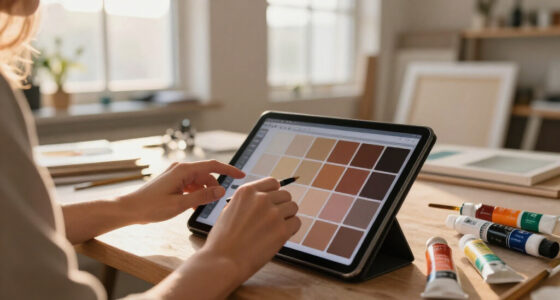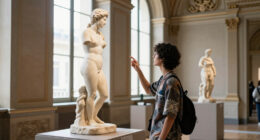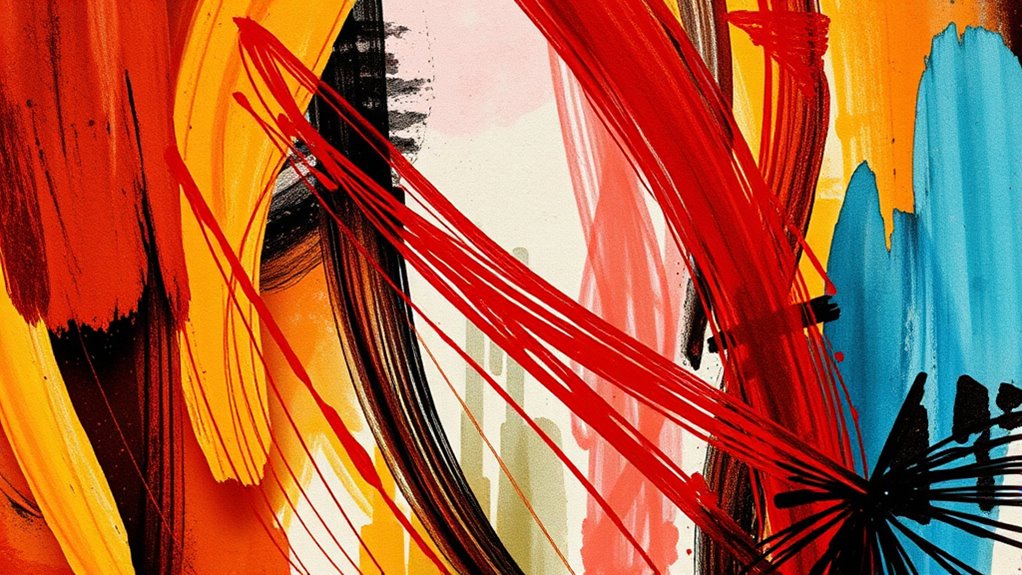
Hybrid aesthetics blend traditional craftsmanship with digital techniques to create fresh, dynamic visuals. You combine tactile, imperfect qualities like brushstrokes or carvings with digital precision, flexibility, and complex textures. This approach allows you to honor handmade elements while adding modern touches such as geometric shapes or overlays. By integrating physical materials with digital tools, you can push creative boundaries and explore the exciting relationship between old and new—keep exploring to see how these methods can transform your work.
Key Takeaways
- Hybrid aesthetics merge tactile, handmade qualities with digital precision to create dynamic and layered visuals.
- Combining analog textures like brushstrokes with digital overlays enhances depth and authenticity.
- Digital tools digitize and manipulate traditional materials, expanding creative possibilities while preserving their character.
- This approach reflects a cultural shift valuing craftsmanship alongside technological innovation.
- Practically, it involves integrating physical techniques with digital manipulation for unique, evolving design outcomes.
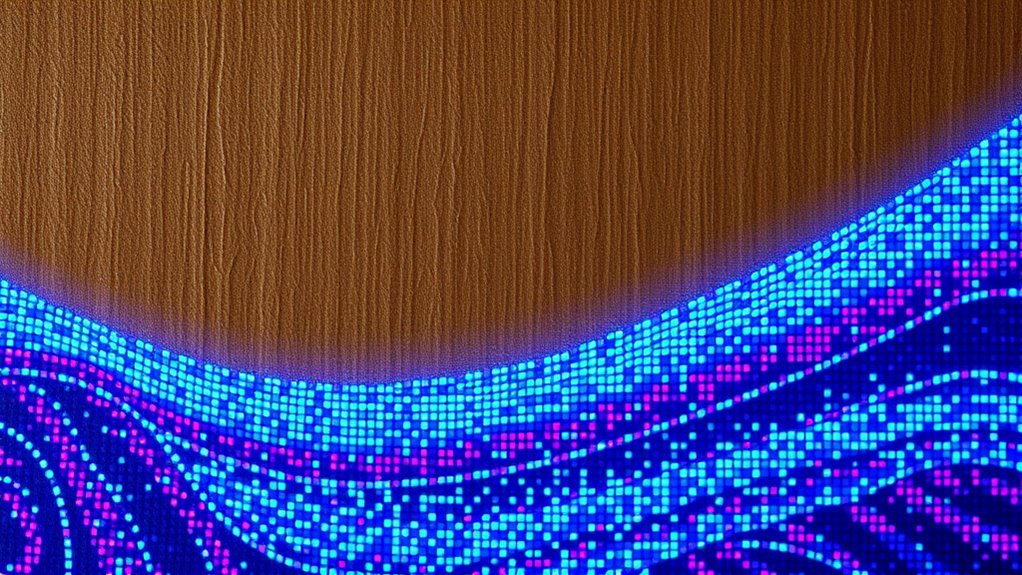
Have you ever noticed how modern design seamlessly blends different styles to create something entirely new? That’s the essence of hybrid aesthetics—combining traditional craftsmanship with digital innovation to produce fresh, compelling visuals. When you explore this world, you’ll see how the contrast between analog and digital techniques plays a essential role. Analog contrast refers to the tactile, imperfect qualities of handmade elements, like brushstrokes or carved details, which bring warmth and authenticity to a piece. Digital layering, on the other hand, introduces precision, flexibility, and complex textures that can’t be achieved by hand alone. When these two approaches intersect, they form a dynamic dialogue that elevates the final work beyond what either could do alone.
Modern design merges traditional craftsmanship with digital innovation, creating dynamic, layered visuals that blend analog warmth with digital precision.
Imagine a piece of modern art that features a hand-painted background, rich with textured brushstrokes and subtle imperfections that echo traditional methods. Overlay this with digital layering—sharp geometric shapes, vibrant gradients, or semi-transparent overlays—that add depth and a contemporary edge. The interplay between these elements creates a visual tension that’s both engaging and harmonious. You’ll find this technique in everything from graphic design to interior spaces, where the roughness of analog contrast balances the sleekness of digital layering. It’s about embracing imperfections while harnessing technological precision, resulting in a balanced aesthetic that feels both grounded and innovative.
In practical terms, blending these techniques involves working with physical materials like charcoal, ink, or fabric, then scanning or digitizing those elements for further manipulation. Digital tools allow you to layer, resize, and adjust these components without losing their original character. This process lets you maintain the authenticity of analog contrast while enhancing it with the flexibility of digital layering. The key is to let each method inform the other—using the rough, tactile qualities of traditional techniques to inject personality into digital compositions, and employing digital tools to refine and expand those initial ideas. Additionally, understanding the influence of curiosity can inspire artists to experiment with unconventional combinations, pushing the boundaries of hybrid aesthetics. The result is a hybrid aesthetic that’s rich and layered, inviting viewers to explore the nuanced relationship between the old and the new.
Ultimately, this blending of traditional and digital techniques reflects a broader cultural shift—one that values craftsmanship but also embraces innovation. You’re not bound to choose one over the other; instead, you’re encouraged to experiment and find unique ways to combine them. By embracing both analog contrast and digital layering, you create work that’s complex, textured, and truly reflective of our hybrid world. It’s a way to push boundaries, challenge conventions, and craft visuals that are as layered and multifaceted as the society we live in.

HUION Note 2-in-1 Digital Notebook Drawing Tablet With Battery-free Pen, Bluetooth Wireless Paper Tablet Electronic Writing Pad for Note-taking, Digital Art & Meeting, Refillable A5 Notepad, 9.5x7inch
- Digital Pen and Notepad: Includes battery-free stylus and refillable A5 notepad
- App Integration: Syncs handwritten notes to Huion Note app
- Audio Recording: Record and playback audio synced with notes
As an affiliate, we earn on qualifying purchases.
As an affiliate, we earn on qualifying purchases.
Frequently Asked Questions
How Do Artists Decide Which Techniques to Blend?
You decide which techniques to blend by considering your desired effect and the strengths of each method. Your technique selection involves exploring how traditional and digital tools can complement one another, fostering creative integration. Think about the textures, precision, and expression each technique offers, then experiment to see how they work together. Trust your intuition and be open to trial and error, as this process helps you create unique hybrid aesthetics.
What Are Common Challenges in Hybrid Aesthetic Projects?
Did you know 65% of hybrid projects face material integration issues? You might struggle with achieving stylistic harmony when combining traditional and digital elements. Challenges include balancing textures, colors, and techniques to create a cohesive look. Sometimes, integrating diverse materials leads to technical hurdles or aesthetic inconsistencies. To overcome these, you need careful planning, experimentation, and a keen eye for how different styles complement each other throughout your project.
How Does Audience Perception Differ Between Traditional and Digital Art?
You’ll notice that audience perception differs between traditional and digital art through perception nuances, as viewers often see traditional works as more authentic and emotionally genuine. Digital art, while innovative, can spark authenticity debates, with some questioning its depth or craft. You might find that traditional art’s tactile qualities evoke stronger emotional responses, whereas digital art’s versatility appeals to modern sensibilities, shaping how audiences interpret and value each form.
Can Hybrid Aesthetics Influence Contemporary Art Movements?
Think of hybrid aesthetics as a bridge connecting worlds. They definitely influence contemporary art movements by merging cultural symbolism with artistic innovation. You can sway perceptions and inspire new trends by blending traditional craftsmanship with digital tools. This fusion creates fresh visual languages, pushing boundaries and redefining what art can be. As a result, hybrid aesthetics serve as a catalyst, shaping the evolution of modern art and encouraging bold, diverse expressions.
What Tools Are Essential for Mastering Hybrid Art Techniques?
To master hybrid art techniques, you need essential tools like digital tablets for mixed media work and software like Photoshop or Procreate for technique fusion. You should also embrace traditional tools such as brushes, paints, and collage materials to blend with digital elements seamlessly. Practice combining these tools, experimenting with layers, textures, and styles, so you can create innovative hybrid artworks that push the boundaries of contemporary art.

3PCS Oil Pastel Blending Tools, Artist Blending Sponge Pen, Sketch Rubbing Sponge Brush, Color Shaper Paint Mixing Tool for Drawing Smearing Blending Highlighting Detailing
- Versatile Artistic Applications: Suitable for various art mediums and projects
- Precision Design: Different sponge sizes for shading and details
- Ergonomic Construction: Comfortable grip with durable materials
As an affiliate, we earn on qualifying purchases.
As an affiliate, we earn on qualifying purchases.
Conclusion
You hold the power to redefine art itself, blending centuries of tradition with cutting-edge digital magic. By mastering hybrid aesthetics, you’ll discover creativity so explosive it could reshape entire worlds—fusing the old and new into visuals that dazzle, mesmerize, and transcend boundaries. This isn’t just a trend; it’s an artistic revolution that could make history. So, plunge into boldly, because once you harness this fusion, nothing can stop your extraordinary creative empire from skyrocketing into the future!
![DeskFX Free Audio Effects & Audio Enhancer Software [PC Download]](https://m.media-amazon.com/images/I/41fXbDohyuS._SL500_.jpg)
DeskFX Free Audio Effects & Audio Enhancer Software [PC Download]
- Audio Transformation: Enhance sound from speakers and headphones
- Sound Quality Improvement: Adjust audio with various effects
- Audio Control: Manage sound through hardware settings
As an affiliate, we earn on qualifying purchases.
As an affiliate, we earn on qualifying purchases.

MOFUNY Mixed Media Sketchbook 9×12, Drawing Paper Pad 60 Sheets_98lb/160gsm
- High-Quality Recyclable Paper: 98 lb/160 gsm mixed media paper
- Prevents Ink Bleeding: Thick, acid-free paper prevents color fading
- Durable Hardcover & Bottom: Protects artwork from damage
As an affiliate, we earn on qualifying purchases.
As an affiliate, we earn on qualifying purchases.