To authenticate artworks, start by verifying their provenance through documented ownership, sales, and exhibitions. Use scientific analysis tools like imaging and material tests to uncover hidden details. Consult art experts to examine techniques, signature, and style, ensuring they match authentic works. Keep detailed records of all findings and reports for future reference. Combining provenance, scientific data, and expert opinions strengthens your due diligence. Continue exploring to discover more about confirming artwork authenticity effectively.
Key Takeaways
- Verify provenance through catalogs raisonnés, auction records, and gallery documentation to establish the artwork’s history.
- Use advanced imaging and scientific analysis to detect fakes or alterations beyond visual inspection.
- Consult multiple art experts to analyze techniques, materials, signatures, and stylistic features for authenticity.
- Cross-verify provenance records with expert opinions to strengthen confidence in the artwork’s legitimacy.
- Maintain detailed documentation and records throughout the process to ensure ongoing due diligence and legal integrity.
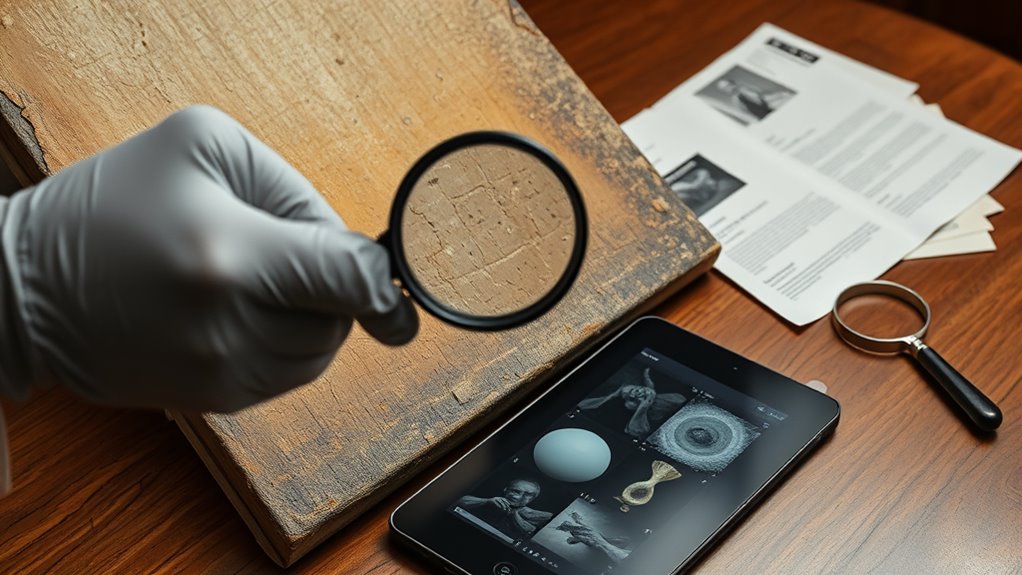
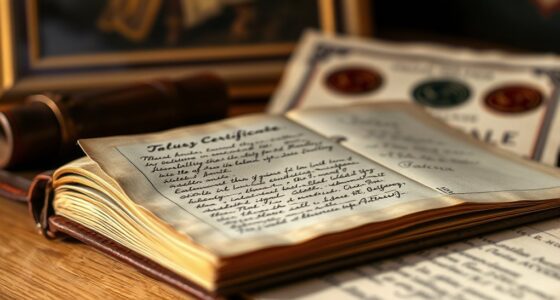
Authenticating artworks is a essential process in the art world, ensuring that a piece is genuine and accurately attributed to its creator. When you’re dealing with a valuable artwork, one of the most critical steps is provenance verification. This involves tracing the piece’s history, including previous owners, exhibitions, and sales. Provenance provides a documented lineage that can help confirm authenticity and establish the artwork’s legitimacy. Without clear provenance, even an artwork that looks authentic might raise suspicions, so you need to gather as much documented history as possible. This might include catalogs raisonnés, auction records, or gallery documentation. Confirming provenance not only boosts confidence in the piece but also helps you assess its value and legal standing. Additionally, understanding the role of technology in authentication can offer new insights into verifying an artwork’s authenticity through advanced imaging and analysis techniques.
Alongside provenance, expert opinion plays a crucial role in authentication. Specialists with deep knowledge of a particular artist, period, or style can examine the artwork’s techniques, materials, and craftsmanship. You should seek out qualified art appraisers or specialists familiar with the artist’s oeuvre to evaluate the piece. These experts analyze the brushwork, composition, and signature, comparing them to known works. Their insights can uncover inconsistencies or confirm authenticity. Expert opinion isn’t just about spotting fakes; it provides context, helping you understand whether the piece aligns with the established characteristics of the artist’s work. Consulting multiple experts can also help you gain a well-rounded view, especially if the piece’s authenticity is uncertain.
In your due diligence process, you’ll want to combine provenance verification with expert assessments. This integrated approach strengthens your case for authenticity and minimizes risk. Keep thorough records of all documentation, expert reports, and correspondence. These records can be invaluable if questions arise later or if you decide to sell the artwork. Remember, authenticating an artwork isn’t a one-step process; it involves ongoing research and collaboration with specialists. The more diligently you verify provenance and seek expert opinions, the more confident you can be about the piece’s authenticity. Ultimately, these steps safeguard your investment and uphold the integrity of the art market, ensuring that you’re making informed, secure decisions when acquiring or selling artworks.
artwork provenance verification tools
As an affiliate, we earn on qualifying purchases.
As an affiliate, we earn on qualifying purchases.
Frequently Asked Questions
How Do I Spot a Fake Artwork at First Glance?
At first glance, you can spot a fake artwork by examining its provenance and details. Look for inconsistencies in the signature, style, or materials used. Use authentication technology like UV light or infrared scans to reveal hidden marks or alterations. Check the provenance records to verify its history. If something seems off or unfamiliar, it’s wise to consult an expert, as genuine artworks usually have clear, documented provenance and pass advanced authentication tests.
What Are the Common Signs of a Forged Signature?
You can spot a forged signature by examining it carefully through signature analysis. Look for inconsistent stroke pressure, shaky lines, or unnatural letter shapes, which are common forgery indicators. Pay attention to any signs of hesitation or retouching, and compare it with verified examples. If the signature appears overly perfect or differs markedly from authentic ones, it’s likely a forgery indicator. Trust your instincts and seek expert opinions if unsure.
How Long Does the Authentication Process Typically Take?
Oh, the thrill of waiting—authentication can take anywhere from a few weeks to several months! You’ll need expert opinions and thorough provenance research, which means experts examine every detail and trace the artwork’s history. Patience is key; rushing could lead to mistakes. So, sit back, enjoy the suspense, and trust that diligent investigation will reveal whether your masterpiece is genuine or just a clever forgery.
Can Digital Images Be Reliably Authenticated?
Yes, digital images can be reliably authenticated using digital image analysis and blockchain verification. Digital image analysis examines the file’s metadata, pixel patterns, and digital signatures to confirm authenticity. Blockchain verification adds an extra layer of security by creating an immutable record of the image’s provenance and ownership history. Together, these methods provide a robust way to authenticate digital images, giving you confidence in their legitimacy and provenance.
What Are the Costs Involved in Authenticating an Artwork?
You’ll likely spend a few thousand dollars on authenticating an artwork, depending on its value and complexity. Costs include provenance research, which traces the piece’s history, and expert consultation, where specialists verify authenticity. Additional expenses may cover scientific testing or documentation. Be prepared for varying fees based on the artwork’s importance and the professionals involved, but investing in thorough due diligence helps safeguard your investment and guarantees genuine provenance.

Color Analysis Draping Kit – Find Your Season at Home | DIY Color Analysis | 36 Face Frames + Step-by-Step Guide | 12-Season System | Chromawings
FIND YOUR SEASON AT HOME: See instantly which colors make your skin look brighter and more even. With…
As an affiliate, we earn on qualifying purchases.
As an affiliate, we earn on qualifying purchases.
Conclusion
By following these due diligence steps, you’re building a sturdy shield against forgeries and misattributions. Remember, authenticating an artwork is like unraveling a complex tapestry—each thread matters. Stay vigilant, ask questions, and don’t rush the process. When you do your homework thoroughly, you’re not just protecting your investment; you’re preserving the integrity of the art world itself. Trust your instincts and let the evidence be your compass on this journey.

The Art Whisperer (An Alix London Mystery Book 3)
As an affiliate, we earn on qualifying purchases.
As an affiliate, we earn on qualifying purchases.
EOOUT 2 Pack 24×36 Inches Art Portfolio Case, Portfolio Folder for Artwork, Posters Storage Bag with Zipper and Handle Mesh Folder Organizers for Poster, Scrapbook, Keepsake and Bulletin Board
Perfect Artwork Size: You can easily fit 22×34 panels into our vinyl combo bag; store up to 2…
As an affiliate, we earn on qualifying purchases.
As an affiliate, we earn on qualifying purchases.