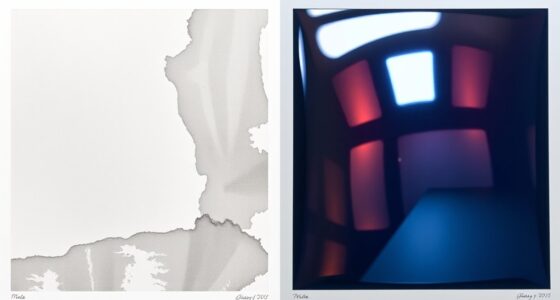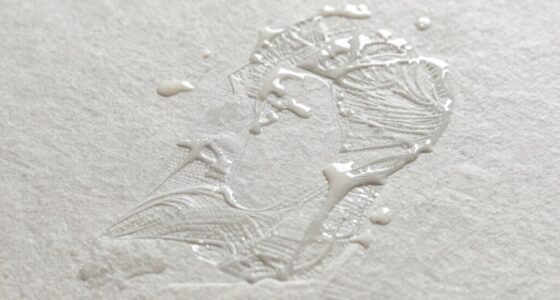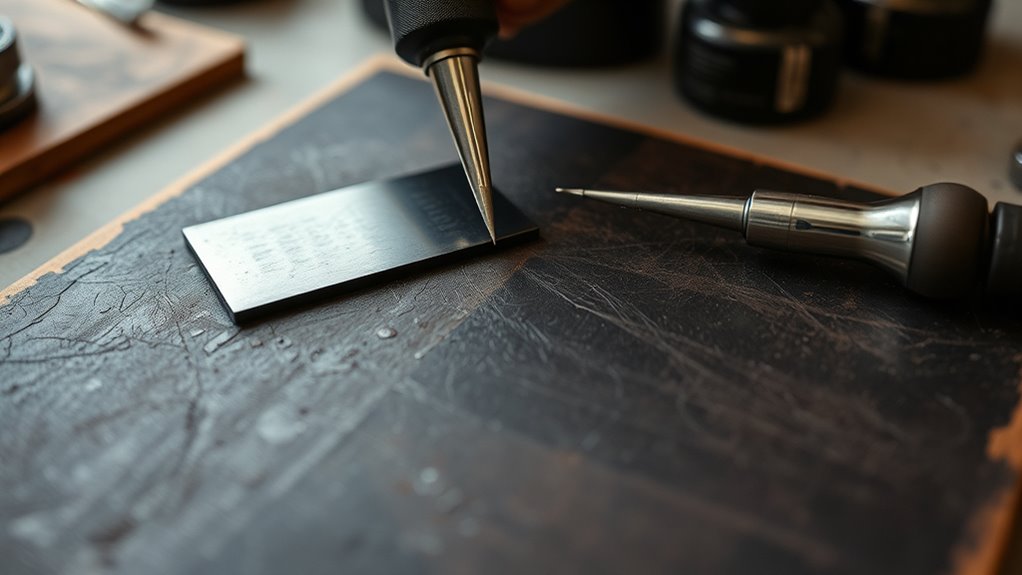

Mezzotint printing is an intaglio technique that creates rich, tonal images by working on a textured copper plate. You use a rocker tool with curved blades to roughen the surface, producing a deep black tone. Light areas are added by smoothing or burnishing parts of the plate, resulting in smooth gradations from dark to light. This process produces detailed, painterly images with subtle shading—if you want to explore how this intricate craft works, there’s more to discover.
Open a free Amazon Business account
Business pricing, bulk buying and tax-exempt orders.
As an affiliate, we earn on qualifying purchases.
Key Takeaways
- Mezzotint is a printmaking technique that creates tonal gradations through surface roughening of a copper plate.
- It involves using a rocker tool to produce a textured surface capable of holding rich black ink.
- Artists achieve subtle shading and smooth tonal transitions by smoothing or burnishing areas of the plate.
- Originating in the 17th century, mezzotint was popular for realistic portraiture and detailed imagery.
- The process requires high craftsmanship, blending traditional methods with modern innovations for nuanced results.
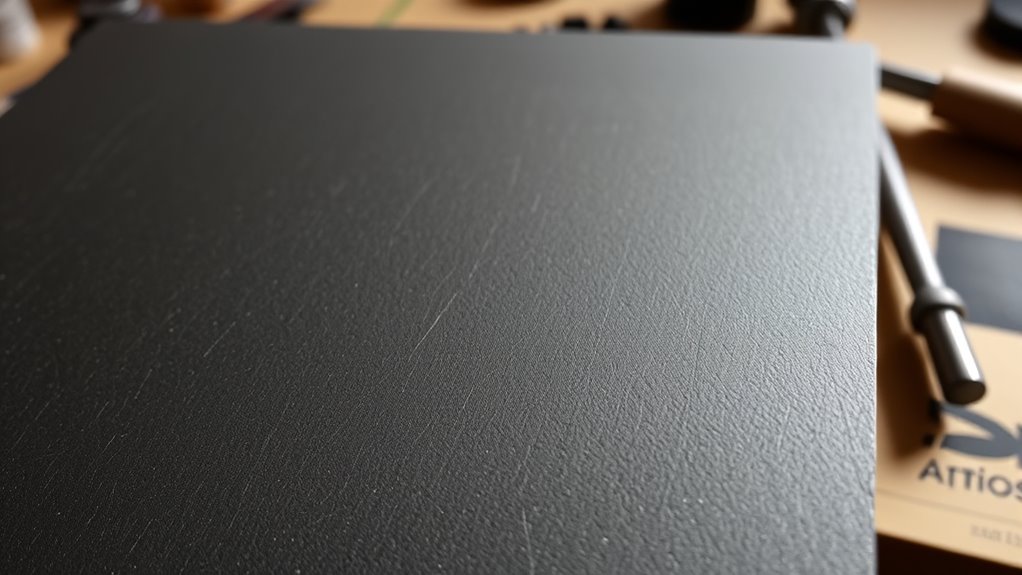
Have you ever wondered how artists achieve such rich, velvety tones in print? The answer lies in a fascinating printmaking technique called mezzotint. To understand how this process works, it helps to start with a techniques overview and explore its historical development. Mezzotint is renowned for its ability to produce smooth gradations of tone, making it ideal for capturing subtle shading and delicate textures in artwork. Unlike other printmaking methods that rely on lines or dots, mezzotint creates images through a process of tonal modulation, resulting in prints that resemble paintings in their depth and richness. The techniques overview of mezzotint involves working on a copper plate that’s been prepared with a rough, textured surface. Artists use a tool called a rocker, which has multiple curved blades, to uniformly roughen the entire plate. This creates a textured surface that, when inked and pressed onto paper, transfers a solid black tone. To create lighter areas, the artist then smooths or burnishes sections of the plate, removing the roughness and allowing the underlying metal to show through and produce lighter shades. This meticulous process of roughening and smoothing allows for an incredible range of tonal values, from deep blacks to soft grays. Shadows, highlights, and midtones are all achieved through careful manipulation of the plate’s surface. The result is a print that offers a wealth of detail and subtle gradations, capturing the nuances of light and shadow in a way that’s comparable to traditional painting techniques. Furthermore, the metalworking involved in preparing the plate requires a high level of skill and precision, reflecting the craftsmanship behind this art form. Tracing its roots, the historical development of mezzotint begins in the 17th century, with its invention attributed to the German artist Ludwig von Siegen. It quickly gained popularity among printmakers and painters who sought to expand their artistic repertoire. During the 18th century, mezzotint reached the height of its popularity, especially in England, where artists like James McArdell and John Strong refined the technique and produced highly detailed portrait prints. The method was prized for its ability to render realistic skin tones and delicate facial features, making it a preferred choice for reproducing portraits. Although the popularity of mezzotint declined with the advent of other printmaking processes in the 19th century, it remains an influential technique, appreciated for its craftsmanship and the unique depth it imparts to images. Today, contemporary artists continue to explore mezzotint, blending traditional methods with modern innovations to achieve stunning visual effects.
As an affiliate, we earn on qualifying purchases.
Frequently Asked Questions
What Are the Main Differences Between Mezzotint and Other Intaglio Techniques?
Mezzotint stands out from other intaglio techniques because it offers exceptional texture variation and tonal richness. You use a rocker tool to create a finely textured surface, allowing you to produce smooth gradients and deep blacks. Unlike etching or drypoint, mezzotint provides a broader range of tonal effects, making your prints more nuanced and expressive. Its unique ability to render subtle gradations gives your artwork a distinctive, velvety quality.
How Long Does It Typically Take to Complete a Mezzotint Print?
You’ll find that completing a mezzotint print takes varying amounts of time, depending on the complexity and your technique. The drying time of the ink and careful application are essential, as rushed work can lead to smudges or uneven tones. Generally, it might take several hours to days, including drying, to finish a detailed print. Patience ensures the final piece captures the rich, tonal qualities that make mezzotint unique.
What Types of Inks Are Best Suited for Mezzotint Printing?
You’ll want to choose the absolute best inks for mezzotint printing, and that means oil-based inks are your go-to superheroes. They provide rich, deep blacks and smooth gradations that truly bring your artwork to life. Oil resist inks are also fantastic, especially if you need to prevent ink from sticking in certain areas. With these inks, your prints will have stunning detail and durability that last for ages.
Can Mezzotint Be Combined With Other Printmaking Methods?
You can definitely combine mezzotint with other printmaking methods to create striking layered techniques. Experimenting with mixed media allows you to add textures or colors that enhance the depth of your work. By integrating mezzotint with techniques like etching, aquatint, or lithography, you can produce complex images with rich tonal variations. This versatility makes mezzotint a powerful tool for artists exploring layered techniques and innovative print combinations.
What Are Common Challenges Faced by Artists Using Mezzotint?
When working with mezzotint, you face challenges like technical difficulties in creating smooth gradients and mastering dark tones. You might struggle with maintaining consistent texture and avoiding accidental burrs that can ruin your work. Patience and precision are key, as mastering these aspects takes time. You’ll need to develop a steady hand and a good understanding of how to control the burrs to achieve the desired depth and tonal richness.
intaglio copper plate engraving tools
As an affiliate, we earn on qualifying purchases.
As an affiliate, we earn on qualifying purchases.
Conclusion
Now that you’ve explored mezzotint printing, you understand its rich history and intricate process. Did you know that during its peak in the 18th century, artists could produce up to 200 detailed images in a single year? Imagine the dedication required to create such finely textured prints by hand. As you appreciate this art form, remember that each print is a demonstration of patience and skill—transforming blank copper plates into stunning works of art.
professional rocker tool for printmaking
As an affiliate, we earn on qualifying purchases.
As an affiliate, we earn on qualifying purchases.
As an affiliate, we earn on qualifying purchases.
Flea & tick season Picks
flea and tick prevention
As an affiliate, we earn on qualifying purchases.