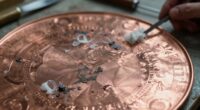
When buying your first etching press, understanding what ‘pressure’ really means is key to great prints. Pressure is the force that transfers ink from the plate to the paper without damaging your materials. Different presses apply pressure differently, like manual cranks or hydraulic systems. Proper control guarantees sharp, consistent results. If you keep exploring, you’ll discover how to set, adjust, and optimize pressure for flawless, professional-quality prints every time.

Get art and craft supplies delivered free — and shop member deals
- Fast, free delivery on millions of items
- Access to Prime Big Deal Days deals on October 6–7
- Prime Video, Amazon Music and more included
Key Takeaways
- Proper pressure ensures even ink transfer and sharp details without damaging your materials.
- Different press types (hand, rolling, hydraulic) apply pressure in distinct ways affecting print quality.
- Adjust and test pressure gradually for consistent, high-quality impressions across multiple prints.
- Maintaining correct pressure prevents issues like blurring, faint lines, or crushing delicate details.
- Understanding and controlling pressure reflects craftsmanship and enhances your artistic expression.
etching press with adjustable pressure
As an affiliate, we earn on qualifying purchases.
As an affiliate, we earn on qualifying purchases.
What Does ‘Pressure’ Really Mean in Printmaking?

Have you ever wondered what “pressure” really means when working with an etching press? In printmaking physics, pressure terminology refers to the force applied to transfer ink from a plate to paper. It’s not just about pressing hard; it’s about the precise amount of force needed to produce quality prints without damaging your materials. Understanding the physics helps you control how much pressure is ideal for different techniques, whether drypoint or aquatint. High refresh rates in projectors can enhance clarity in detailed prints, emphasizing the importance of pressure adjustments. Too much pressure can cause over-inking or plate wear, while too little results in faint images. As you operate the press, you’re adjusting the force to optimize ink transfer, ensuring consistent, sharp prints. Exploring new frontiers in printmaking techniques can also enhance your understanding of pressure dynamics. Knowing what pressure means in printmaking is essential for achieving professional results with your etching press.
manual etching press for beginners
As an affiliate, we earn on qualifying purchases.
As an affiliate, we earn on qualifying purchases.
How Do Different Types of Etching Presses Apply Pressure?
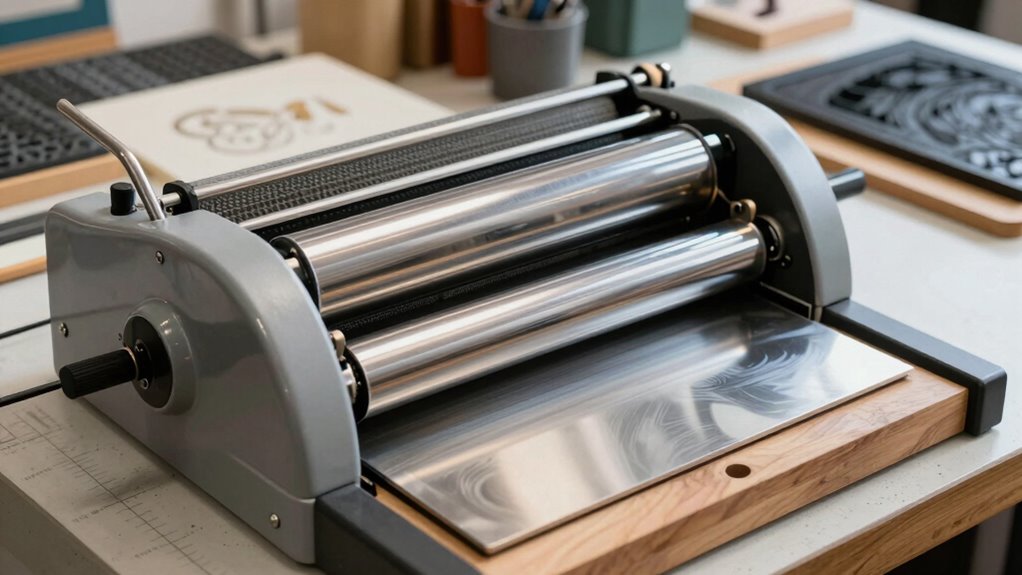
Different types of etching presses apply pressure in distinct ways, depending on their design and mechanism. For example, some presses use a screw mechanism to gradually increase pressure, ensuring consistent ink absorption and improved print durability. Others employ a rolling or bar system that distributes pressure evenly across the plate. Here are three common types:
Different etching presses use screw, rolling, or hydraulic mechanisms for precise, even pressure and durable prints.
- Hand Crank Presses: You turn a wheel or handle, applying manual pressure that allows precise control for ink absorption.
- Rolling Presses: These use rollers to exert uniform pressure, ideal for consistent print quality and durability.
- Hydraulic or Motorized Presses: These apply pressure electronically or hydraulically, providing steady force for ideal ink absorption and long-lasting prints.
Choosing the right type depends on your needs for consistency, control, and print quality.
As an affiliate, we earn on qualifying purchases.
Why Does Proper Pressure Make a Difference for Your Prints?
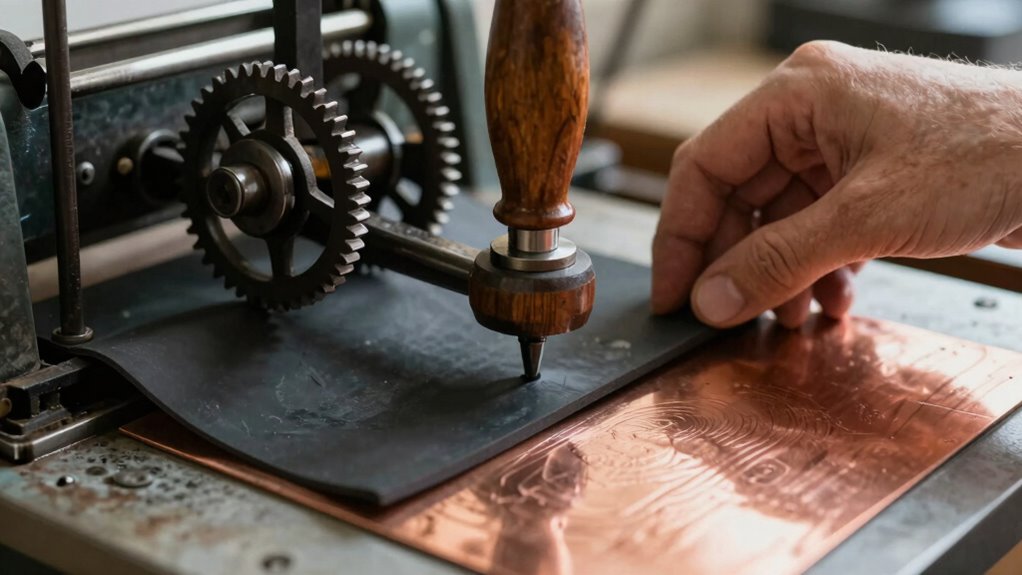
Proper pressure guarantees your ink is evenly distributed, preventing blotches or uneven tones. It also helps produce sharp, clear lines that make your print stand out. When pressure is just right, your artwork’s details come through with precision and consistency. Additionally, understanding everyday comfort can enhance your overall printing experience, ensuring you maintain proper technique and avoid strain while working. A well-calibrated printing technique is essential for achieving the best results in your artwork. Moreover, smart choices in selecting your materials can further optimize your printing process and elevate the quality of your work.
Consistent Ink Distribution
Sure! Here’s the revised content following your instructions:
—
Achieving consistent ink distribution hinges on applying the right amount of pressure during printing. Proper pressure ensures even ink adhesion across your paper, preventing uneven spots or fading. When pressure is just right, ink transfers smoothly, highlighting the paper’s texture without causing smudging or excess buildup. To optimize this, focus on:
- Adjusting pressure to match paper texture—softer paper needs gentler pressure, while rougher textures require more.
- Monitoring ink coverage—consistent pressure helps avoid over- or under-inked areas.
- Checking print quality regularly—adjust pressure as needed to maintain even ink adhesion from print to print. Additionally, understanding urban traffic confidence can enhance your ability to execute precise movements during printing. Incorporating techniques from eco-friendly natural pools can also inspire a more sustainable approach in your artistic processes. Healthy soil ecosystems are essential to achieving thriving plants and can be mirrored in creating a balanced printing environment. Furthermore, using proper power protection for your tools can ensure that your etching press operates optimally, preventing any interruptions that could affect print quality.
Getting this balance right makes your prints clearer, more uniform, and professional-looking. Proper pressure isn’t just about force; it’s about precision for perfect ink distribution. Additionally, understanding the economic implications of precision in artistic production can enhance appreciation for the skill involved in printmaking.
—
Let me know if you need any more adjustments!
Sharp, Clear Lines
When you apply the right amount of pressure during printing, your lines become sharper and more defined. Proper pressure guarantees that your design transfers cleanly onto the paper, highlighting the details of your work. This level of technical precision is essential for achieving crisp, clear lines that enhance your artistic expression. Too much pressure can cause smudging or blurring, while too little results in faint or incomplete impressions. Finding the ideal pressure allows you to control the quality of each print, emphasizing fine lines and intricate details. Consistent pressure also helps maintain uniformity across multiple prints, making your work look professional. Ultimately, mastering pressure boosts your confidence in executing precise, visually striking etchings that truly reflect your artistic vision. Additionally, just as herbal baths can enhance relaxation and focus, understanding pressure can elevate your creative process.
As an affiliate, we earn on qualifying purchases.
How to Set and Adjust Pressure on Your Press
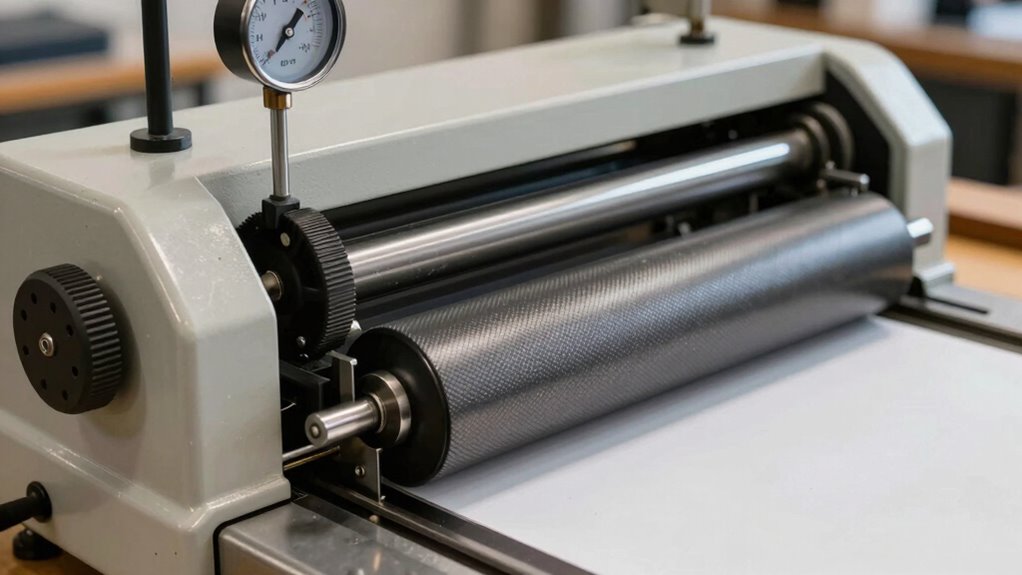
To get the best results, you need to set and adjust the pressure on your press carefully. Make small changes and check the impression each time to guarantee consistency. Monitoring and fine-tuning your pressure will help you produce even, high-quality prints. Understanding window regulator replacement can also aid in achieving the right tension and pressure in the materials you are using.
Adjusting Pressure Correctly
Adjusting the pressure on your etching press is essential for producing clean, precise prints without damaging your plate or paper. To do this effectively, focus on three key steps:
- Check material compatibility: Ensure your paper and plate can handle the pressure without tearing or smudging.
- Calibrate pressure: Use the press’s adjustment mechanism to set the right pressure, starting light and gradually increasing until the design transfers cleanly.
- Test and refine: Run a test print, then adjust as needed to avoid over- or under-pressing. Proper pressure calibration ensures consistent results and preserves your materials’ integrity. Always remember, the goal is to balance enough pressure for clarity without risking damage.
Monitoring Impression Consistency
Sure! Here’s the revised content based on your instructions:
—
Once you’ve calibrated the pressure on your etching press, maintaining a consistent impression becomes key to producing uniform, high-quality prints. To do this, regularly monitor your impressions during each session, checking for even ink coverage and depth. Keep detailed records of pressure settings and how they affect your results, allowing you to refine your technique over time. Remember, impression consistency isn’t just about technical precision; it also supports your artistic interpretation by ensuring each print reflects your vision accurately. Proper press maintenance, like cleaning and inspecting rollers and mechanisms, helps prevent pressure fluctuations. Additionally, employing effective travel planning strategies can offer valuable insights into organizing your printing sessions. Embracing diversity in fashion can also inspire your artistic choices, enhancing the uniqueness of your prints. Consistent impressions demonstrate your control and craftsmanship, making your work more professional and cohesive. Regularly evaluating and adjusting pressure ensures your prints stay true to your creative intent. Furthermore, understanding the principles of safety tips can help you avoid common pitfalls while working with your etching press. Additionally, understanding the principles of neural interfaces can inspire innovative approaches to printmaking techniques.
—
Let me know if you need any further adjustments!
Common Mistakes When Setting Pressure and How to Avoid Them
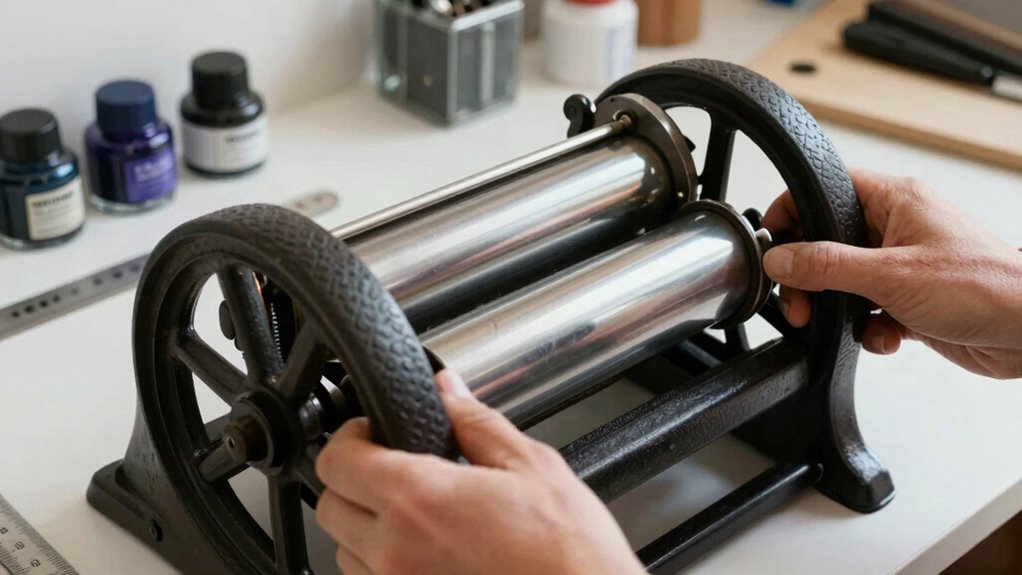
Setting the right pressure on your etching press is essential for achieving clean, detailed prints, but many beginners make common mistakes that can ruin their work. One mistake is neglecting proper material selection; using incompatible or overly thick materials can cause uneven pressure. Additionally, using outdoor cooling fans can help maintain a comfortable temperature in your workspace, which can positively affect your printing process. It’s also beneficial to consider car protection accessories, as they can offer additional support for your workspace setup. Furthermore, ensuring that your materials are properly strained can prevent clogs and improve the overall quality of your prints. Second, failing to take into account safety precautions can lead to accidents or damage to the press. Third, applying too much pressure in an attempt to get clearer images often results in crushed lines or blurred details. To avoid these issues, always choose materials suited for your press’s specifications, follow safety guidelines, and start with lower pressure settings, gradually increasing until achieving the desired result. Additionally, understanding essential oil properties can enhance your overall printing experience by providing a calming environment that reduces stress during the creative process. Being mindful of these points ensures better prints and a safer, more efficient printing process.
How to Test and Optimize Pressure Before Printing
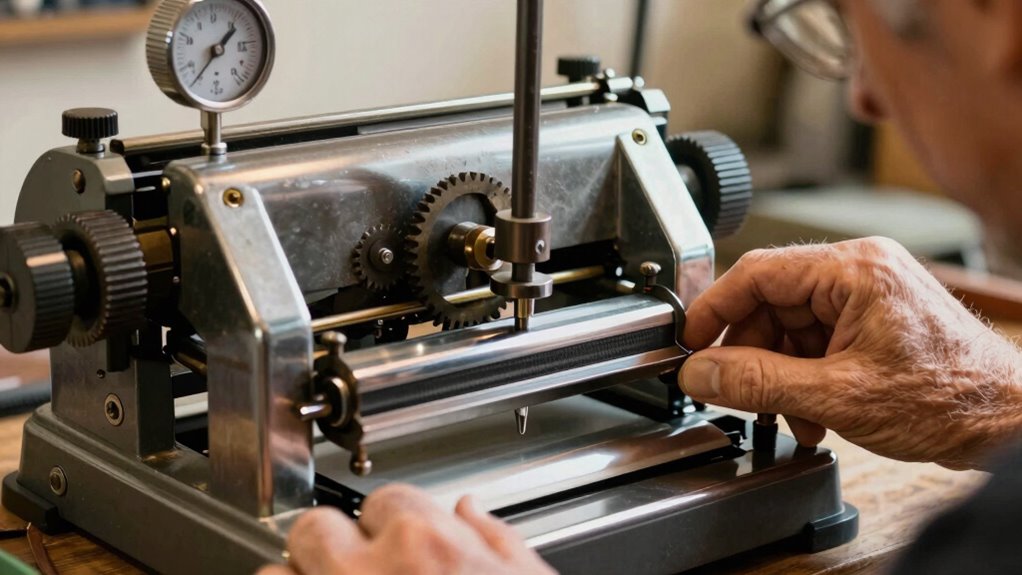
Before you start printing, it’s important to test and refine the pressure to get the best results. Use simple pressing techniques to gauge how much pressure your etching press applies. Begin by applying light pressure and gradually increasing it, observing the pressure measurement on your gauge or indicator. Check if the image transfers evenly without excessive ink or incomplete lines. Adjust the pressure in small increments, noting how each change affects the print quality. Consistent pressure measurement helps you maintain control and reproducibility. Remember, too much pressure can damage your plate, while too little may produce faint images. Additionally, maintaining a balanced diet can enhance your overall focus and dexterity while working. Testing and fine-tuning pressure beforehand guarantees clean, precise prints and helps you develop effective pressing techniques for future work. Additionally, understanding the importance of pressure measurement can enhance your control over the printing process. This process mirrors the collaboration techniques used in design thinking, ensuring that you engage in continuous iteration and improvement.
Frequently Asked Questions
How Often Should I Check and Recalibrate My Etching Press Pressure?
You should check and recalibrate your etching press pressure at least once every few months or after significant usage. Regular pressure calibration guarantees consistent results and prevents damage. Incorporate pressure calibration into your maintenance schedule, especially if you notice uneven etching or changes in output. Consistent checks help you maintain peak performance, extend your press’s lifespan, and keep your artwork precise. Don’t neglect this essential part of your press maintenance routine.
Can Pressure Settings Affect the Longevity of My Etching Press?
Yes, pressure settings can affect the longevity of your etching press. Inconsistent pressure can cause uneven wear on parts, leading to potential damage over time. To preserve your press’s lifespan, focus on pressure consistency through regular press maintenance and calibration. Properly calibrated pressure ensures even force distribution, reducing strain on components and helping your press perform reliably for years to come.
Is There a Standard Pressure Setting for Different Types of Paper?
You’ll want a standard pressure range, but it varies with paper texture and press durability. Thinner or delicate papers need lighter pressure to prevent damage, while thicker or textured papers require more pressure for proper ink transfer. Think of it as finding the sweet spot—too much can strain your press, too little won’t do the job. Adjust your pressure carefully based on paper type to get the best results without wearing out your equipment.
How Does Ambient Temperature Influence Pressure and Print Quality?
Ambient temperature affects pressure and print quality because temperature effects can alter ink adhesion and paper behavior. When it’s warmer, inks tend to dry faster, making it easier to achieve crisp prints, but too much heat may cause ink to smudge or bleed. Cold temperatures slow ink drying, requiring adjusted pressure to guarantee proper adhesion. Monitoring temperature helps you fine-tune pressure, resulting in better print clarity and consistent results.
What Safety Precautions Should I Take When Adjusting Pressure?
Did you know improper pressure adjustments can cause equipment damage or personal injury? Always calibrate your pressure gauge before making adjustments, ensuring accurate readings. When adjusting pressure, wear safety gear essentials like gloves and goggles to protect against potential hazards. Keep hands clear of moving parts, and double-check the pressure setting before proceeding. These precautions help you stay safe while achieving the best print quality.
Conclusion
Getting the pressure just right on your etching press is like tuning a musical instrument—you need harmony for the best sound. By understanding how pressure works, practicing its adjustments, and avoiding common pitfalls, you’ll create prints that sing with clarity and detail. Think of your press as a trusty steed—tame it with careful settings, and it’ll carry your art to new heights with every pull. Keep experimenting, and your prints will truly come alive.
Fall Picks
fall essentials
As an affiliate, we earn on qualifying purchases.