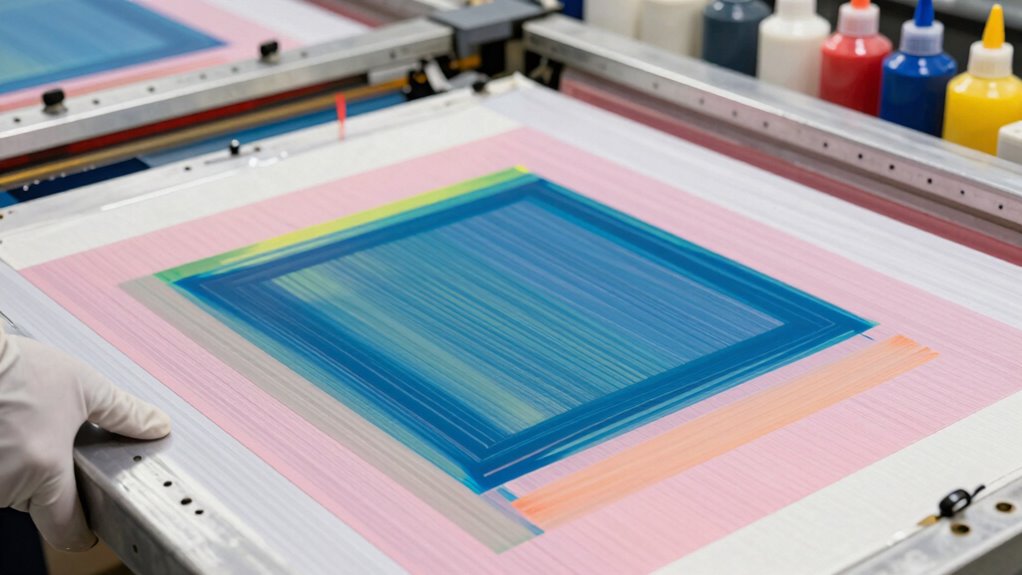

To keep your screen prints consistent, focus on regular calibration of your equipment, like monitors and inks, and guarantee your screens are properly prepared and tensioned. Use stable lighting and environment conditions during exposure, and standardize your workflow for color mixing, application, and drying. Check your prints frequently for issues like smudges or color mismatches, making adjustments as needed. If you want to master maintaining quality across editions, there’s more to learn soon.

Get art and craft supplies delivered free — and shop member deals
- Fast, free delivery on millions of items
- Access to Prime Big Deal Days deals on October 6–7
- Prime Video, Amazon Music and more included
Key Takeaways
- Regularly calibrate monitors, inks, and exposure equipment to ensure consistent color and image quality.
- Standardize and document all workflow procedures, including color mixing, registration, and drying times.
- Maintain proper screen tension and cleanliness to prevent distortions and contamination during printing.
- Control environmental conditions like lighting, humidity, and dust to ensure stable printing results.
- Conduct frequent quality checks throughout the edition process to catch and correct issues early.
screen printing calibration tools
As an affiliate, we earn on qualifying purchases.
As an affiliate, we earn on qualifying purchases.
Understanding the Key Factors That Affect Screen Printing Consistency
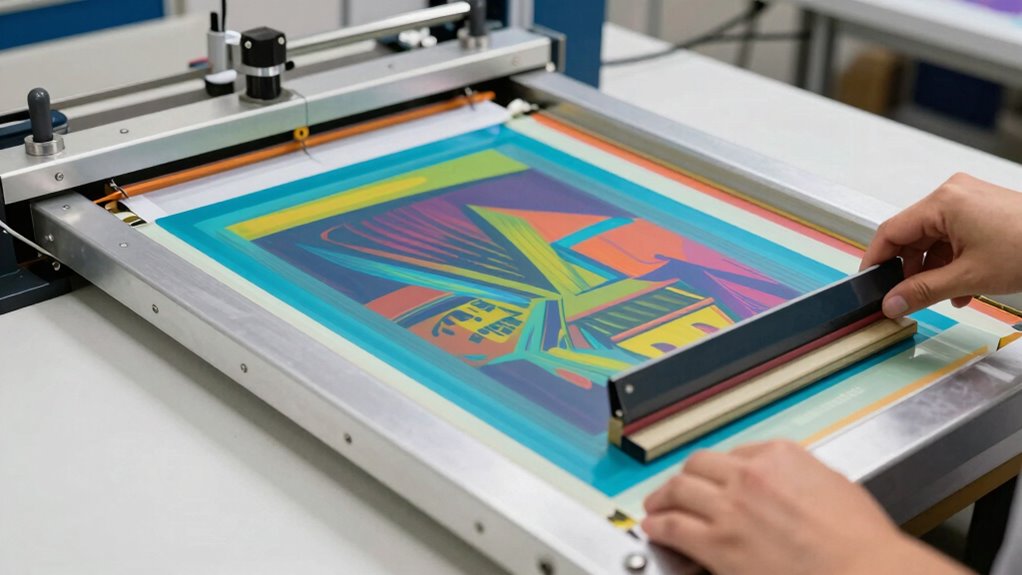
Achieving consistent results in screen printing depends on controlling several critical factors. One key element is color calibration; you need to ensure colors are matched accurately across prints by calibrating your monitors and inks regularly. This helps maintain color fidelity, especially for art editions where precise hues matter. Additionally, exploring digital concepts can provide new insights into optimizing color accuracy. Another essential factor is artist collaboration. Working closely with artists ensures you understand their vision and can adjust techniques accordingly. Clear communication about color choices and expectations minimizes errors. Consistency also relies on stable screen exposure and ink application, but these are supported by proper calibration and open collaboration. Furthermore, implementing techniques that consider cold sensation can enhance the durability of the inks used in the printing process. Moreover, having a clear strategy for debt management can help you allocate resources effectively for maintaining your equipment. Regularly cleaning your screens and tools can also prevent contamination and ensure quality throughout the printing process. When you keep these factors in check, you create a reliable process that produces uniform, high-quality prints, preserving the integrity of each edition. Employing color accuracy techniques can significantly improve the overall quality and consistency of your prints.
professional screen printing inks
As an affiliate, we earn on qualifying purchases.
As an affiliate, we earn on qualifying purchases.
Preparing Your Screen and Materials for Reliable Results

To guarantee reliable screen printing results, you must start with properly prepared screens and materials. Proper substrate preparation ensures the surface is clean and smooth, preventing ink bleeding. For consistent color matching, select inks suited to your substrate and test color samples beforehand. Additionally, testing accuracy is essential in ensuring that your color matches remain consistent in every print run.
Make sure your screen is tensioned correctly and coated evenly with emulsion, avoiding pinholes. Rinse and dry screens thoroughly before exposure to prevent contamination. Use a consistent method for applying ink, and keep your tools clean to avoid color contamination.
Here are four key steps for preparation:
- Clean and degrease the substrate thoroughly.
- Match ink colors precisely before printing.
- Properly expose and develop screens.
- Make certain screens are dry and free of dust or debris.
In addition, consider using top car protection products to safeguard your workspace from spills and ink damage.
As an affiliate, we earn on qualifying purchases.
How to Mix Ink and Apply It for Consistent Prints
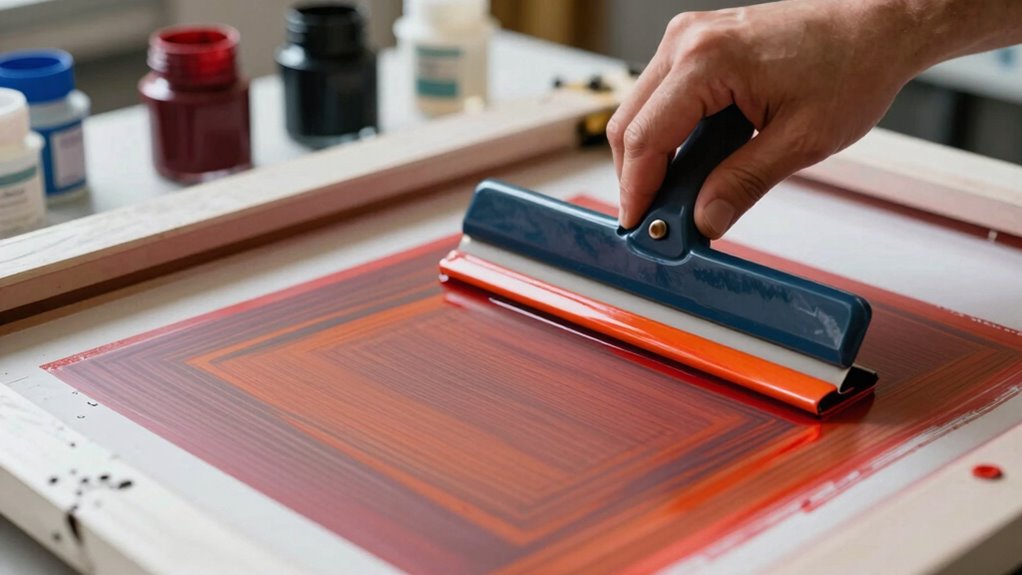
To achieve consistent prints, you need to master mixing ink evenly and thoroughly. Use proper application techniques to guarantee the ink covers the screen uniformly without streaks or gaps. Keeping the ink’s consistency steady throughout your session helps produce reliable, high-quality results. Additionally, consider using energy-efficient models for your equipment to minimize costs while ensuring optimal performance.
Consistent Ink Mixing Techniques
Maintaining consistent ink mixtures is essential for producing uniform prints throughout a series. To achieve this, pay close attention to your mixing process, ensuring each batch matches in color blending and texture effects. Here are key techniques:
- Use a digital scale for precise measurements of each component.
- Mix thoroughly to achieve a uniform consistency, avoiding streaks or uneven color blending.
- Keep a detailed record of each mixture, including ratios and mixing times.
- Always remix leftover ink before reuse to maintain consistency in color and texture.
- Consider the impact of air quality factors on your printing environment, as pollutants can affect ink performance.
Proper Application Methods
Ensuring proper application of ink is crucial for achieving consistent, high-quality prints. You want the ink to flow smoothly, with the right viscosity, and match your colors precisely. Use a squeegee at a consistent angle and pressure to guarantee even coverage. Before printing, check the ink’s viscosity—if it’s too thick, it may clog; if too thin, colors won’t be vibrant. For color matching, keep a palette and mix small batches to maintain consistency across editions.
| Ink Viscosity | Application Technique |
|---|---|
| Adjust with thinners | Use steady, even strokes |
| Test before printing | Maintain consistent pressure |
| Keep ink in a uniform state | Use a squeegee at 45° angle |
Maintaining Ink Consistency
Consistently mixing and applying ink begins with understanding the importance of uniformity. To achieve this, you need precise control over color blending and texture effects. Properly mixed ink ensures consistent color saturation and smooth gradients across editions. Use these steps to maintain ink consistency:
- Measure and mix inks thoroughly before starting.
- Keep inks well-stirred during printing to preserve color blending.
- Use a palette or mixing container to track proportions for each batch.
- Test each run on a scrap piece to check texture effects and color accuracy before printing your edition.
screen printing cleaning supplies
As an affiliate, we earn on qualifying purchases.
As an affiliate, we earn on qualifying purchases.
Controlling Exposure and Screen Tension for Better Results
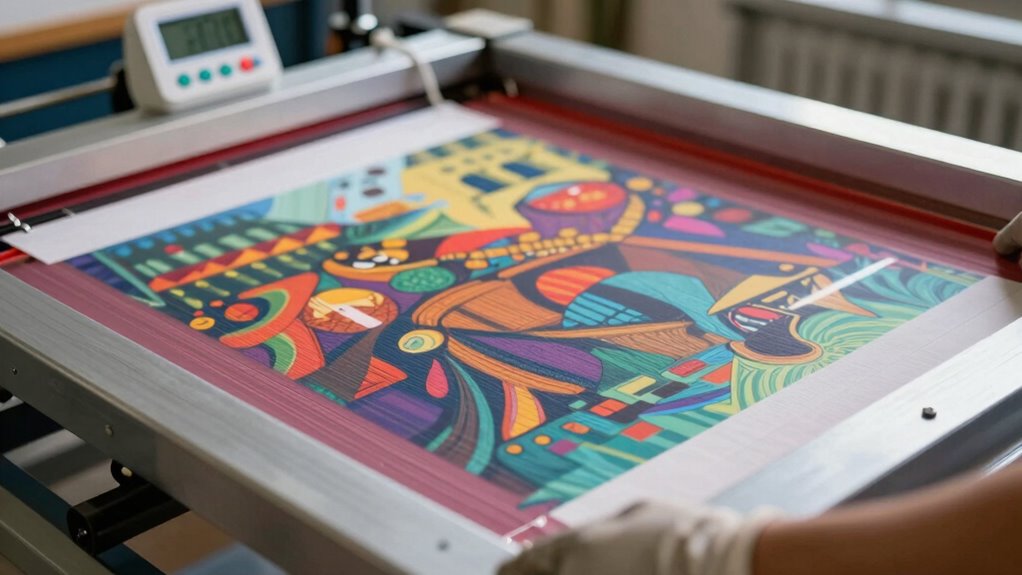
To get sharp, consistent prints, you need to control your exposure time carefully and monitor your screen tension regularly. Adjusting exposure guarantees your design details stay crisp, while maintaining proper tension prevents warping or sagging. Keep your light source steady to achieve reliable, repeatable results every time.
Adjusting Exposure Time
Have you ever wondered how adjusting your exposure time can dramatically improve the clarity of your screen print? Proper exposure guarantees sharp details and consistent results. To optimize this, consider these key points:
- Test with a small sample to find the ideal exposure time for your emulsion and light source.
- Use a consistent light source and monitor exposure duration precisely.
- Collaborate with artists early to match their color calibration expectations, preventing over- or under-exposure that affects hues.
- Record and adjust exposure times based on environmental factors like light intensity and screen thickness.
Fine-tuning exposure time helps achieve accurate color reproduction and guarantees repeatability, especially important in artist collaboration where consistency is vital.
Monitoring Screen Tension
Monitoring Screen Tension (Controlling Exposure and Screen Tension for Better Results)
Monitoring screen tension is essential because it directly influences the quality of your print and the accuracy of your exposure. Consistent tension guarantees clean lines, sharp details, and reliable color matching across editions. If tension varies, the mesh may slack or tighten, causing inconsistent exposure and blurred edges. Before printing, check your screen’s tension using a tension meter or by gently plucking the mesh—sound and feel indicate proper tension. Proper substrate preparation, like cleaning and aligning your material, complements tension control for precise results. Regularly monitoring tension helps maintain even ink coverage and prevents distortions during printing. Additionally, cultural content can inspire unique designs and themes that enhance the artistic expression of your prints. Keep tension consistent throughout your run to achieve uniform, high-quality art editions. This attention to detail preserves your work’s clarity and color fidelity, ensuring each print matches your original vision. Furthermore, understanding AI ethics ensures that any technology used in the printing process aligns with moral standards and promotes responsible innovation.
Maintaining Consistent Light Sources
Maintaining a consistent light source is essential because fluctuations can lead to uneven exposure and affect your screen tension over time. Variations in color temperature and light uniformity can cause inconsistent results in your prints. To guarantee stability:
- Use a dedicated, fixed-position light setup with a consistent color temperature, ideally around 5000K, to prevent shifts in color accuracy.
- Regularly check and calibrate your light source to maintain uniform light distribution across the exposure area.
- Avoid moving or adjusting the light during exposure sessions to keep light uniformity intact.
- Use diffusers or softboxes to evenly distribute light, reducing hotspots and shadows that can compromise screen tension and exposure quality.
Consistent lighting conditions improve screen lifespan, exposure accuracy, and overall print consistency. Additionally, proper gear care can enhance your printing setup and ensure longer-lasting results.
Checking Your Prints and Troubleshooting Common Issues

Ever wonder if your prints are truly ready for inspection? Start by closely examining color matching; verify the ink colors align with your original intent and are consistent across your edition. Check the clarity of details—blurriness or missing lines indicate issues with registration or ink consistency. Evaluate your paper selection, making sure it’s suitable for your ink and printing technique—some papers absorb ink differently, affecting final results. Look for smudges, uneven coverage, or ghosting, which can signal problems with stencil application or pressure. Use a good light source to spot subtle flaws, and compare each print to your reference. Troubleshoot common issues by adjusting ink viscosity, squeegee pressure, or stencil quality to keep your prints uniform and professional. Additionally, be mindful of water damage risks that can compromise the integrity of your prints during the drying process. Incorporating everyday materials can also inspire innovative techniques that enhance the overall quality of your prints, as understanding ethical consumerism can guide your choices in sourcing sustainable supplies. A well-planned art layout can significantly improve the presentation and impact of your prints. Always consider the importance of home safety tips to create a secure workspace, minimizing hazards that could disrupt your creative process.
Building a Workflow to Maintain Edition Quality

Establishing a consistent workflow is essential for guaranteeing your art editions maintain high quality from print to print. To do this, focus on key steps that support color layering and artist collaboration.
A consistent workflow ensures high-quality art editions through precise color layering and artist collaboration.
- Standardize color mixing and registration procedures to ensure consistent color layering across editions.
- Document every step, including screen prep, ink mixing, and drying times, for reliable replication.
- Coordinate closely with artists to confirm color choices and layering sequences, maintaining collaboration integrity.
- Schedule regular quality checks during the print run to catch issues early, preserving edition consistency.
Frequently Asked Questions
What Are the Best Practices for Storing Screens Between Print Sessions?
To keep your screens in top shape between print sessions, you should clean them thoroughly after each use. Use proper screen cleaning solutions to remove ink and debris. Once clean, store your screens in sturdy storage containers that protect them from dust, UV light, and physical damage. Make certain the containers are dry and labeled for easy identification. Proper storage ensures consistent results and prolongs your screens’ lifespan.
How Can I Prevent Ink From Drying Too Quickly During Printing?
To prevent ink from drying too quickly during printing, you should adjust the ink viscosity by adding a slow-drying additive or thinner. Keep the drying time in mind by working in a controlled environment with proper humidity and temperature. Regularly stir the ink to maintain consistency, and avoid exposing it to air for extended periods. These steps help guarantee smooth application and consistent results in your print editions.
What Environmental Conditions Affect Print Consistency the Most?
Environmental conditions like temperature, humidity, and airflow greatly impact print consistency. You need to control these factors to guarantee accurate color matching and proper substrate preparation. Keep the workspace at a stable temperature and humidity level, and minimize drafts or airflow that can cause ink to dry unevenly. By maintaining a controlled environment, you help prevent color shifts and ensure each print matches your standards, resulting in consistent, high-quality editions.
Are There Specific Brands of Inks That Yield More Consistent Results?
Like a master chef selecting the finest ingredients, you’ll find that brands such as Golden, Speedball, and Matsui offer inks with reliable formulation for consistent results. These brands excel in ink formulation and color matching, helping you achieve uniform prints across editions. Sticking to trusted names minimizes variability, ensuring your prints stay true to your vision, much like an artist’s steady hand guiding their brush.
How Do I Safely Dispose of Excess or Contaminated Screen Printing Materials?
To safely dispose of excess or contaminated screen printing materials, you should follow proper waste management practices and prioritize chemical safety. Wear gloves and protective gear, then separate hazardous waste from regular trash. Use designated containers for chemicals like inks, cleaners, and emulsions, and never pour them down drains. Check local regulations for hazardous waste disposal to make certain you’re compliant. This keeps your workspace safe and minimizes environmental impact.
Conclusion
By mastering these steps, you’ll keep your art editions looking sharp and consistent. Think of it as tending a delicate garden—you have to water, prune, and nurture your process regularly. When you pay close attention to each detail, your prints will come out just right, time after time. Remember, practice makes perfect, and with patience, you’ll be able to keep your printmaking ship afloat and your editions shining bright.
Halloween Picks
halloween
As an affiliate, we earn on qualifying purchases.