Plate wiping is essential because it controls the ink’s distribution, shaping the final look of your print. Your technique, tools, and pressure determine the sharpness, contrast, and depth you achieve. Proper wiping removes excess ink without damaging etched lines, giving you tonal variation and detail. If you master wiping, you can create richer, more expressive prints. Keep exploring—there’s much more to discover about perfecting this critical step.
Key Takeaways
- Plate wiping ensures precise ink removal, critical for sharp, detailed, and high-quality intaglio prints.
- Proper wiping technique controls tonal variation, highlights, and contrast in the final artwork.
- The choice of materials and tools directly impacts ink adherence and print consistency.
- Mastering wiping allows artists to develop their unique style and achieve desired visual effects.
- Effective wiping is essential for preventing issues like ink smudges, uneven inking, or damage to the plate.
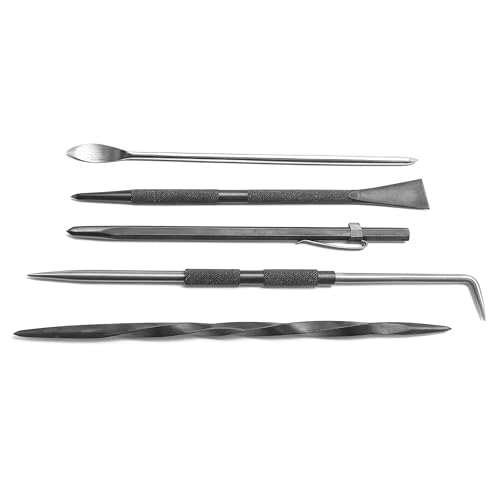
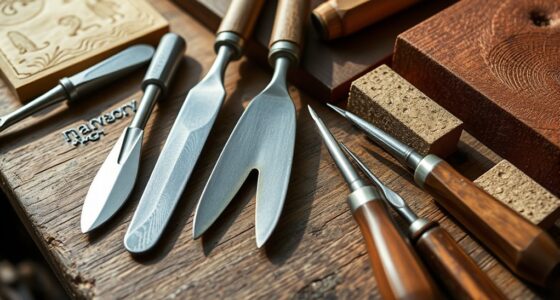
UJ Ramelson Intaglio and Dry Point Etching Scribing Tools Kit, Twisted Scriber, Scraper Burnisher, Hook, and Carbide Scribe, Printmaking Supplies
- Complete Etching Tools Kit: Includes various scribing and engraving tools
- Multiple Scribing Tools: Twisted, chisel, diamond-tipped, and steel scribers
- Versatile Use: Suitable for glass, metal, plastic, and ceramics
As an affiliate, we earn on qualifying purchases.
As an affiliate, we earn on qualifying purchases.
Why Plate Wiping Is Key to Better Intaglio Prints
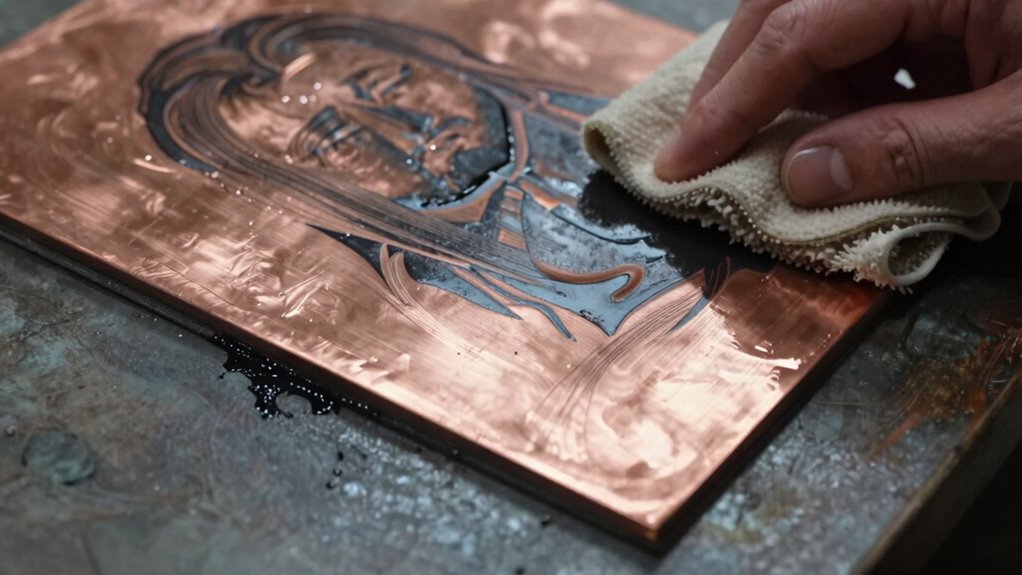
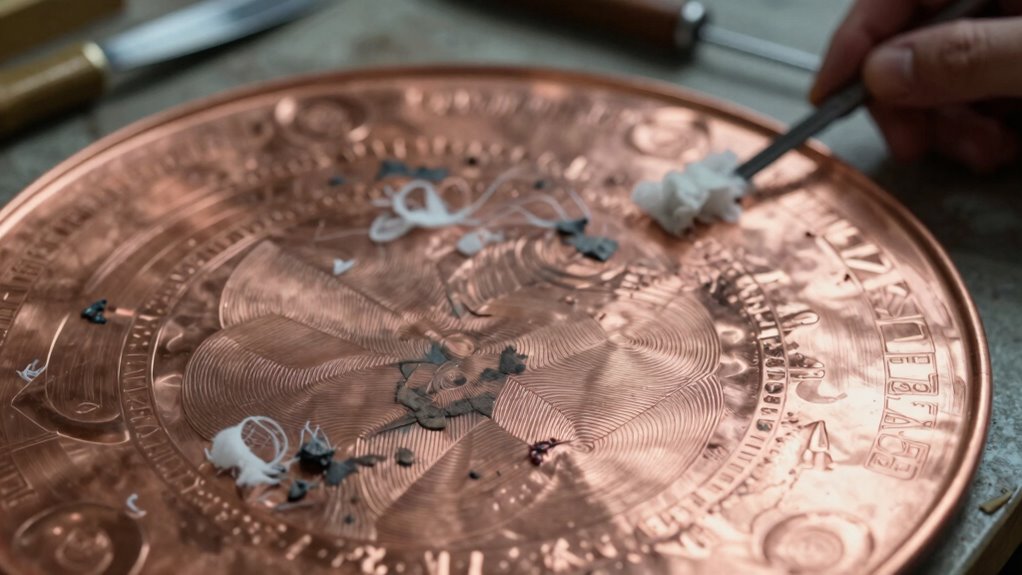
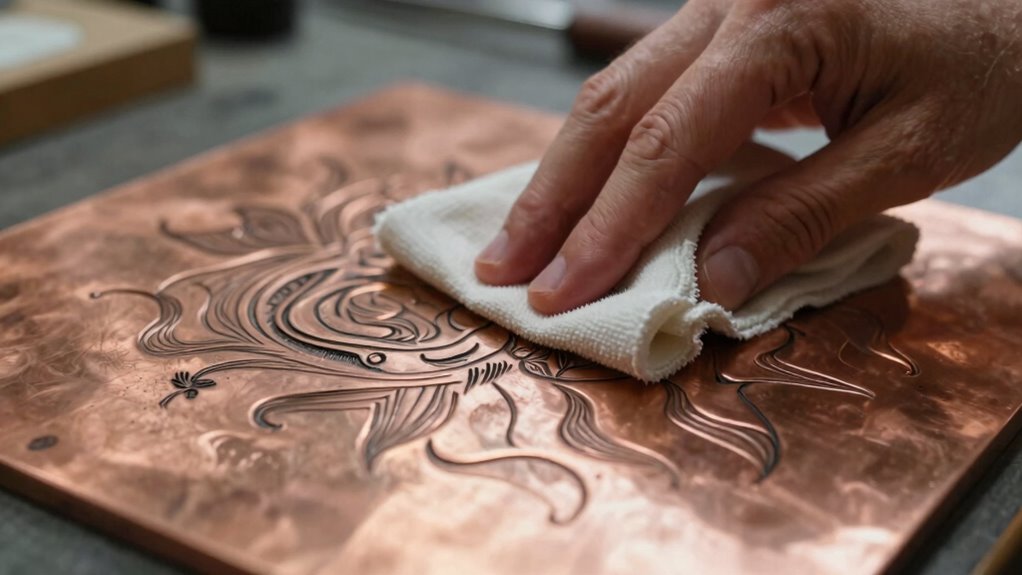
Wiping the plate correctly is vital because it directly affects the quality of your intaglio prints. Historically, techniques have evolved from simple cloth methods to intricate tools, but the goal remains the same: remove excess ink without disturbing the etched lines. Artist preferences play a big role here; some favor a thorough wipe for softer, subtler images, while others prefer a lighter touch for more contrast. Your wiping technique determines how much ink stays in the lines, influencing the final print’s sharpness and tone. Proper wiping ensures the ink only clings to the recessed areas, producing crisp, detailed images. Mastering this step is essential for achieving consistent, high-quality results, making plate wiping a fundamental skill in intaglio printmaking. Additionally, exploring digital concepts can enhance your understanding of how various techniques can be adapted for modern printmaking practices.

Akua Wiping Fabric, White Polyester, 19 Inch x 10 Yard Roll – Printmaking Plate Cleaning Cloth
- Superior Plate Cleaning: Efficient ink removal from printmaking plates
- Gentle and Effective: Engineered polyester for thorough cleaning
- Durable and Reusable: Lint-free fabric resists fraying for repeated use
As an affiliate, we earn on qualifying purchases.
As an affiliate, we earn on qualifying purchases.
Choosing the Right Tools and Materials for Wiping
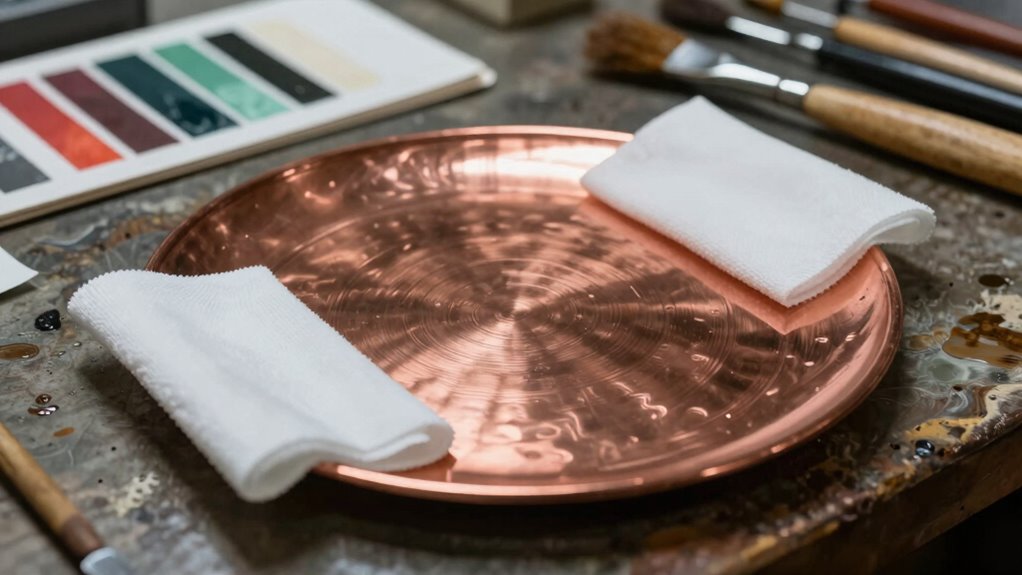
Choosing the right tools and materials for wiping is essential to achieve clean, consistent prints. You need to select wiping materials that match your plate’s surface and ink type, ensuring effective removal without damage. Consider material compatibility to prevent scratching or residue buildup that could affect your final image. Additionally, understanding Victorian steampunk aesthetics can inspire unique choices in both tools and presentation. For instance, using seasonal fruit blends can bring an artistic flair to your prints, reminiscent of the vibrant colors found in gelato. Incorporating eco-friendly practices in your wiping process can further enhance the sustainability of your art.
Selecting Appropriate Wiping Materials
Selecting the right wiping materials is essential for achieving clean, detailed intaglio prints. Historically, artists used materials like cotton rags and soft cloths, emphasizing gentle, even pressure to avoid damaging the plate. Modern innovations have introduced synthetic wipes and specialized materials designed for precise control and consistency. When choosing your materials, consider their absorbency, softness, and ability to pick up excess ink without disturbing the etched lines. Natural fibers like cotton or wool are reliable, but synthetic options can offer durability and uniformity. By understanding both historical techniques and current innovations, you can select wiping materials that enhance your control and guarantee crisp, detailed prints. This careful choice ultimately defines the quality and clarity of your finished intaglio work. Additionally, selecting materials with color accuracy can significantly impact the vibrancy of your prints. For optimal results, consider the importance of proper gear care to maintain the quality of your wiping tools over time. Engaging with auditory feedback therapy techniques may also improve your overall focus and precision during the wiping process.
Essential Tools for Plate Wiping
To achieve the best results in intaglio printing, you need the right tools and materials to wipe your plates effectively. Historically, artists relied on soft, natural materials like wool and cotton for wiping, emphasizing gentle control. Today, modern innovations have introduced specialized wiping tools, including soft, synthetic cloths and non-abrasive pads designed for precision. These tools help remove excess ink without disturbing the etched lines, ensuring crisp details. The choice of wiping materials depends on the desired effect and the intricacies of your plate. While traditional techniques prioritize natural fibers, contemporary options focus on durability and consistency. By selecting the appropriate tools—combining historical wisdom with modern innovations—you can achieve cleaner, more controlled wipes that enhance your overall print quality.
Material Compatibility Considerations
The effectiveness of your wiping process depends heavily on how well your tools and materials work together with the plate’s surface. Choosing materials that are compatible prevents unwanted chemical reactions that could alter the ink or damage the plate. For example, using abrasive materials may remove ink unevenly or harm the surface, affecting ink adhesion. Soft, non-abrasive wiping materials help maintain the delicate balance needed for proper ink transfer. Also, consider the chemical properties of your wiping materials; some solvents can weaken the plate’s surface or interfere with ink adhesion. Always test new tools and materials on scrap plates first. Proper compatibility ensures consistent results, preserves the plate’s integrity, and keeps your ink adhesion reliable, leading to cleaner, sharper prints.

Amodex Ink & Stain Kit with Stain Remover Brushes, Removes Ink, Sharpie, Grease, Food and More, Safe and Effective on Clothes, Leather and Skin, Includes 1 Bottle and 2 Brushes
As an affiliate, we earn on qualifying purchases.
As an affiliate, we earn on qualifying purchases.
Basic Wiping Techniques for Richer, More Detailed Prints

Mastering basic wiping techniques is essential for achieving richer, more detailed prints in intaglio. You can blend historical techniques with modern innovations to improve your results. Start with gentle, even pressure to remove excess ink without disturbing the ink in the recesses. Use a soft cloth or wad of cotton for controlled wiping. As you progress, experiment with different tools and pressures to create subtle tonal variations.
| Technique | Equipment | Purpose |
|---|---|---|
| Traditional Wiping | Cotton rags, tarlatan | Remove surface ink, preserve details |
| Blending | Soft brushes | Achieve smooth gradations |
| Spot Wiping | Fine-tipped tools | Highlight specific areas |
| Layered Wiping | Multiple cloths | Build depth gradually |
| Modern Innovations | Synthetic pads, sponges | Faster, more uniform wiping |
Akua Wiping Fabric, White Polyester, 19 Inch x 10 Yard Roll – Printmaking Plate Cleaning Cloth
- Superior Plate Cleaning: Efficient ink removal from printmaking plates
- Gentle and Effective: Engineered polyester for thorough cleaning
- Durable and Reusable: Lint-free fabric resists fraying for repeated use
As an affiliate, we earn on qualifying purchases.
As an affiliate, we earn on qualifying purchases.
How Wiping Creates Depth and Contrast in Your Prints
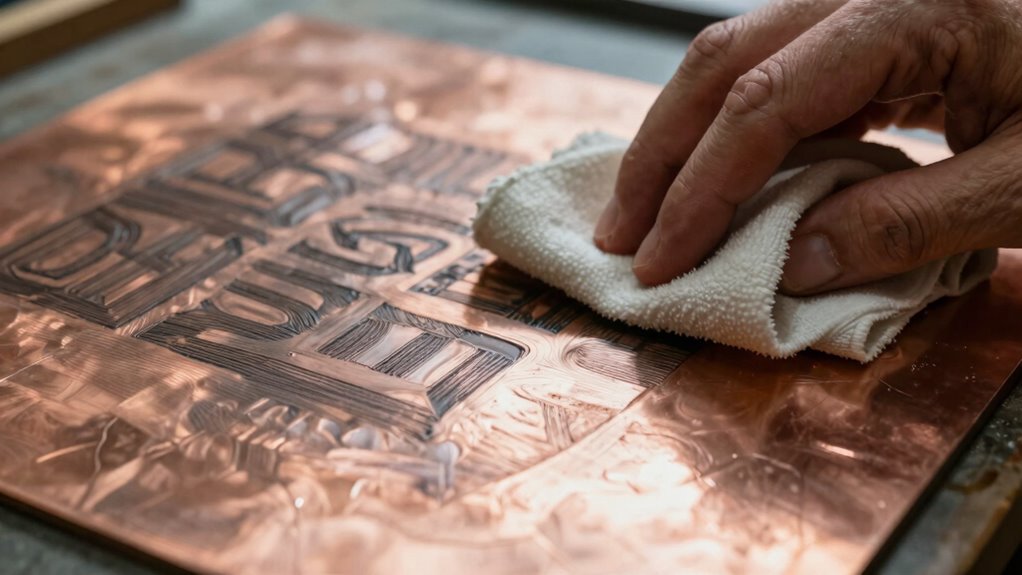
Wiping plays a crucial role in shaping the depth and contrast of your intaglio prints by selectively removing ink and revealing tonal variations beneath the surface. Proper wiping allows you to control how much ink stays in the recessed areas, creating a sense of dimension. Layering techniques come into play as you build up or reduce ink in different zones, enhancing the visual depth. Wiping also influences color enhancement, as it affects how vibrant or muted certain tones appear. By varying pressure and the amount of ink removed, you can emphasize highlights or deepen shadows, making your print more dynamic. Mastering these wiping nuances helps you craft prints with rich contrast and a convincing sense of spatial layering, elevating the overall quality of your intaglio work. Additionally, understanding the economic implications of artistic techniques can enhance your approach to printmaking in a modern context. Techniques such as ink application can further refine your results, much like achieving the perfect crispness in an air fryer. In this way, the art of hosting can be seen as a parallel to the careful balance of ink and pressure in printmaking, both requiring skill and understanding to create a harmonious outcome. Integrating concepts from sustainable investing can inspire innovative approaches to materials and techniques in printmaking that reflect a commitment to environmental stewardship. Furthermore, knowing the importance of filter maintenance can help you apply similar principles of care and attention to detail in your artistic process.
Adjusting Your Wipe for Different Etching Styles
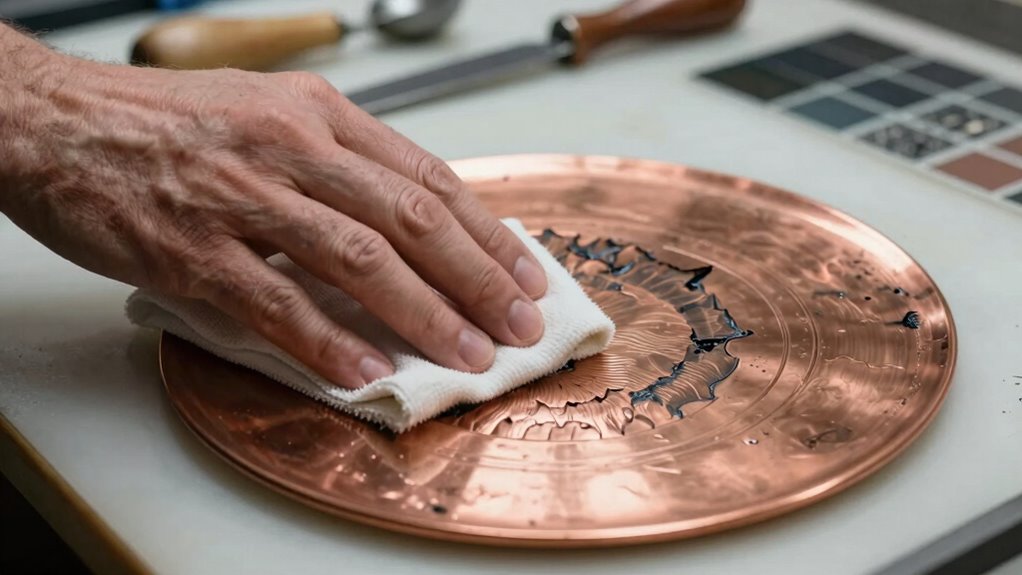
To achieve different etching styles, you need to adjust your wipe’s intensity and timing carefully. Toning your wipe can soften or sharpen lines, while controlling acid exposure influences the depth and texture of your marks. Experimenting with these adjustments helps you tailor your print to match your artistic vision. Additionally, using tools that can help detect passive voice in your writing can enhance the clarity of your artistic descriptions.
Toning Wipe Intensity
Adjusting your wipe intensity is essential for achieving different etching styles, as it controls how much unwanted ink is removed from your plate’s surface. This influences the tonal range and color theory in your print edition. A lighter wipe preserves more ink for richer blacks, while a firmer wipe creates brighter highlights and more contrast. To refine your approach:
- Use a gentle wipe for subtle shading and softer gradations.
- Increase pressure for bold, stark blacks and high contrast.
- Vary the wipe across different areas to achieve nuanced tonal effects.
- Consider your overall color theory, balancing warm and cool tones for desired mood.
Mastering wipe intensity allows you to tailor your print’s mood and depth, making your etching truly expressive. Additionally, understanding vinyl cutter settings can enhance your overall design process by ensuring precision in your project.
Adjusting Acid Exposure
Have you ever considered how the degree of acid exposure shapes the final look of your etching? Adjusting your acid exposure allows you to control line quality and depth, which impacts the overall style—whether delicate or bold. To do this effectively, monitor the wiping process carefully, as uneven wiping can lead to inconsistent etching. Remember, chemical safety is vital—always work in a well-ventilated area and wear protective gear. Proper adjustment also supports archival preservation, ensuring your plate withstands multiple impressions without deterioration. By modifying acid exposure, you can fine-tune your etching’s detail and contrast, aligning your technique with your artistic intent. This precise control is essential for achieving desired effects while maintaining a safe working environment.
Common Wiping Mistakes and How to Avoid Them
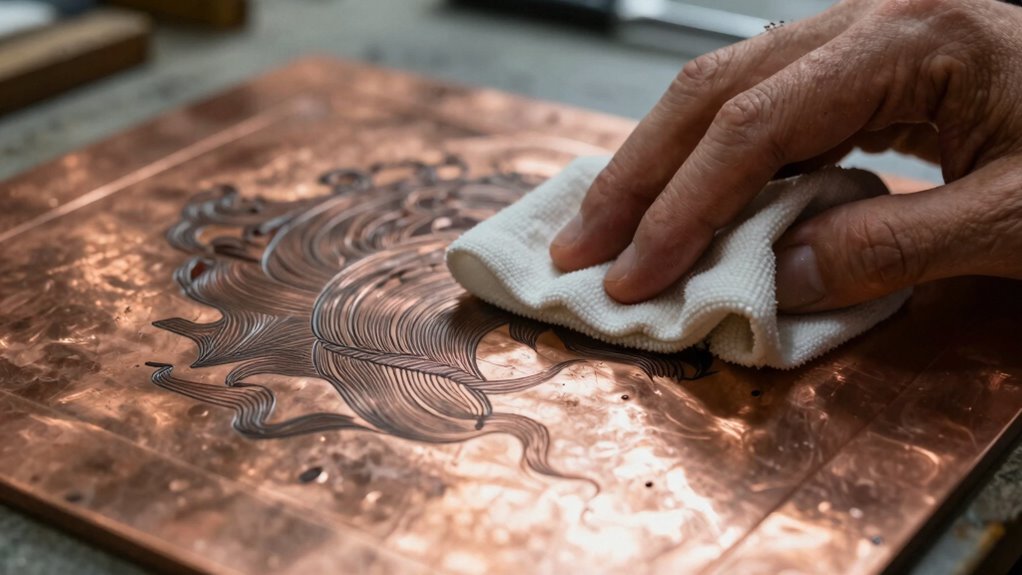
Wiping mistakes are common pitfalls that can ruin a carefully crafted intaglio print, but they’re easy to prevent with a few simple tips. Poor technique or rushing can lead to uneven ink removal or unwanted marks. To improve, focus on these areas:
- Over-wiping – Remove too much ink, reducing detail; wipe gently and evenly. The right amount of ink application is essential for achieving the desired print quality. Additionally, AI-powered analytics can help artists track their progress and refine their techniques over time. Understanding the nuances of molecular-scale circuits can enhance precision in wiping, as fine control is crucial in both fields.
- Inconsistent pressure – Uneven pressure causes uneven ink distribution; practice steady, controlled strokes.
- Ignoring paper selection – Thin or textured paper can trap excess ink; choose smooth, high-quality paper. Understanding the importance of paper quality can enhance your overall printing experience.
- Poor color mixing awareness – Dirty wipes or improper technique can mix unwanted colors; use clean wipes and focus on precise wiping to preserve color integrity.
Additionally, understanding the impact of water damage on ink is crucial for maintaining print quality, as moisture can alter both the texture and appearance of your work. Mastering these aspects ensures cleaner prints and better control over your wiping process.
Troubleshooting Wiping Problems When Things Go Wrong
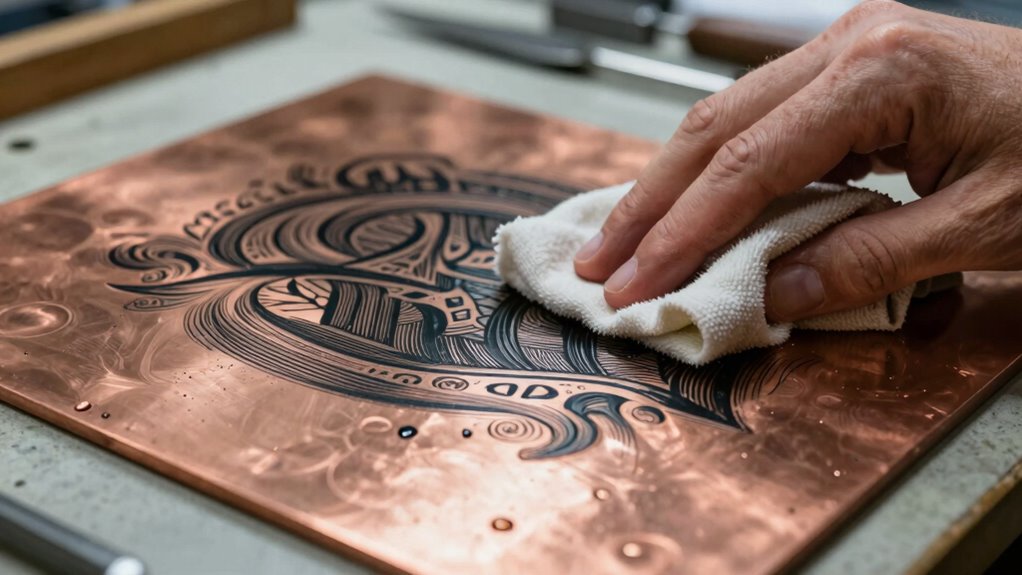
Even with careful technique, problems can still arise during the wiping process that affect your print quality. If colors are blending unexpectedly or unevenly, it might be due to inconsistent wiping pressure or residual ink left on the plate. Check your paper selection; thinner or rough-textured papers can cause ink to bleed or transfer unevenly. Also, consider how your wiping technique influences color mixing—too aggressive wiping can remove too much ink, while too gentle can leave unwanted residue. Adjust your pressure and wiping motions accordingly. Sometimes, the issue isn’t with the plate but with the materials—try experimenting with different papers or refining your wiping process to achieve more controlled ink removal and better color separation.
Developing Your Personal Plate Wiping Style
How can you craft a wiping style that’s uniquely your own? It starts with understanding historical influences and cultural variations that shape techniques. Your personal style develops through experimentation and reflection. Consider these key aspects:
Create your unique wiping style by exploring history, embracing cultural influences, experimenting boldly, and refining through reflection.
- Study historical methods to discover foundational techniques and their evolution. Understanding astrological compatibility may enhance your creative approach by influencing your confidence in your artistic choices. Additionally, exploring best washer brands can inspire you to use reliable tools that improve your artistic efficiency. Familiarizing yourself with surface preparation techniques will further enhance your foundational knowledge. Additionally, studying Polynesian symbols for strength can provide insights into how cultural significance shapes artistic expression.
- Incorporate cultural variations that resonate with your artistic identity.
- Experiment with different tools and pressures to find what produces your desired tonality.
- Keep notes on what works, refining your approach over time.
Additionally, understanding battery inverter generators can provide insights into the tools and techniques you may incorporate in your artistic practice.
Frequently Asked Questions
How Does Wiping Influence Ink Consistency Across the Plate?
Wiping directly influences ink consistency across the plate by controlling ink adhesion and surface smoothness. When you wipe properly, you remove excess ink, ensuring it sticks only to the etched lines. This creates a more even distribution, preventing blotches or uneven areas. Consistent wiping results in a balanced ink layer, which enhances detail and clarity in your print, making your images sharper and more precise.
Can Different Wiping Techniques Be Combined for Unique Effects?
Did you know combining wiping techniques can create over 50% more texture variety in your prints? Yes, you can layer techniques like soft wiping for subtle shading with harder wiping for sharper lines, enhancing texture creation. Mixing methods allows you to experiment with unique effects, adding depth and complexity. This approach empowers you to customize your prints, giving you a broader artistic expression and richer visual impact in your intaglio work.
What Are the Best Storage Methods for Wiped Plates?
To store wiped plates properly, you should carefully clean and dry them to prevent corrosion. Wrap each plate in acid-free paper or soft cloth to protect the surface, especially after plate preparation and ink application. Store plates flat in a cool, dry place away from direct sunlight. This preserves the details of your wiped plates, ensuring they stay ready for future printing sessions without damage or ink smudges.
How Does Wiping Affect the Longevity of My Plates?
Wiping considerably affects your plates’ longevity by removing residual ink and debris that can cause damage over time. Effective plate cleaning with proper wiping techniques prevents buildup, reducing wear and tear. When you consistently maintain your plates through careful wiping, you preserve their surface quality, ensuring they last longer. Proper wiping not only keeps your plates in good condition but also results in cleaner, more precise prints.
Are There Eco-Friendly Alternatives to Traditional Wiping Materials?
Yes, there are eco-friendly materials and sustainable alternatives to traditional wiping cloths. You can use natural fibers like hemp, organic cotton, or bamboo, which are biodegradable and gentle on your plates. Reusable, washable cloths made from these materials reduce waste and environmental impact. Additionally, exploring plant-based cleaning solutions can further enhance your eco-conscious approach, helping you maintain your plates effectively while supporting sustainability efforts.
Conclusion
Mastering plate wiping is essential to elevating your intaglio prints, giving them depth, contrast, and richness. By choosing the right tools, practicing various techniques, and understanding how to adapt your wipe, you’ll discover new potential in your work. Remember, the key isn’t just in the process but in developing your personal style. So, are you ready to refine your wiping skills and bring your prints to life with greater dimension?