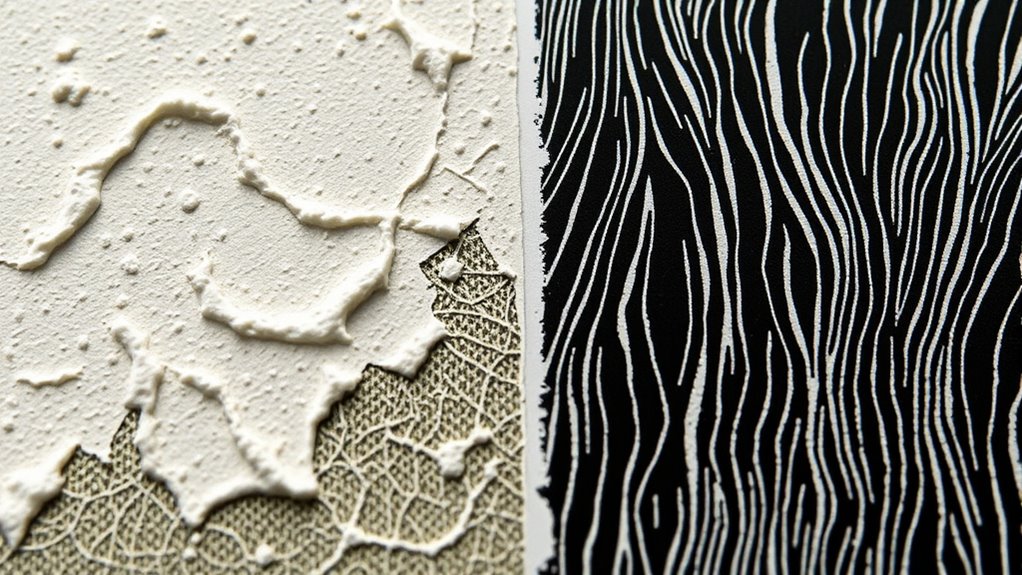
Relief and intaglio are two key printmaking techniques that affect how a print looks and feels. In relief, you carve into surfaces like wood, leaving raised areas that hold ink, creating bold and graphic images. In intaglio, you etch or carve into metal plates, with ink filling recessed lines for detailed, subtle textures. Understanding these methods helps you choose the right approach for your desired visual and tactile effects—if you explore further, you’ll discover how each technique truly transforms your work.

Get art and craft supplies delivered free — and shop member deals
- Fast, free delivery on millions of items
- Access to Prime Big Deal Days deals on October 6–7
- Prime Video, Amazon Music and more included
Key Takeaways
- Relief involves carving into a surface to create raised areas for printing, producing bold, graphic images.
- Intaglio engraves into a metal plate, with ink filling recessed lines for fine, detailed, and tonal effects.
- Relief emphasizes strong contrasts and textured surfaces, while intaglio allows subtle gradations and depth.
- Relief is suited for bold imagery; intaglio enables intricate, delicate artwork with complex surface variations.
- Mastery of both techniques broadens an artist’s expressive possibilities in printmaking.

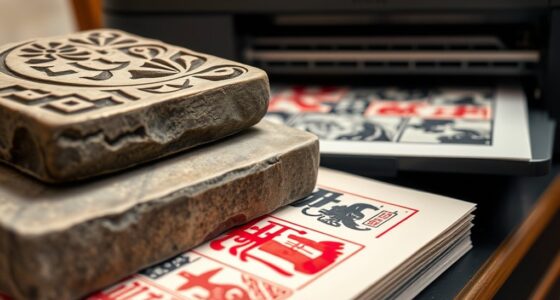
When comparing printmaking techniques, relief and intaglio stand out as two distinct methods that produce different visual effects. As you explore relief printing, you’ll notice how the artist carves into the surface of a block, like wood or linoleum, leaving the raised areas to be inked. This surface manipulation creates a bold, tactile quality, emphasizing texture contrast between the inked relief and the unprinted background. You can easily manipulate the surface to emphasize specific textures, whether smooth or rough, giving each print a tactile character that’s visually compelling. Relief printing often results in crisp, solid lines and a straightforward, graphic appearance, making it ideal for bold imagery and strong contrasts.
Relief printing carves into surfaces to create bold, textured, and graphic images with crisp lines and strong contrasts.
In contrast, intaglio printing involves carving into a metal plate, typically copper or zinc, where the artist etches lines or textures into the surface with sharp tools or acid. Here, the ink is applied into these recessed areas, and surface manipulation becomes more delicate and detailed, allowing for subtle gradations and intricate textures. When you work with intaglio, the focus shifts from creating raised surfaces to emphasizing the deeply incised lines and textures within the plate. This technique produces a rich, tonal quality because the ink sits deep within the grooves, capturing fine detail and producing a high level of surface contrast. The result often looks more delicate and nuanced compared to relief, with a sense of depth and complexity that’s hard to achieve with relief methods.
The differences in surface manipulation between the two techniques substantially influence their visual outcomes. Relief printing relies on physically removing material from the surface to define the image, which lends itself to bold, straightforward compositions. Intaglio, however, emphasizes precise incisions that trap ink, allowing for more sophisticated shading and textural variation. You might find relief to be more accessible for strong, graphic work, while intaglio offers you the opportunity to explore subtle tonal shifts and detailed textures within your prints. Additionally, understanding the surface manipulation involved in each method can help you better control the final appearance of your prints.
Both methods leverage their unique surface manipulations to create contrasting effects—relief with its tactile, surface-exposed textures, and intaglio with its intricate, recessed textures. Understanding these differences helps you choose the technique that best matches your artistic goals, whether you seek bold surface contrast or delicate surface detail. Ultimately, mastering both allows you to expand your expressive range and explore a wider spectrum of visual textures and surface qualities in your printmaking practice.
wood carving tools for relief printmaking
As an affiliate, we earn on qualifying purchases.
As an affiliate, we earn on qualifying purchases.
Frequently Asked Questions
How Do Relief and Intaglio Techniques Influence Artwork Durability?
You’ll find that relief and intaglio techniques substantially impact printmaking durability and artwork longevity. Relief prints, with their raised surfaces, tend to wear faster but can be quite resilient with proper care. Intaglio, involving etched lines, generally produces more durable prints that resist wear over time. Choosing the right technique depends on your desired longevity, as intaglio often offers greater printmaking durability, ensuring your artwork stays preserved longer.
Which Technique Is More Suitable for Color Application?
Did you know that relief printing allows for vibrant, bold color application? You’ll find it more suitable for artistic expression involving rich, layered hues. Relief techniques, like linocuts, enable you to easily incorporate multiple colors, making your artwork stand out. In contrast, intaglio’s fine lines suit detailed, monochromatic images. If vibrant color application is your goal, relief is the better choice for expressive, colorful artwork.
Can Relief and Intaglio Be Combined in a Single Piece?
Yes, you can combine relief and intaglio in a single piece by using a mixed technique for artistic integration. This approach allows you to leverage the strengths of both methods—relief’s bold textures and intaglio’s fine lines. You’ll create a dynamic, layered artwork that highlights contrasting surfaces and details, enriching your piece’s visual complexity. Experimenting with this combination opens new creative possibilities and enhances your overall artistic expression.
What Historical Periods Favored Relief Versus Intaglio?
During the medieval period, relief techniques like woodcuts were favored for their simplicity and speed, making them ideal for illustrations. In contrast, Renaissance printmaking saw a rise in intaglio methods, such as engraving, valued for their detail and finesse. You’ll notice that medieval engravings relied more on relief, while Renaissance artists embraced intaglio, pushing artistic possibilities and technical mastery in printmaking.
How Do Cost and Time Requirements Compare for Each Method?
You might be surprised to learn that relief methods often cost less in material and take less time to produce, making them ideal for quick projects. Intaglio, however, requires more expensive tools and materials, plus meticulous craftsmanship, which extends production speed. If you’re on a tight schedule or budget, relief could be your best choice. But for detailed, lasting work, intaglio’s higher costs and longer process pay off.
intaglio etching metal plates kit
As an affiliate, we earn on qualifying purchases.
As an affiliate, we earn on qualifying purchases.
Conclusion
Now that you’ve explored relief and intaglio, think of them as two different musical notes—each with its own voice and rhythm. Relief jumps out at you like a bold, sunny day, while intaglio pulls you into a deep, mysterious night. Both techniques craft unique stories on paper or metal, inviting you to appreciate their contrasting beauty. So, whether you prefer the bright or the mysterious, remember—each art form is a unique melody waiting to be heard.
printmaking ink for relief and intaglio
As an affiliate, we earn on qualifying purchases.
As an affiliate, we earn on qualifying purchases.
As an affiliate, we earn on qualifying purchases.
Halloween Picks
halloween
As an affiliate, we earn on qualifying purchases.