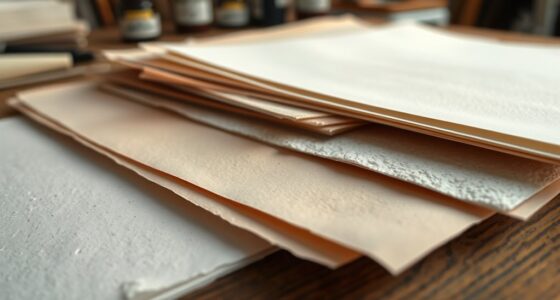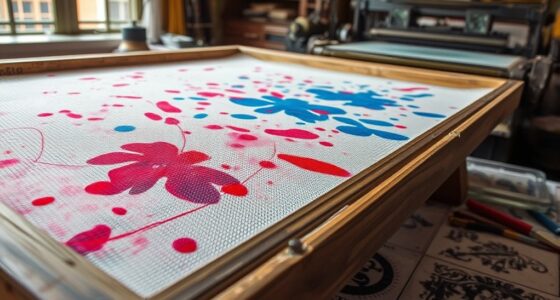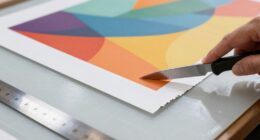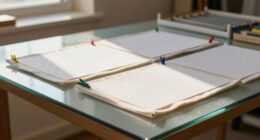
Printmaking offers four main methods: relief, intaglio, lithography, and screen printing. Relief involves carving into surfaces like wood or linoleum, creating bold images. Intaglio engraves or etches into metal plates for detailed textures. Lithography uses flat stones or plates with greasy drawings, enabling subtle tones. Screen printing forces ink through a mesh to produce layered designs. Exploring each type reveals how diverse and innovative printmaking can be—keep going to discover how these techniques evolve and combine.
Key Takeaways
- Printmaking originated in China and evolved through techniques like woodblock printing, engraving, etching, lithography, and screen printing.
- The four main types of printmaking are relief, intaglio, lithography, and screen printing, each with distinct processes and results.
- Relief printing involves carving into materials like wood or linoleum to produce bold images.
- Intaglio uses engraved or etched metal plates for detailed, textured images.
- Screen printing forces ink through a mesh stencil, suitable for textiles, posters, and layered designs.

Have you ever wondered how artists create detailed and textured images on paper or fabric? Printmaking is an ancient art form that allows for the reproduction of images through various techniques. Understanding the techniques overview and historical development of printmaking helps you appreciate its rich heritage and diverse methods. Historically, printmaking began in China around the 3rd century CE, initially used for printing texts and religious images. It evolved considerably during the Tang and Song dynasties, with the invention of woodblock printing making images more accessible. By the 15th century, in Europe, the development of techniques like engraving and etching expanded the possibilities for artists, enabling more intricate and detailed images. These innovations marked a vital chapter in the historical development of printmaking, transforming it from a craft into a respected art form.
Today, printmaking encompasses four main types: relief, intaglio, lithography, and screen printing. Each method has its own unique process, tools, and results, but all share the goal of creating multiple copies of an image from a single original. Relief printmaking involves carving into a block of material, such as wood or linoleum, leaving the raised areas to be inked and pressed onto paper. This technique is straightforward and often used for bold, graphic images. Intaglio, on the other hand, requires engraving or etching into metal plates. Ink is applied into the incised lines, and the surface is wiped clean before pressing onto paper, producing highly detailed and textured images. Lithography uses a flat stone or metal plate, exploiting the chemical repulsion between oil and water to produce images. Artists draw directly onto the surface with greasy materials, and the image is transferred through pressing. Finally, screen printing involves forcing ink through a fine mesh screen stretched over a frame. Areas blocked off by a stencil prevent ink from passing through, allowing for vibrant, layered designs suitable for textiles, posters, and art prints. The development of printing technology has played a crucial role in expanding the possibilities and accessibility of printmaking.
Each of these types reflects a different aspect of printmaking’s techniques overview and its historical development. Relief and intaglio have roots in medieval European practices, while lithography was invented in the late 18th century, revolutionizing the ability to produce detailed images more efficiently. Screen printing, which emerged in the 20th century, became popular for its versatility and suitability for commercial uses. By understanding these main types, you gain insight into how printmaking has evolved from simple blocks and carvings to sophisticated processes capable of creating complex, textured images. This knowledge not only deepens your appreciation for the art form but also inspires you to explore the diverse techniques that have shaped printmaking’s history and continue to influence contemporary artists.

Linocut Kit for Printmaking – Arts and Crafts for Adults – Easter DIY Kit Gifts – Hobby Kits Birthday Gift for Adults, Women, Men, Boys, Girls – Stamp Making Kit – Linoleum Blocks Carving Tools
【Upgrades Linocut Kit】Create unique block printing by hand with our linocut kit for printmaking. Apply rich ink and…
As an affiliate, we earn on qualifying purchases.
As an affiliate, we earn on qualifying purchases.
Frequently Asked Questions
How Do I Choose the Right Printmaking Type for Beginners?
To choose the right printmaking type for beginners, consider your interests and comfort with printmaking tools and ink selection. Start with simpler methods like linocut or monotype, which require basic tools and manageable ink application. These options help you learn fundamentals without feeling overwhelmed. As you gain confidence, explore more complex techniques. Focus on selecting inks that are easy to work with and suitable for your chosen method, making your first printmaking experience enjoyable.
What Safety Precautions Are Necessary in Printmaking Studios?
In printmaking studios, you should prioritize safety by ensuring proper studio ventilation to avoid inhaling harmful fumes and dust. Always wear personal protective equipment like gloves, masks, and eye protection to safeguard your skin and eyes from chemicals and inks. Keep your workspace well-ventilated and clean, and follow all safety guidelines for handling tools and materials. Staying vigilant helps prevent accidents and keeps your environment safe.
How Do I Price Printmaking Artworks for Sale?
Imagine you’re a modern-day Da Vinci, and pricing your printmaking artwork involves understanding art valuation and pricing strategies. Start by researching similar works, considering size, complexity, and edition numbers. Factor in your time and materials, and don’t undervalue your skill. Set a fair price that reflects your effort and market demand. Remember, consistent pricing strategies help establish your reputation and attract serious collectors.
Can Printmaking Techniques Be Combined in One Artwork?
Yes, you can definitely combine printmaking techniques in one artwork. Many artists explore collaborative printmaking, working with others to blend styles, or use mixed media techniques to add depth and texture. This approach lets you create unique pieces that showcase different methods like engraving, monotype, or screen printing within a single work. Experimenting with these combinations allows for innovative expressions and richer visual effects, making your art more dynamic and engaging.
What Are Common Mistakes to Avoid in Printmaking?
Think of printmaking as a delicate dance—you don’t want to trip over common mistakes like ink smudging or improper drying. To avoid these pitfalls, keep your workspace organized, use the right amount of ink, and allow ample drying time. Rushing can lead to smudges, ruining your artwork. Pay attention to detail, and your prints will come out crisp, professional, and true to your vision.

FLEXCUT SK130 5-Piece Lino & Relief Printmaking Set, Carbon Steel Blades (SK306, SK309, SK803, SK307), Quick Connect ABS Handle, Tool Roll, Strop & Honing Compound – 12 oz, Made in USA
Complete Printmaking Kit: Includes four high-carbon steel blades (SK306 6×5/16", SK309 #11×1/8", SK803 45° × 1 mm, SK307…
As an affiliate, we earn on qualifying purchases.
As an affiliate, we earn on qualifying purchases.
Conclusion
Now that you’ve explored the four main types of printmaking, you see how each method is a unique brushstroke in the art world’s canvas. Like a symphony of techniques, they come together to create stunning, textured images. Whether you’re inspired to try etching, lithography, screen printing, or relief, remember that your creativity is the ink that brings these processes to life. Immerse yourself and let your artistic spirit print its own masterpiece!

Intaglio Etching Set – 6 Pieces
Intaglio Etching Set – 6 Pieces
As an affiliate, we earn on qualifying purchases.
As an affiliate, we earn on qualifying purchases.

Caydo 23 Pieces Screen Printing Starter kit Include 3 Different Size of Wood Silk Screen Printing Frame with Mesh, Screen Printing Squeegees, Inkjet Transparency Film, Ink Knife, and Mask Tape
Screen Printing Frames: 3 different sizes of screen printing frames(10 x 14 inch, 8 x 12 inch, 6…
As an affiliate, we earn on qualifying purchases.
As an affiliate, we earn on qualifying purchases.