
Etching is a centuries-old printmaking technique that combines artistic creativity with chemical processes. You start by coating a metal plate with a waxy ground, then draw into it with a needle to create exposed lines. When submerged in acid, these lines are etched into the metal, holding ink for printing. This method allows for detailed images and expressive variations. If you keep exploring, you’ll discover even more fascinating aspects of this historic art form.
Key Takeaways
- Etching is a centuries-old printmaking technique that evolved from craft to respected art form, used by artists like Rembrandt and Goya.
- The process involves coating a metal plate with a waxy ground, drawing into it, and then using acid to etch the design into the metal.
- The acid bites into exposed lines, creating grooves that hold ink, which is transferred onto paper through pressing.
- Artists utilize various techniques such as shading and cross-hatching to achieve delicate and expressive visual effects.
- Today, etching remains a vital art form, allowing for detailed, multiple copies and continued innovation in artistic expression.
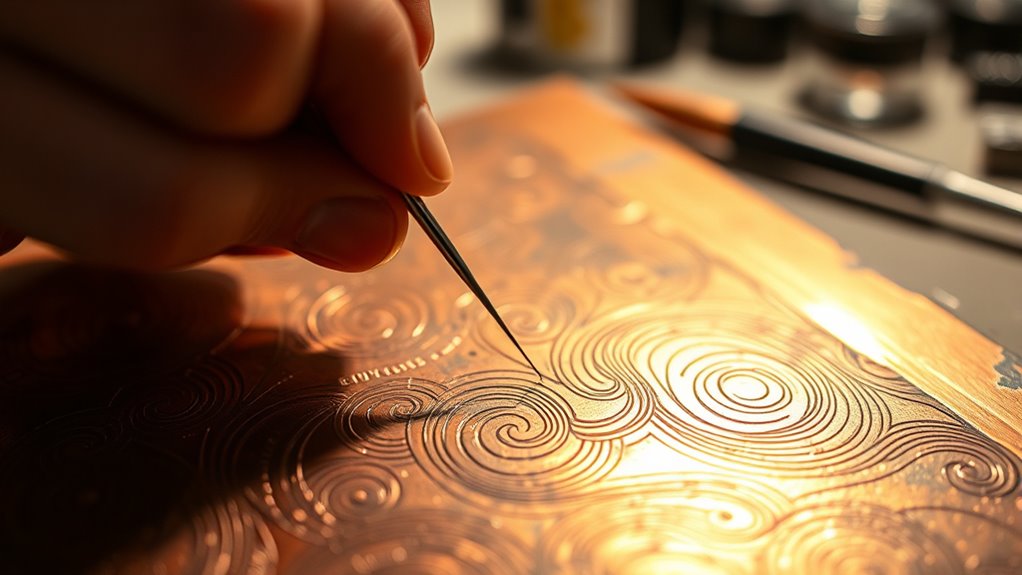
Etching, a mesmerizing printmaking technique, has a rich history that dates back centuries. As you explore its origins, you’ll see that etching played a significant role in the printmaking evolution, shaping how artists express their ideas across generations. Unlike other methods, etching allows you to create intricate lines and detailed textures that bring depth and emotion to your artwork. This technique became a crucial tool for artists seeking new ways to push the boundaries of artistic expressions, offering a means to produce multiple copies of their work while maintaining fine detail. Over time, etching transformed from a craft into a respected art form, with master printmakers using it to document historical events, explore personal themes, and experiment with aesthetics.
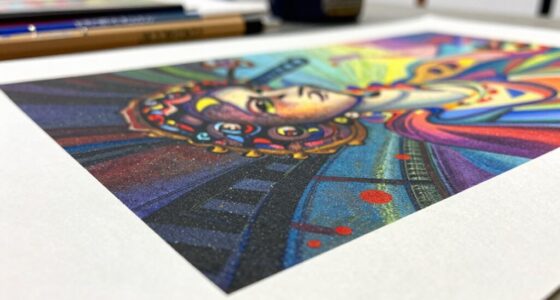
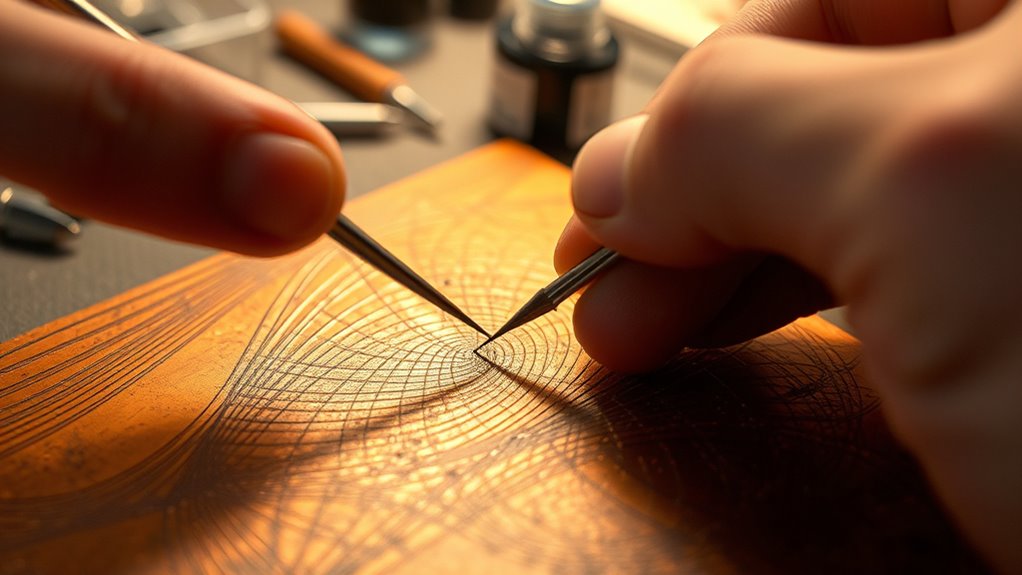
When you start practicing etching, you’ll notice that it involves a combination of chemical processes and manual skill. First, you prepare a metal plate—traditionally copper or zinc—and cover it with a waxy, acid-resistant ground. You then use a needle or etching needle to draw your design into the ground, exposing the metal beneath. This act of incising your image is where your artistic expressions truly begin to take shape. Once your design is complete, you submerge the plate in acid, which bites into the exposed metal lines, creating grooves that will hold ink. You then wipe the surface clean, leaving ink only in the etched lines. When you press the plate onto damp paper with a printing press, the ink transfers, revealing your detailed image in a mirror of your original design. Understanding the chemical processes involved in etching helps you better control the outcome and achieve desired effects.
The beauty of etching lies in its versatility. You can achieve everything from delicate, fine lines to bold, expressive strokes. This flexibility invites you to experiment with shading, cross-hatching, and tone, allowing for a wide range of artistic expression. As you refine your technique, you’ll discover how different acids, tools, and plate preparations influence the final outcome. Many renowned artists, from Rembrandt to Francisco Goya, harnessed etching’s potential to communicate complex ideas and evoke powerful emotional responses. Today, contemporary artists continue to push its boundaries, blending traditional methods with modern innovations, ensuring that etching remains a essential and dynamic form of artistic expression.
Ultimately, by understanding its history and mastering its technique, you connect with a centuries-old tradition of creativity and innovation. Etching’s enduring appeal lies in its capacity to mirror your artistic vision in exquisite detail, making it a compelling medium for personal and cultural storytelling. Whether you’re capturing fleeting moments or exploring abstract concepts, etching invites you to leave an indelible mark through a process that is as thoughtful as it is expressive.

Richeson & Co. Printmaking Starter Kit – Clear Carve Etching Set, Includes Clear Carve Etching Plates, Etching Tool, Printmaking Paper
Set includes: (6) Clear Carve Etching Plates, twisted etching tool, 6” x 9” 88# printmaking paper (50)
As an affiliate, we earn on qualifying purchases.
As an affiliate, we earn on qualifying purchases.
Frequently Asked Questions
How Has Digital Technology Influenced Traditional Etching Methods?
Digital technology has substantially influenced traditional etching methods by providing new tools and methods. You can now explore digital tools to design and plan your artwork before transferring it to your etching surface. Virtual workshops also make learning and practicing etching more accessible, allowing you to connect with experts worldwide. This integration of technology enhances creativity, precision, and accessibility, transforming how you approach and refine your traditional etching practices.
What Are Common Mistakes Beginners Make When Practicing Etching?
When practicing etching, you often fall into technique pitfalls like over-etching or uneven lines. Beginner errors include rushing the process, which causes poor detail, or neglecting proper pressure and tool control. You might also forget to clean your plate thoroughly, leading to unwanted marks. To improve, take your time with each step, focus on consistent pressure, and practice patience. These adjustments help you avoid common mistakes and develop better technique.
How Can Etching Be Integrated Into Modern Mixed-Media Art?
You can integrate etching into modern mixed-media art by combining it with digital collage and layered materials. Use etched prints as textured elements, layering them over photos, paint, or fabric to add depth. Experiment with printing directly onto diverse surfaces, blending traditional etching with digital techniques. This approach creates rich, tactile artworks that merge old and new, making your mixed-media projects more dynamic and visually engaging.
What Are Environmentally Friendly Alternatives to Traditional Etching Chemicals?
Think of eco-friendly alternatives as fresh paint over an old mural, revitalizing your art with care. You can explore chemical substitutes like soy-based acids, citrus-based cleaners, or eco-friendly mordants that cut down on harmful waste. These environmentally friendly alternatives not only protect the planet but also allow you to create stunning etchings without sacrificing safety or quality, making your art both beautiful and responsible.
How Do Cultural Differences Affect Etching Styles Worldwide?
You see that cultural differences shape etching styles worldwide through unique cultural motifs and regional symbolism. These elements influence the choice of imagery, patterns, and techniques artists use, creating diverse artistic expressions. You might notice how traditional symbols or motifs reflect local beliefs and histories, making each etching style distinct. Exploring these variations helps you appreciate the rich cultural tapestry woven into etching art across different societies.

K&S Precision Metals Copper Etching Plate 6602 – 0.050" Thick x 5" Wide x 7" Long – DIY Crafts, Engraving, Metalworking, Made in USA, 1 Plate
Alloy 110 1/2 hard
As an affiliate, we earn on qualifying purchases.
As an affiliate, we earn on qualifying purchases.
Conclusion
As you explore etching’s rich history, imagine yourself wielding a tiny, enchanted sword, carving intricate stories into metal. Just like a craftsman transforming a blank plate into art, you hold the power to turn simple lines into lasting images. Remember, each etching carries centuries of tradition—it’s like passing a secret handshake through time. So, pick up your tools with passion and create your own timeless masterpiece, just as artists have done for generations.

Jack Richeson 689095 Clear Carve Twisted Etching Tool
7 inches in length
As an affiliate, we earn on qualifying purchases.
As an affiliate, we earn on qualifying purchases.
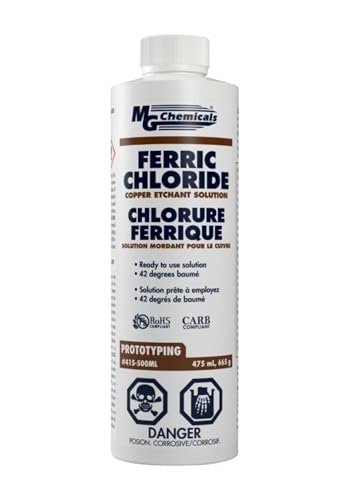
MG Chemicals 415-1L Ferric Chloride, 1 Quart
Add dynamic details to your metal jewelry – etch your designs in metal
As an affiliate, we earn on qualifying purchases.
As an affiliate, we earn on qualifying purchases.