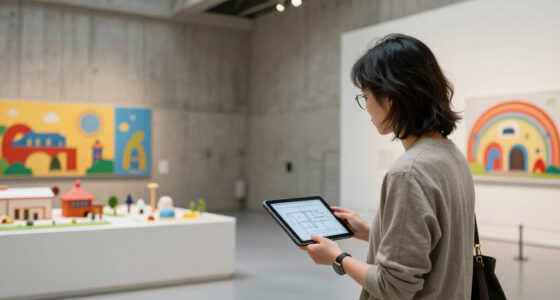
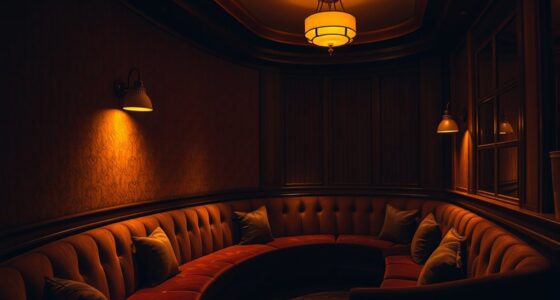
Using harsh, direct lights or poorly diffused bulbs can create glare, shadows, and dull colors, making your artwork look cheap and unprofessional. Avoid mismatched bulbs and inconsistent color temperatures, as they distort colors and reduce visual appeal. Proper placement, layered lighting, and calibrated fixtures highlight details and add depth, elevating your art’s look. If you want to discover more tips to avoid these mistakes and showcase your art effectively, keep exploring.
Play games included with Prime
Start a Prime free trial and play with Amazon Luna on your devices.
As an affiliate, we earn on qualifying purchases.
Key Takeaways
- Using harsh, direct lights causes glare and shadows, making artwork appear unprofessional and cheap.
- Poor diffusion and improper bulb choices distort colors, reducing vibrancy and perceived quality.
- Inconsistent or uncalibrated lighting creates uneven illumination, diminishing artwork’s richness and detail.
- Overly bright or dull lighting washes out details, making art look flat and inexpensive.
- Ornate fixtures or colored bulbs distract from the artwork, undermining a polished, high-end presentation.
As an affiliate, we earn on qualifying purchases.
Common Lighting Mistakes That Make Your Artwork Look Cheap
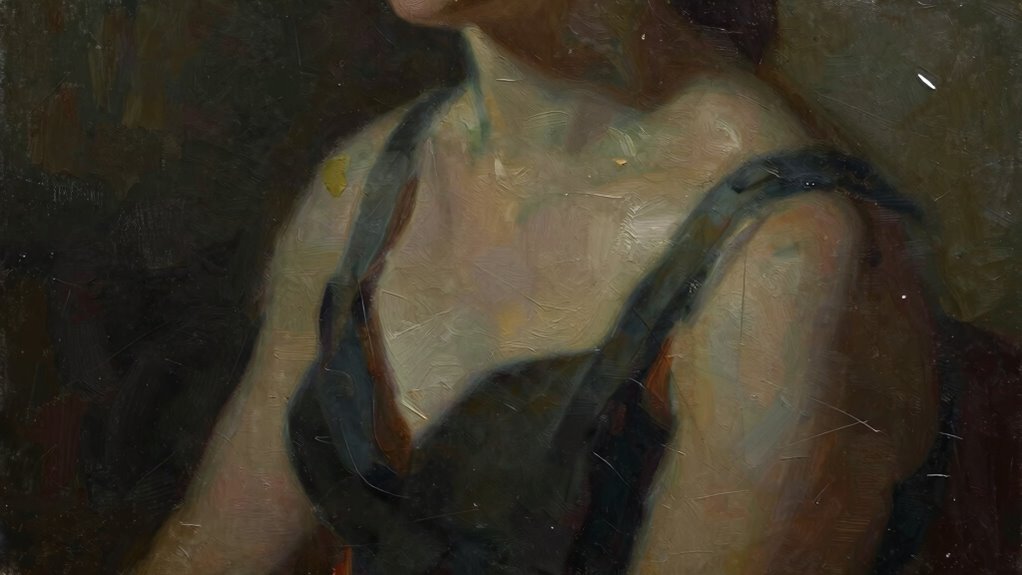
Poor lighting can instantly cheapen the appearance of your artwork, making it look less professional and more amateurish. If you don’t consider your gallery ambiance, your art may seem flat or uninviting. One common mistake is using harsh, direct lights that create glare and uneven light diffusion. This distracts viewers and diminishes the artwork’s true colors and details. Instead, aim for soft, well-diffused lighting that evenly illuminates your pieces. Proper light diffusion prevents harsh shadows and highlights, creating a more polished and sophisticated atmosphere. When your gallery lighting is balanced, your artwork stands out without feeling overwhelming. Focus on achieving a warm, inviting ambiance that enhances your art’s beauty, rather than detracting from it through poorly executed lighting choices. Additionally, incorporating safety tips for lighting can further enhance the viewing experience without compromising the integrity of your artwork. Ensuring that your lighting setup is safe and well-maintained can prevent potential hazards while showcasing your art beautifully. Furthermore, understanding the importance of early detection in other contexts, like health awareness, can also inspire attention to detail in your lighting choices. To elevate your display even further, consider how proper gear care can enhance the overall presentation of your art, including using remote car covers that protect your vehicle from environmental damage, just as thoughtful lighting protects the integrity of your artwork.
As an affiliate, we earn on qualifying purchases.
How Harsh and Uneven Lighting Dulls Your Art’s Impact
How Harsh and Uneven Lighting Dulls Your Art’s Impact
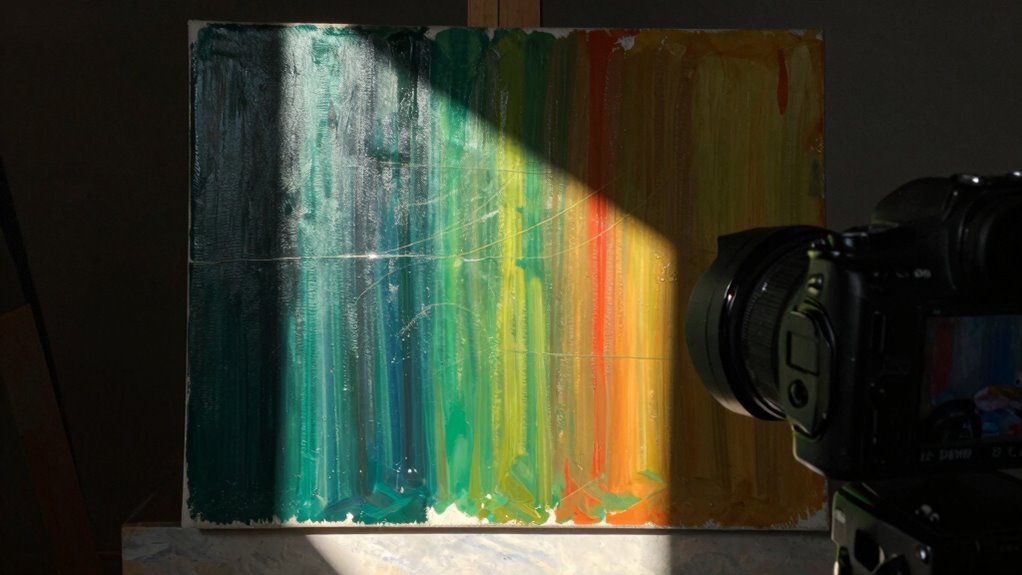
Harsh and uneven lighting can considerably diminish the impact of your artwork by creating distracting shadows and glare. Natural sunlight, while beautiful, can be too intense if not diffused properly, causing uneven illumination. This uneven lighting reduces the clarity of details and diminishes the vibrancy of colors, making your art look dull and less engaging. When light is too harsh, it flattens color contrast, preventing viewers from appreciating the depth and richness of your work. Instead, aim for soft, diffuse lighting that evenly illuminates your art. Proper lighting highlights the true colors and textures, allowing your art’s details to stand out without harsh shadows or reflections. This creates a more professional, polished look that truly showcases your artistic intent. Additionally, exploring new frontiers in digital content can help artists understand how to better present their work online. Understanding the importance of proper lighting techniques can significantly enhance the viewing experience and overall impact of your art. Moreover, effective soundproofing solutions can further enhance the ambiance of your space, allowing for a more focused and immersive art appreciation. The principles of cookie consent are also crucial as they help ensure that digital representations of your art are shared responsibly and ethically. Furthermore, the consideration of ethical consumerism can guide artists in making choices that resonate positively with their audience.
As an affiliate, we earn on qualifying purchases.
Choosing the Wrong Bulbs? Here’s How It Affects Your Art Display
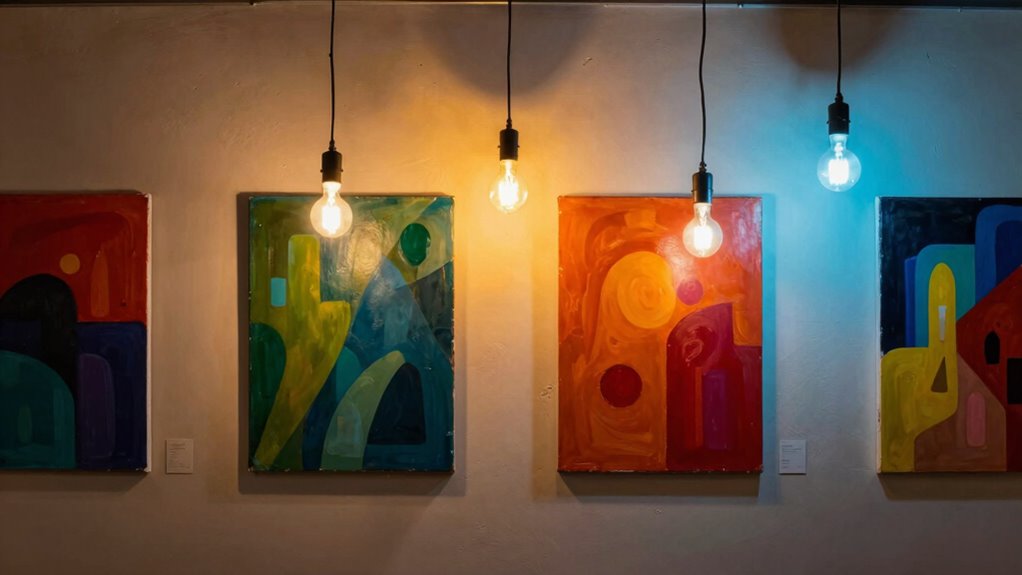
Choosing the right bulbs is vital because color temperature, wattage, and compatibility directly impact how your art appears. Using the wrong bulbs can distort colors, cause glare, or create uneven lighting that diminishes your artwork’s appeal. When you select the appropriate bulbs, your art will look more vibrant and polished, avoiding a cheap or off-putting effect. Additionally, proper lighting techniques can elevate your art and enhance the overall ambiance of your space. Incorporating natural lighting can further enrich the presentation of your artwork, creating a more inviting and harmonious environment.
Color Temperature Matters
The color temperature of your bulbs plays a crucial role in how your art appears under lighting. Warm bulbs (around 2700K-3000K) create a cozy, inviting atmosphere, but can cause ambient shadows that distort color harmony and make artwork appear dull or yellowed. Cooler bulbs (around 5000K-6500K) produce a crisp, daylight effect, enhancing true colors and details. When choosing bulbs, consider how the temperature influences the overall tone and mood of your display. Inconsistent color temperatures can disrupt color harmony, making art look mismatched or cheap. Aim for a balanced, neutral hue that complements your artwork’s colors and prevents harsh shadows or unnatural tones, ensuring your art looks vibrant and professional. Additionally, incorporating music and movement into your space can create a more engaging atmosphere for enjoying art. Proper door swings can also enhance the flow of your space, allowing for better access to your art displays. Maintaining good indoor air quality can enhance the viewing experience by reducing the presence of microplastics in dust, which can affect both health and visual clarity. Properly straining paint before application can also ensure that the colors in your artwork are rendered more vividly and accurately. Understanding the impact of effective lighting techniques can further elevate your art display, allowing for a more dynamic and appealing presentation.
Wattage and Brightness
While the color temperature sets the tone for how your artwork looks, the brightness level determines how well it’s showcased. Choosing the wrong wattage can ruin the ambient glow you want to create, making the art appear flat or washed out. Too bright, and you risk harsh shadows and glare, diminishing the piece’s details. Too dim, and it loses impact, making your display look cheap. Proper brightness enhances shadow play, adding depth and dimension. Additionally, optimized lighting systems can help maintain consistent brightness across your display, similar to how molecular-scale circuits ensure precise control in technology applications.
- Use bulbs with adjustable brightness to fine-tune the ambiance.
- Opt for bulbs that balance ambient glow without overpowering the artwork.
- Avoid overly high wattage that creates glare and harsh shadows.
Getting the wattage right guarantees your art is vibrant, inviting, and professionally displayed. Additionally, maintaining proper color accuracy ensures that the hues of your artwork remain true to life.
Incompatibility With Artwork
Using the wrong type of bulbs can considerably distort how your artwork appears. Incompatibility with your artwork’s palette, framing, or gallery setup can make colors seem dull or overly harsh. For instance, warm bulbs may enhance cozy framing but distort cooler tones, while cool bulbs can wash out warm hues. Selecting the right bulbs guarantees your artwork’s true colors shine through. Consider this table:
| Bulb Type | Effect on Artwork | Best Use Case |
|---|---|---|
| Incandescent | Warm, soft glow | Artwork with warm tones |
| LED | Bright, consistent | Modern gallery setup |
| Halogen | Intense, color-rich | Detailed artwork |
| Fluorescent | Cool, sometimes harsh | General lighting |
Choosing mismatched bulbs leads to misrepresentation, making your display look unprofessional. Proper pairing enhances the overall presentation and preserves your artwork’s integrity.
soft white track lighting for art
As an affiliate, we earn on qualifying purchases.
As an affiliate, we earn on qualifying purchases.
Getting the Right Angles to Make Your Artwork Shine
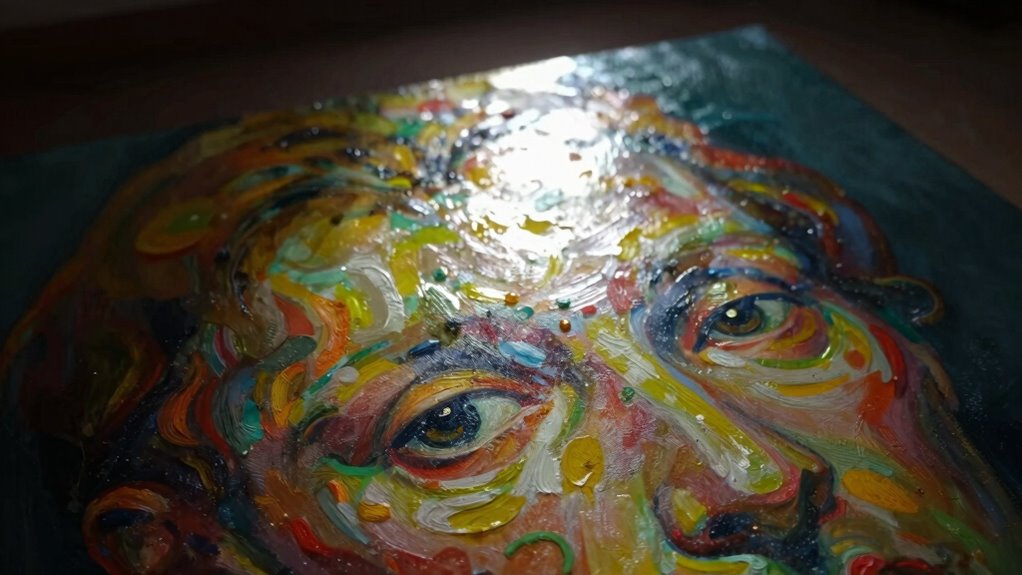
Getting the Right Angles to Make Your Artwork Shine
Getting the right angles for your artwork can dramatically enhance its visual impact. By adjusting your lighting angles, you can highlight details and create depth that draws viewers in. Your artistic perspective plays a key role in positioning lights to avoid harsh shadows or flat looks. Experiment with different angles to find the most flattering and dynamic illumination. Remember, subtle shifts in lighting angles can change the mood entirely.
- Position lights slightly above and at an angle for natural highlights.
- Avoid direct, straight-on lighting that flattens features.
- Use directional lighting to emphasize textures and details. Additionally, understanding how coffee grinding techniques can influence flavor may inspire innovative ways to present your art. Incorporating cultural elements into your work can further enhance its relatability and depth.
Mastering lighting angles helps your art shine without looking cheap. It’s about showcasing your work in the best light, literally and figuratively. Moreover, understanding the importance of diversification of retirement portfolio can inspire creative strategies in how you present and market your artwork. Furthermore, using the right flywheel upgrades can enhance the overall presentation of your setup, allowing your artwork to take center stage. Moreover, consider the potential health risks of excessive sugar and fat consumption when displaying desserts or food-related art.
How Color Temperature Changes Your Art’s Vibe
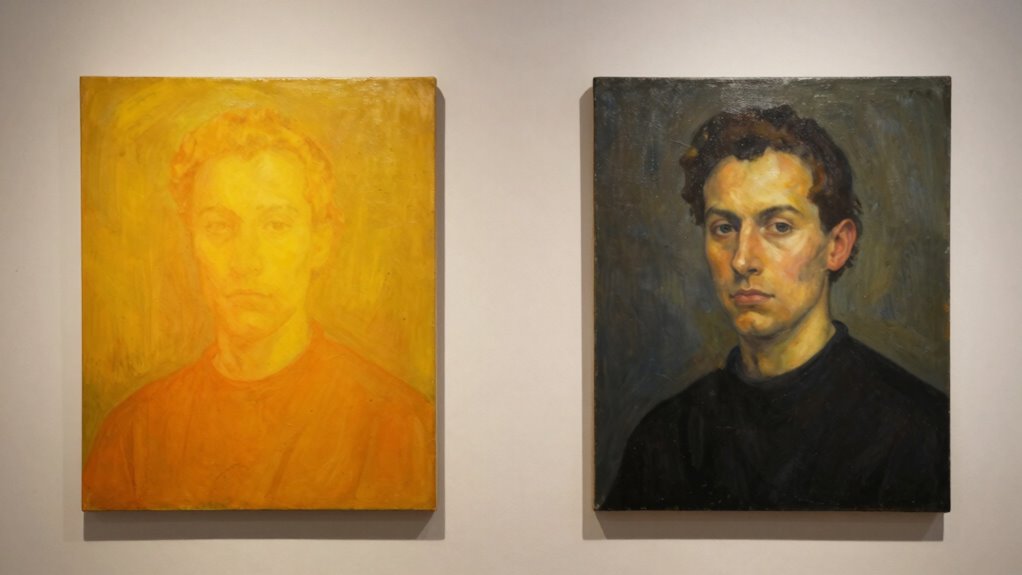
Have you ever noticed how the color temperature of your lighting can completely change the mood of your artwork? Warm tones, like yellow or amber, evoke feelings of comfort and intimacy, aligning with positive color psychology. They create a cozy, inviting vibe that makes your art feel approachable. On the other hand, cool tones—think bluish or white light—give a more modern, sleek look, emphasizing clarity and freshness. These ambient tones influence how viewers perceive your art, affecting its emotional impact. Choosing the right color temperature helps you set the desired vibe, whether it’s vibrant energy or calm serenity. Remember, subtle shifts in lighting can dramatically alter your artwork’s perceived value, making your display more compelling and polished.
Lighting Placement Tips to Elevate Your Art Display
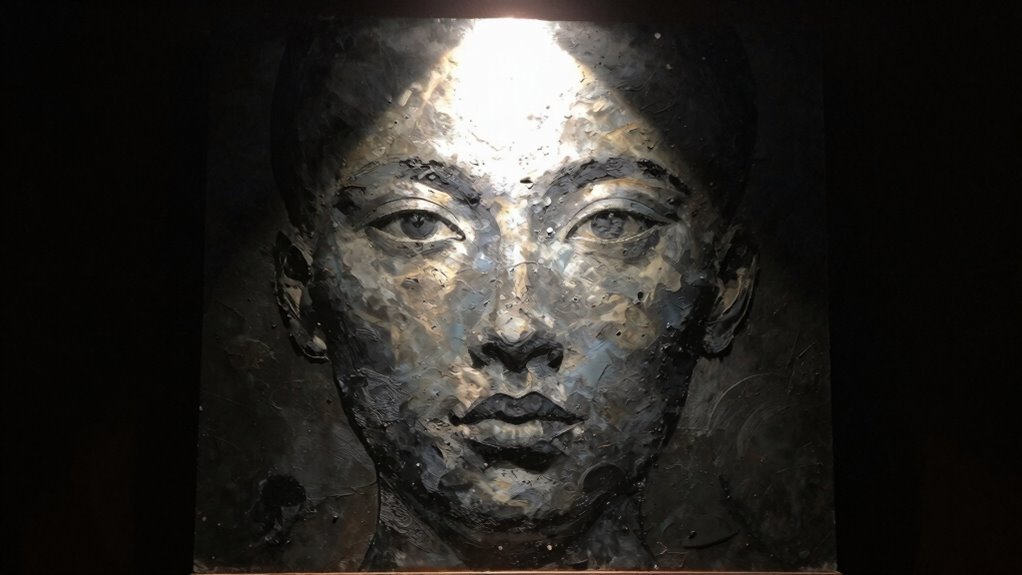
To make your art stand out, focus on highlighting its key features with well-placed lighting. Use layered lighting to add depth and prevent harsh shadows that can detract from the piece. Proper placement guarantees your artwork looks polished and inviting rather than cheap or flat.
Highlight Key Features
Strategic lighting placement can dramatically enhance the impact of your artwork, drawing attention to its details and colors. To highlight key features effectively, consider how artistic techniques and framing styles work together. Proper lighting can emphasize texture, brushstrokes, or focal points, making your piece stand out. Use focused, adjustable lights to cast subtle shadows that add depth without overpowering the art.
- Position lights slightly above and angled to avoid glare
- Use narrow beam spreads for precise highlighting
- Adjust lighting to complement framing styles and enhance textures
Use Layered Lighting
Layered lighting creates a dynamic and sophisticated display by combining different types of lights to highlight various aspects of your artwork. By incorporating layered lighting, you add visual depth, making your art stand out without flatness or dullness. Use a mix of ambient, task, and accent lights to create a balanced glow that draws the eye naturally. Position wall washers or track lights at different angles to emphasize textures and details, while softer ambient lights set the overall mood. Avoid relying solely on a single light source, which can flatten your artwork’s appearance. Instead, layer your lighting to create contrast and highlight key features, giving your art a polished, professional look that feels intentional and refined.
Avoid Harsh Shadows
Avoid harsh shadows by paying close attention to where your lights are placed. Proper shadow control creates a softer, more inviting display that highlights your art’s details without distractions. Using natural light wisely can also reduce the need for harsh artificial lighting, providing a more balanced and authentic look. To prevent unflattering shadows, consider the following tips:
- Position lights at a 45-degree angle to evenly distribute light and minimize shadows.
- Use diffusers or lampshades to soften direct light and create a gentle glow.
- Incorporate multiple light sources to balance shadows and enhance overall illumination.
Fixtures to Avoid (and What to Use Instead) for Better Art Lighting
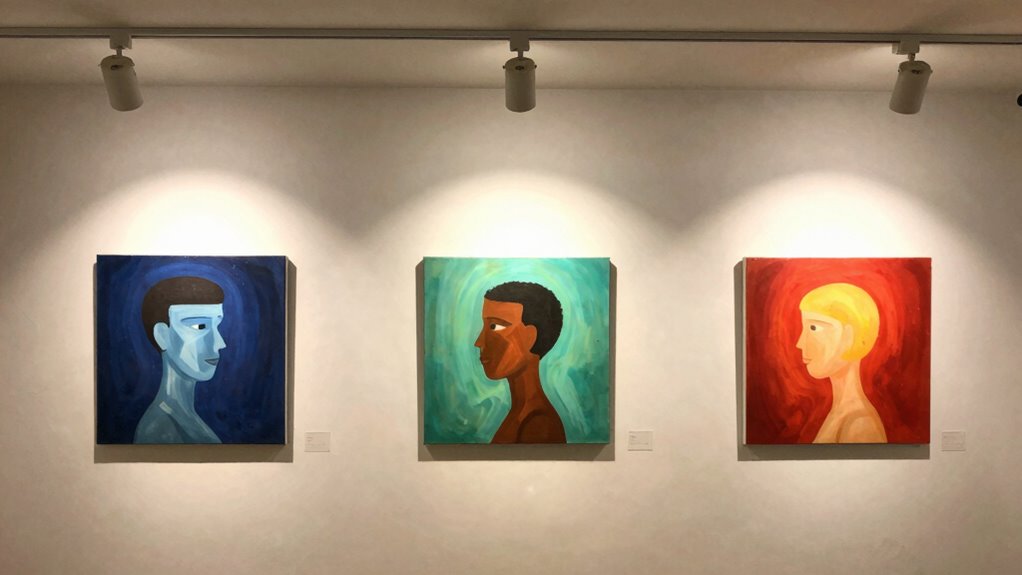
Certain types of fixtures can make your artwork look cheap or unprofessional, so choosing the right lighting is vital. Avoid outdated or overly decorative fixtures like ornate chandeliers or colored bulbs, which can distract from your art. In art gallery displays, use simple, focused gallery lighting that highlights pieces without overwhelming them. Steer clear of incandescent bulbs, as they cast warm, uneven light that can distort colors. Instead, opt for LED track lighting or adjustable spotlights, which provide even, natural illumination and can be directed precisely. These fixtures enhance the artwork’s details and colors, creating a polished, professional look. Investing in quality, minimalist fixtures ensures your art is showcased effectively without cheapening the overall presentation.
Why Poor Lighting Can Diminish Your Framed Art’s Appeal
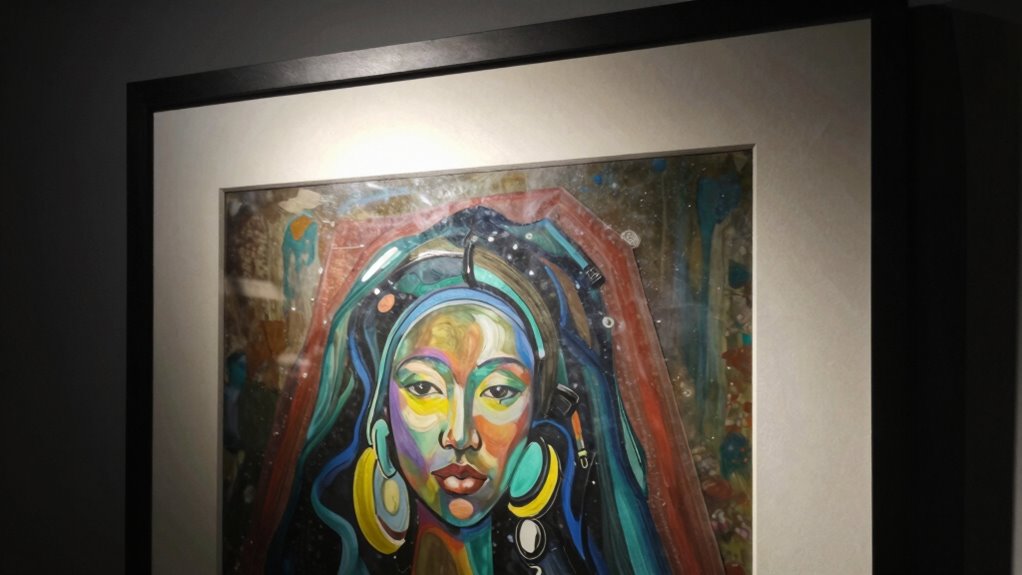
Poor lighting can considerably diminish the appeal of your framed art, making it look dull or uninviting. Without proper illumination, your artwork loses its vibrancy and can disrupt the gallery ambiance you want to create. Insufficient or harsh lighting can also produce unwanted artistic shadows, distracting from the piece itself. When lighting isn’t thoughtfully planned, your art may seem flat or cheap, undermining its value. To avoid this, consider how your light enhances the artwork’s colors and textures.
Proper lighting enhances your art’s vibrancy, highlights textures, and creates an inviting gallery atmosphere.
- Use diffuse lighting to soften shadows and highlight details
- Position lights to minimize harsh reflections and glare
- Aim for even coverage to maintain a cohesive gallery ambiance
Tips to Correct Common Lighting Mistakes and Showcase Your Art Effectively

To showcase your art effectively, you need to identify and fix common lighting mistakes that can diminish its impact. Start by using modern lighting technology, like adjustable LED fixtures, to create even, shadow-free illumination. Avoid harsh or uneven lighting that can distort colors and textures. Instead, position lights at a 30-degree angle to highlight details without glare. Draw on your artistic inspiration to select warm, flattering tones that enhance your artwork’s mood. Consider using dimmers to control brightness and prevent overexposure. Properly calibrated lighting not only highlights your art’s best features but also elevates its perceived value. Regularly review your setup and make adjustments as needed, ensuring your lighting complements the piece and showcases its true essence.
Frequently Asked Questions
How Can I Test if My Lighting Setup Highlights My Artwork Properly?
You can test if your lighting setup highlights your artwork properly by observing how the lighting color and bulb brightness affect it. Adjust the bulbs to guarantee the light isn’t too harsh or dull, and check if the colors appear true to life. Move around your artwork to see if the lighting uniformly highlights the piece from different angles. This will help you create the perfect balance for showcasing your art effectively.
What Are the Signs That My Lighting Is Damaging or Fading My Art?
Did you know that over 50% of artworks suffer damage from improper lighting? Signs your lighting harms your art include fading colors, discoloration, or surface deterioration. You might notice a change in the vibrancy or texture over time. Poor lighting aesthetics can accelerate damage, jeopardizing artwork preservation. Regularly inspect for these signs and use UV filters or LED lights to protect your art from harmful rays, ensuring it remains vivid and intact.
Can Natural Light Be Effectively Used for Art Display Without Causing Damage?
Yes, you can use natural illumination effectively for art display without causing damage. To do this, position your artwork away from direct sunlight, which can cause fading, and use filtered light to minimize harmful UV exposure. Be mindful of light reflection, which can create glare but also enhance visibility if managed correctly. Regularly monitor the light levels and rotate artworks to prevent uneven fading, ensuring your art stays vibrant over time.
How Often Should I Adjust or Update My Artwork Lighting?
Think of your artwork like a vintage vinyl—regular tuning keeps it pristine. You should review your artwork positioning and light color temperature every six months or when you notice changes in how the piece looks. Adjustments help prevent fading and glare, ensuring your art remains vibrant. Keep an eye on ambient light and consider updating your lighting setup seasonally, especially if you change wall colors or display locations.
What Lighting Adjustments Are Needed for Different Types of Art (E.G., Paintings vs. Sculptures)?
You should adjust lighting angles and color temperature based on your art type. For paintings, use soft, even lighting at a 30-degree angle to reduce glare and bring out colors. Sculptures benefit from directional lighting that highlights textures, often with warmer color temperatures to enhance depth. Always experiment with angles and temperature settings to avoid harsh shadows or washed-out colors, ensuring your artwork looks its best.
Conclusion
If you ignore these lighting tricks, your art could look downright tragic—like a badly dressed clown at a fancy party! But don’t worry, with the right angles, bulbs, and placement, you’ll turn your space into an art gallery that screams sophistication. Just remember, bad lighting can turn your masterpiece into a cheap-looking joke, so get it right, and let your artwork shine brighter than a supernova! Your walls will thank you.
NFL season / tailgating Picks
team gear
As an affiliate, we earn on qualifying purchases.