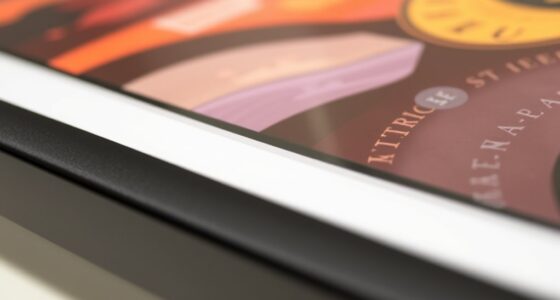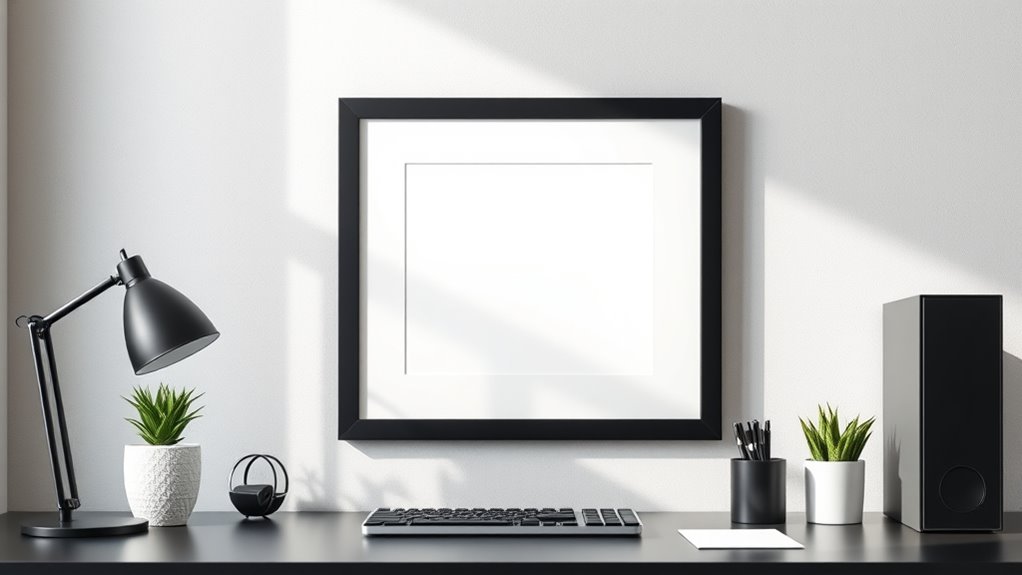

When framing digital prints, choose acid-free mats and UV-protective glass or acrylic to keep your artwork vibrant and protected from damage. Use high-quality materials that complement your artwork’s style, and guarantee everything is aligned and secured properly. Avoid cheap frames, and regularly check your piece for signs of aging. Proper framing enhances the display and preservation of your print, and if you stay tuned, you’ll discover even more expert tips to make your artwork shine.
Key Takeaways
- Use acid-free mats and UV-protective glass to prevent discoloration and fading over time.
- Ensure precise alignment and secure the print with archival materials to prevent shifting or damage.
- Choose framing materials that complement the artwork and display environment, such as wood or metal frames.
- Clean the print thoroughly before framing to avoid fingerprints and dust affecting final presentation.
- Regularly inspect framed prints for signs of aging, damage, or deterioration to maintain optimal display quality.
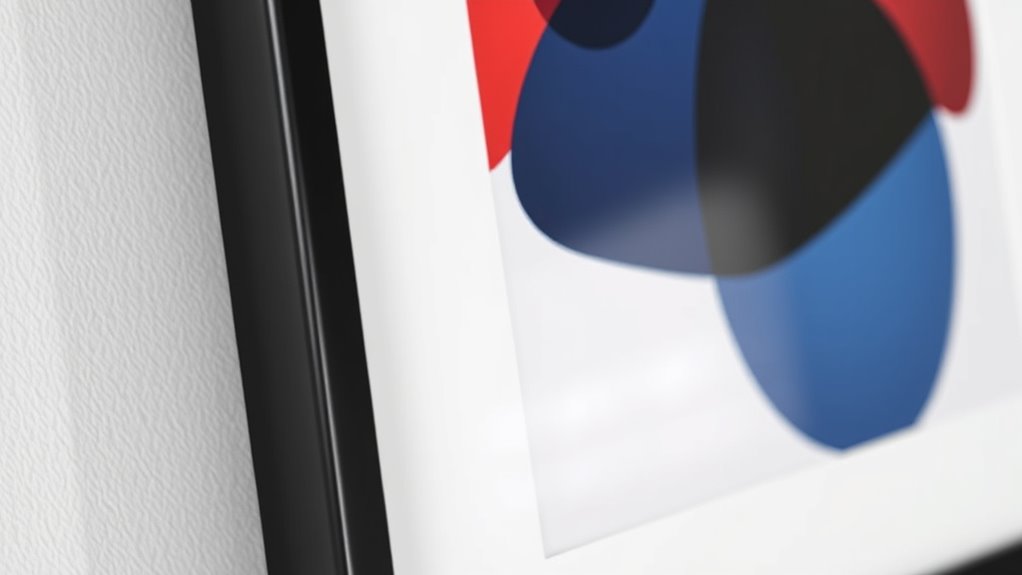
Framing digital prints is an essential step to showcase your artwork and protect it from damage. When you’re ready to frame, the way you approach matting techniques and choose framing materials will significantly influence the final look and longevity of your print. To start, selecting the right framing materials is crucial. Opt for acid-free mats and UV-protective glass or acrylic to prevent discoloration and fading over time. These materials help preserve your digital print’s vibrant colors and intricate details, ensuring it remains stunning for years to come. Metal or wood frames are popular choices; metal offers a sleek, modern aesthetic, while wood provides a warm, classic appeal. Whichever you choose, ensure the frame complements your artwork and fits your display space.
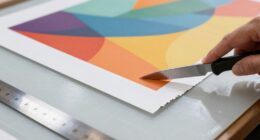
Next, focus on your matting techniques. A well-chosen mat can elevate your digital print, creating visual space and drawing attention to the artwork itself. When selecting a mat, consider the color and thickness. Light-colored mats, like white or cream, are versatile and work well with most images, providing a clean, professional look. Thicker mats add a more substantial feel, while thinner mats keep the focus close to the print. Cutting the mat with precision is essential—use a high-quality mat cutter for a clean, straight edge. You might also experiment with double mats or contrasting colors to create depth and visual interest. Just remember, the mat should not overpower your digital print but instead serve as a subtle frame that enhances its presence. Additionally, understanding the contrast ratio of your framing materials and display environment can influence how vivid and detailed your digital print appears.
When you’re ready to assemble, make sure your digital print is clean and free of fingerprints or dust. Place the print face-up on a flat surface, and position the mat inside the frame, ensuring it’s centered and aligned correctly. Use archival tape or corners to secure the print without damaging it. Close the frame carefully, checking for any gaps or misalignments. Proper framing materials—such as UV-protective glass and acid-free backing—are essential to prevent deterioration and preserve your digital print’s quality. Avoid cheap or non-archival options that can accelerate fading or cause damage over time.

Mat Board Center, Pack of 5, Photo Picture Mats – Acid Free, 4-ply Thickness, White Core – for Pictures, Photos, Framing (8×10 for 2-4×6 White)
Acid-Free Custom Cut White Color Photo Matboards
As an affiliate, we earn on qualifying purchases.
As an affiliate, we earn on qualifying purchases.
Frequently Asked Questions
What Safety Precautions Should I Take When Handling Digital Prints?
When handling digital prints, you should wear gloves to prevent handling hazards like smudges and oils. Handle prints carefully to avoid creases or tears, and always support the edges. Store prints in a cool, dry place, using proper storage techniques to avert damage. Keep your workspace clean and free of dust. By taking these precautions, you protect your prints and ensure they stay in excellent condition during handling and storage.
How Do Different Framing Materials Affect Print Longevity?
You should consider how framing materials affect your print’s longevity. Matte frames reduce glare and are less prone to fingerprints, while glossy frames enhance vibrancy but can show scratches. Opt for UV-protective glass or acrylic to shield your print from harmful rays, preventing fading over time. These choices keep your digital print looking vibrant longer, ensuring it remains a beautiful display piece for years to come.
Can Digital Prints Be Framed Without Glass? Why or Why Not?
You can absolutely frame digital prints without glass, especially if you prefer a sleek, modern look. Using matte or glossy finishes, you might choose float framing to highlight the artwork’s edges and avoid glare. Without glass, your print remains more vibrant and accessible, but be mindful of dust and handling. This approach works well for digital prints, giving them a contemporary feel while protecting the art through careful placement.
What Are Eco-Friendly Framing Options for Digital Prints?
You can choose eco-friendly framing options for your digital prints by selecting frames made from recycled materials like reclaimed wood or recycled plastics. Biodegradable options, such as bamboo or certain biodegradable plastics, also make great sustainable choices. These environmentally conscious materials help reduce waste and lessen your carbon footprint, allowing you to display your artwork beautifully while supporting eco-friendly practices.
How Do Framing Techniques Vary for Different Print Sizes?
Did you know that larger prints often require more sturdy framing to prevent warping? When choosing framing styles, consider print size considerations—smaller prints suit sleek, minimal frames, while larger prints benefit from wider, more supportive borders. Framing style variations depend on print dimensions; you might opt for ornate frames for big prints or simple, thin borders for smaller ones. Adjust your approach to enhance each print’s visual impact and longevity.
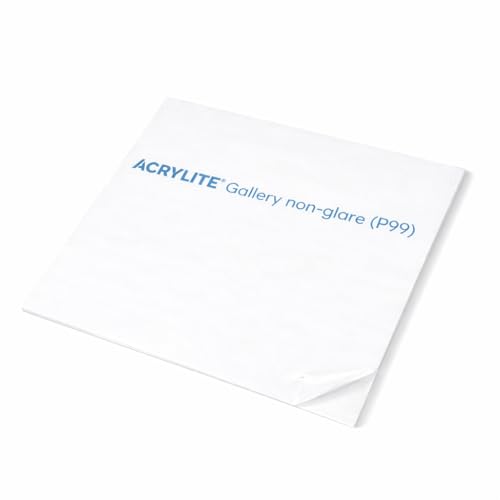
Acrylic Glass Shatterproof 99% UV Protected Conservation Clear OP3 Premium Framing Grade Display For Picture Frame (8 x 10)
Lightweight: Features a lightweight design that makes handling and installation easier compared to traditional glass
As an affiliate, we earn on qualifying purchases.
As an affiliate, we earn on qualifying purchases.
Conclusion
Now that you know the best framing practices, your digital prints will shine like never before. Imagine the vibrant colors and sharp details standing out against a sleek frame, capturing every moment’s essence. But don’t forget—without proper framing, even the most stunning image can fade into obscurity. So, take that extra step. Frame with care, and let your digital art tell its story boldly, emotionally, and forever, standing proud against the passing of time.

Lineco 4 Inches See-Through Archival Polyester Mounting Strips. Acid-Free, Framing Photos, Hinge-Less, Sturdy, Safe, Conservation, Easy, Artwork, Craft, DIY. (Pack of 60)
HIGH QUALITY: Sturdy and safe, these mounting strips are made from conservation quality archival polyester (Melinex or equivalent)…
As an affiliate, we earn on qualifying purchases.
As an affiliate, we earn on qualifying purchases.
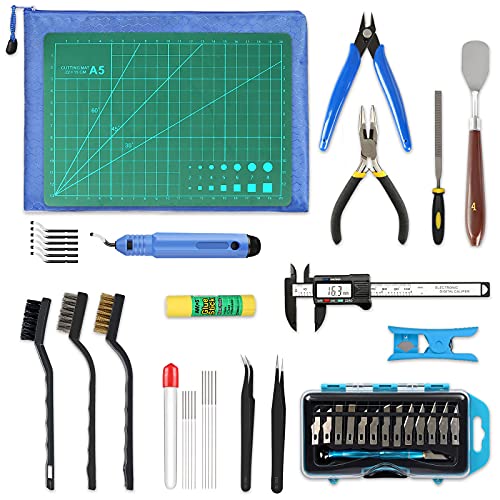
YEETIN 45 Pieces 3D Printer Tools Kit, 3D Printing Accessory Includes Deburring Tool, Digital Caliper, Art Knife Set, Tube Cutter, Storage Bag Suitable for 3D Print Removing, Cleaning, Finishing
PRINTING EXPERIENCE ENHANCED: This product contains all the essential tools a maker needs to successfully 3D print, as…
As an affiliate, we earn on qualifying purchases.
As an affiliate, we earn on qualifying purchases.