Hardware calibration involves physically adjusting device components for high precision and stability, making it ideal for essential tasks. Software calibration, on the other hand, uses digital algorithms to fine-tune measurements quickly and cost-effectively, which suits less demanding needs. Both methods have their benefits and limitations—hardware offers better accuracy, while software provides flexibility. To choose the best approach for your situation, understanding their differences is vital; stay tuned for more insights.

Get art and craft supplies delivered free — and shop member deals
- Fast, free delivery on millions of items
- Access to Prime Big Deal Days deals on October 6–7
- Prime Video, Amazon Music and more included
Key Takeaways
- Hardware calibration involves physical adjustments to device components, while software calibration uses digital algorithms to correct measurement errors.
- Hardware calibration typically offers higher accuracy and stability but requires specialized equipment and longer setup times.
- Software calibration is more cost-effective, flexible, and easier to perform regularly, making it suitable for less critical adjustments.
- Hardware calibration is essential for critical measurements where minimal errors are crucial; software calibration enhances ongoing accuracy.
- Combining both methods can optimize device performance, ensuring baseline accuracy and adaptable fine-tuning.
As an affiliate, we earn on qualifying purchases.
What Are Hardware and Software Calibration and Why Do They Matter?
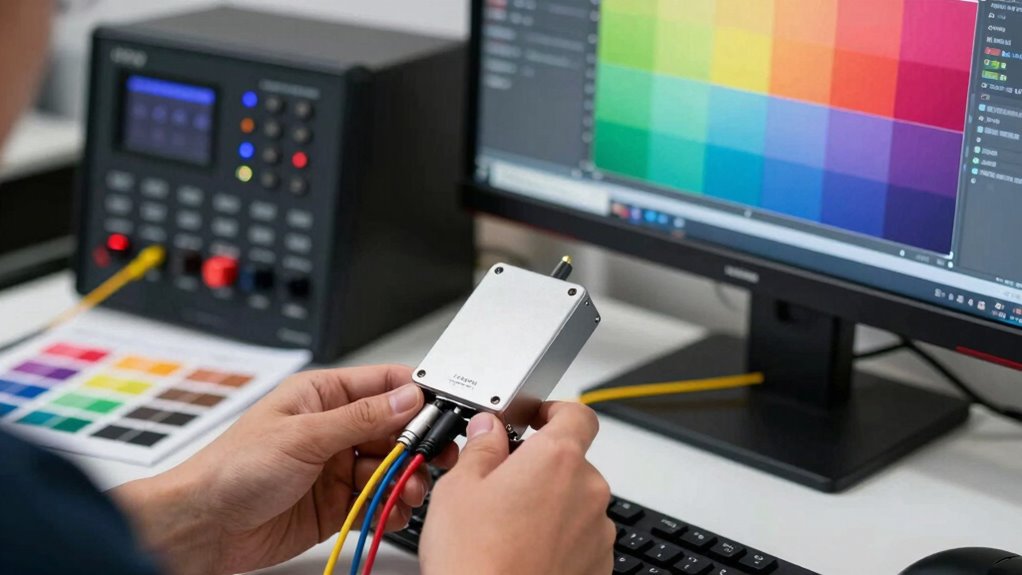
Have you ever wondered how devices like monitors, printers, or sensors maintain accurate readings? That’s where calibration comes in. Hardware calibration involves adjusting the device’s physical components to meet specific calibration standards, guaranteeing consistent accuracy. Software calibration, on the other hand, uses digital adjustments within the device’s firmware or connected software to fine-tune performance. Both methods are essential because they confirm device compatibility with industry standards and precision requirements. Without proper calibration, readings can drift, leading to errors or unreliable data. Whether you’re adjusting hardware settings or configuring software controls, each approach plays a critical role in maintaining device accuracy. Additionally, high refresh rates can significantly impact the performance of devices used for gaming or multimedia applications. Understanding these differences helps you select the right calibration method for each device, ensuring reliable operation and precise measurements. Furthermore, effective travel planning can also benefit from accurate device calibration, ensuring that navigation tools remain dependable during your journeys. In the realm of digital content, calibration is crucial for ensuring that visual and audio outputs are delivered with the highest fidelity possible. Moreover, regular safety checks on portable oil radiators can prevent potential hazards and ensure optimal performance. Proper calibration is also vital in whole-home water systems to ensure filter sizing/flow is optimized for efficiency and reliability.
As an affiliate, we earn on qualifying purchases.
How Hardware Calibration Ensures Precise Device Adjustments
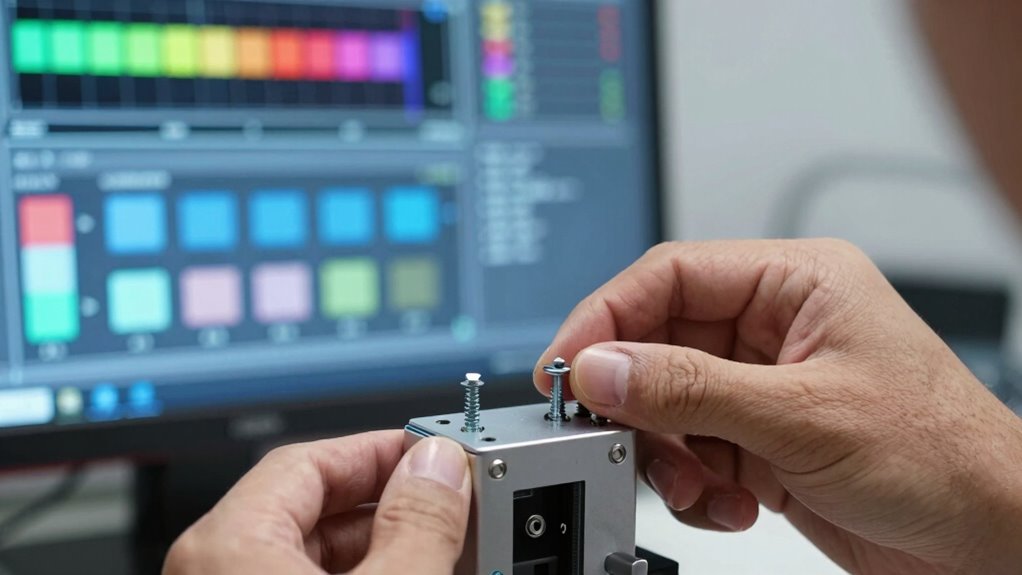
Hardware calibration directly involves physically adjusting a device’s components to align its performance with established standards. This process guarantees you maintain ideal device stability, preventing deviations that could impact accuracy. By calibrating hardware, you correct issues like sensor misalignments or output inconsistencies, directly affecting performance quality. Regular calibration helps keep your device operating at peak precision, especially in environments where small errors matter. Calibration is a critical part of device maintenance practices, as it ensures longevity and reliability. The calibration frequency depends on your device’s usage and environment; more demanding conditions may require more frequent adjustments. Proper hardware calibration minimizes drift and maintains the integrity of measurements or outputs, reducing the risk of costly errors. Ultimately, it provides you with consistent, reliable data and device behavior, which is essential for precision-dependent tasks. Furthermore, caregiver emotional well-being is crucial for those managing high-stress environments, ensuring they can maintain focus during calibration. Regular attention to cycling gear care** can enhance your overall performance and help prevent wear and tear on your devices.
As an affiliate, we earn on qualifying purchases.
How Software Calibration Fine-Tunes Measurements With Data
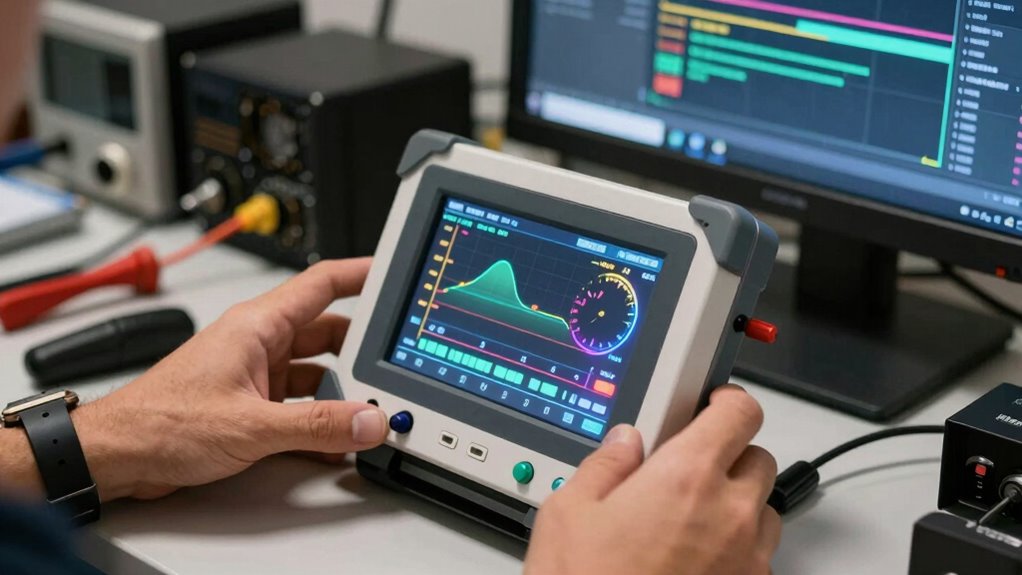
Software calibration improves your measurements by correcting systematic errors based on actual data. It allows you to make precise adjustments, ensuring your results are more accurate. With this fine-tuning, you can trust your data to reflect real-world conditions more reliably. Additionally, incorporating requirements traceability into your calibration process can enhance compliance and ensure that all adjustments align with regulatory standards. Finding trusted resources in your area can further support your calibration efforts by connecting you with experienced professionals. Understanding lubricant specifications can also provide valuable insights into the performance characteristics needed for accurate calibration in specific applications. Moreover, utilizing data-driven methodologies can enhance your overall calibration strategy by aligning it with best practices in the industry. A thorough approach to detecting passive voice can also improve the clarity and effectiveness of your calibration documentation.
Enhances Measurement Accuracy
When calibration data is collected and analyzed properly, software can considerably improve measurement accuracy. By adjusting for sensor alignment issues and correcting deviations from calibration standards, software fine-tunes your measurements. It identifies inconsistencies caused by sensor drift or environmental factors and applies precise corrections based on historical data. This process guarantees your readings stay within the desired accuracy range over time. Software calibration methods can quickly adapt to changing conditions, reducing errors that might go unnoticed with hardware adjustments alone. As a result, you gain more reliable, consistent data, which is essential for making informed decisions. Ultimately, this refined measurement accuracy helps you achieve higher quality results and greater confidence in your data.
Enables Precise Data Adjustment
Because software calibration relies on detailed data analysis, it can make highly precise adjustments to your measurements. By utilizing digital twins and established calibration standards, you can model your equipment’s behavior more accurately. Digital twins simulate real-world conditions, allowing software to identify and correct discrepancies in your data. This process guarantees your measurements stay consistent and reliable. Software calibration fine-tunes data by analyzing patterns and applying corrections based on historical and real-time data, unlike hardware calibration, which adjusts physical components. This data-driven approach helps you achieve maximum accuracy, especially when working with complex systems. Ultimately, it enables you to trust your measurements and make informed decisions, enhancing overall precision and consistency in your processes.
As an affiliate, we earn on qualifying purchases.
Hardware vs. Software Calibration: Pros and Cons

When choosing between hardware and software calibration, you need to take into account the trade-offs in precision and accuracy. Hardware calibration often offers higher accuracy but can be more costly and complex to implement. Conversely, software calibration tends to be more affordable and easier to update, though it may sacrifice some precision. Achieving work-life harmony can also be influenced by how effectively you manage these calibration methods in your workflow. Additionally, understanding accessibility features can enhance how calibration processes are integrated into daily tasks, making them more user-friendly. Incorporating sound healing techniques can further improve focus and reduce stress during calibration processes, ultimately streamlining efficiency. Implementing automated testing can further streamline calibration processes and improve overall efficiency, especially when considering tax planning strategies that optimize resource allocation.
Precision and Accuracy
Hardware calibration often delivers higher precision and consistent accuracy because it directly adjusts physical components, minimizing potential errors from external influences. It guarantees proper sensor alignment, which is essential for reliable measurements. Regular calibration frequency maintains this accuracy over time, preventing drift. Additionally, employing data storage solutions can help ensure that calibration records are securely backed up for future reference. Software calibration, while versatile, depends on algorithms that may introduce minor errors, especially if data inputs are flawed. The table below compares their precision and accuracy aspects:
| Aspect | Hardware Calibration | Software Calibration |
|---|---|---|
| Sensor alignment | Precisely adjusted physically | Estimated via algorithms |
| Calibration frequency | Usually more frequent | Can be less frequent, adaptive |
This comparison highlights how hardware calibration’s physical adjustments often lead to superior precision and accuracy in vital measurements. Additionally, understanding testing accuracy is crucial for selecting the appropriate calibration method.
Cost and Complexity
Sure! Here’s your revised content with the requested changes:
—
Have you ever wondered which calibration method offers a better balance between cost and complexity? Hardware calibration often requires high initial investments in specialized equipment and strict adherence to calibration standards, making it more expensive upfront. It also demands user training to operate and maintain the equipment correctly, adding to ongoing costs. Software calibration, on the other hand, tends to be more cost-effective initially, as it often involves less hardware and setup. However, it requires users to understand calibration procedures deeply, emphasizing user training to ensure accuracy. While software calibration simplifies procedures and reduces hardware costs, it might not meet the strict standards needed for certain applications. Additionally, some industries rely on essential oils for toothache relief to provide natural remedies, highlighting the importance of understanding various calibration methods. Ultimately, your choice depends on your budget, required precision, and the calibration standards you must follow. Furthermore, accurate door swings are crucial in ensuring that spaces are designed efficiently and functionally. Additionally, incorporating innovative composting toilets can enhance bathroom efficiency and comfort while considering overall system calibration. Understanding the importance of straining paint can also improve results in various applications. Familiarizing yourself with drone regulations can further enhance your ability to navigate the complexities of aerial imaging.
—
Feel free to let me know if you need any more adjustments!
Cost and Time: Which Calibration Method Fits Your Needs?
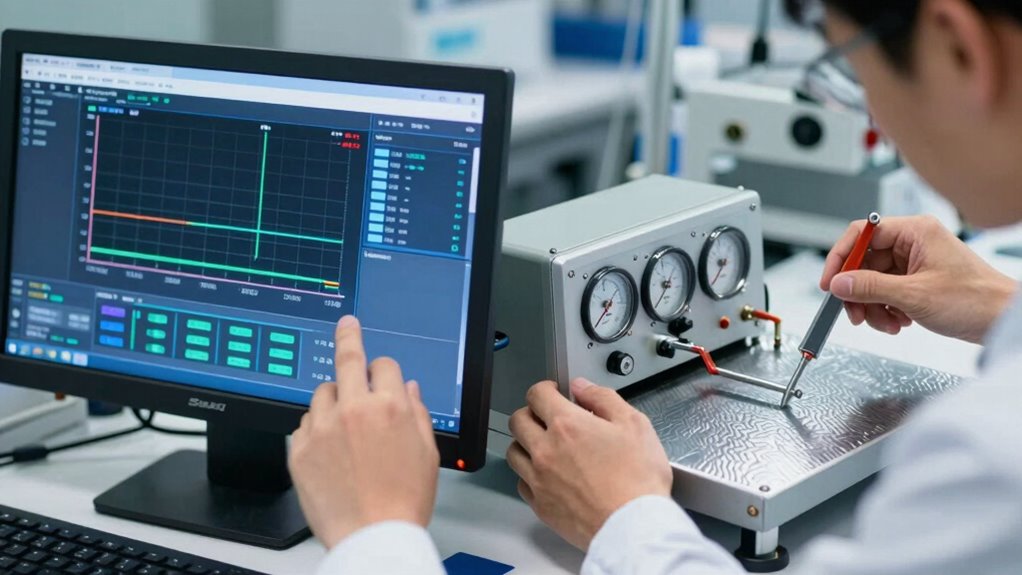
Choosing the right calibration method depends heavily on your budget and schedule. Software calibration typically offers a faster, more cost-effective solution, especially for routine adjustments, but may sacrifice some calibration accuracy and device stability over time. Hardware calibration, while more expensive and time-consuming initially, guarantees higher calibration accuracy and long-term device stability, reducing the need for frequent recalibration.
- Speed: Software calibration can be completed quickly, minimizing downtime.
- Cost: Hardware calibration often involves higher upfront costs, including equipment and labor.
- Long-term reliability: Hardware calibration provides more consistent calibration accuracy over time, guaranteeing device stability.
Assess your needs carefully to balance budget constraints with the importance of precise calibration and device longevity.
Limitations and Benefits of Hardware Calibration
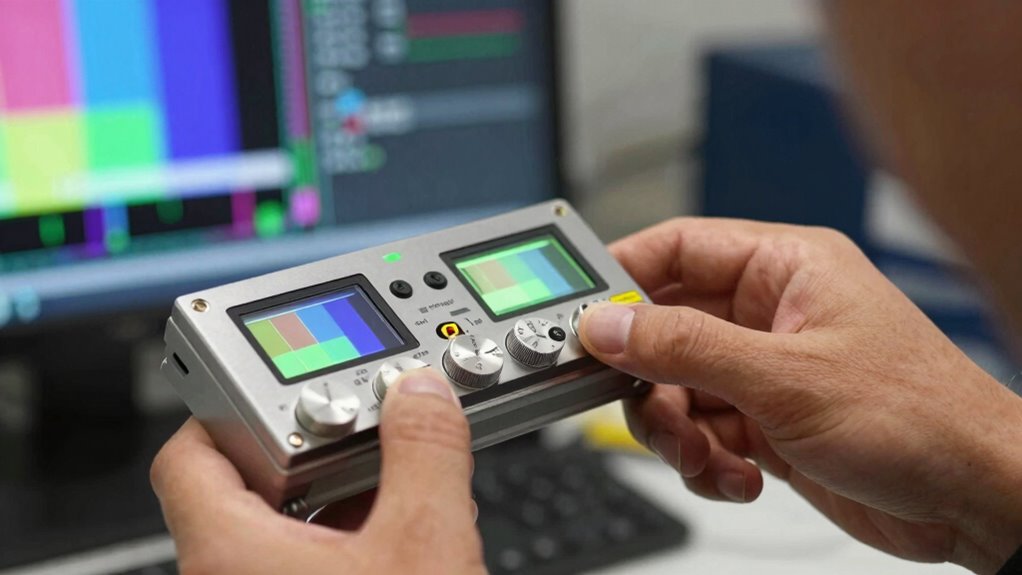
Are you aware of the key advantages and drawbacks of hardware calibration? Hardware calibration offers high accuracy because it uses specialized calibration tools that directly adjust equipment to meet measurement standards. Its primary benefit is precision, making it ideal for critical applications requiring exact results. However, it also has limitations. Hardware calibration often requires expensive equipment and skilled personnel, which can increase costs and setup time. Additionally, it may not be feasible for frequent recalibration, especially in environments with changing conditions. You might also face challenges when calibration tools become outdated or need replacement to maintain measurement standards. Despite these drawbacks, hardware calibration remains essential when absolute accuracy is necessary, but it’s important to weigh its benefits against its costs and logistical constraints.
Benefits and Challenges of Software Calibration
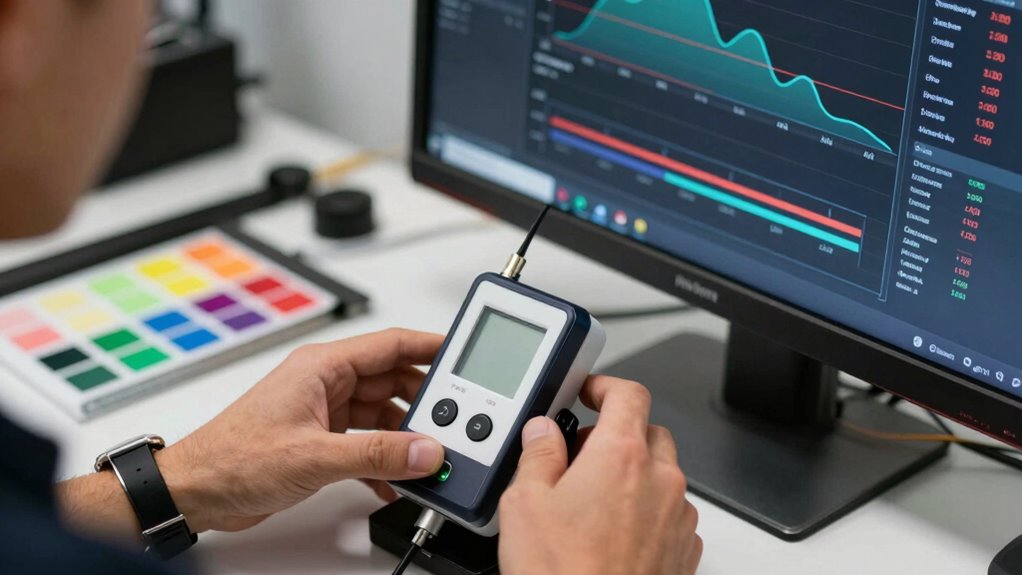
Software calibration offers a flexible and cost-effective way to maintain measurement accuracy without the need for specialized hardware. It allows you to quickly update calibration standards through user-friendly interfaces, reducing downtime and operational costs. The ease of access to calibration data enhances transparency and control, making it simple to track adjustments over time. However, challenges include reliance on software accuracy and potential compatibility issues with different systems. Confirming your calibration standards are properly integrated into the user interface is vital for reliable results. You must also stay vigilant about software updates that could impact calibration integrity. While software calibration provides convenience and adaptability, you need to balance these benefits with the need for rigorous validation to avoid errors. Proper implementation ensures you maximize its advantages effectively.
Choosing the Right Calibration Method: When to Use Hardware, Software, or Both
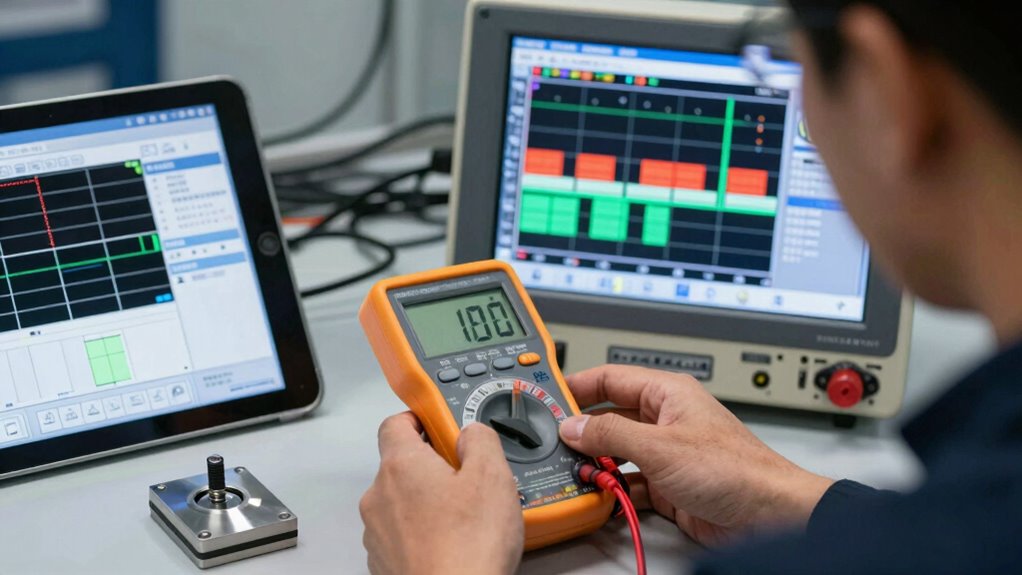
Selecting the appropriate calibration method depends on your specific measurement needs, equipment complexity, and operational environment. If your device requires frequent calibration (high calibration frequency), hardware calibration ensures accuracy and stability over time. For less frequent adjustments or simpler equipment, software calibration can be sufficient and more convenient. Consider user expertise: if you or your team lack technical skills, automated software calibration reduces errors and simplifies the process. In complex systems, combining both methods may be ideal—hardware provides a solid baseline, while software fine-tunes calibration efficiently. Ultimately, assess your operational requirements, calibration schedule, and user capabilities to determine whether hardware, software, or a hybrid approach best fits your calibration strategy.
Frequently Asked Questions
Can Hardware Calibration Permanently Fix Measurement Inaccuracies?
Ever wondered if hardware calibration can truly fix measurement inaccuracies permanently? While hardware calibration adjusts for hardware limitations, it doesn’t guarantee lasting accuracy due to environmental factors or hardware wear. Calibration longevity varies, and over time, inaccuracies may creep back. So, although hardware calibration can considerably improve precision initially, regular recalibration is essential to maintain accuracy in the long run. Would you rely on a one-time fix for ongoing measurement needs?
How Often Should Calibration Be Performed for Optimal Accuracy?
You should perform calibration regularly, typically every 6 to 12 months, to maintain best accuracy. Calibration frequency depends on how often you use your equipment, environmental conditions, and the required measurement precision. More frequent calibration ensures your measurements stay consistent and reliable. Keep an eye on manufacturer recommendations and your specific application needs to determine the best schedule for your calibration routine, guaranteeing sustained measurement precision.
Are There Industry Standards Guiding Calibration Practices?
You might think industry standards limit your flexibility, but they actually provide essential guidance for calibration practices. Industry compliance requires following established calibration protocols to guarantee accuracy and safety. These standards vary across sectors but generally specify calibration frequency, methods, and documentation. By adhering to these protocols, you ensure your equipment remains reliable, meet legal requirements, and maintain consistent quality, simplifying compliance and boosting confidence in your measurements.
Is Software Calibration Effective for All Types of Devices?
Software calibration is effective for many devices, especially those needing digital precision and user convenience. It allows quick adjustments without hardware changes, making it ideal for monitors, printers, or cameras. However, for highly sensitive or industrial equipment, hardware calibration might be necessary to guarantee absolute accuracy. So, while software calibration works well in many cases, it’s not a universal solution—always consider the device’s specific requirements.
What Are the Risks of Improper Calibration Procedures?
Imagine trusting a compass that’s been off since the Age of Exploration—that’s what happens with improper calibration procedures. You risk compromising sensor accuracy, leading to inaccurate data and potential system failures. Poor calibration can cause equipment to drift out of alignment, resulting in costly repairs and downtime. To avoid these risks, follow precise calibration procedures, ensuring devices maintain their accuracy and reliability over time.
Conclusion
Choosing between hardware and software calibration depends on your specific needs. For example, if you’re managing a manufacturing line, hardware calibration guarantees precision. However, for routine adjustments or data analysis, software calibration offers flexibility. Remember, combining both can optimize accuracy and efficiency. By understanding their strengths and limitations, you can select the right method—saving time and money while maintaining high quality. Make informed choices to keep your devices calibrated and your results reliable.
Fall Picks
fall essentials
As an affiliate, we earn on qualifying purchases.