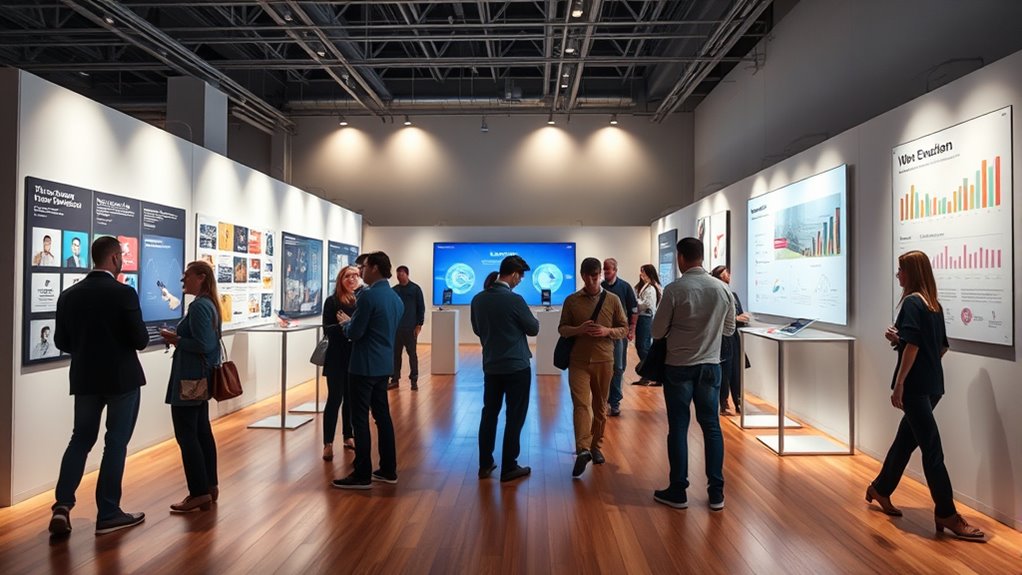

To measure your exhibition’s success and impact, focus on visitor engagement indicators like foot traffic, dwell time, and participation in activities. Gather feedback from exhibitors about lead quality and satisfaction to assess organization and reach. Combine these insights with behavioral observations to evaluate interactions and overall experience. Monitoring safety and layout effectiveness also plays a role. Keep tracking these metrics, and you’ll uncover ways to enhance future events—discover how to optimize your results as you continue.
Key Takeaways
- Use visitor engagement metrics like foot traffic, dwell time, and participation to gauge event effectiveness.
- Collect qualitative feedback from visitors and exhibitors to assess satisfaction and perceived value.
- Analyze booth placement, display quality, and safety standards to understand their influence on engagement.
- Measure the quality of interactions and relationship-building opportunities beyond simple attendance numbers.
- Integrate quantitative data and qualitative insights for a comprehensive evaluation of exhibition success and impact.
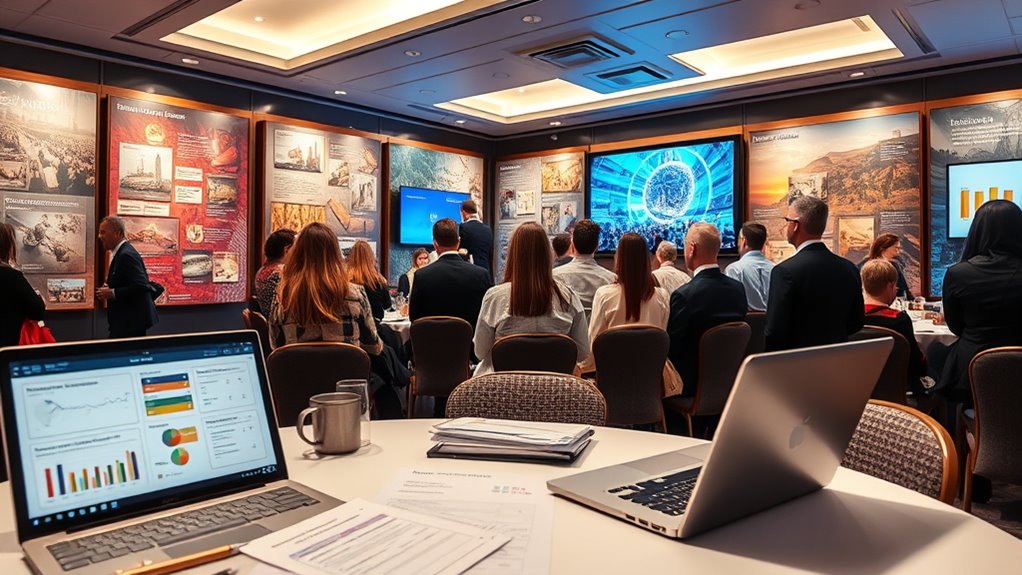
Evaluating an exhibition is essential to understanding its success and identifying areas for improvement. When you focus on visitor engagement, you gain valuable insights into how effectively your event captures and holds attendees’ attention. High visitor engagement indicates that your exhibition resonates with your audience, encouraging them to explore displays, interact with exhibits, and spend more time at your event. To measure this, you can track metrics such as foot traffic, dwell time, and participation levels in interactive activities. These data points reveal whether your content is compelling and if your layout facilitates easy navigation. Additionally, observing visitor behavior provides qualitative insights—are they asking questions, taking photos, or sharing their experiences? These indicators help you understand what works and what doesn’t, guiding adjustments for future exhibitions. Incorporating newborn safety standards into your display setup can also enhance visitor confidence and engagement, especially when presenting child-related products or services.
Focusing on visitor engagement reveals what excites your audience and guides improvements for future exhibitions.
Equally important is collecting and analyzing exhibitor feedback. Exhibitors are your partners in creating a successful event, so their perspectives are invaluable. After the exhibition, reach out to gather their insights on how well the event met their objectives. Were their booths visited sufficiently? Did they generate quality leads? How did the event’s organization support or hinder their engagement with visitors? Their feedback sheds light on logistical aspects, booth placement, and overall satisfaction. If exhibitors felt they lacked visibility or faced logistical hurdles, addressing these issues can substantially enhance future iterations. Furthermore, happy exhibitors are more likely to participate again and recommend your event to others, amplifying its reputation.
To streamline this process, develop structured surveys that prompt specific feedback on visitor engagement and exhibitor experiences. Use open-ended questions to uncover nuanced insights and quantitative scales to measure satisfaction levels. Combining these responses with your visitor data allows you to identify patterns and correlations—such as whether certain booth locations or display types attracted more visitors. By analyzing both visitor engagement metrics and exhibitor feedback, you get a holistic view of your exhibition’s overall impact. This comprehensive approach ensures you’re not only measuring numbers but also understanding the quality of interactions and relationships fostered during your event.
In the end, evaluating an exhibition isn’t just about tallying attendance; it’s about understanding the experience from multiple perspectives. By focusing on visitor engagement and listening closely to exhibitor feedback, you can refine your strategies, enhance participant satisfaction, and elevate the success of your future exhibitions. This ongoing process of assessment transforms your event from a one-time gathering into a continually improving platform that meets and exceeds expectations.
Top picks for "exhibition evaluation measur"
Open Amazon search results for this keyword.
As an affiliate, we earn on qualifying purchases.
Frequently Asked Questions
How Can I Improve Exhibition Attendance for Future Events?
You can improve exhibition attendance by focusing on engaging promotional strategies that attract your target audience. Use social media, email campaigns, and local partnerships to boost visibility. Additionally, prioritize visitor retention by creating memorable experiences, interactive displays, and exclusive offers. These efforts encourage repeat visits and word-of-mouth promotion, ultimately increasing attendance at future events. Consistently analyze what works best to refine your approach and maximize engagement.
What Are the Most Effective Tools for Gathering Visitor Feedback?
Think of digital surveys and interactive kiosks as your modern-day oracle, revealing visitor insights effortlessly. You can gather honest feedback quickly, allowing for real-time adjustments. Digital surveys are accessible from attendees’ devices, making it easy for visitors to share their thoughts. Interactive kiosks engage visitors directly, encouraging detailed responses. Both tools streamline data collection, giving you clear, actionable insights to improve future exhibitions and enhance visitor experience effectively.
How Do I Measure Long-Term Exhibitor Engagement?
You can measure long-term exhibitor engagement by analyzing digital analytics to track their online interactions and content engagement over time. Use visitor segmentation to identify exhibitor groups showing sustained interest or repeat participation. Monitoring these patterns helps you assess ongoing involvement, understand exhibitor needs, and tailor future strategies to foster deeper, lasting relationships. Combining digital analytics with visitor segmentation provides a thorough view of exhibitor engagement beyond the event.
What Budget Considerations Should I Keep in Mind for Evaluation?
Imagine uncovering hidden costs that could make or break your evaluation plan. You should consider a thorough cost analysis to identify direct and indirect expenses, making sure your budget covers tools, data collection, and analysis. Resource allocation is key—prioritize essential metrics and tools without overspending. Keep some funds reserved for unexpected challenges. By balancing these elements, you ensure your evaluation stays on track and delivers meaningful insights without breaking the bank.
How Can Technology Enhance Exhibition Impact Assessment?
You can enhance your exhibition impact assessment by leveraging digital analytics to track visitor engagement and behavior in real-time. Incorporate virtual reality experiences to gather immersive feedback and provide interactive insights. These technologies enable you to measure visitor interactions more precisely, identify areas for improvement, and demonstrate your exhibition’s success effectively. Using digital analytics and virtual reality makes your evaluation more dynamic, data-driven, and impactful.
Conclusion
By evaluating your exhibition, you’re planting seeds for future growth and nurturing a vibrant garden of insights. The success blooms like a radiant sunrise, illuminating what worked and what needs tending. Impact weaves a tapestry of connections, each thread representing a visitor’s experience. When you measure carefully, you’re steering your creative ship through a vast ocean, charting courses toward even richer horizons. Remember, every evaluation is a compass guiding your next masterpiece.