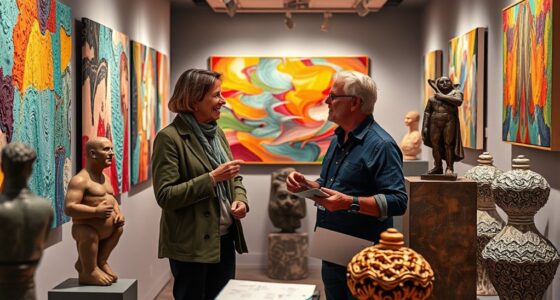
To plan a themed art exhibition, start by defining a clear unifying concept, such as style, era, or social issue, and select artworks that tell a cohesive story. Organize the layout thoughtfully, considering flow and viewer experience, and incorporate contextual info like artist statements. Develop targeted marketing strategies using digital and traditional channels to attract your audience. Engaging activities and promotions will heighten interest, and combining strong curation with strategic promotion helps create a memorable, impactful event—learn more on how to fine-tune each step.

Get art and craft supplies delivered free with Prime
- Fast, free delivery on millions of items
- Prime Video, Amazon Music and more included
- Member-only deals all year
Key Takeaways
- Define a clear, cohesive theme and select artworks that support and enhance the concept.
- Organize the exhibition layout to guide viewers through the narrative, considering flow and visual interaction.
- Develop targeted marketing strategies using both digital and traditional channels to attract your desired audience.
- Plan engaging events and interactive elements to foster visitor participation and deepen the thematic experience.
- Integrate curation and marketing efforts to maximize visibility, interest, and overall impact of the exhibition.

Planning a themed art exhibition requires careful organization and a clear vision. You need to start by defining the concept that will unify your display—whether it’s a specific style, era, or social issue. Once you have your theme in mind, focus on curating artworks that align with this concept. Curating artworks involves selecting pieces that tell a cohesive story or evoke a particular emotion, guaranteeing each work contributes meaningfully to the overall narrative. Take the time to research artists, review their portfolios, and consider how their pieces will interact with one another. This process isn’t just about filling space; it’s about creating a dialogue between the works that will resonate with your audience. Authentic storytelling can also enhance the emotional impact of your exhibition, making it more memorable for visitors.
A well-curated exhibition weaves artworks into a compelling narrative that resonates with viewers.
As you curate, think about the flow and arrangement. Will you display works chronologically, thematically, or in a more abstract layout? The way you organize the pieces can dramatically influence how viewers experience the show. Pay attention to scale, color, and medium, and consider how these elements interact across the exhibition space. Don’t forget to include contextual information, like artist statements or installation notes, to deepen viewers’ understanding and engagement.
Simultaneously, developing effective marketing strategies is vital for attracting visitors. Your goal is to reach your target audience and generate buzz around the exhibition. Use a mix of digital and traditional marketing channels. Social media platforms are powerful tools—share sneak peeks, artist features, and behind-the-scenes content to build anticipation. Craft compelling press releases and send them to local media, art blogs, and community newsletters. Visual promotion is key, so invest in high-quality images of your curated artworks and create eye-catching posters or flyers.
Partnering with local organizations or influencers can also expand your reach. Consider hosting opening receptions, artist talks, or panel discussions to draw more visitors and create a sense of event. Engagement is essential; encourage visitors to share their experience online using specific hashtags and consider creating interactive elements within the exhibition to foster participation. Remember that understanding audience preferences and behaviors can help tailor your marketing efforts more effectively, especially when leveraging audience engagement strategies.
Throughout the planning process, keep in mind that both curating artworks and marketing strategies work hand in hand. A well-curated exhibition will attract interest, and strategic marketing will guarantee that interest translates into attendance. Regularly evaluate your marketing efforts’ effectiveness and be ready to adapt your approach. The combination of thoughtful curation and targeted promotion will help you create a memorable, impactful themed art exhibition that resonates with viewers and stands out in your community.
As an affiliate, we earn on qualifying purchases.
Frequently Asked Questions
How Do I Choose the Right Theme for My Exhibition?
Choosing the right theme starts with your artistic inspiration; think about what excites and motivates you. Consider a concept that allows for thematic coherence, tying your pieces together seamlessly. Reflect on current trends, personal experiences, or cultural topics that resonate deeply. By aligning your inspiration with a clear, cohesive theme, you’ll create an engaging exhibition that connects with your audience and showcases your artistic vision effectively.
What Is the Ideal Budget for a Themed Art Show?
Think of budgeting as your canvas—without overpainting, it stays vibrant. For a themed art show, aim for a budget that covers artistic collaborations, marketing strategies, and venue costs, typically between 10-30% of your overall project. Keep it flexible to adapt as you grow, and remember, a well-planned budget guarantees your creative vision stays alive, just like a masterpiece that endures beyond the gallery walls.
How Can I Attract Diverse Audiences to My Exhibition?
To attract diverse audiences, you should focus on community outreach and cultural inclusivity. Engage local organizations, schools, and cultural groups to promote your exhibition and guarantee it reflects a variety of perspectives. Use inclusive language and diverse imagery in your marketing. Host multicultural events or artist talks to invite different communities to participate. By actively fostering an inclusive environment, you’ll draw in a broader, more engaged audience.
What Permits and Insurance Are Necessary for Public Displays?
When planning a public display, you need to secure the necessary permits and insurance. You should obtain cultural permits if your exhibit features specific cultural content or artifacts. Additionally, you must have liability coverage to protect against potential accidents or damages. Check local regulations to make sure you’ve met all requirements, and work with insurance providers to get the right coverage, so your exhibition runs smoothly and safely.
How Do I Handle Artwork Security and Insurance Concerns?
Imagine safeguarding fragile masterpieces while tackling insurance concerns head-on. You should implement artwork security measures like surveillance cameras, secure display cases, and controlled access to deter theft or damage. Simultaneously, review your insurance policies to guarantee thorough coverage for theft, vandalism, or accidents. Regularly update security protocols and communicate with your insurer to stay protected, giving you peace of mind knowing your artwork is safe and insured throughout the exhibition.
As an affiliate, we earn on qualifying purchases.
Conclusion
As you wrap up your planning journey, remember that your themed art exhibition is like a vibrant tapestry, woven from countless creative threads. With each carefully chosen piece, you’re painting a story that invites viewers into a world of imagination and emotion. Your vision becomes a guiding star, leading visitors through a labyrinth of inspiration. When the curtain rises, let your passion illuminate the space, turning your exhibition into a memorable masterpiece etched into hearts forever.
As an affiliate, we earn on qualifying purchases.
As an affiliate, we earn on qualifying purchases.
Halloween Picks
halloween
As an affiliate, we earn on qualifying purchases.