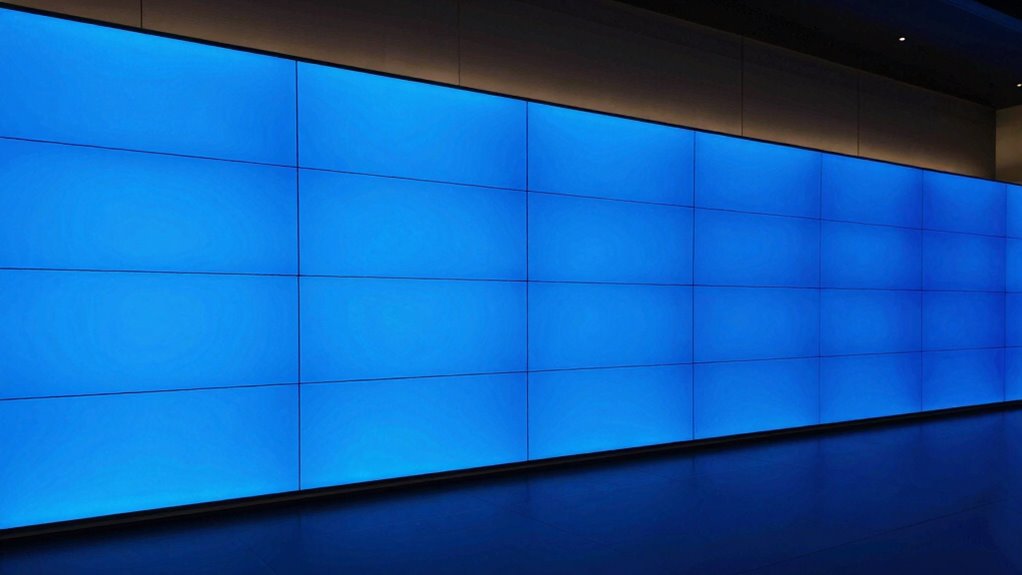

To create a seamless, synchronized video wall, you need high-quality hardware with bezel correction and uniform calibration capabilities. Carefully align and mount your displays, then perform color calibration and adjust bezel correction to hide gaps. Use advanced synchronization tools and processors to guarantee all screens update simultaneously, preventing lag and flickering. Regular maintenance and testing are key to keeping everything in perfect sync. Keep exploring for more tips on achieving flawless visuals and performance.

Get art and craft supplies delivered free — and shop member deals
- Fast, free delivery on millions of items
- Access to Prime Big Deal Days deals on October 6–7
- Prime Video, Amazon Music and more included
Key Takeaways
- Use high-quality video processors with bezel correction and synchronization features to minimize gaps and ensure seamless content delivery.
- Calibrate all displays for consistent color, brightness, and contrast to prevent visible seams and mismatched visuals.
- Mount screens precisely with level adjustments and narrow bezels to improve physical alignment and reduce gaps.
- Synchronize input signals across all displays to eliminate lag, flickering, and misalignment issues.
- Regularly maintain and monitor hardware and software settings for consistent performance and optimal visual continuity.
video wall bezel correction hardware
As an affiliate, we earn on qualifying purchases.
As an affiliate, we earn on qualifying purchases.
Recognize the Main Seam and Sync Challenges in Video Walls
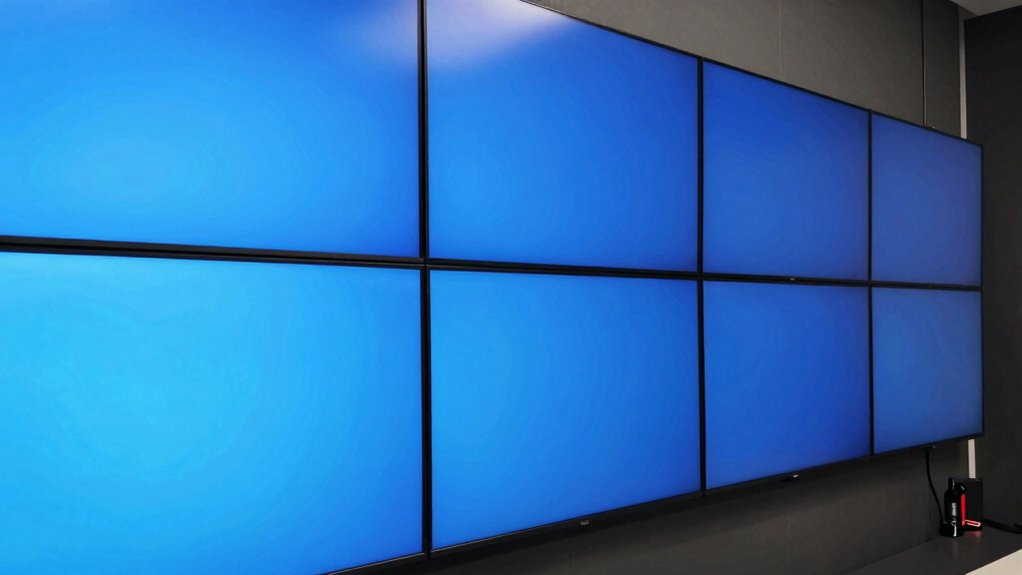
When setting up a video wall, understanding the main seam and sync challenges is essential to achieving a seamless display. One key issue is color uniformity; different screens can display slight color variations, making seams obvious. Bezel correction helps minimize this by adjusting for the physical gaps between screens, but it’s not a complete fix. You need to guarantee consistent calibration across all panels to prevent mismatched brightness and color. Additionally, achieving color accuracy is vital for ensuring that all displays present a uniform visual experience. Establishing a routine for gear maintenance can also enhance the longevity of your setup.
To enhance your setup, consider incorporating lighting techniques that can further reduce the visibility of seams. Sync challenges also arise when displays don’t update simultaneously, causing flickering or misalignment. Recognizing these issues early allows you to plan for proper calibration and synchronization techniques. Addressing color uniformity and bezel correction from the start helps create a cohesive, professional-looking video wall free of distracting seams and sync problems. Additionally, exploring digital concepts can provide innovative solutions to enhance the overall viewer experience.
professional video wall calibration tools
As an affiliate, we earn on qualifying purchases.
As an affiliate, we earn on qualifying purchases.
Select the Best Hardware for Seamless and Synchronized Displays

Choosing the right hardware is essential to guarantee your video wall displays seamlessly and stays synchronized. Start with a high-quality video processor that supports bezel correction to minimize visible gaps between screens. Look for displays with consistent color calibration capabilities to ensure uniform color output across all panels, preventing mismatched hues that break the visual flow. Invest in a reliable synchronization system, such as a control platform that manages timing and signal distribution precisely. Hardware with built-in calibration features simplifies setup, helping you maintain uniform brightness, contrast, and color. Additionally, choose displays with narrow bezels and adjustable mounts to enhance the seamless appearance. Proper hardware selection ensures your video wall remains visually cohesive, with perfect synchronization and minimal distractions.
synchronized video wall controller
As an affiliate, we earn on qualifying purchases.
As an affiliate, we earn on qualifying purchases.
Calibrate and Configure Your Video Wall for Flawless Alignment

Calibrating and configuring your video wall is essential to achieving flawless alignment and a seamless visual experience. Start with color calibration to verify consistent hues across all screens, preventing color discrepancies that can distract viewers. Use calibration tools or software to match brightness, contrast, and color temperature. Robot mowers have similar calibration needs when ensuring optimal performance in varied conditions. Additionally, consider the importance of mount leveling kits to ensure that your displays are properly aligned and prevent misalignment during installation. Bezel correction is equally important; adjust settings to compensate for the physical gaps between displays, minimizing visible seams. Proper bezel correction aligns image edges, creating a cohesive picture. Take your time to fine-tune these settings, as small adjustments can notably improve overall display quality. Once calibrated, review the entire wall from different angles to confirm consistent color and seamless image alignment. This careful setup guarantees a professional, polished appearance for your video wall. Additionally, consider the implications of ethical consumerism when sourcing your display equipment, as it can influence both quality and sustainability.
As an affiliate, we earn on qualifying purchases.
Apply Advanced Technologies to Prevent Gaps and Lag

To effectively prevent gaps and lag in your video wall, leveraging advanced technologies is essential. Modern display processors and synchronization tools ensure seamless content delivery, minimizing lag and visual discrepancies. Content customization features allow you to tailor visuals precisely to each screen’s specifications, maintaining consistent aesthetic design across the entire wall. These technologies synchronize multiple inputs and adjust for slight variations in display timing, preventing gaps caused by misalignment. By integrating hardware and software solutions that optimize data flow, you guarantee smooth playback without noticeable lag. Implementing these advanced tools not only enhances visual continuity but also simplifies management, giving you better control over your video wall’s performance and appearance.
Test and Maintain Your Video Wall for Perfect Performance
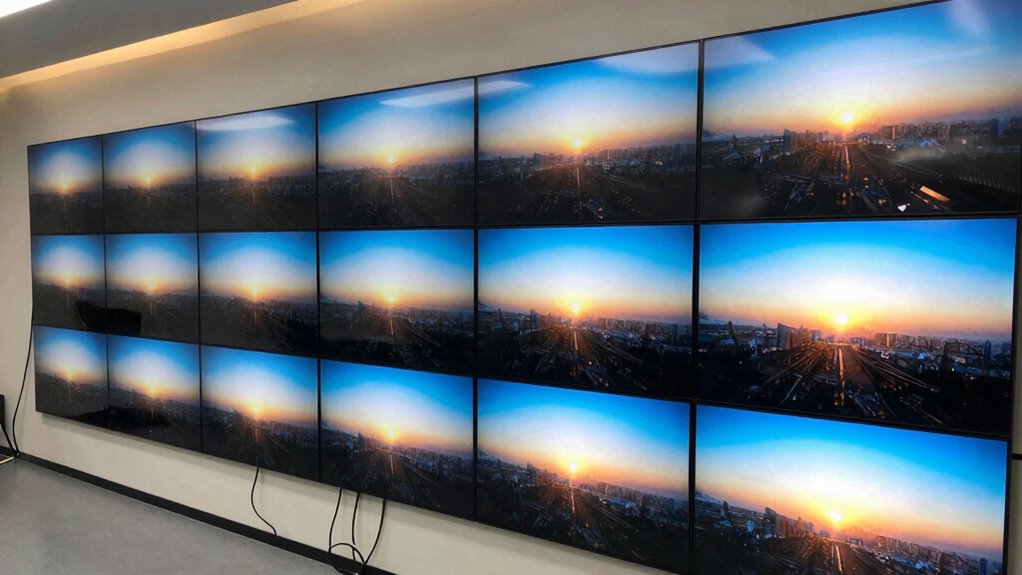
Regular testing and maintenance are essential to keep your video wall performing at its best. Regularly check for any display inconsistencies, such as color mismatches, dead pixels, or sync issues, to assure seamless visuals. Updating your content customization options keeps your display fresh and engaging, boosting audience engagement. Additionally, incorporating safe window cleaning techniques can help maintain the clarity of your screens. It’s also important to regularly clean your screens using appropriate cleaning solutions that won’t damage the display. Effective travel planning can also serve as a reminder to regularly monitor hardware connections and software settings to prevent potential lag or gaps. Cleaning screens and tightening loose cables to avoid performance hiccups is crucial. Furthermore, consider eco-friendly disposal methods for any outdated components to minimize environmental impact. Schedule routine maintenance to identify and address problems early, reducing downtime and preserving image quality. By consistently testing and maintaining your video wall, you guarantee a professional, eye-catching display that captivates your audience and delivers flawless content every time. Additionally, consider using calibrated instruments to test measurement accuracy, ensuring that your video wall consistently outputs the best possible visuals.
Frequently Asked Questions
What Are the Cost Differences Between Various Video Wall Configurations?
The cost comparison between different video wall configurations varies widely. Basic setups with fewer, smaller screens are more affordable, while large, high-resolution, bezel-less displays cost substantially more. Modular configurations offer flexibility but can increase expenses due to additional hardware and installation. Your choice depends on your budget, desired resolution, and seamlessness. Carefully evaluate configuration options to balance your visual goals with your financial constraints.
How Does Ambient Lighting Affect Video Wall Performance?
Ambient effects and lighting influence your video wall’s performance by impacting visibility and image clarity. Bright ambient lighting can wash out the display, making colors appear dull and details hard to see. Conversely, dim lighting enhances contrast and color vibrancy. You should control ambient effects by optimizing the lighting environment around your wall, ensuring consistent, balanced lighting to minimize glare and reflections, which helps maintain sharp, vivid visuals.
Can DIY Installation Ensure Professional-Quality Results?
DIY installation can definitely aim for professional results if you’re precise, patient, and well-prepared. While it might seem like a challenge to match the quality of professionals, careful planning, proper tools, and attention to detail make it possible. You’ll need to focus on seamless mounting, accurate calibration, and avoiding common pitfalls like uneven gaps or sync issues. With dedication, your DIY video wall can look polished and impressive, rivaling expert installations.
What Are the Best Practices for Cable Management?
You should prioritize organized cable routing to prevent clutter and interference, ensuring easy maintenance and a sleek look. Use cable ties, clips, or conduits to secure cables along the frame or wall, reducing strain and accidental disconnections. Efficient power distribution is essential; connect power supplies properly, avoid overloading circuits, and keep power cables separate from signal cables. This approach minimizes sync issues and maintains a professional, seamless video wall appearance.
How Often Should Firmware and Software Be Updated?
You should regularly update firmware and software to guarantee peak performance and avoid sync issues on your video wall. Check for firmware updates at least once a month, or whenever the manufacturer releases new versions. Keep your software synchronized by installing updates promptly and following manufacturer instructions. This proactive approach minimizes bugs, enhances compatibility, and prevents ugly seams or sync problems, ensuring a seamless, high-quality visual experience.
Conclusion
With the right tools and careful tuning, your video wall can shine like a seamless tapestry woven from vibrant images, free of distracting seams and sync issues. Think of it as orchestrating a symphony where every instrument plays in harmony, creating a mesmerizing display that captures attention. Keep testing and maintaining your setup, and you’ll enjoy a flawless visual masterpiece that leaves viewers captivated—truly a window into perfection in motion.
Fall Picks
fall essentials
As an affiliate, we earn on qualifying purchases.