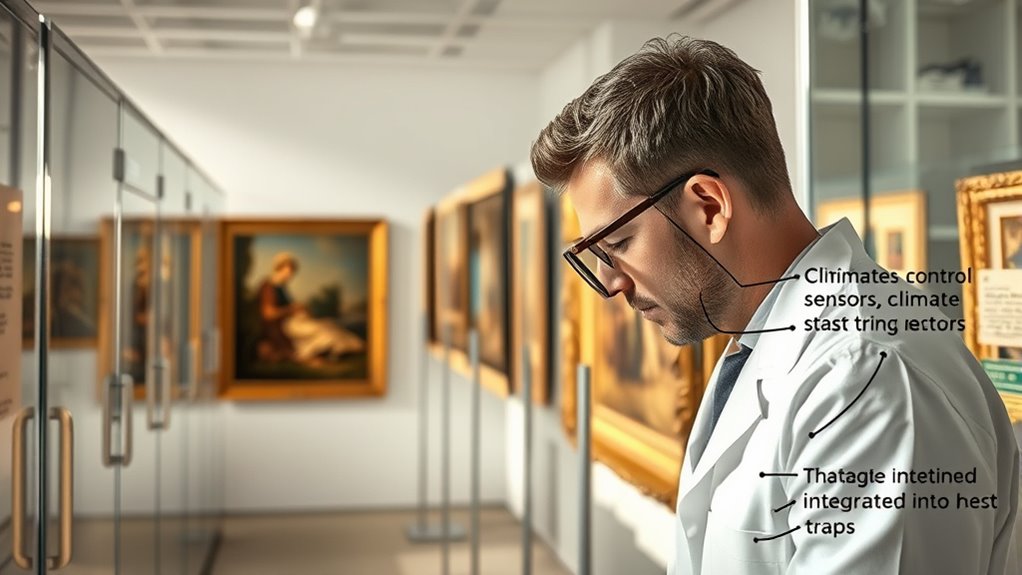

Integrated Pest Management in art collections involves using a combination of biological, chemical, and monitoring techniques to prevent and control pests, safeguarding your artworks from damage. You’ll focus on natural predators, targeted chemical treatments, and regular pest monitoring to keep infestations in check while minimizing harm to delicate artifacts. This balanced approach promotes a healthy environment and long-term preservation. If you want to explore effective strategies tailored to your collection, there’s more to discover beyond this overview.

Get art and craft supplies delivered free — and shop member deals
- Fast, free delivery on millions of items
- Access to Prime Big Deal Days deals on October 6–7
- Prime Video, Amazon Music and more included
Key Takeaways
- IPM in art collections combines biological, chemical, and monitoring methods to control pests while minimizing damage to artworks.
- Biological control uses natural predators to target specific pests, reducing chemical reliance and environmental impact.
- Chemical treatments are applied judiciously when pest infestations are severe, ensuring safety for artifacts.
- Regular monitoring and accurate pest identification inform targeted, data-driven pest management strategies.
- The goal is to preserve collection integrity, prevent pest damage, and promote sustainable, long-term pest control solutions.

Have you ever wondered how farmers and gardeners control pests effectively without overusing chemicals? It’s a question that’s just as relevant in the world of art collections, where the health of delicate artifacts depends on careful pest management. Integrated Pest Management, or IPM, offers a strategic approach that balances various methods to keep pests at bay while minimizing damage to valuable works. Central to IPM is understanding that relying solely on chemical treatments can be risky, potentially harming artwork and the environment. Instead, IPM promotes the use of biological control methods alongside chemical treatments, creating a more sustainable and effective pest control system.
Biological control plays a vital role when managing pests in art collections. This approach involves introducing natural predators or beneficial organisms that target specific pests without harming the artifacts or the environment. For example, tiny parasitic wasps can be used to control pest populations like mold mites or insect larvae that threaten paintings, textiles, or wooden objects. These natural predators are selective, meaning they focus only on the pests, reducing the need for broad-spectrum chemical controls that might damage sensitive materials. By fostering a balanced ecosystem within storage or display areas, you can suppress pest populations naturally and sustainably. This method not only reduces chemical exposure but also minimizes residual contamination that could be absorbed by or deposited on artwork.
However, there are situations where chemical treatments become necessary, especially when pest infestations are severe or rapidly spreading. IPM advocates for the judicious and targeted use of these chemicals, rather than blanket applications. When chemical treatments are employed, they should be chosen carefully to confirm they’re effective against specific pests and safe for the materials involved. Using integrated strategies, you might combine chemical controls with biological methods, applying them at the right time and in precise quantities. This integrated approach helps prevent overreliance on chemicals, which can lead to issues like chemical residues or deterioration of artworks, and guarantees you’re managing pests responsibly. Incorporating pest monitoring**** ensures that interventions are based on accurate data, reducing unnecessary chemical use.
In practice, IPM for art collections involves regular monitoring, identifying pests accurately, and employing a combination of strategies tailored to each situation. Biological control reduces the need for chemicals and preserves the integrity of artworks, but chemical treatments can serve as a backup when pests become unmanageable through natural means alone. The key is balancing these tools carefully, keeping pest populations under control while protecting the collection’s environment and the artifacts themselves. This adaptive, thoughtful approach ensures that your collection remains safe and preserved for future generations, all while minimizing the impact of pest control methods on your valuable treasures.
art collection pest control products
As an affiliate, we earn on qualifying purchases.
As an affiliate, we earn on qualifying purchases.
Frequently Asked Questions
How Often Should Pest Inspections Be Conducted in Art Collections?
You should conduct pest inspections at least quarterly to guarantee effective pest monitoring and early detection. Regular inspection frequency helps catch infestations before they cause significant damage. Always document each inspection and adjust the schedule based on the collection’s environment and risk level. Consistent pest monitoring not only maintains the collection’s integrity but also helps you stay ahead of potential pest problems, safeguarding your artworks effectively.
Are There Eco-Friendly Pest Control Options Suitable for Art Environments?
Yes, there are eco-friendly pest control options suitable for art environments. You can use eco-friendly pesticides that are less toxic and safer for art collections, or natural deterrents like pheromone traps and essential oils such as neem or citrus. These options help you manage pests effectively while minimizing risks to artwork and the environment. Always guarantee you’re choosing methods approved for sensitive environments and follow safety guidelines.
What Are the Signs of Pest Infestation in Artworks?
Like a detective uncovering clues, you’ll notice pest signs such as tiny holes, frass, or webbing on your artworks. You might see surface damage, discoloration, or mold, which indicate pest activity. These subtle hints are often early warnings of infestation, risking artwork damage if ignored. Stay vigilant, regularly inspect your pieces closely, and act promptly to prevent pests from causing irreversible harm to your cherished collection.
How Does Climate Control Influence Pest Management Strategies?
Climate control plays a vital role in pest management strategies by maintaining ideal humidity control and temperature regulation. You should guarantee consistent conditions to prevent pests from thriving, as fluctuations can create perfect environments for infestations. By stabilizing these factors, you reduce pest activity and protect your collection. Regularly monitoring and adjusting climate controls helps create an unfriendly environment for pests, safeguarding your artworks effectively.
Can Integrated Pest Management Be Combined With Conservation Efforts?
Your efforts can save priceless artworks by combining pest management with conservation. Integrated pest management (IPM) seamlessly integrates pest monitoring and conservation strategies, creating a shield that protects collections from destruction. By coordinating these approaches, you guarantee pests are controlled without harming the art, making preservation efforts more effective. This powerful combination safeguards cultural treasures, allowing future generations to marvel at their beauty, as if they’d been untouched by time itself.
biological pest control for art storage
As an affiliate, we earn on qualifying purchases.
As an affiliate, we earn on qualifying purchases.
Conclusion
By implementing integrated pest management, you not only protect your art collection but also create a healthier environment. It’s funny how a simple, proactive approach can prevent costly damage, just like how catching a small crack early saves a whole wall later. When you stay vigilant and apply these strategies, you’ll find that safeguarding your art becomes second nature—almost like the art itself is quietly watching over you, grateful for the care you give it.
As an affiliate, we earn on qualifying purchases.
art conservation chemical treatments
As an affiliate, we earn on qualifying purchases.
As an affiliate, we earn on qualifying purchases.
Fall Picks
fall essentials
As an affiliate, we earn on qualifying purchases.