To succeed in jewelry metalworking, you need to master soldering, casting, and finishing techniques safely. Use the right tools and work in well-ventilated areas with protective gear to avoid hazards from heat, fumes, and splashes. Slowly heat metals, organize your workspace, and handle materials carefully. Proper safety precautions guarantee quality results and prevent accidents. Keep exploring these essential skills, and you’ll discover how to craft beautiful, professional jewelry pieces.

Get art and craft supplies delivered free with Prime
- Fast, free delivery on millions of items
- Prime Video, Amazon Music and more included
- Member-only deals all year
Key Takeaways
- Use proper safety gear and work in well-ventilated areas during soldering, casting, and finishing processes.
- Select appropriate solder types and control heat carefully to ensure strong, seamless joins in jewelry creation.
- Handle molten metals with heat-resistant tools and protective equipment to prevent burns and splashes.
- Maintain organized workspaces, using suitable molds and crucibles for safe and precise casting.
- Polish and finish jewelry with proper abrasives and techniques to enhance appearance while ensuring safety from dust and particles.

Have you ever wondered how jewelry makers transform raw metals into stunning pieces? The process involves skill, precision, and a good understanding of the materials involved. When working with precious metals like gold, silver, or platinum, safety precautions are essential to protect yourself and guarantee quality results. These metals are valuable and sometimes delicate, so handling them correctly makes all the difference. Before you start, make sure your workspace is well-ventilated, and always wear protective gear such as goggles, gloves, and a respirator if necessary. This not only keeps you safe from harmful fumes and hot metal splashes but also helps prevent accidents that could damage your work or harm you.
Soldering is one of the fundamental techniques in jewelry making. It involves joining pieces of metal by melting a filler metal, called solder, that has a lower melting point than the base metals. When working with precious metals, you want to use the right type of solder to guarantee a strong, seamless bond. Proper safety precautions include keeping your workspace clear of flammable materials, using a fire-resistant surface, and working with a torch that’s appropriately calibrated. You should also work in a well-ventilated area to avoid inhaling fumes. Heating metals can produce toxic gases, so guaranteeing good airflow is essential. Always heat your metal slowly and evenly to prevent warping or cracking, and use appropriate tools like tweezers and pickers to handle hot pieces safely.
Casting is another key process, allowing you to create intricate designs by pouring molten metal into molds. When casting precious metals, safety precautions become even more important because you’re handling very hot materials. Make sure your mold is made from heat-resistant material, and always pour the metal carefully into the mold to prevent splashing. Wear heat-resistant gloves and eye protection to shield against splatters and radiant heat. Using a proper crucible and tongs helps you handle the molten metal safely, and working in a clear, organized space minimizes risk. Remember that casting involves high temperatures, so never rush the process. Controlled heating and patience are vital to prevent accidents. Additionally, understanding ethical hacking principles can help protect your digital records and designs from theft or unauthorized access, ensuring your intellectual property remains secure.
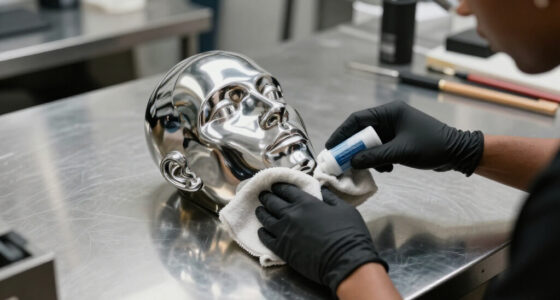
Finally, finishing touches like polishing and setting stones complete your jewelry piece. During finishing, you use abrasives, polishing compounds, and tools to refine the surface. Always wear protective gear because particles and dust can be harmful if inhaled. Keep your workspace tidy and avoid rushing through these steps; patience results in a professional-looking piece. By understanding these techniques and adhering to safety precautions, you can confidently turn raw precious metals into beautiful jewelry that’s both safe to make and stunning to wear.
As an affiliate, we earn on qualifying purchases.
Frequently Asked Questions
What Safety Gear Is Essential During Jewelry Metalworking?
You should always wear protective eyewear to shield your eyes from sparks, debris, and intense light during jewelry metalworking. Heat resistant gloves are essential to protect your hands from burns when handling hot metals or tools. Additionally, consider wearing a respirator or mask in poorly ventilated areas and a long-sleeved apron or clothing to safeguard your skin. These safety gears help prevent accidents and make certain a safer working environment.
How Do I Choose the Right Solder for My Project?
Choosing the right solder is like selecting the perfect puzzle piece for your masterpiece. Start by understanding different solder types—hard, medium, and easy—each suited for specific joins. Consider your alloy selection to match the metal you’re working with, ensuring a seamless bond. Think about the project’s heat requirements and strength needs, then match these factors to the appropriate solder. This thoughtful approach will make your jewelry both beautiful and durable.
What Are Common Mistakes in Casting Jewelry?
You might encounter casting defects like porosity or incomplete fills if you don’t carefully select the right mold and control your temperature. Always double-check your mold material; some materials don’t handle high heat well, leading to imperfections. Avoid rushing the cooling process, which can cause cracks or warping. Proper mold selection and precise temperature control are key to minimizing common mistakes and achieving a smooth, high-quality jewelry cast.
How Can I Prevent Tarnishing After Finishing?
To prevent tarnishing after finishing, you should apply a protective coating like a clear lacquer or wax to shield your jewelry from air and moisture. Store your pieces in airtight containers or anti-tarnish pouches, and keep them away from humidity and chemicals. Regularly clean and reapply protective coatings as needed. These steps help maintain the shine and prevent tarnish, ensuring your jewelry stays beautiful longer.
What Tools Are Necessary for Detailed Finishing Touches?
To achieve detailed finishing touches, you need fine tools like polishing wheels, small files, and abrasives for polishing techniques. For intricate designs, use engraving tools such as burins or rotary engravers. These tools help you refine edges, add textures, and enhance details. By combining polishing techniques with precise engraving methods, you can elevate your jewelry’s appearance, ensuring a professional, polished finish that highlights your craftsmanship.
As an affiliate, we earn on qualifying purchases.
Conclusion
Now that you’ve learned the essentials of soldering, casting, and finishing, you’re ready to bring your jewelry ideas to life. Think of metalworking as a dance—each step carefully timed and executed—leading you to create stunning pieces that reflect your passion. Keep practicing, stay patient, and enjoy the journey. With your newfound skills, you’re crafting more than jewelry; you’re shaping your own story in every gleam and curve.
As an affiliate, we earn on qualifying purchases.
heat-resistant crucible for metal casting
As an affiliate, we earn on qualifying purchases.
As an affiliate, we earn on qualifying purchases.
Halloween Picks
halloween
As an affiliate, we earn on qualifying purchases.