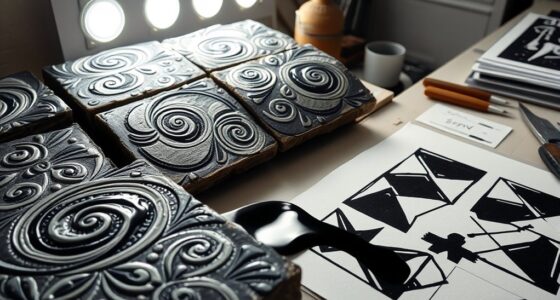
Across cultures, calligraphy styles use distinct tools and techniques that reflect their traditions. Asian calligraphy relies on brushes and ink to create fluid, expressive strokes, emphasizing harmony and rhythm. Western styles often use quills or broad-edged pens, focusing on precision and decorative details. Modern methods incorporate digital tools and unconventional media, blending tradition with innovation. Exploring these approaches reveals how cultural values shape artistic expression, and if you keep exploring, you’ll discover even more fascinating techniques behind each style.

Get art and craft supplies delivered free with Prime
- Fast, free delivery on millions of items
- Prime Video, Amazon Music and more included
- Member-only deals all year
Key Takeaways
- Different cultures utilize unique tools such as quills, brushes, and digital tablets to achieve distinct calligraphic effects.
- Western calligraphy traditionally employs broad-edged pens and specific stroke techniques rooted in medieval scripts.
- Asian calligraphy emphasizes brushwork, focusing on fluidity, pressure, and ink flow to create harmonious characters.
- Modern calligraphy combines traditional tools with innovative mediums like digital pens and unconventional inks for artistic versatility.
- Techniques vary across cultures, reflecting historical, religious, and philosophical influences shaping their unique styles.

Have you ever wondered how different calligraphy styles can dramatically change the feel of a piece? The answer lies in their rich history and ongoing evolution. Each style reflects specific historical influences, shaping the way you approach tools and techniques today. For example, traditional Western calligraphy draws heavily from medieval manuscripts, illuminated texts, and the Gothic and Carolingian scripts. These historical influences dictated the use of quills, broad-edged pens, and specific letterforms that evoke a sense of grandeur and formality. Understanding these roots helps you appreciate how calligraphy was once a meticulous craft, often reserved for religious texts or official documents. Additionally, attention to detail is vital for accurately replicating or innovating within a style, as it directly impacts the authenticity and aesthetic quality of your work.
In contrast, modern adaptations have expanded the scope of calligraphy, blending traditional techniques with contemporary creativity. Today, you can experiment with new tools like brush pens, digital tablets, and unconventional inks to produce fresh, innovative styles. These adaptations often prioritize personal expression and artistic freedom, moving away from rigid rules of the past. For instance, modern calligraphers might combine elements from different cultures or incorporate abstract forms, resulting in eclectic and dynamic pieces. Despite these innovations, they still often draw inspiration from historical influences, paying homage to the roots of their craft while pushing boundaries. This blend of old and new allows you to craft pieces that are both rooted in tradition and uniquely modern.
As you explore different calligraphy styles, it’s essential to understand that each one is a product of its historical context. The tools used, the strokes, and the overall aesthetic are all shaped by the era and culture from which they originate. For example, traditional Asian calligraphy, such as Chinese or Japanese, emphasizes brush techniques influenced by centuries of artistic and philosophical principles. These styles have evolved but still retain core techniques that emphasize fluidity and harmony. Meanwhile, contemporary Western calligraphy often emphasizes versatility, employing a variety of tools and media to create expressive works. By studying these historical influences, you gain insight into the purpose and meaning behind each style, which in turn informs your own practice. Furthermore, developing a methodical approach to practicing different styles enables more consistent progress and mastery over time.
Ultimately, whether you’re inspired by centuries-old traditions or modern innovations, understanding the historical influences and embracing modern adaptations empowers you to develop a personal style. It allows you to appreciate the depth of calligraphy’s history while also exploring new techniques that resonate with your artistic voice. Through this balance, you can craft pieces that honor the past and reflect the present, making your calligraphy truly unique.
As an affiliate, we earn on qualifying purchases.
Frequently Asked Questions
How Do Cultural Differences Influence Calligraphy Styles Worldwide?
Cultural differences shape your calligraphy styles by embedding unique symbolism and regional aesthetics. You adapt your techniques to honor local traditions, using specific tools and strokes that reflect cultural values. For instance, you might incorporate symbolic motifs or follow regional aesthetic principles, which influence your letterforms and overall style. These cultural nuances help you create authentic, meaningful calligraphy that resonates with the heritage and identity of each community.
What Are the Most Common Mistakes Beginners Make in Calligraphy?
You often make penmanship errors when starting calligraphy, like inconsistent strokes or uneven spacing. Poor ink control is a common mistake, leading to blotches or smudges. To improve, practice basic strokes regularly, focus on steady hand movements, and experiment with your tools. Remember, patience is key—overcoming these beginner errors helps you develop better technique and confidence in your calligraphy skills.
How Can One Preserve Traditional Calligraphy Techniques?
Did you know that over 60% of traditional calligraphy techniques risk being lost without proper preservation? To preserve these techniques, you should study historical documentation and practice authentic methods consistently. Use original tools and materials whenever possible, and seek guidance from master calligraphers. By actively engaging with historical sources, you guarantee these beautiful arts are passed down and remain vibrant for future generations.
What Modern Tools Are Replacing Traditional Calligraphy Tools?
You’re seeing digital pens and stylus tablets replace traditional calligraphy tools. These modern tools let you create intricate designs on screens with precision and ease, mimicking brush strokes and ink flow. They also offer adjustable settings for different styles, making practice more versatile. While they don’t replicate the tactile feel of traditional tools, digital pens and stylus tablets are transforming how you practice, learn, and share calligraphy in the digital age.
How Does Calligraphy Impact Cultural Identity and Heritage?
You see how calligraphy shapes cultural identity by embodying cultural symbolism and heritage preservation. It connects you to past traditions, showcasing unique artistic expressions that define a community. Through calligraphy, you preserve language, history, and values, ensuring they’re passed down generations. This art form fosters pride and continuity, making it an essential part of cultural heritage and identity, strengthening your connection to your roots.
As an affiliate, we earn on qualifying purchases.
Conclusion
As you master different calligraphy styles, remember each stroke is a bridge connecting cultures and histories. Your tools become the keys revealing centuries of tradition, while your techniques breathe life into symbols that whisper stories across time. Embrace the ink as a vessel of unity, where every line you craft symbolizes a shared human desire to communicate beauty and meaning. Through your hands, the ancient and modern worlds intertwine, leaving a lasting mark like a timeless echo.
As an affiliate, we earn on qualifying purchases.
As an affiliate, we earn on qualifying purchases.
Halloween Picks
halloween
As an affiliate, we earn on qualifying purchases.