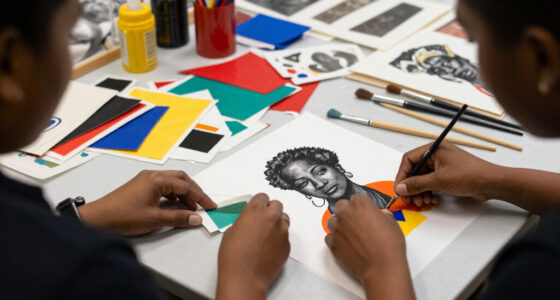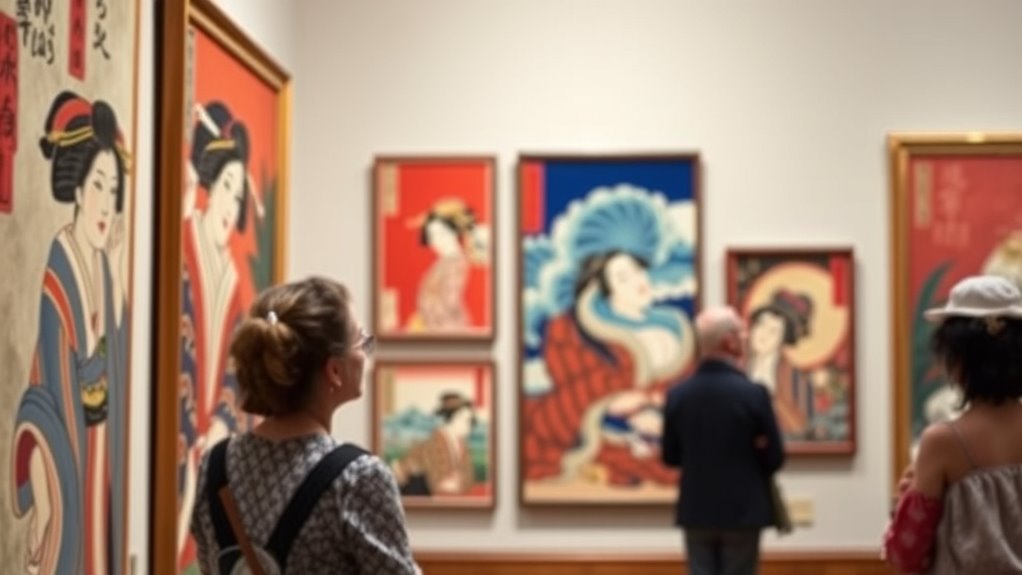

Japanese ukiyo-e has markedly influenced Western art by introducing bold compositions, flat perspectives, and vibrant colors that challenge traditional techniques. You’ll notice Western artists adopting simplified forms, striking outlines, and dynamic scenes inspired by these prints. This cross-cultural exchange shifted Western focus from realism to visual impact and design. If you want to explore how these artistic ideas continue to shape creative expression today, there’s much more to discover.

Get art and craft supplies delivered free — and shop member deals
- Fast, free delivery on millions of items
- Access to Prime Big Deal Days deals on October 6–7
- Prime Video, Amazon Music and more included
Key Takeaways
- Ukiyo-e’s flattened perspective and bold outlines inspired Western artists to experiment with stylized design and composition.
- The use of bright colors and dynamic layouts in Ukiyo-e influenced Western approaches to visual impact and storytelling.
- Western artists like Van Gogh adopted Ukiyo-e’s simplified forms and striking patterns, emphasizing mood over realism.
- Ukiyo-e’s depiction of everyday life and modern themes broadened Western subject matter beyond traditional classical themes.
- The detailed craftsmanship and affordability of Ukiyo-e facilitated cross-cultural exchange, revolutionizing Western artistic vocabulary.
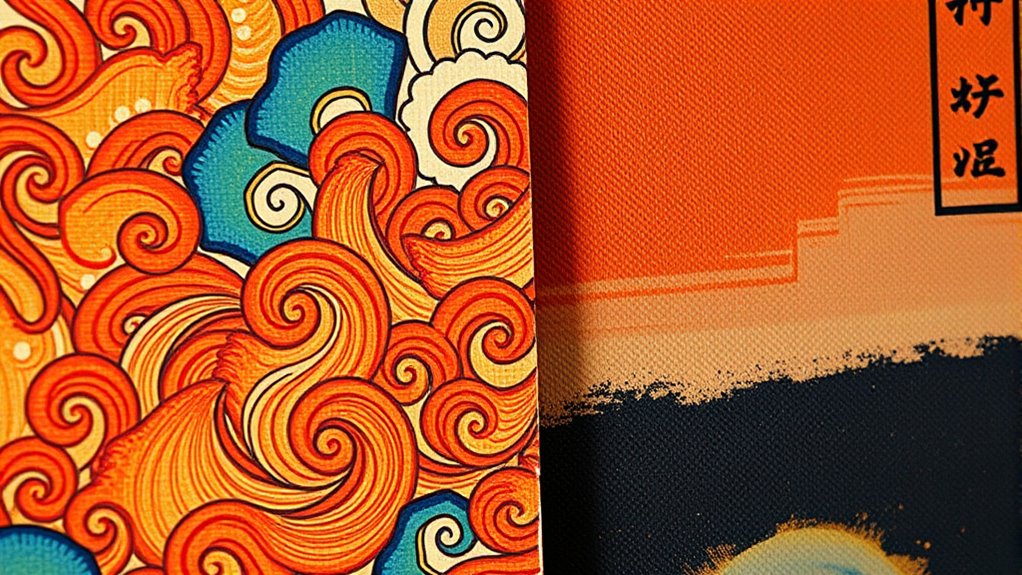
The influence of Japanese Ukiyo-e on Western art transformed the way artists approached composition, perspective, and subject matter. One of the key ways this happened was through the detailed craft of woodblock printing, which allowed Ukiyo-e artists to produce vivid, affordable images that quickly spread beyond Japan’s borders. As these prints made their way into Europe and America, they sparked numerous artistic crossovers, inspiring painters, illustrators, and printmakers to experiment with new visual techniques. You might notice how Western artists began adopting the flattened perspective and bold outlines characteristic of Ukiyo-e, moving away from traditional Western methods that emphasized depth and realism. This shift challenged the classical conventions of composition, encouraging artists to think more about the impact of their images rather than strict realism.
Ukiyo-e’s bold styles transformed Western art by emphasizing flatness and expressive design over realism.
When you look at Western artworks influenced by Ukiyo-e, you’ll see how the use of bright colors and dynamic compositions became central elements. Artists like Vincent van Gogh and James McNeill Whistler drew inspiration from the flat planes and decorative patterns of Japanese prints. They appreciated how Ukiyo-e prioritized storytelling through simplified forms and striking visual effects. This appreciation led to a greater focus on design and pattern, moving away from the meticulous detail that had dominated Western art. Instead, the emphasis shifted toward capturing mood and atmosphere, often achieved through bold color contrasts and unconventional perspectives.
You’ll also notice that the subject matter expanded due to these cross-cultural influences. Ukiyo-e depicted scenes of everyday life, landscapes, kabuki actors, and beautiful women—subjects that Western artists hadn’t traditionally explored with such vibrancy and immediacy. This broadened the scope of Western art, encouraging artists to depict more contemporary, relatable scenes rather than classical or religious themes alone. The accessibility of woodblock prints meant that everyday people could enjoy and be inspired by these images, which in turn influenced Western artists to incorporate more popular culture and modern themes into their work. Additionally, the innovative use of bold outlines and flat color in Ukiyo-e challenged Western artists to explore new stylistic boundaries, fostering a more experimental approach to their own work.
Ultimately, the cross-cultural exchange facilitated by woodblock printing and Ukiyo-e’s artistic innovations did more than introduce new visuals; it revolutionized Western artistic language. You can see this influence in the way Western artists began experimenting with composition, perspective, and subject matter, blending Eastern aesthetics with Western techniques. This fusion fostered a new visual vocabulary that continues to resonate in art today, highlighting how cross-cultural dialogue can spark profound creativity and change.
Japanese ukiyo-e woodblock print reproductions
As an affiliate, we earn on qualifying purchases.
As an affiliate, we earn on qualifying purchases.
Frequently Asked Questions
How Did Ukiyo-E Influence Modern Graphic Design?
Ukiyo-e influences modern graphic design by shaping how you use color theory and visual storytelling. Its bold lines and vibrant colors teach you to create striking images that convey messages quickly. You borrow its simplified forms and dynamic compositions to make designs eye-catching and clear. By integrating these techniques, you enhance your work’s emotional impact and storytelling power, making your visuals more compelling and engaging for your audience.
Which Western Artists Were Most Inspired by Ukiyo-E?
You might think Western artists mostly ignored Japanese aesthetics, but many were deeply inspired by ukiyo-e. Artists like Van Gogh and Toulouse-Lautrec embraced its bold lines and vibrant colors, seeing it as a powerful form of cultural exchange. Their work reflects how ukiyo-e’s unique style influenced Western art, encouraging a fresh perspective and blending Eastern and Western traditions into a new artistic language.
What Techniques From Ukiyo-E Are Seen in Western Art?
You notice that Western artists adopted techniques like color blocking, which creates bold, flat areas of color, and woodblock precision, evident in detailed, clean lines. These methods emphasize clarity and simplicity, making compositions more striking. By incorporating these ukiyo-e techniques, Western art gains a sense of harmony and flatness, blending Eastern aesthetics with Western creativity, and highlighting the influence of Japanese printmaking on modern artistic practices.
How Did Ukiyo-E Impact the Development of Impressionism?
Like Monet’s water lilies whisper of Japanese aesthetics, ukiyo-e profoundly shaped impressionism. You see, its innovative printmaking techniques, like bold lines and flat areas of color, inspired Western artists to explore new ways of capturing light and atmosphere. This cross-cultural exchange challenged traditional perspectives, encouraging impressionists to embrace spontaneity and immediacy, ultimately transforming how you perceive and depict the fleeting moments of everyday life.
Are There Contemporary Artists Who Incorporate Ukiyo-E Styles?
You’ll find many contemporary artists embracing ukiyo-e styles through modern adaptations and cultural reinterpretations. They often incorporate bold lines, vibrant colors, and traditional themes, blending them with contemporary subjects. Artists like Takashi Murakami and Yuko Shimizu explore these influences, creating works that honor the ukiyo-e tradition while updating it for today’s audience. Their art demonstrates how ukiyo-e’s aesthetic continues to inspire and evolve in modern visual culture.
artistic printmaking tools for woodblock printing
As an affiliate, we earn on qualifying purchases.
As an affiliate, we earn on qualifying purchases.
Conclusion
You can see how Japanese ukiyo-e acts like a vibrant river, flowing into Western art and transforming its landscape. Its bold lines, vivid colors, and unique perspectives weave a tapestry that awakens your senses and broadens your artistic horizon. Just as a sudden breeze can change the course of a river, ukiyo-e’s influence reshapes Western creativity, inviting you to explore new vistas and embrace the beauty of cross-cultural exchange. The art world’s colors are richer because of it.
Western art inspired by ukiyo-e prints
As an affiliate, we earn on qualifying purchases.
As an affiliate, we earn on qualifying purchases.
vibrant color art supplies for painting
As an affiliate, we earn on qualifying purchases.
As an affiliate, we earn on qualifying purchases.
Fall Picks
fall essentials
As an affiliate, we earn on qualifying purchases.