Ukiyo‑e are vibrant Japanese woodblock prints that showcase Edo-period life, landscapes, and entertainment. You’ll notice the intricate carving, layering of colors, and careful printing techniques that give these artworks their vibrancy and detail. Influenced by traditional Japanese and Chinese styles, ukiyo‑e evolved through innovation, capturing societal changes and popular culture. If you explore further, you’ll uncover the fascinating craftsmanship and artistic developments that make ukiyo‑e a mesmerizing window into Japanese history.
Key Takeaways
- Ukiyo‑e is a traditional Japanese art form featuring vividly colored woodblock prints depicting landscapes, scenes of daily life, and entertainment.
- Crafted through intricate carving, layered inking, and precise pressing, Ukiyo‑e emphasizes detailed, vibrant imagery.
- Influenced by Yamato-e painting and Chinese techniques, it reflects Japan’s cultural shifts and societal changes during the Edo period.
- Artists like Hokusai and Hiroshige pioneered innovative compositions, perspectives, and multicolored printing methods.
- Ukiyo‑e’s mass production made art accessible, capturing fleeting moments and the lively spirit of modern Edo society.
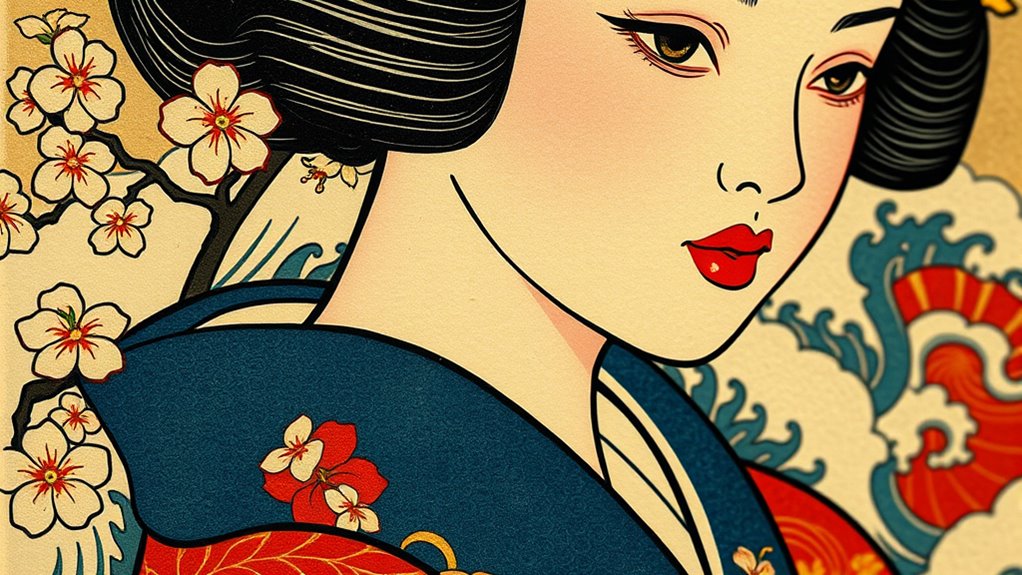
Have you ever wondered how Japanese art captured everyday life with such vivid detail? Ukiyo‑e, the genre of woodblock prints, masterfully brings scenes from daily life, landscapes, and popular entertainment into sharp focus. Its success lies in the innovative techniques artists used to produce these images, techniques that allowed for mass production while maintaining remarkable detail and vibrancy. You see, the process involved carving intricate designs into woodblocks, applying multiple layers of ink, and carefully pressing paper onto these carved surfaces. This meticulous process enabled artists to replicate their images with consistency, making art accessible to a broad audience. The layering of colors and the use of delicate gradations gave the prints depth and richness, capturing subtle nuances of light and shadow. The precision required in applying ink and the skillful carving of the blocks were essential techniques that defined ukiyo‑e. These methods weren’t developed in isolation; they were heavily influenced by earlier artistic traditions and contemporary innovations. Artists drew inspiration from traditional Japanese painting styles, such as Yamato-e, which emphasized storytelling and decorative details. They also incorporated techniques from Chinese printmaking, adapting them to fit Japanese tastes and aesthetics. The influence of landscape painting, particularly the use of perspective and natural motifs, can be seen in many ukiyo‑e works. Artists like Hokusai and Hiroshige, both towering figures in the genre, were inspired by these earlier influences but pushed the boundaries further. They experimented with new compositions, perspectives, and color schemes, creating dynamic scenes that felt alive and immediate. Their work also reflects a keen observation of society, capturing moments from bustling city streets, serene nature scenes, and popular entertainment venues. This blend of traditional techniques and contemporary influences allowed ukiyo‑e to evolve into a uniquely Japanese art form that resonated deeply with the public. The artists’ influences extended beyond just painting and printmaking; they were inspired by the societal changes occurring around them. As urban centers grew and the middle class expanded, ukiyo‑e became a mirror of modern life, embracing themes of leisure, beauty, and fleeting moments. Additionally, the development of multicolored printing techniques played a crucial role in enhancing the visual appeal and complexity of ukiyo‑e artworks. By mastering the techniques of woodblock printing and drawing from diverse artistic influences, ukiyo‑e artists created images that continue to enchant viewers today. Their craftsmanship and innovative spirit transformed simple prints into a vibrant window into Japan’s cultural and social landscape.
Top picks for "ukiyo world japanese"
Open Amazon search results for this keyword.
As an affiliate, we earn on qualifying purchases.
Frequently Asked Questions
How Did Ukiyo‑E Influence Modern Japanese Art Styles?
Ukiyo-e influences modern Japanese art styles by inspiring contemporary adaptations that blend traditional techniques with modern themes. You can see its impact in vibrant prints, graphic design, and manga, shaping visual culture. Its influence also extends to the art market, where collectors prize ukiyo-e-inspired works, fueling a renewed appreciation for this historic style and inspiring artists to innovate while honoring its legacy.
What Are the Rarest Ukiyo‑E Prints Ever Discovered?
You’ll find that the rarest ukiyo‑e prints, like the “Hokusai’s Red Fuji,” often have fewer than 20 known copies, making them collector rarities. These prints are shrouded in provenance mysteries, with some surviving through secret vaults or hidden collections. Such rarity heightens their value, drawing collectors worldwide enthusiastic to uncover the stories behind these elusive treasures, which continue to fascinate the art world today.
How Did Ukiyo‑E Artists Sign Their Works?
Ukiyo‑e artists sign their works using signature practices that help with artist identification. Usually, they place their signature or seal, often called a hanko, in a corner or along the print’s edge. Some artists also used cartouches or inscriptions to mark their creations. These signatures guarantee collectors and viewers can recognize the artist, preserving their reputation and contributing to the artwork’s historical significance.
Were Ukiyo‑E Prints Used for Political Commentary?
Yes, ukiyo‑e prints often served as political satire and societal critique. You’ll notice artists used humor and symbolism to comment on political issues or social norms of their time. These prints subtly challenged authority or highlighted societal flaws, allowing viewers to reflect on current events. By doing so, ukiyo‑e became a powerful medium for public discourse, making complex ideas accessible through engaging, visually striking images.
How Has Digital Technology Changed the Preservation of Ukiyo‑E?
Digital technology has revolutionized the preservation of ukiyo-e by enabling digital archiving and online exhibitions. You can now access high-resolution images of prints from anywhere, guaranteeing their preservation and wider appreciation. This technology also helps monitor the condition of delicate artworks and shares them globally, reducing physical handling. By embracing digital tools, you ensure these cultural treasures remain accessible and protected for future generations.
Conclusion
Now that you’ve explored ukiyo‑e, you see its beauty, its storytelling, and its artistry. You’ve discovered how these prints capture the fleeting moments of life, the beauty of nature, and the spirit of Japan. You’ve glimpsed the craftsmanship behind each stroke, the cultural significance behind every scene. With this knowledge, you appreciate ukiyo‑e not just as art, but as a window into a vibrant world—an eternal, mesmerizing, and ever-fascinating world.