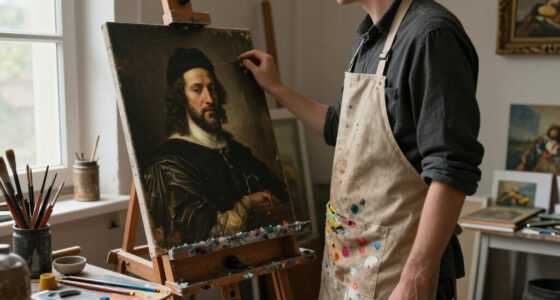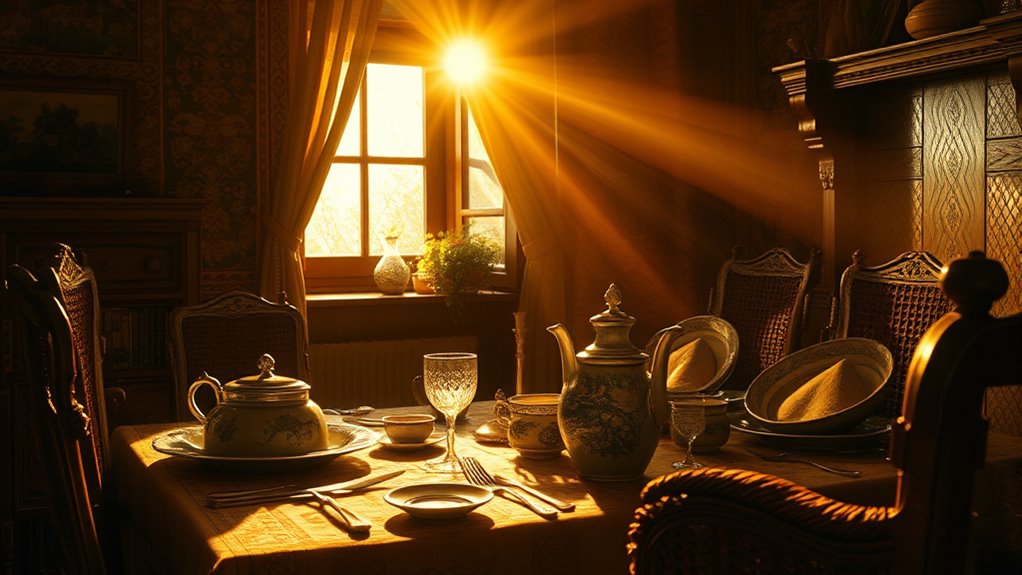

During the Dutch Golden Age, painters skillfully used light and intricate detail to bring everyday scenes to life, emphasizing realism and emotion. They mastered techniques like chiaroscuro, capturing subtle light gradations and reflections that add depth and drama. This focus on detail elevates ordinary objects and moments, making them compelling works of art. If you’re curious about how these techniques shaped Dutch masterpieces, you’ll discover more fascinating insights ahead.

Get art and craft supplies delivered free — and shop member deals
- Fast, free delivery on millions of items
- Access to Prime Big Deal Days deals on October 6–7
- Prime Video, Amazon Music and more included
Key Takeaways
- Dutch Golden Age painters mastered the use of light and shadow (chiaroscuro) to create realism and dramatic effects.
- Artists developed meticulous detail, capturing textures like fabrics, glass, and natural elements with precision.
- Light was skillfully manipulated to enhance mood, depth, and narrative within everyday scenes.
- Genre innovations focused on ordinary life, emphasizing realism and elevating mundane subjects through detailed rendering.
- These techniques and focus on detail continue to influence art, showcasing the period’s mastery in capturing light and realism.

Have you ever wondered what makes Dutch painting stand out? It’s the remarkable way artists during the Dutch Golden Age mastered light and detail that sets these works apart from others. Instead of relying solely on traditional subjects, Dutch painters pushed the boundaries of genre innovation, exploring new types of scenes that captured everyday life, still lifes, and landscapes with striking realism. This shift didn’t just broaden what could be depicted on canvas; it transformed how viewers connected with art. You’re not just looking at a scene; you’re invited into a moment of life, made compelling through clever artistic techniques that highlight texture, light, and emotion.
Dutch artists became masters of their craft by developing artistic techniques that emphasized meticulous detail and subtle gradations of light. They knew how to manipulate light to create depth and mood, often using chiaroscuro—contrasts of light and shadow—to add drama and realism. For instance, a simple candlelit still life or a bustling street scene comes alive through their skillful use of reflections, shadows, and highlights. These details aren’t just decorative; they serve to deepen the narrative, making ordinary objects or scenes seem extraordinary. You’ll notice how every leaf, fabric fold, or glint of glass is rendered with precision, revealing the artist’s dedication to capturing reality. Additionally, the careful planning of compositions and lighting techniques contributed to the overall harmony and realism of their work.
What’s fascinating is how these artistic techniques were combined with an innovative approach to genre. Artists moved beyond traditional religious or mythological themes, focusing instead on scenes from daily life, markets, interiors, and even mundane objects. This genre innovation made art more accessible and relevant, allowing viewers to see their own world reflected on canvas. You might find yourself drawn into a detailed portrait, a lively street scene, or a quiet interior, all rendered with such clarity that you almost feel part of the moment. This approach challenged the old hierarchy of subject matter in art, elevating ordinary life to the status of fine art.
The mastery of light and detail in Dutch painting during this era created a visual language that’s both realistic and emotionally engaging. The artists’ clever use of artistic techniques to highlight textures and manipulate light helped convey mood and narrative with subtlety and precision. By pushing genre boundaries and refining their techniques, Dutch painters produced works that continue to captivate audiences today. When you look at these paintings, you’re not just observing scenes; you’re experiencing a masterclass in artistic innovation that celebrates the beauty in everyday life, illuminated through a lens of extraordinary skill.
Dutch Golden Age painting art prints
As an affiliate, we earn on qualifying purchases.
As an affiliate, we earn on qualifying purchases.
Frequently Asked Questions
How Did Dutch Painters Achieve Such Realistic Textures?
You can achieve realistic textures by mastering detailed painting techniques like chiaroscuro, which creates depth and contrast, and glazing, adding translucent layers for richness. Dutch painters paid close attention to light and shadow, capturing textures like fabric, skin, and objects with fine brushwork. They often used careful blending and precise strokes, allowing them to mimic real surfaces convincingly, making their artworks remarkably lifelike and textured.
What Influence Did Dutch Culture Have on Painting Styles?
You’ll find that Dutch culture deeply shaped painting styles, reflecting their values and societal norms. Dutch painters often emphasized realism and everyday life, mirroring their appreciation for practicality and honesty. Coincidentally, this focus on ordinary scenes and detailed craftsmanship became a hallmark of Dutch art. Their cultural emphasis on commerce, modesty, and innovation directly influenced the way artists portrayed their world, making their work both relatable and technically impressive.
Were Women Artists Prominent During the Golden Age?
Women artists were rarely prominent during the Golden Age, facing significant gender barriers that limited their opportunities. You might notice that gender representation was skewed, with few women gaining recognition for their work. Despite these challenges, some women like Judith Leyster made notable contributions, but overall, their visibility remained limited. The era’s art scene was chiefly male-dominated, which impacted the recognition and promotion of women artists.
How Did the Economic Climate Affect Painting Subjects?
The economic climate shaped painting subjects like a gardener tending different blooms, driven by trade prosperity and middle-class patronage. You notice that as trade flourished, artists shifted focus from religious themes to everyday life, landscapes, and domestic scenes. The rising middle class wanted art that reflected their values and lifestyle, making paintings more accessible and relatable. This economic boom cultivated a vibrant art scene, rich in detail and variety, for everyone to enjoy.
What Techniques Distinguished Dutch Landscape Paintings?
You notice Dutch landscape paintings stand out because of their Dutch tonal mastery and atmospheric perspective. Artists use subtle shading and color gradations to create depth and realism, making distant elements appear hazy and atmospheric. This technique draws you into the scene, emphasizing the expansive skies and detailed foregrounds. Their skillful use of light and shadow enhances the mood, making these landscapes feel both lively and immersive, inviting you to explore the scene deeply.
chiaroscuro painting techniques book
As an affiliate, we earn on qualifying purchases.
As an affiliate, we earn on qualifying purchases.
Conclusion
As you explore the golden age of Dutch painting, you can’t help but be subtly drawn into its luminous world of light and intricate detail. These masterpieces gently invite you to see the beauty in everyday moments, softly reminding us that even in simplicity, there’s richness worth discovering. In appreciating this delicate artistry, you’ll find yourself quietly enchanted, appreciating the timeless charm woven through every stroke—an enduring witness to Dutch painters’ mastery.
As an affiliate, we earn on qualifying purchases.
artistic detail magnifying glass
As an affiliate, we earn on qualifying purchases.
As an affiliate, we earn on qualifying purchases.
Fall Picks
fall essentials
As an affiliate, we earn on qualifying purchases.