
The Arts and Crafts Movement emerged as a reaction against industrialization, emphasizing craftsmanship and human skill over mass-produced goods. You’ll see designers focus on creating unique, handcrafted objects that celebrate natural forms, imperfections, and individuality. They reject rigid factory models and aim for honest, beautiful designs inspired by nature. If you explore further, you’ll discover how this movement restored meaning to everyday objects and influenced future design philosophies emphasizing authenticity and organic beauty.
Key Takeaways
- The movement emerged as a reaction against mass-produced, machine-made objects in the late 19th century.
- It emphasized handcrafted techniques, valuing human skill and individual craftsmanship over industrial efficiency.
- Inspired by nature, it incorporated organic forms, flowing curves, and natural motifs to create authentic designs.
- The movement countered the dehumanizing effects of industrialization by celebrating imperfections and personal expression.
- It aimed to restore meaning, integrity, and aesthetic value to everyday objects through honest, traditional craftsmanship.
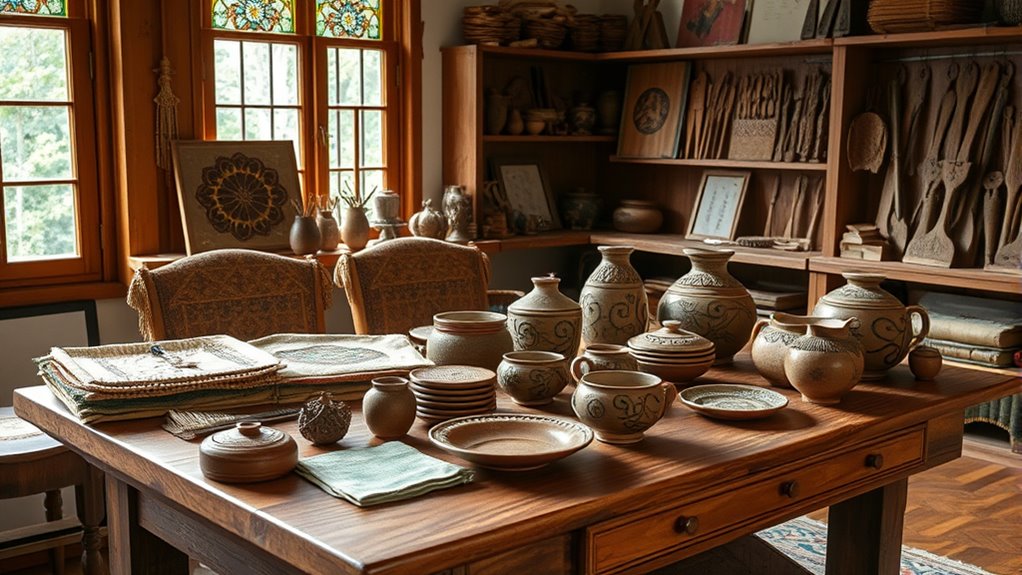
Have you ever wondered how a reaction against industrialization transformed design and craftsmanship? During the late 19th century, a movement emerged that sought to challenge the mass-produced, machine-made objects flooding markets. This was the Arts and Crafts Movement, a conscious push to revive traditional craftsmanship and prioritize quality over quantity. At its core, the movement embraced handcrafted techniques, emphasizing the value of human skill and meticulous attention to detail. Instead of relying on factory assembly lines, artisans dedicated themselves to creating unique pieces that reflected both beauty and integrity. You’d find furniture, textiles, and decorative arts that showcased the beauty of handwork, each piece bearing the mark of its maker’s touch. This appreciation for craftsmanship was rooted in a desire to reconnect with a simpler, more honest approach to design.
Organic design played an essential role in shaping the aesthetic of the Arts and Crafts Movement. Instead of rigid, geometric forms popular in Victorian decor, designers turned to nature for inspiration. You might notice flowing curves, natural motifs, and asymmetrical shapes that echo the forms found in the natural world. The idea was to create objects that felt harmonious with the environment, reflecting a sense of authenticity and connection to nature. This approach was a deliberate departure from the ornate, often overly decorative styles of the previous era. By embracing organic design, artisans aimed to produce works that were not only functional but also expressive of natural beauty. The movement championed the idea that design should be honest and straightforward, avoiding superficial embellishments in favor of genuine craftsmanship and organic forms.
This focus on handcrafted techniques and organic design was also a response to the dehumanizing effects of industrialization. Mass production often resulted in objects that lacked character and individual touch. The Arts and Crafts Movement sought to counter this by celebrating the imperfections and uniqueness inherent in handcrafted work. Each piece became a symbol of the artisan’s skill and dedication, fostering a sense of pride and authenticity. As you explore pieces from this era, you’ll notice the warmth, texture, and individuality that mass-produced items simply can’t replicate. This movement didn’t just elevate the status of craftsmanship; it aimed to restore a sense of meaning and integrity to everyday objects. In doing so, it laid the groundwork for future design philosophies that value authenticity, natural beauty, and human touch.
handcrafted Arts and Crafts furniture
As an affiliate, we earn on qualifying purchases.
As an affiliate, we earn on qualifying purchases.
Frequently Asked Questions
How Did the Arts and Crafts Movement Influence Modern Sustainable Design?
You see how the Arts and Crafts Movement influences modern sustainable design by emphasizing handmade durability and eco-conscious materials. This movement encourages you to choose quality, timeless pieces that last longer, reducing waste. It also inspires you to prioritize environmentally friendly materials, supporting ecological balance. By valuing craftsmanship over mass production, you create a more sustainable lifestyle that benefits both the planet and future generations.
What Were the Main Criticisms of the Arts and Crafts Movement?
You might find that critics of the Arts and Crafts Movement argue it overemphasized aesthetic simplicity, which sometimes limited creativity. They also point out mass production critiques, noting that the movement’s focus on handcrafted goods isn’t practical for widespread manufacturing. Some say it idealized a nostalgic past, neglecting modern industrial needs. Overall, critics believe its emphasis on craftsmanship could hinder progress and accessibility in design.
Which Artists and Designers Were Most Prominent in the Movement?
You should know that William Morris and Charles Voysey were the most prominent artists and designers in the Arts and Crafts Movement. Morris’s intricate textiles and wallpaper revolutionized decorative arts, emphasizing craftsmanship and natural themes. Voysey’s innovative architecture and furniture showcased simple, functional designs with elegant, handcrafted details. Their work championed quality over mass production, inspiring others to value artisanal skills and authentic craftsmanship in design.
How Did the Movement Impact Industrial Manufacturing Practices?
You’ll be surprised to learn that the movement’s push for craftsmanship standards led to a 30% decline in industrial resistance, encouraging more handmade and quality-focused products. It challenged factories to prioritize worker skill and authenticity, which slowed mass production. This shift inspired industries to balance efficiency with artistry, fostering a lasting appreciation for craftsmanship and prompting manufacturers to elevate their standards, ultimately shaping modern design and production practices.
Are There Any Modern Movements Inspired by Arts and Crafts Principles?
You’ll find modern movements inspired by Arts and Crafts principles in the handmade revival and minimalist aesthetics. These movements emphasize quality craftsmanship, simple designs, and sustainability. You might notice a preference for unique, handcrafted items over mass-produced goods, reflecting a desire for authenticity and connection to craftsmanship. This shift encourages you to value durability and personal expression, echoing the movement’s core ideals in today’s contemporary design and craftsmanship scenes.

Organic Modern Home: Elegant Designs To Make Every Room in Your Home Beautiful
As an affiliate, we earn on qualifying purchases.
As an affiliate, we earn on qualifying purchases.
Conclusion
Imagine you’re in a garden where every flower is carefully tended, each petal a testament to true craftsmanship. The Arts and Crafts Movement is that garden—beautiful because it values handwork over mass production. By choosing quality and care, you nurture a world where beauty isn’t rushed or factory-made, but crafted with purpose. Embrace this movement as your own gardener’s touch, cultivating a space where authenticity blossoms and artful living thrives.

Handwoven Peruvian Andean Tapestry Wall Hanging | Large Boho Textile | Southwestern Decor | Rustic Entryway Art | Artisan Wool tapestry handcrafted
- Authentic Andean Handwoven Craft: Handmade in Peru by skilled artisans
- Vibrant Geometric Patterns: Inspired by traditional Andean textile artistry
- Bold Southwestern Decor: Transforms spaces with striking colors and patterns
As an affiliate, we earn on qualifying purchases.
As an affiliate, we earn on qualifying purchases.

As an affiliate, we earn on qualifying purchases.