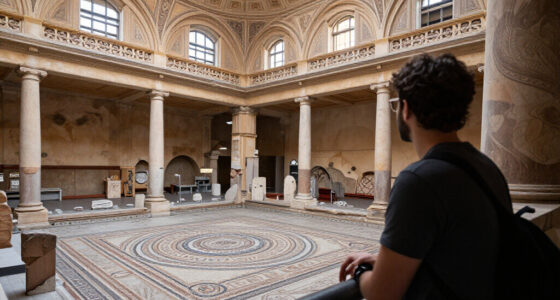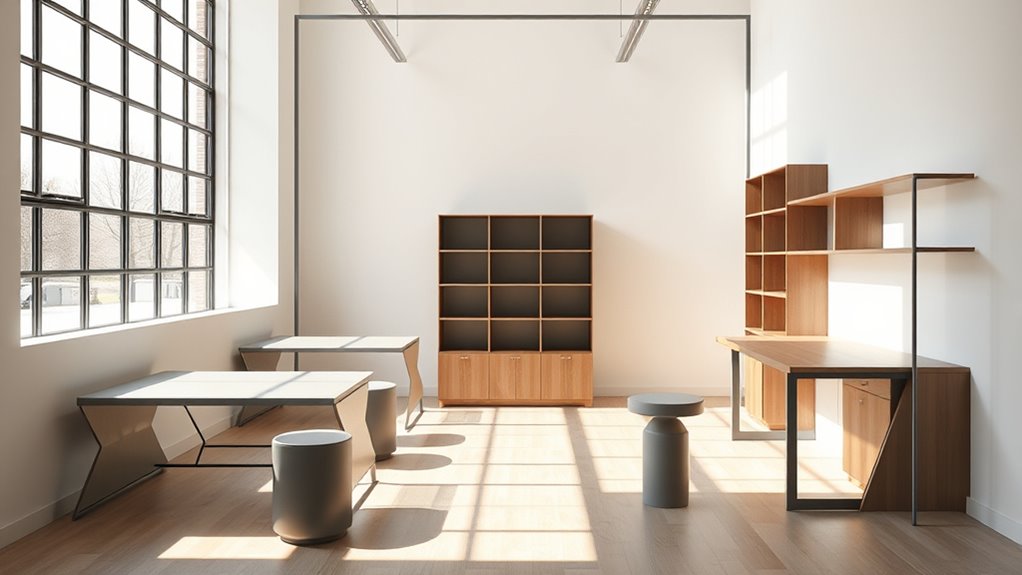

The Bauhaus Movement merges art, craft, and technology by emphasizing functional design rooted in simplicity and innovation. It encourages you to see objects and spaces as unified forms that serve their purpose while embracing modern materials like steel and glass. The focus is on efficiency, accessibility, and breaking traditional boundaries between art and industry. To discover how this influential movement continues to shape contemporary design, keep exploring its core ideas and legacy.

Get art and craft supplies delivered free — and shop member deals
- Fast, free delivery on millions of items
- Access to Prime Big Deal Days deals on October 6–7
- Prime Video, Amazon Music and more included
Key Takeaways
- Bauhaus unified art, craft, and technology by integrating craftsmanship with industrial processes for functional design.
- Emphasized that form follows function, promoting simplicity, efficiency, and mass production.
- Broke traditional boundaries by blending artistic creativity with industrial and technological advancements.
- Promoted modern architecture and product design using new materials like steel, glass, and concrete.
- Influenced global design by fostering a mindset of progress, accessibility, and the harmonious integration of aesthetics and utility.

Have you ever wondered how modern design and architecture evolved? The Bauhaus movement played a pivotal role in shaping both fields, blending art, craft, and technology into a cohesive vision. It emerged in early 20th-century Germany, bringing together artists, architects, and designers who believed that form should follow function. The movement’s emphasis on simplicity, functionality, and mass production revolutionized industrial design and modern architecture, laying the groundwork for the sleek, minimal aesthetics we see today.
At its core, Bauhaus was about breaking down traditional boundaries. Before this movement, art and craft existed in separate worlds, with architecture often ornamented and disconnected from technological advances. Bauhaus challenged this by integrating craftsmanship with industrial processes, making good design accessible and practical. You can see this influence everywhere—from the furniture you use daily to the buildings that define city skylines. The movement championed the idea that good design should serve society, emphasizing efficiency and usability while maintaining aesthetic appeal. This shift gave rise to a new approach in industrial design, where function dictated form, and materials were used innovatively to produce affordable, durable objects.
Bauhaus unified art and craft, emphasizing function, efficiency, and accessible design for all.
In architecture, Bauhaus ideas promoted a clean, geometric style that emphasized open floor plans, large windows, and flat roofs. These principles are fundamental to modern architecture, which aims for simplicity and harmony between form and function. Architects working within the Bauhaus philosophy sought to create spaces that reflected modern life’s needs, stripping away unnecessary decoration. This approach influenced countless buildings, inspiring the modernist movement that continues to shape cityscapes worldwide. You can identify Bauhaus-inspired architecture by its emphasis on light, space, and the honest use of materials like steel, glass, and concrete.
The movement’s influence extended beyond Germany, spreading across the globe and inspiring subsequent generations of designers and architects. Its legacy is evident in the streamlined products, minimalist interiors, and innovative structural designs that define contemporary aesthetics. By merging art, craft, and technology, Bauhaus fostered a mindset that prioritized progress, efficiency, and accessibility. Understanding the significance of color theory in Bauhaus design helps explain how the movement integrated visual harmony into everyday objects and architecture—an essential element of its aesthetic. If you look around today, you’ll see how its ideas continue to inform modern design and architecture, encouraging us to think about how form and function can harmonize to improve everyday life. The Bauhaus movement’s enduring impact reminds us that good design is about more than appearance—it’s about creating meaningful, functional spaces and objects for everyone.
As an affiliate, we earn on qualifying purchases.
Frequently Asked Questions
How Did the Bauhaus Influence Modern Digital Design?
The Bauhaus influences your modern digital design by emphasizing interface simplicity and digital aesthetics. You notice their impact in clean, functional layouts that prioritize user experience. Bauhaus principles inspire you to create designs that are both visually appealing and efficient. By merging art and technology, you craft intuitive interfaces that reflect their legacy of minimalism and clarity, shaping the way you approach digital innovation today.
What Were the Key Philosophical Principles Behind Bauhaus Education?
You discover that the key philosophical principles behind Bauhaus education are its revolutionary educational philosophy and its interdisciplinary approach. It believed in breaking down barriers between art, craft, and technology, encouraging students to blend skills seamlessly. This approach fosters creativity through hands-on learning and collaboration, aiming to produce versatile designers. The movement’s emphasis on unity, functionalism, and innovation transformed art education, making it a powerhouse of modern design thinking.
How Did Bauhaus Architecture Impact Urban Development?
You see Bauhaus architecture revolutionized urban development by emphasizing functional design and architectural innovation. It influenced urban planning by promoting streamlined, affordable buildings that integrated form and function, encouraging sustainable growth. This approach led to the creation of cohesive, modern neighborhoods with open spaces and improved living conditions. Its impact persists today, inspiring architects and urban planners to prioritize efficiency, aesthetics, and human-centered design in shaping cities.
Who Were the Most Prominent Bauhaus Artists and Designers?
Imagine a constellation of creative stars—your most prominent Bauhaus artists and designers include Bauhaus masters like Walter Gropius, Paul Klee, Wassily Kandinsky, and László Moholy-Nagy. These figures shaped modern art and design with their innovative ideas and groundbreaking work. As you explore Bauhaus, you’ll find that these prominent Bauhaus artists and masters revolutionized architecture, furniture, and visual arts, leaving a lasting legacy that continues to inspire today.
What Challenges Did the Bauhaus School Face During Its Existence?
You face challenges like funding struggles and political opposition at the Bauhaus school. Limited financial support made it hard to sustain programs and facilities, while political tensions, especially from rising authoritarian regimes, threatened its existence. Despite these obstacles, you see how the school’s innovative approach to art, craft, and technology persisted through resilience and adaptation, ultimately influencing modern design and architecture worldwide.
minimalist glass and steel architecture decor
As an affiliate, we earn on qualifying purchases.
As an affiliate, we earn on qualifying purchases.
Conclusion
Just as Icarus dared to reach for the sun, the Bauhaus movement pushes you to blend art, craft, and technology in bold new ways. It reminds you that innovation thrives at the intersection of disciplines, shaping a future where beauty and function unite. Embrace this legacy, and like the phoenix rising from ashes, let your creativity soar beyond boundaries. The Bauhaus spirit invites you to craft a world that’s both inspiring and transformative.
industrial design lighting fixtures
As an affiliate, we earn on qualifying purchases.
As an affiliate, we earn on qualifying purchases.
As an affiliate, we earn on qualifying purchases.
Halloween Picks
halloween
As an affiliate, we earn on qualifying purchases.