
TL;DR

Get art and craft supplies delivered free with Prime
- Fast, free delivery on millions of items
- Prime Video, Amazon Music and more included
- Member-only deals all year
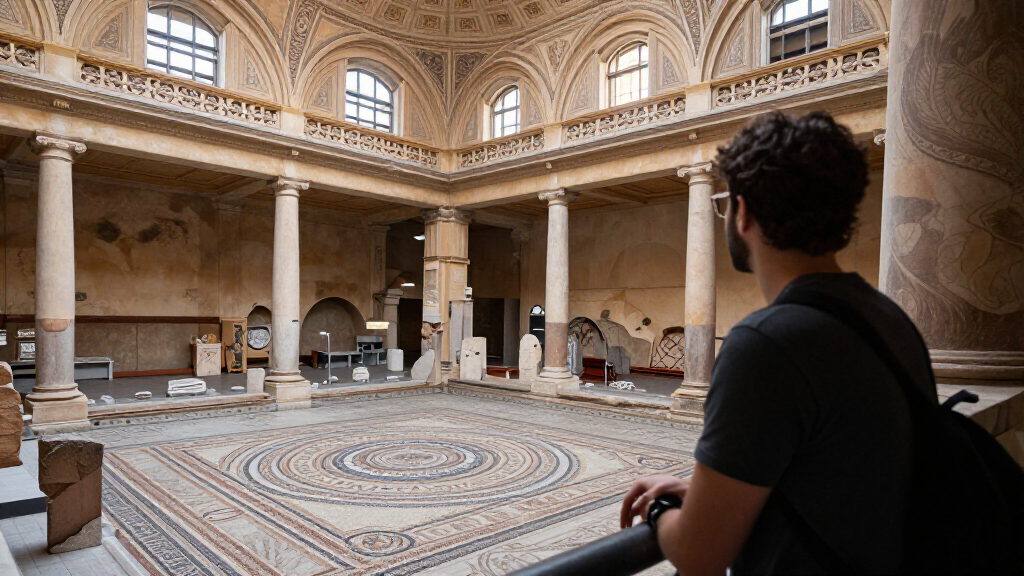
The largest known Roman mosaic, found beneath the Baths of Trajan in Rome, has been officially opened to the public. The discovery offers new insights into Roman art and engineering, drawing significant interest from archaeologists and historians.
The world’s largest known Roman mosaic, discovered beneath the Baths of Trajan in Rome, has officially been opened to visitors for the first time. The unveiling marks a major archaeological milestone, offering a rare glimpse into ancient Roman artistry and engineering. The mosaic’s size and complexity have attracted international attention, making it a significant cultural and historical site.
The mosaic, which measures approximately 200 square meters, was uncovered during excavations beneath the ancient Baths of Trajan, a site dating back to the early 2nd century AD. After extensive conservation work, it was opened to the public in January 2024, becoming the largest known example of Roman mosaic art.
Experts involved in the project have confirmed that the mosaic features intricate geometric patterns and depictions of mythological scenes, although detailed interpretation is ongoing. The discovery is considered one of the most significant Roman archaeological finds in recent decades, providing new insights into Roman artistic techniques and cultural expressions.
The site is now accessible to visitors through guided tours, with educational displays explaining its historical context and significance. Archaeologists and conservators continue to study the mosaic to better understand its original purpose and the techniques used in its creation.
Implications for Roman Art and Engineering
The opening of the mosaic offers a rare opportunity to examine the scale and craftsmanship of Roman decorative art, which was previously known mostly through smaller or fragmentary examples. Its size and complexity suggest advanced techniques and a high level of artistic achievement, reflecting the cultural and political importance of the Baths of Trajan as a public space. The discovery also enhances our understanding of Roman engineering, as the mosaic was preserved beneath the structural remains of the baths, indicating sophisticated construction methods.
For historians and archaeologists, this find provides a tangible link to Roman social life and aesthetic values, enriching the narrative of ancient Rome’s artistic legacy. It may influence future research and excavations in the region, potentially leading to more discoveries of similar scale and significance.
Popular right now

Dyson Airwrap i.d. Multi-Styler for Straight and Wavy Hair

Shark Rocket Corded Stick Vacuum (HV301) – Gray/Orange

Samsung 85-Inch QN70H Neo QLED 4K Smart TV (2026)
As an affiliate, we earn on qualifying purchases.
Historical and Archaeological Background of the Baths of Trajan
The Baths of Trajan, constructed during the reign of Emperor Trajan in the early 2nd century AD, were among the largest and most elaborate public baths in ancient Rome. They served as a social hub for Roman citizens and featured extensive facilities, including swimming pools, gyms, and decorative mosaics. Over centuries, the site was buried and largely forgotten until modern excavations began in the 20th century.
Recent archaeological efforts have focused on uncovering the remains of the baths’ original decoration and structure, with the mosaic being one of the most significant discoveries. Prior to this, only smaller fragments and surface remains were visible, limiting understanding of the site’s original grandeur. The recent excavation and conservation work have revealed the mosaic’s full extent, offering new insights into Roman decorative arts and public architecture.
Interest in the site has grown as more of its original features are uncovered, with scholars emphasizing its importance for understanding Roman urban life and artistic achievements during the early Empire period.
Remaining Questions About the Mosaic’s Original Context
While the mosaic has been fully uncovered and conserved, some details about its original purpose, iconography, and the specific patrons who commissioned it remain unclear. Researchers are still analyzing the scenes depicted and their symbolic meanings, and interpretations are expected to evolve as studies progress. Additionally, it is not yet confirmed whether the mosaic was part of a private or public space within the baths, or if it had a ceremonial function.
Future Research and Preservation Plans
Ongoing studies aim to analyze the mosaic’s materials and techniques to better understand Roman artistic methods. Conservation efforts will continue to ensure its preservation against environmental and structural threats. Archaeologists also plan further excavations around the site to uncover related structures or artifacts that could shed light on its original setting and use.
Public access will likely expand as educational programs are developed, and the site may become a focal point for Roman history tourism. Researchers anticipate that additional discoveries in the vicinity could enhance understanding of the entire complex surrounding the Baths of Trajan.
Key Questions
How was the mosaic discovered?
The mosaic was uncovered during recent excavations beneath the Baths of Trajan, carried out by a team of archaeologists from the Italian Ministry of Culture, as part of ongoing efforts to explore the ancient site.
What makes this mosaic the largest in Roman history?
Its estimated size of approximately 200 square meters surpasses all previously known Roman mosaics, which generally covered smaller areas or were fragmentary. Its scale and detailed craftsmanship make it a unique find.
Can the public visit the mosaic now?
Yes, after conservation and research, the mosaic is now accessible to visitors through guided tours, with educational displays explaining its significance.
What does the mosaic depict?
While detailed interpretations are ongoing, the mosaic features geometric patterns and mythological scenes, typical of Roman decorative art, reflecting both artistic skill and cultural themes.
Are there plans for further excavations?
Yes, archaeologists plan to continue excavations around the site to uncover related structures and artifacts that may provide more context for the mosaic and the Baths of Trajan as a whole.
Source: hn