
Secondary market galleries serve as crucial bridges between collectors, investors, and the art community by reselling previously owned artworks. They help keep the art world dynamic and accessible through careful valuation, provenance research, and market positioning. By ensuring transparency and authentication, they protect buyers and boost artwork’s long-term value. Understanding their role reveals how they sustain the market’s health and keep art careers thriving—discover more about their fundamental functions below.

Get art and craft supplies delivered free — and shop member deals
- Fast, free delivery on millions of items
- Access to Prime Big Deal Days deals on October 6–7
- Prime Video, Amazon Music and more included
Key Takeaways
- Serve as intermediaries connecting collectors, investors, and the art community for reselling pre-owned artworks.
- Conduct provenance research and authentication to ensure artwork legitimacy and proper valuation.
- Facilitate the transfer, pricing, and market positioning of artworks to maximize value and demand.
- Maintain transparent histories and documentation to increase buyer confidence and safeguard transactions.
- Contribute to the art market’s dynamism by supporting the ongoing circulation and legacy of artworks.

Ever wonder how art finds new homes after its initial sale? That’s where secondary market galleries come into play, acting as vital bridges between collectors, investors, and the broader art community. These galleries don’t deal with freshly created works but focus on reselling pieces already owned, making them essential for keeping the art world dynamic and accessible. When you step into this space, you realize that a lot hinges on accurate art valuation. Knowing the true worth of a piece isn’t just about market price; it involves understanding an artwork’s provenance, condition, rarity, and historical significance. Secondary market galleries excel at assessing these factors, ensuring that both sellers and buyers make informed decisions. This process requires sharp gallery management skills, balancing transparency with discretion, and keeping up with fluctuating market trends.
Secondary market galleries rely on expert valuation, provenance, and market trends to connect buyers and sellers confidently.
As you consider selling or buying through a secondary gallery, you’re engaging with a system that’s built on trust and expertise. The gallery’s role involves more than just facilitating a sale; it’s about positioning the artwork correctly within the market. Proper art valuation helps determine a fair price, which can fluctuate based on current demand, the artist’s reputation, and recent sales of similar works. For collectors, this means access to a curated selection of works with transparent histories, all vetted by experienced gallery management. For sellers, this process ensures their pieces are valued accurately, preventing undervaluation or overpricing, which can hinder a sale. Additionally, understanding the importance of art valuation can significantly impact the success of transactions in this market.
Gallery management in this environment also involves marketing and provenance research. The gallery’s reputation hinges on its ability to authenticate artworks and present them compellingly. When you’re dealing with high-value pieces, meticulous documentation and a thorough understanding of the artwork’s history are critical. This not only safeguards buyers but also enhances the artwork’s desirability and resale value. Good gallery management also means maintaining relationships with collectors, investors, and other galleries, fostering a network that sustains the secondary market’s vitality.
In essence, secondary market galleries serve as custodians of the art’s journey beyond its first owner. They manage the delicate balance of art valuation, market trends, and provenance, ensuring each transaction contributes to the artwork’s legacy. If you’re looking to buy or sell in this domain, understanding the importance of skilled gallery management and accurate valuation will help you navigate the complexities and opportunities of the secondary art market confidently.
Frequently Asked Questions
How Do Secondary Market Galleries Establish Authenticity?
You can trust secondary market galleries to establish authenticity through rigorous authentication processes. They verify artworks by examining provenance, condition, and signatures, often consulting expert appraisers. Your confidence also depends on the gallery’s reputation and history of honesty. By carefully scrutinizing each piece and leveraging their industry expertise, they guarantee that what you’re buying is genuine, helping protect your investment and preserve the artist’s reputation.
What Is the Typical Commission Rate for Secondary Galleries?
Imagine walking into a gallery where every piece you admire has a price tag, but behind the scenes, gallery negotiations shape that number. Typically, secondary galleries take a commission rate of about 50%, though it varies. These commission structures are part of gallery negotiations, balancing fair artist compensation and gallery sustainability. As a buyer or seller, understanding this helps you navigate the market more confidently, ensuring you get the best deal possible.
How Do Secondary Galleries Influence Contemporary Art Prices?
You see that secondary galleries influence contemporary art prices by impacting market trends and artist reputation. When they sell works, they often set new benchmarks, shaping collector interest and perceived value. Their reputation for handling certain artists can boost prices, while their ability to identify emerging talent influences future market dynamics. Consequently, secondary galleries play a vital role in maintaining or elevating an artist’s market standing, affecting price fluctuations across the contemporary art scene.
What Are the Risks of Purchasing From Secondary Galleries?
When purchasing from secondary galleries, you face risks like potential misrepresentation, which can impact your art investment. The gallery’s reputation is vital, as less reputable dealers might sell fake or damaged works. Always do thorough research, verify provenance, and seek expert opinions. Relying on established galleries reduces these risks, helping you make confident, informed decisions in your art collection and safeguarding your investment.
How Can Collectors Verify the Provenance of Artworks?
To verify an artwork’s provenance, you should start with certificate verification from reputable sources. Conduct thorough provenance research by examining gallery records, exhibition histories, and previous ownership documentation. Don’t hesitate to contact experts or appraisers who can authenticate the history. Cross-check information across multiple sources to guarantee accuracy. This diligent process helps confirm authenticity, reduces risks, and provides confidence in your purchase.
Conclusion
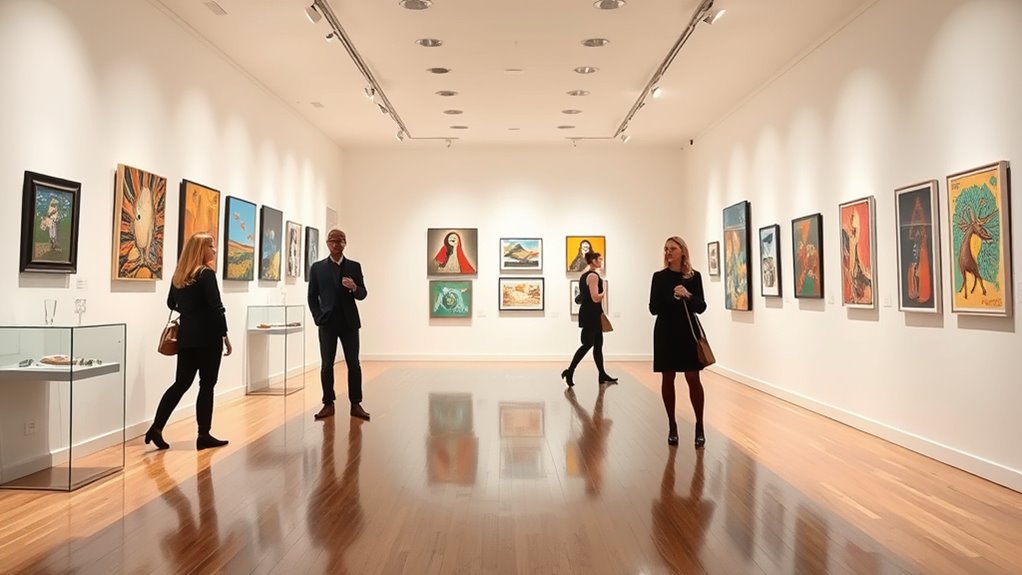
As you walk through a secondary market gallery, you see artworks reborn from their original silence, their stories whispering anew. Unlike the pristine, untouched pieces in primary markets, these works carry the weight of history and renewed life. You realize that, in this space, rarity and accessibility collide—an echo of the past meeting the pulse of the present. It’s a vibrant dance between preservation and reinvention, reminding you that art’s journey never truly ends.
Halloween Picks
halloween
As an affiliate, we earn on qualifying purchases.