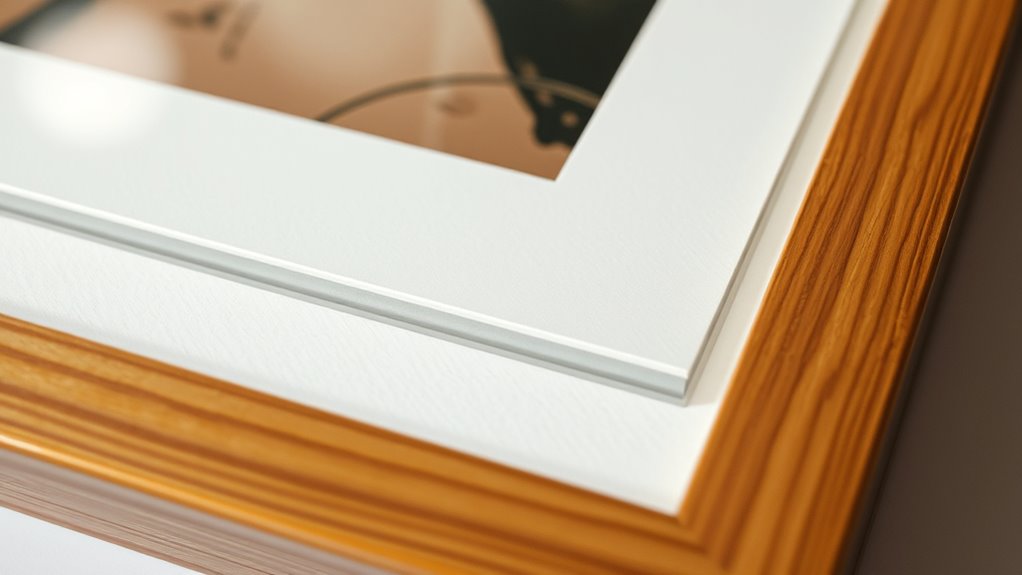

To avoid buckling and warping when framing works on paper, use acid-free mats and mounts, and avoid adhesives that can damage the paper. Choose framing materials like UV-protective glass and guarantee proper spacing between the artwork and glass to allow breathability. Maintain stable environmental conditions with steady temperature and humidity. Proper tension and quality materials keep your artwork flat and protected over time. Keep these tips in mind to preserve your piece’s integrity—more details await if you continue on.
Key Takeaways
- Use acid-free, archival-quality mat boards and mounts to prevent chemical reactions that cause buckling.
- Employ hinge mounting with acid-free materials to allow paper to breathe and reduce stress.
- Maintain stable environmental conditions—around 70°F and 50% humidity—to minimize expansion and contraction.
- Choose UV-protective glass or acrylic and ensure proper spacing between glass and artwork to prevent sticking.
- Regularly inspect framed works for early signs of warping, and avoid adhesives that may damage or distort paper over time.
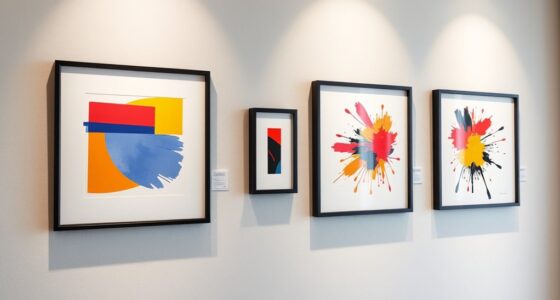
Have you ever wondered why framing is essential for preserving and showcasing works on paper? When you carefully choose the right framing techniques, you protect your artwork from environmental damage and ensure it remains vibrant over time. Proper framing isn’t just about aesthetics; it’s a vital conservation technique that helps prevent issues like buckling and warping. To achieve this, understanding the importance of framing materials is crucial. Not all materials are suitable for works on paper, and selecting the right ones can make a significant difference in the longevity of your piece.
Proper framing protects paper artworks from damage and preserves their vibrancy over time.
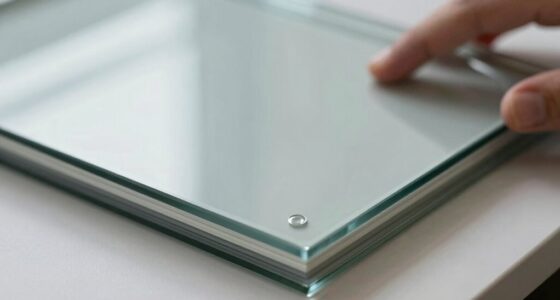
When you decide on framing, you should prioritize conservation techniques that protect your artwork from moisture, temperature fluctuations, and pollutants. Acid-free mat boards and mounts are essential because they prevent acid migration, which can cause deterioration and discoloration. Archival-quality glass, such as UV-protective glass or acrylic, shields your work from harmful light exposure while reducing the risk of condensation buildup behind the glass, which can lead to warping. Using non-reactive framing materials ensures that no harmful chemicals will interact with the paper over time.
It’s also important to consider the method of mounting your work. You might be tempted to use adhesives or tapes, but these can cause damage and accelerate aging. Instead, opt for hinge mounting with acid-free materials or use corner mounts that hold the paper securely without adhesives. This approach allows the paper to breathe and reduces the risk of buckling caused by trapped moisture or uneven tension. Additionally, ensuring proper spacing between the artwork and the glass prevents sticking and damage, which could otherwise lead to warping or creasing.
Temperature and humidity control are equally vital. You should keep your framed work in an environment with stable conditions, ideally around 70°F and 50% relative humidity. Sudden changes can cause the paper to expand or contract, resulting in buckling. Proper framing techniques, combined with high-quality framing materials, act as a buffer against these fluctuations, maintaining the flatness and integrity of your artwork. Regularly inspecting the frame and its materials helps catch any early signs of deterioration, so you can take corrective action before irreversible damage occurs. Incorporating hydrocolloid material in the framing process can also help absorb excess moisture and further protect your work from warping over time.

Somime 10 Pack Backing Boards, 18×24 Acid-Free Uncut White Mat Boards
- Package Includes: 10 uncut white mat boards
- Durable Material: Thick, sturdy cardboard with 4-ply thickness
- Versatile Size: Measures 18×24 inches, customizable
As an affiliate, we earn on qualifying purchases.
As an affiliate, we earn on qualifying purchases.
Frequently Asked Questions
How Long Does Paper Framing Protection Typically Last?
Your paper framing protection typically lasts 50 to 100 years if you use acid-free materials and UV-resistant glass. These materials prevent deterioration and fading, ensuring your artwork stays vibrant over time. Regularly inspecting your frame helps catch issues early. Keep the frame in a stable environment, avoiding humidity and direct sunlight. With proper care, your framed paper can remain beautiful and well-preserved for generations.
Are There Eco-Friendly Framing Options for Paper Art?
Imagine wrapping your paper art in a gentle, eco-friendly embrace. Yes, there are sustainable materials and biodegradable frames that protect your masterpiece without harming the planet. These options are made from recycled wood, bamboo, or biodegradable plastics, offering a greener alternative. By choosing eco-friendly framing, you help reduce waste and support sustainable practices, ensuring your art is preserved beautifully while caring for the environment.
Can Framing Prevent Fading of Paper Artworks?
Framing can help prevent fading of paper artworks if you select UV protection glass and acid-free materials. These features shield your piece from harmful UV rays and acidic deterioration, preserving colors and paper quality over time. Make certain the frame is sealed properly, and avoid direct sunlight. Using high-quality UV-protective glass and acid-free backing ensures your artwork stays vibrant and well-preserved for years to come.
What Are the Best Storage Methods for Framed Paper Pieces?
You should store framed paper pieces in a cool, dry environment with stable temperature and humidity, using climate control to prevent damage. Keep the artwork in acid-free materials, like mats and backing boards, to avoid chemical reactions that cause deterioration. When not on display, store the framed piece upright in a location away from direct sunlight and moisture, ensuring the environment remains consistent to preserve its condition over time.
How Often Should I Recheck the Framing for Stability?
Checking your framing for stability is like tending a garden—you need to do it regularly. You should recheck every 6 to 12 months, especially if climate control isn’t perfect. Keep an eye on framing materials and signs of warping or buckling. Consistent inspections help prevent damage, so confirm your framed paper stays in top condition. Adjustments early can save you from costly repairs later.

ArtToFrames 8×10 Replacement UV Non-Glare Glass for Picture and Poster Frames (Clear-17)
- Glazing Type: UV Non-Glare Glass
- Size: 8×10 inches
- Protection: Enhanced UV protection and clarity
As an affiliate, we earn on qualifying purchases.
As an affiliate, we earn on qualifying purchases.
Conclusion
Now that you know the secrets to preventing buckling and warping, your framed art will stand the test of time. But what if there’s one essential step you’ve overlooked? The tiniest detail could be the difference between a flawless display and a damaged masterpiece. Are you ready to uncover that final, indispensable tip? Stay tuned—your perfect framed paper is closer than you think, and the next move could make all the difference.
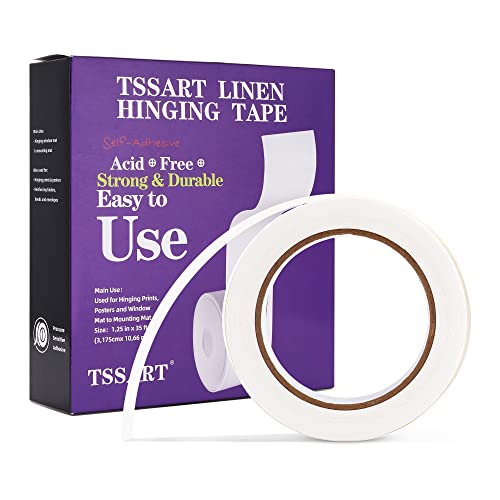
TSSART Linen Hinging Tape – Self-Adhesive Hinging Tape for Prints Matte Frames, Artwork Matting – Acid Free 1.25inch x 35ft
- Material: Linen fabric for durability and flexibility
- Ease of Use: Removable plastic backing for easy measurement
- Applications: Hinging prints, posters, mats, and books
As an affiliate, we earn on qualifying purchases.
As an affiliate, we earn on qualifying purchases.

Design&I 2'x3' Washable Area Rug Oval Dusty Dining Cream Scattered Vintage Framing Artwork Table Sleek Flatweave Pet Friendly & Non-Slip Built-in Grip for Kitchen, Bathroom, Pet Station
- Easy to Clean: Wipes clean or machine washable
- Flatwoven Design: Seamless, non-intrusive surface
- Non-Slip Grip: Anti-skid bottom for safety
As an affiliate, we earn on qualifying purchases.
As an affiliate, we earn on qualifying purchases.