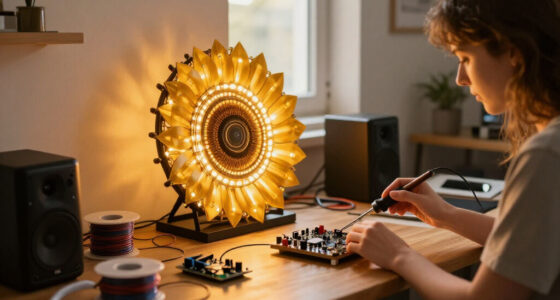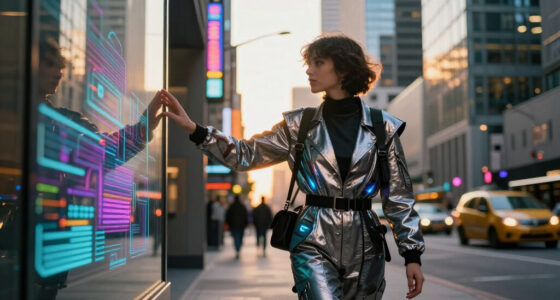
Algorithmic art shows how you can turn code into a creative medium by blending mathematical and logical systems to craft visually striking works. By tweaking parameters, you guide algorithms to generate complex, unpredictable visuals that reflect both human intent and machine randomness. This process encourages collaboration between you and the algorithms, expanding your artistic possibilities. If you want to discover how computational principles shape aesthetics, exploring further will reveal the fascinating potential of code as an artistic tool.

Get art and craft supplies delivered free — and shop member deals
- Fast, free delivery on millions of items
- Access to Prime Big Deal Days deals on October 6–7
- Prime Video, Amazon Music and more included
Key Takeaways
- Code serves as a flexible tool for generating complex, unique visual artworks through mathematical and logical algorithms.
- Algorithmic art integrates aesthetic principles like balance and harmony into computational processes.
- Creative workflows benefit from rapid experimentation and parameter adjustments, leading to diverse visual outcomes.
- Human-machine collaboration enhances artistic expression, allowing algorithms to produce surprising and sophisticated results.
- The use of code as a medium pushes artistic boundaries and explores new visual styles enabled by technology.
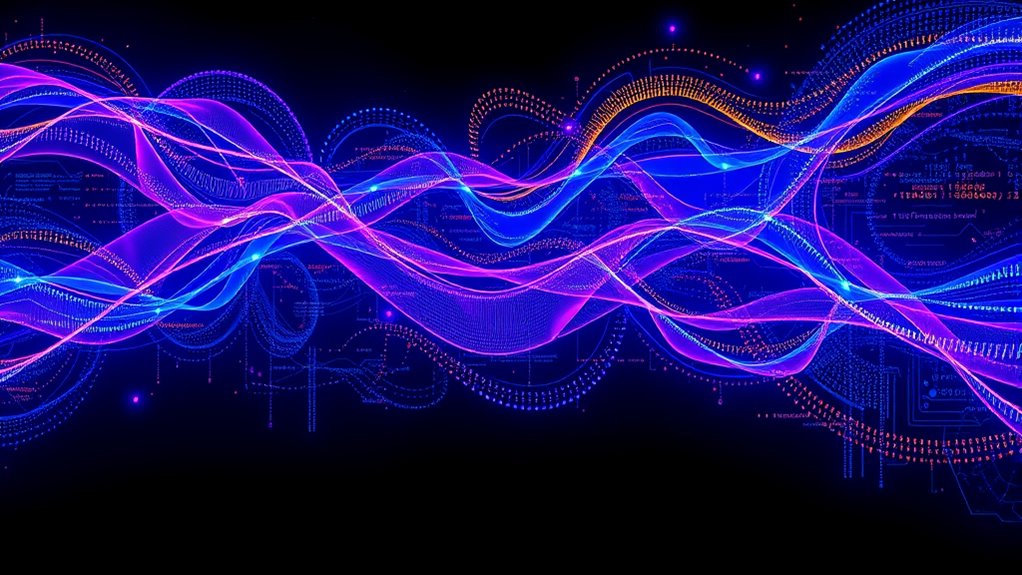
Have you ever wondered how computers can create stunning, original artworks? It all comes down to the fascinating world of algorithmic art, where code transforms into a powerful tool for creative expression. At the heart of this process are generative processes—mathematical or logical systems that produce art autonomously or semi-autonomously. Instead of manually crafting each detail, you set the rules or parameters, and the computer’s algorithms generate complex, often unpredictable visuals. This approach allows for endless variation, pushing the boundaries of traditional art by blending technology with creativity.
Discover how code and algorithms enable computers to generate stunning, unpredictable artworks through creative, autonomous processes.
These generative processes are rooted in the principles of computational aesthetics, a field that explores how algorithms can be designed to produce visually appealing and meaningful compositions. When you work with algorithms, you’re essentially encoding aesthetic principles—balance, contrast, harmony—into the code. The computer then applies these principles, sometimes with randomized elements, to create unique artworks that reflect both the artist’s intent and the algorithm’s intrinsic unpredictability. This synergy between human input and machine computation results in artworks that are both innovative and engaging.
By leveraging computational aesthetics, you can experiment with countless variations without starting from scratch each time. For example, tweaking a few parameters in a fractal-generating algorithm can lead to entirely different visual outcomes. This process not only accelerates your creative workflow but also invites exploration of new artistic styles that might be difficult to achieve manually. The beauty of algorithmic art lies in its ability to combine precise, logical operations with the organic, often surprising results that emerge from randomness and complexity.
Furthermore, understanding the role of generative processes helps you appreciate the collaborative nature of algorithmic art. You’re designing the rules, but the final output can surprise you—sometimes more than traditional methods. As you refine your code, you develop an intuitive sense of how different parameters influence aesthetics, enabling you to craft increasingly sophisticated and compelling artworks. This iterative process blurs the line between creator and machine, emphasizing the creative potential that exists within computational systems. Additionally, integrating art theory principles into algorithmic design can help guide the aesthetic quality of your outputs, bridging technical and artistic considerations.
As an affiliate, we earn on qualifying purchases.
Frequently Asked Questions
How Do I Start Creating Algorithmic Art With No Coding Experience?
To start creating algorithmic art with no coding experience, delve into beginner tutorials on creative coding platforms like Processing or p5.js. These resources guide you step-by-step, making it easy to learn basic programming concepts. Experiment with simple shapes and colors, and gradually explore more complex patterns. Keep practicing, stay curious, and you’ll find that creating unique digital art becomes both fun and accessible, even as a complete beginner.
What Programming Languages Are Best Suited for Algorithmic Art?
You should start with visual programming languages like Processing or p5.js, as they’re perfect for generative design and don’t require advanced coding skills. These tools let you create algorithmic art through easy-to-understand interfaces, making it accessible to beginners. You can experiment with code snippets, customize visuals, and see instant results, helping you learn the fundamentals of generative design while expressing your creativity effectively.
Can Algorithmic Art Be Considered Fine Art or Just Technology?
You might think algorithmic art is just tech, but it’s more than that—it’s a blend of creative expression and artistic legitimacy. The lines between art and technology blur, proving it can be a genuine form of fine art. By harnessing technological influence, you create meaningful, innovative work that challenges traditional notions and elevates digital creations to the domain of fine art. It’s a case of art evolving with the times.
How Do I Ensure My Code-Based Artworks Are Unique and Original?
To make sure your code-based artworks are unique and original, focus on originality verification by creating custom algorithms and avoiding copying existing code. Use your own creative logic and experiment with different techniques to develop distinctive visual styles. Implement plagiarism prevention methods, such as documenting your process and sharing original code. Regularly update and modify your work to maintain originality, ensuring your art stands out as truly one-of-a-kind.
Are There Ethical Concerns Related to Algorithmic Art Creation?
Yes, ethical concerns like copyright issues and cultural appropriation can arise in algorithmic art. Imagine your code as a brushstroke, but if it borrows too heavily from existing works or cultures, you risk infringing rights or misrepresenting traditions. You should respect original creators’ rights, credit sources when possible, and be mindful of cultural sensitivities to guarantee your art remains ethical and respectful.
As an affiliate, we earn on qualifying purchases.
Conclusion
As you explore algorithmic art, you become both the composer and the conductor of a digital symphony. Your code weaves vibrant tapestries on the canvas of the screen, transforming abstract logic into breathtaking visuals. Embrace the dance of zeros and ones, for in this domain, your creativity blooms like a garden born from the digital soil. With each line you craft, you open endless worlds where art and technology intertwine in perfect harmony.
As an affiliate, we earn on qualifying purchases.
As an affiliate, we earn on qualifying purchases.
Halloween Picks
halloween
As an affiliate, we earn on qualifying purchases.