
TL;DR

Get art and craft supplies delivered free with Prime
- Fast, free delivery on millions of items
- Prime Video, Amazon Music and more included
- Member-only deals all year
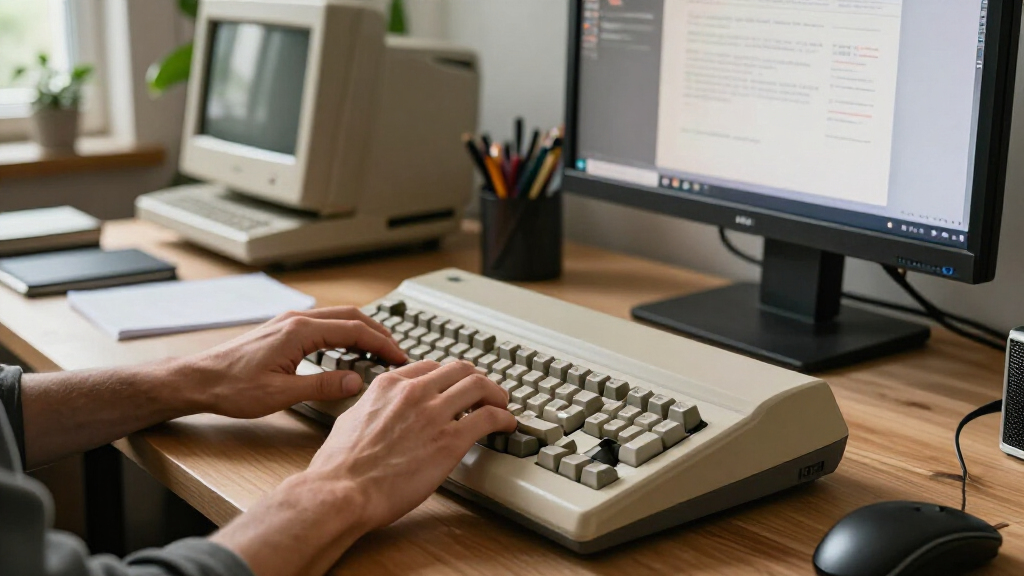
Levente Szabadkai has published C64 Keyboard, a font based on photographs of the keycaps on his Central European Commodore 64. It recreates printed legends, including all 63 PETSCII graphic front legends, and is available in several formats under a CC0 dedication; the creator says the graphics are reconstructed outlines, not exact photo traces.
Levente Szabadkai has published C64 Keyboard, a downloadable font that recreates the lettering and symbols printed on classic Commodore 64 keycaps using photographs of his own Central European keyboard. The project includes the machine’s 63 PETSCII graphic front legends as well as letters, numbers and function-key labels, offering a way to use the keyboard’s printed designs in digital text and graphics.
The project page offers TTF, OTF and webfont files, along with a complete package that includes an online preview and a local preview page. Users can install the font and select “C64 Keyboard” in an application, or use the preview’s type tester to insert symbols and copy them into another program. The preview provides buttons for function-key and PETSCII symbols.
Szabadkai says the letterforms come from photographs of his own Central European Commodore 64, which served as the reference for the letters, numbers and symbols. The font includes uppercase letters, punctuation, arrows, the pound sign and pi, as well as selected accented characters, including Hungarian characters. Lowercase input displays as uppercase, and function-key labels run from f1 to f12.
The PETSCII graphics are presented as reconstructed outlines, not as reproductions of the Commodore 64’s screen bitmap font. The creator says the symbol identities and key assignments are based on the Ultimate Commodore 64 Reference, while details such as frame thickness, curves and print proportions were inferred from the keyboard photograph. The project page also says an updated release is version 1.112; people replacing an earlier version may need to restart applications that continue to display the old font.
A Keyboard’s Printed Graphics, Digitized
The font makes a distinction that matters to retro-computing users and designers: it recreates the marks printed on the physical keys, rather than imitating the C64’s on-screen character shapes. That gives users a digital reference to a particular part of the machine’s design, including the small secondary graphics printed on the fronts of the keys.
Its practical scope extends beyond display lettering. The project includes editable outlines and build tools, and its license allows users to use, modify and redistribute Szabadkai’s contributions, including commercially, without attribution. That could make the work useful for projects that need key labels or PETSCII symbols, though users still need to account for rights that the font’s license does not cover.
The release also documents how its graphics should be interpreted. In the preview, left-side front legends correspond to Commodore-plus-key combinations, while right-side legends correspond to Shift-plus-key combinations in uppercase/graphics mode. Pi is unframed, matching its appearance on the up-arrow key; the project says it also works with Commodore. Those details help connect the font’s symbols to the keyboard’s original layout.
As an affiliate, we earn on qualifying purchases.
Photographs as the Reference
The project is based on one keyboard, not a stated survey of every Commodore 64 model or regional layout. Szabadkai identifies the source as his own Central European unit and says its keycaps supplied the reference for the font’s lettering and symbols. That makes the font a reconstruction tied to a specific photographed example.
The creator’s notes describe two different sources for the PETSCII work: the Ultimate Commodore 64 Reference informs the symbols’ identities and key assignments, while the photograph informs their visual treatment. The outlines were smoothed and made consistent in proportion, according to the project description; they are not exact traces from the images.
The repository includes editable glyph outlines, scripts, documentation, mappings and specimen images. The close-up photographs used during tracing are not included. Szabadkai dedicates the rights he holds in the repository’s contributions to the CC0 1.0 Universal public domain dedication. The project says that dedication does not grant rights in historical keycap designs or trademarks, and that C64 Keyboard is unofficial and not endorsed by Commodore.
“These are reconstructed outlines: identities and key assignments come from the Ultimate Commodore 64 Reference; frame thickness, curves, and print proportions are inferred from the keyboard photograph.”
— Levente Szabadkai, project creator
As an affiliate, we earn on qualifying purchases.
Model Coverage and Rights Limits
The project description does not establish how closely the font matches other Commodore 64 keyboards, regional layouts or production variations. Its documented reference is one Central European keyboard, and the creator says some visual properties were inferred from a photograph rather than measured from every keycap. The source material also gives no publication date, so the timing of the release cannot be pinned down from the project details provided.
The CC0 dedication covers the contributions Szabadkai says he holds in the repository, but it does not grant rights held by others in the historical keycap designs or trademarks. The project page does not provide a broader legal determination about particular uses of those designs. The source photographs themselves are not included in the download.
As an affiliate, we earn on qualifying purchases.
Try the Preview or Download
Readers can test the typeface in the project’s online preview or download the package and open preview.html. The page says users can click a function-key or PETSCII button to add a symbol to the type tester, then copy it into another application and select the font. Copied PETSCII symbols need C64 Keyboard to display correctly; the project links to a key map and encoding guide for codes and keyboard combinations.
The repository lists no future release date or additional development milestone in the supplied description. Users installing over an earlier version are advised to replace it with version 1.112 and restart any applications still showing the old font. Any further changes or additions depend on the project’s subsequent releases.
As an affiliate, we earn on qualifying purchases.
Key Questions
What does the C64 Keyboard font reproduce?
It recreates printed lettering and symbols from Commodore 64 keycaps, including PETSCII front legends. It is not a recreation of the computer’s screen bitmap font.
Which symbols and labels are included?
The project lists uppercase letters, numbers, punctuation, arrows, the pound sign, pi, selected accented letters, f1–f12 labels and all 63 PETSCII graphic front legends. Lowercase input displays as uppercase.
How can I use the font?
Download and install the TTF or OTF file, then select “C64 Keyboard” in an application. You can also try the online preview or open preview.html from the complete package.
Are the PETSCII symbols exact traces of the keycaps?
No. The creator describes them as reconstructed outlines. Symbol identities and key assignments draw on the Ultimate Commodore 64 Reference, while visual details were inferred from a keyboard photograph.
Can the font be used commercially?
Szabadkai dedicates the rights he holds in the repository contributions under CC0 1.0, which permits use, modification and redistribution, including commercial use, without attribution. The project says this does not grant rights in historical keycap designs or trademarks.
Source: hn
Fall Picks
fall essentials
As an affiliate, we earn on qualifying purchases.